

Photo: Wikipedia
Political ClimatePolitical Climate in Covington, KY
District shown is the primary district for this city’s centroid. Cities may span multiple districts.
Local Political AnalysisPolitical Analysis of Covington, KY
Covington, Kentucky, has always had a bit of a split personality politically, but the honest truth is that the city itself has been drifting left for a while now, while the surrounding Kenton County suburbs still lean pretty solidly red. If you look at the 2024 presidential race, Kenton County as a whole went for Trump by about 12 points, but Covington proper—especially the neighborhoods closer to the river—voted blue. That’s a real shift from even ten years ago, when the city was more of a toss-up. The trajectory is concerning if you value limited government and local control, because the progressive wave that’s hit Cincinnati is starting to slosh across the Ohio River.
How it compares
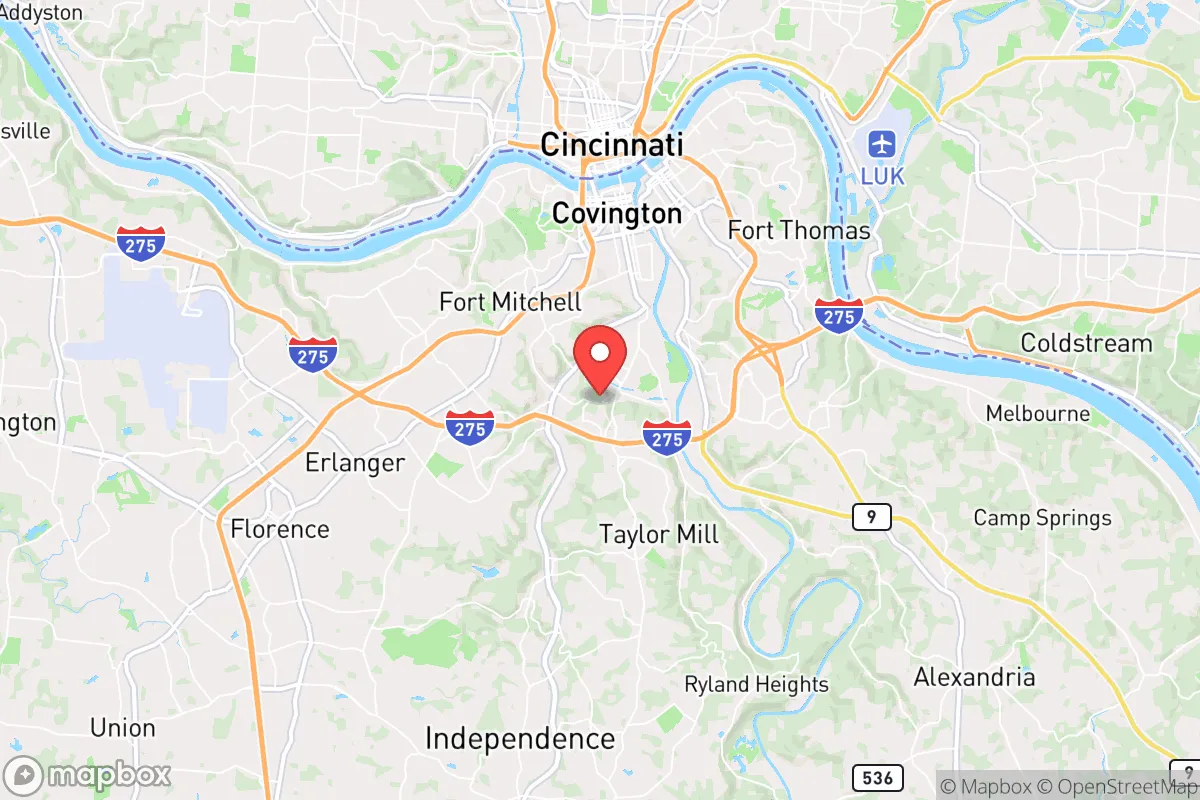
Drive ten minutes south to Fort Mitchell or Edgewood, and you’re in a different world—those communities are reliably conservative, with lower taxes and a “leave us alone” attitude. Head north across the bridge into Cincinnati, and you get the full progressive experiment: higher taxes, defund-the-police rhetoric, and a city council that’s constantly pushing new regulations on landlords and small businesses. Covington sits right in the middle, and it’s starting to feel more like Cincinnati every year. The city council has a few solid conservatives, but the mayor and a couple of the at-large members are openly pushing for things like “sanctuary city” policies and rent control. That’s a far cry from the Covington I remember in the 90s, where the biggest political fights were about potholes and parking meters.
What this means for residents
For folks who just want to live their lives without the government breathing down their necks, the trend is a red flag. Property taxes in Covington are already higher than in the surrounding county, and there’s talk of a new city income tax to fund “equity initiatives.” That’s government overreach, plain and simple. The local school board has also gotten tangled up in culture-war stuff—pushing DEI training and critical race theory materials into the curriculum, even though most parents I talk to just want their kids to learn math and reading. If you’re a gun owner, you’ll be relieved to know Kentucky is a constitutional carry state, so Covington can’t do much on that front, but they’ve tried to pass local ordinances restricting where you can carry in city parks. So far, state preemption has blocked most of it, but they keep trying.
On the plus side, the business climate is still decent compared to Cincinnati. The city has a lower business license fee than most of Ohio, and the MainStrasse and Roebling Point districts have a lot of independent shops and restaurants that are run by folks who just want to work hard and be left alone. But the city council’s push for “affordable housing mandates” is scaring off some developers, and I’ve seen a few small landlords sell out to out-of-state corporate buyers because they’re tired of the red tape.
Looking ahead, the next few years are going to be a tug-of-war. The old-guard conservatives in the county are still a force, and they’ve been pushing back hard on the city’s progressive agenda. But the demographics are changing—more young professionals moving over from Cincinnati, more renters who don’t have a long-term stake in the community. If you’re thinking of relocating here, I’d say look at the neighborhoods south of 12th Street or stick with the county suburbs. The riverfront is pretty, but the politics there are getting ugly in that “we know what’s best for you” kind of way.

State Political ClimatePolitical Climate in Kentucky
State Political AnalysisPolitical Environment in the State
Kentucky has long been a reliably red state in federal elections, but its political landscape is more nuanced than the presidential results suggest. The state has voted Republican in every presidential election since 2000, with Donald Trump carrying it by over 25 points in both 2016 and 2020. However, the state’s partisan lean is driven by a powerful coalition of rural, small-town, and suburban conservatives, while its urban centers—particularly Louisville and Lexington—remain Democratic strongholds. Over the past two decades, the GOP has solidified its grip on state government, winning supermajorities in both legislative chambers and holding every statewide office, a shift that accelerated after the 2015 election of Governor Matt Bevin.
Urban vs. rural divide
The political map of Kentucky is a textbook study in the urban-rural divide. The state’s two largest metros, Louisville (Jefferson County) and Lexington (Fayette County), are reliably Democratic, with Louisville voting for Joe Biden by about 20 points in 2020 and Lexington by a similar margin. These cities are home to the state’s major universities, healthcare systems, and corporate headquarters, and they attract a younger, more diverse, and more progressive population. In contrast, the rest of the state is overwhelmingly Republican. The rural counties of eastern Kentucky—once a Democratic stronghold due to unionized coal miners—have flipped hard red, with counties like Pike, Floyd, and Harlan now voting Republican by 40 to 60 points. The western part of the state, including the Purchase area (McCracken, Graves, Calloway counties), is also deeply conservative. A notable exception is the suburban ring around Louisville, particularly Oldham County, which is one of the most reliably Republican counties in the state, voting for Trump by over 40 points. Similarly, the suburbs of Lexington, such as Jessamine and Clark counties, lean heavily Republican. The political divide is stark: the Bluegrass region’s horse farms and bourbon distilleries tend to be conservative, while the urban cores of Louisville and Lexington are the only real blue dots on the map.
Policy environment
Kentucky’s policy environment is broadly conservative, with a strong emphasis on low taxes, limited regulation, and traditional values. The state has a flat income tax rate of 4.5%, which is being phased down to 4% by 2026, and no state-level estate or inheritance tax. Property taxes are among the lowest in the nation, with a statewide average of about 0.83% of assessed value. The regulatory posture is business-friendly, with right-to-work laws in place and a tort reform system that caps non-economic damages in medical malpractice cases. On education, Kentucky has a robust school choice movement, with charter schools legalized in 2017 (though none have opened yet) and a strong homeschooling community. The state’s education funding, however, remains a point of contention, with teacher protests in 2018 and 2019 over pension reform and funding cuts. Healthcare policy is a mixed bag: Kentucky expanded Medicaid under the Affordable Care Act in 2014, but the state has since implemented work requirements and other restrictions. Election laws are relatively strict, with voter ID requirements and limited early voting, though no-excuse absentee voting was expanded during the pandemic and remains in place. The state also has a strong Second Amendment culture, with permitless carry passed in 2019 and no red-flag law.
Trajectory & freedom
Kentucky has been moving in a decidedly more freedom-oriented direction over the past decade, particularly on gun rights, parental rights, and tax policy. In 2019, the state passed constitutional carry, allowing law-abiding citizens to carry concealed firearms without a permit. In 2021, the legislature passed a law banning the teaching of critical race theory in public schools, a move that resonated with parents concerned about government overreach in education. The same year, the state passed a law requiring parental consent for minors to receive gender-affirming care, and in 2023, it banned all gender-affirming care for minors entirely. On the tax front, the state has been steadily reducing its income tax, with a goal of eventually eliminating it entirely. However, there are concerns about the expansion of government power in other areas. The state’s response to the COVID-19 pandemic was a flashpoint, with Governor Andy Beshear’s executive orders on mask mandates and business closures sparking significant backlash and legal challenges. The legislature responded by passing laws limiting the governor’s emergency powers, a clear win for personal liberty. Property rights are generally strong, with no statewide zoning laws and a robust system of private property protections. Overall, Kentucky is trending toward more individual freedom, but the tension between the executive and legislative branches remains a source of uncertainty.
Civil unrest & political movements
Kentucky has seen its share of political activism and civil unrest, though it has been less intense than in some other states. The 2020 protests over the death of Breonna Taylor in Louisville were a major flashpoint, with months of demonstrations, some turning violent, and a heavy police presence. The city’s Democratic leadership faced criticism from both the left (for not doing enough) and the right (for allowing the unrest to continue). In response, the state legislature passed a series of police reform bills, including a ban on no-knock warrants, though many conservatives felt the reforms went too far. On the right, the state has a strong grassroots conservative movement, with groups like the Kentucky Family Foundation and the Kentucky Right to Life Association wielding significant influence. The 2022 election saw a surge in election integrity activism, with many counties adopting hand-counting of ballots and other measures. Immigration politics are less prominent in Kentucky than in border states, but there is a growing concern about illegal immigration, particularly in the Louisville area, where some local leaders have declared sanctuary city policies. The state has also seen a rise in secessionist rhetoric in eastern Kentucky, with some residents calling for a separate state due to feeling ignored by both Frankfort and Washington. Overall, the political climate is polarized but not chaotic, with most residents going about their daily lives without major disruption.
Projection
Over the next 5 to 10 years, Kentucky is likely to remain a solidly red state, but with some important shifts. The continued in-migration of conservatives from blue states, particularly to the suburbs of Louisville and Lexington, will reinforce the GOP’s dominance. However, the urban cores will become even more Democratic, potentially leading to a more polarized state. The state’s tax-cutting trajectory is likely to continue, with the income tax possibly being eliminated by 2030, which would make Kentucky even more attractive to businesses and individuals seeking lower taxes. The education landscape will likely see more school choice options, including the opening of charter schools and expansion of education savings accounts. On social issues, the state will continue to be a leader in protecting parental rights and Second Amendment freedoms, but there will be ongoing battles over healthcare and abortion access. The biggest wildcard is the potential for federal intervention, particularly on issues like Medicaid expansion and LGBTQ rights, which could create friction between the state and the federal government. For someone moving to Kentucky now, they can expect a state that is increasingly conservative, with a strong emphasis on personal freedom, but with the understanding that the urban-rural divide will continue to shape the political landscape.
For a new resident, the bottom line is that Kentucky offers a high degree of personal freedom, low taxes, and a conservative political environment that respects individual rights. The state is not without its challenges—particularly in the urban areas where progressive policies are more common—but overall, it is a place where you can live your life with minimal government interference. If you value gun rights, parental control over education, and a low tax burden, Kentucky is a strong choice. Just be aware that the political climate varies significantly depending on where you settle, with the suburbs and rural areas offering the most freedom, while the cities of Louisville and Lexington are more likely to have the kind of government overreach you may be looking to escape.
* Values derived from national, state, county, city and local statistics and may differ in a specific area. Last updated: 2026-04-21T10:25:27.000Z
Narrative content on this page is AI-generated and may contain mistakes. Verify any details that matter before acting on them.
ReloMaps may earn a commission from affiliate links at no extra cost to you.

