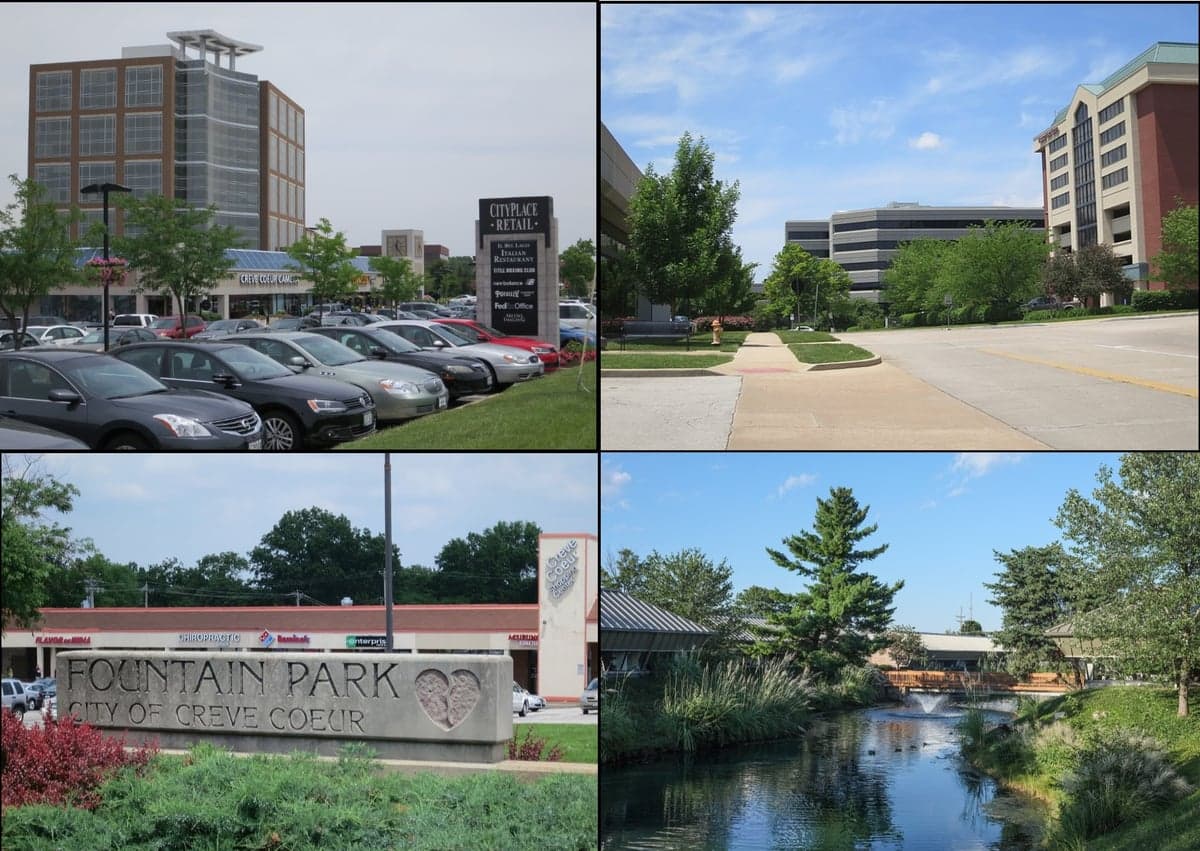
Photo: Wikipedia
Strategic Assessment of Creve Coeur, MO
Meaningful friction. Expect exposure to either population pressure, blast zones, or natural disaster risk. Consider buying a retreat property.
What does the Strategic Assessment tell us?
Our Strategic Assessment grades tactical survivability of an area. Major population centers, military targets, fallout zones, natural disasters, and border exposure all drive risk — lower exposure means a more defensible position in a crisis.
This is heavily inspired by Joel Skousen's Strategic Relocation book. Highly recommended you checkout the book ($)What does this tell us?
Our Strategic Assessment grades tactical survivability of an area. Major population centers, military targets, fallout zones, natural disasters, and border exposure all drive risk — lower exposure means a more defensible position in a crisis.
This is heavily inspired by Joel Skousen's Strategic Relocation book. Highly recommended you checkout the book ($)Strategic Pillars

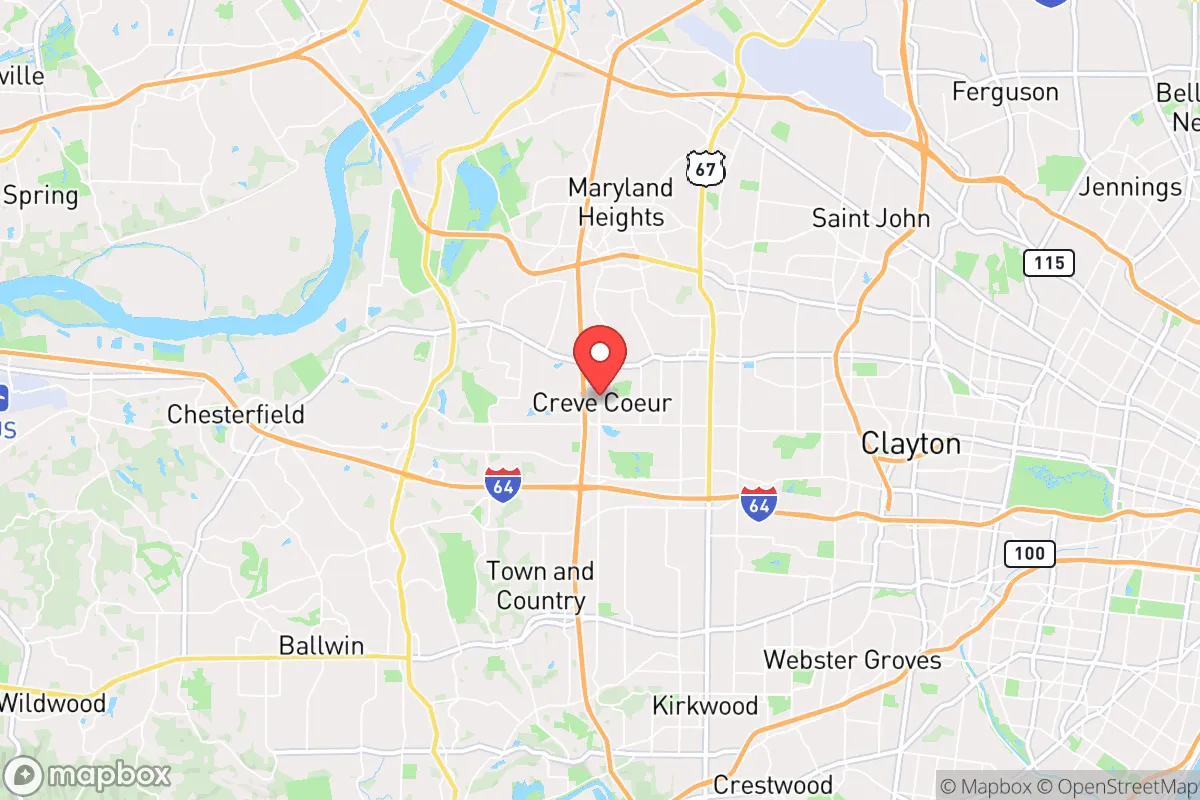
Key Distances
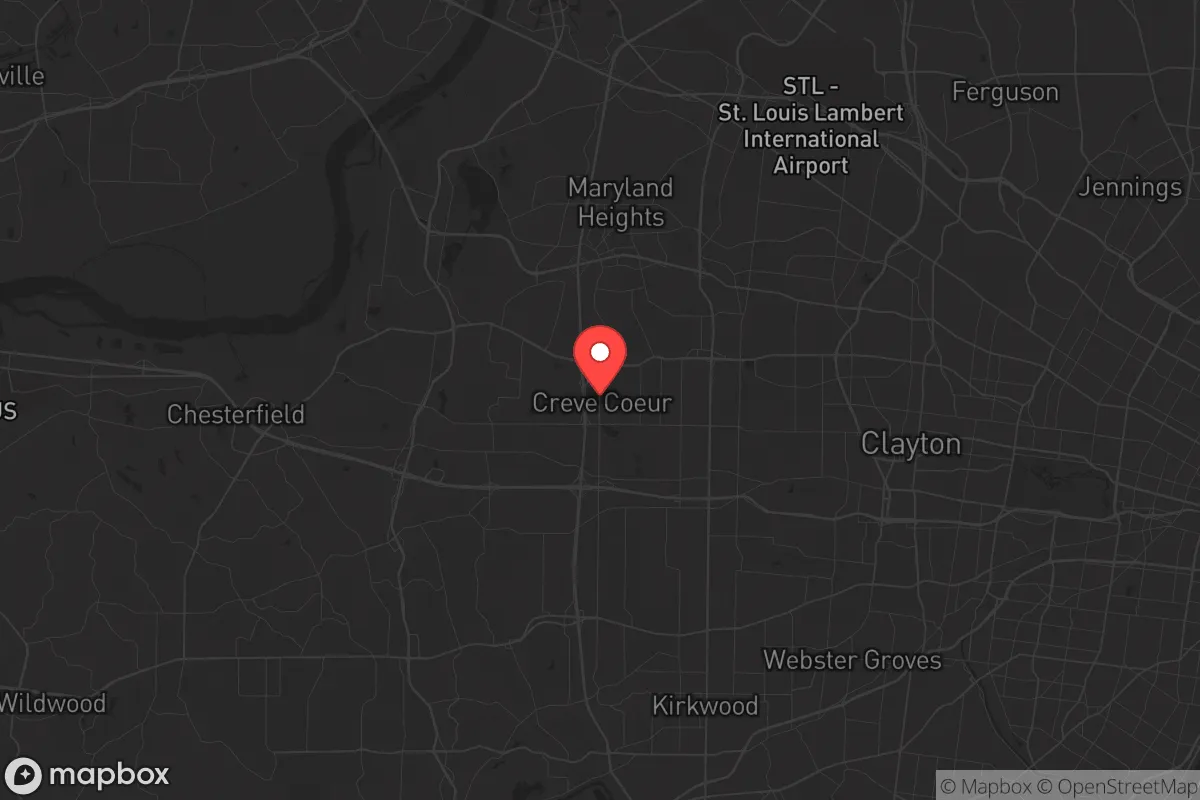
Regional Safe Places
Below is our recommended "safe zones" in Missouri and the surrounding area based on our strategic heuristics. For most people, it's unrealistic to live in a “safe zone” full-time due to work, family or other personal reasons. They tend to be more rural. However, many of these areas are perfect for second homes and retreat properties that double as a vacation home or even a short-term rental.


Important Note: For informational purposes only. This does not mean nothing bad ever happens in the green zones. Please use common sense. This is based on public data and modeled with AI. We tried to take a conservative approach but mistakes happen. We update this regularly as new information becomes available.
Solar Generator Recommendations
Backup power matters more here than in safer locations. We've picked three solar generators across budgets and capacity tiers — start with the budget unit if you only need a few essentials, or step up if you want to run a fridge and HVAC for days at a time.

Jackery Portable Power Station Explorer 300
Budget OptionPower on the Go: Weighing only 11 lbs, it's convenient to set up and store with book-sized foldable solar panels

BLUETTI Portable Power Station AC180
Designed for both indoor and outdoor scenarios, AC180 is highly capable as it has a robost capacity and continuous output power.

EF ECOFLOW DELTA Pro Ultra Power Station
Upgraded PickEcoFlow DELTA Pro Ultra is a whole-home energy system designed to grow with your family. Integrated with the Smart Home Panel 2, it scales to meet your evolving energy needs — keeping your home powered, intelligent, and secure through every stage of life.
We earn a commission, at no additional cost to you.
Strategic Assessment Analysis
Creve Coeur, Missouri, presents a mixed strategic picture for the conservative prepper or survivalist. Its greatest asset is its location within the St. Louis metro area, which provides access to critical infrastructure, but that same proximity is its most significant liability in a collapse scenario. For a relocator prioritizing resilience over convenience, Creve Coeur offers a solid base for short-term disruption but requires a clear-eyed plan for long-term self-sufficiency, as the area’s dependence on regional supply chains and its position near a major urban center create vulnerabilities that cannot be ignored.
Geographic position and natural advantages for long-term survival
Creve Coeur sits in west-central St. Louis County, roughly 15 miles from downtown St. Louis. Its location along the Missouri River floodplain gives it access to fertile soil and abundant water, but the flood risk is real—parts of the city lie in the 100-year flood zone, particularly near Creve Coeur Lake and the Missouri River bottoms. The area’s rolling hills and wooded subdivisions offer some natural cover and defensibility, but it is not remote. The city is bisected by major highways (I-270, I-64, and Olive Boulevard), which are both evacuation routes and choke points during civil unrest. The proximity to the Missouri River provides a potential water source for filtration, but the river is heavily industrialized upstream, so contamination from chemical spills or upstream infrastructure failures is a concern. The region’s four-season climate supports gardening and small-scale agriculture, but the hot, humid summers and cold winters demand robust food storage and energy planning.
Risks, exposures, and proximity to fallout-relevant landmarks
The most glaring risk for Creve Coeur is its location within the St. Louis metropolitan statistical area, home to over 2.8 million people. In a mass casualty event, civil unrest, or grid-down scenario, the city would be directly in the path of population displacement from the urban core. The nearby Lambert-St. Louis International Airport (10 miles east) and the Mississippi River barge traffic are high-value targets for disruption. More concerning is the proximity to the St. Louis Arch and downtown government buildings, which could become focal points for unrest. Additionally, the area is within 50 miles of the Callaway Nuclear Plant (Fulton, MO) and the now-shuttered but still monitored West Lake Landfill (a Superfund site with radioactive waste). A nuclear incident or deliberate attack on either would put Creve Coeur in a downwind danger zone. The city’s reliance on the I-270 and I-64 corridors for resupply means a single bridge failure or roadblock could isolate the area from rural escape routes to the west and south.
Practical resilience for a relocator: food, water, energy, and defensibility
For a relocator with a prepper mindset, Creve Coeur offers a mixed bag. Water is the most immediate concern: the city draws from the Missouri River via the St. Louis County Water Company, which is vulnerable to contamination and power outages. A well is not feasible in most suburban lots due to clay soils and shallow bedrock, so rainwater catchment and storage are essential. Food options are decent for a suburb—there are multiple grocery stores (Dierbergs, Schnucks, Aldi) within a 5-minute drive, but these would empty within 48 hours of a panic event. Local farmers’ markets exist (e.g., the Creve Coeur Farmers Market at the Community Center), but they are seasonal and not sufficient for long-term supply. Community gardens are limited, and HOA restrictions in many subdivisions may prohibit livestock or extensive gardening. Energy is a vulnerability: the grid is aging and prone to outages during storms (ice storms, derechos). Solar panels are allowed in most of the city, but battery storage is critical given the lack of natural gas backup in many homes. Defensibility is the weakest point. Creve Coeur is a typical suburban sprawl—cul-de-sacs, large lots, and tree cover offer some concealment, but the lack of natural barriers (rivers, mountains) and the density of neighbors (population ~18,000) mean that a determined group could move through the area easily. The city’s police force is professional but small (about 40 officers), and mutual aid from St. Louis County would be strained during a regional crisis. For a single individual or family, the best strategy is to harden a single-family home with reinforced doors, window film, and a secure perimeter, while maintaining a low profile. The nearby Creve Coeur Lake Memorial Park (2,000+ acres) offers a potential bug-out location for short-term evasion, but it is a public space that would attract crowds.
The overall strategic picture for a conservative relocator
Creve Coeur is not a survivalist’s paradise, but it is a viable option for someone who wants to stay connected to the St. Louis job market while maintaining a reasonable level of preparedness. The city’s strengths—good schools, low crime relative to the urban core, and access to medical facilities (Barnes-Jewish West County Hospital, Mercy Hospital St. Louis)—make it a solid choice for a family that values stability during normal times. However, for the prepper focused on worst-case scenarios, the trade-offs are clear: you gain convenience and community but sacrifice true self-sufficiency and security. The best use of Creve Coeur is as a base for building skills and stockpiling while you scout more defensible rural property in the Missouri Ozarks or southern Illinois. If you are committed to staying here, invest in a deep pantry, a reliable vehicle with off-road capability (for bypassing blocked highways), and a network of like-minded neighbors. The area’s political leanings are moderate—St. Louis County votes reliably blue, but Creve Coeur itself is a mix of professionals and retirees, many of whom are fiscally conservative. You will find allies, but you will also find neighbors who are unprepared. In a crisis, the unprepared become a liability. Plan accordingly.

* Values derived from national, state, county, city and local statistics and may differ in a specific area. Last updated: 2026-04-29T20:02:18.000Z
Narrative content on this page is AI-generated and may contain mistakes. Verify any details that matter before acting on them.
ReloMaps may earn a commission from affiliate links at no extra cost to you.

