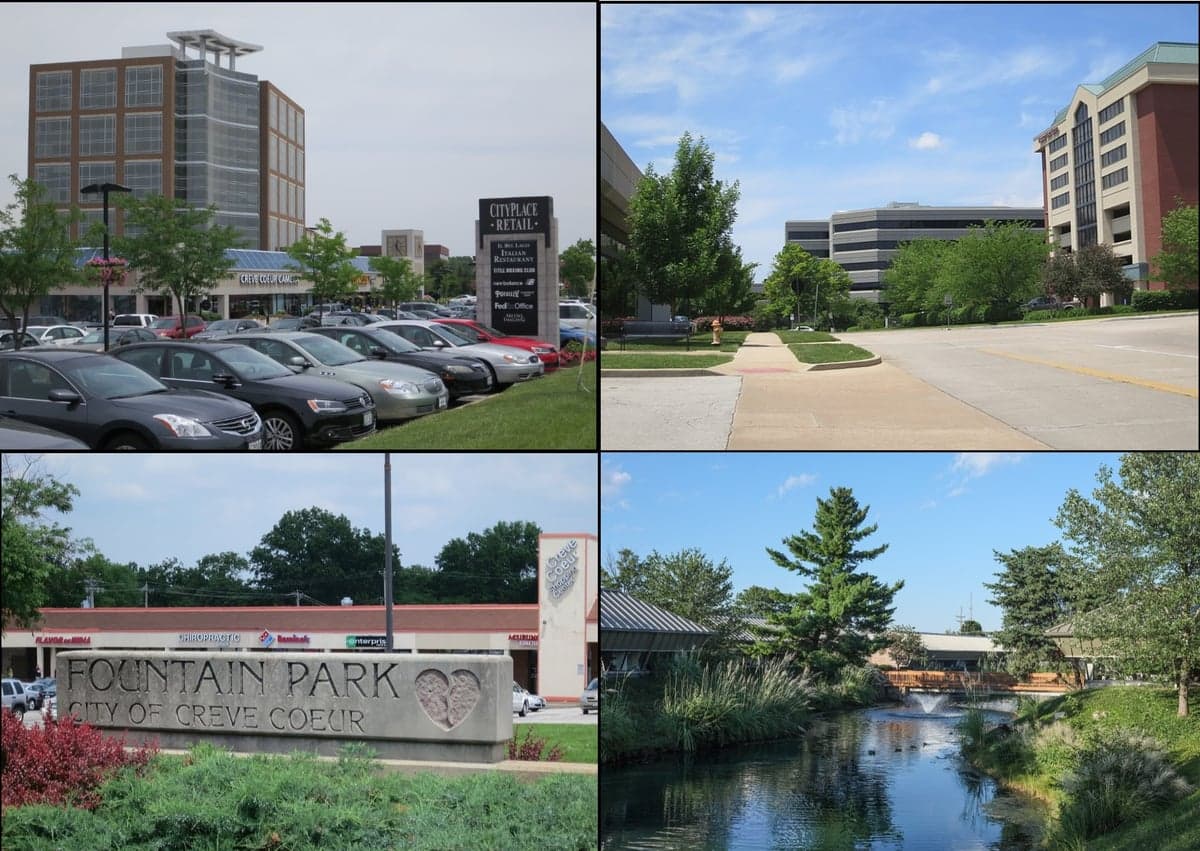
Photo: Wikipedia
Political ClimatePolitical Climate in Creve Coeur, MO
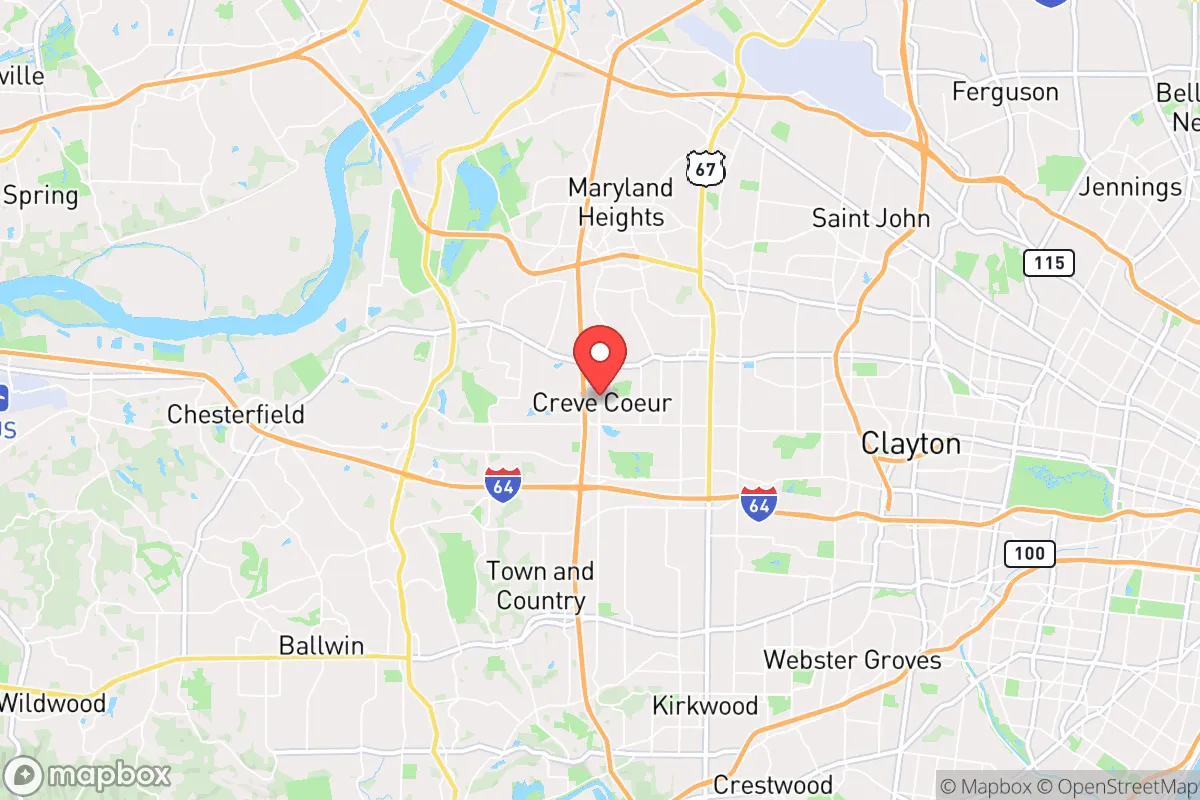
District shown is the primary district for this city’s centroid. Cities may span multiple districts.
Local Political AnalysisPolitical Analysis of Creve Coeur, MO
Creve Coeur has long been a reliably conservative pocket in St. Louis County, but like much of suburban Missouri, it’s been drifting leftward over the last decade. The area carries a Cook PVI of R+4, meaning it still leans Republican by a modest margin, but that edge has been shrinking. If you’d asked me ten years ago, I’d have said this was a rock-solid red suburb—folks here valued low taxes, limited government, and personal responsibility. Now? You see more yard signs for progressive candidates, and the local school board meetings have gotten a lot more heated over things like critical race theory and mask mandates. It’s not a blue wave, but it’s a slow erosion, and that’s something to keep an eye on if you value keeping government out of your daily life.
How it compares
Creve Coeur sits in a kind of political buffer zone. Drive west into Wildwood or Town and Country, and you’ll find communities that are still solidly conservative—those areas vote R+10 or more in most elections. Head east toward University City or Clayton, and you’re in deep-blue territory, where progressive policies on zoning, policing, and school curriculum are the norm. Creve Coeur is caught in the middle, which means you get a mix of old-guard fiscal conservatives and newer residents—often young families or transplants from the coast—who bring more liberal ideas about everything from property taxes to public health mandates. The contrast is stark: in Wildwood, you can still have a conversation about Second Amendment rights without getting side-eyed; in Creve Coeur, that conversation is getting quieter every year.
What this means for residents
For someone who values personal freedoms—like the right to make your own healthcare choices, send your kids to school without ideological indoctrination, or keep more of your paycheck—Creve Coeur’s shift is a real concern. The local city council has been flirting with progressive zoning changes that could raise property taxes, and the school district has faced pressure to adopt DEI initiatives that prioritize group identity over individual merit. If you’re a conservative, you’re not in hostile territory yet, but you’re no longer in friendly territory either. You’ll need to stay engaged—attend those city council meetings, vote in every primary, and maybe even consider running for a local office yourself. The good news is that the R+4 rating means your vote still counts; the bad news is that a few more election cycles could flip this area to a toss-up or worse.
Culturally, Creve Coeur still holds onto some of its old-school Midwestern values—neighbors wave, people mow their own lawns, and there’s a general sense of self-reliance. But you’ll also notice more “In This House We Believe” signs popping up, and the local library has started hosting drag story hours. The policy distinctions are subtle but real: the city has adopted a “welcoming” ordinance that limits cooperation with federal immigration enforcement, and there’s been talk of creating a civilian review board for the police. These aren’t radical changes yet, but they’re steps toward the kind of government overreach that makes you wonder who’s really in charge. If you’re looking for a place where you can live your life without the government breathing down your neck, Creve Coeur is still an option—but you’ll have to work to keep it that way.

State Political ClimatePolitical Climate in Missouri
State Political AnalysisPolitical Environment in the State
Missouri has long been considered a bellwether state, but over the past 15 years it has shifted decisively from a purple swing state to a solidly red one. The Show-Me State voted for Donald Trump by 15 points in 2020 and by an even wider margin in 2024, a stark contrast to the razor-thin margins of the 2008 and 2012 elections. The dominant coalition is now a blend of rural conservatives, suburban ex-urbanites fleeing St. Louis and Kansas City, and a growing population of fiscally conservative transplants from Illinois and California. The trajectory is unmistakably rightward, driven by a backlash against coastal progressive policies and a state government that has aggressively pursued a low-tax, culturally conservative agenda.
Urban vs. rural divide
The political map of Missouri is a textbook case of the urban-rural chasm. The two major metros—St. Louis and Kansas City—are deep blue islands in a sea of red. St. Louis City and County, along with Jackson County (Kansas City), consistently deliver 60-70% of their votes to Democrats, powered by union households, university faculty, and a growing minority population. But the rest of the state is overwhelmingly Republican. The I-70 corridor from Columbia (home to the University of Missouri) to Jefferson City is a mix of college-town blue and state-government red, but the real action is in the exurbs. St. Charles County, just west of St. Louis, has flipped from purple to deep red over the past decade, now voting +30 points Republican. Similarly, Cass County south of Kansas City and Boone County’s rural precincts have hardened their conservative lean. The rural counties along the Mississippi River—Cape Girardeau, Perryville, and Ste. Genevieve—are reliably red, while the southwestern corner around Springfield and Joplin is the state’s most conservative stronghold, with some precincts voting +50 points Republican. The Ozarks region, including Branson and Lake of the Ozarks, is a libertarian-leaning area where distrust of federal overreach runs deep.
Policy environment
Missouri’s policy environment is a conservative’s dream, with a few notable exceptions. The state has a flat income tax of 4.95% (down from 6% in 2019) and is on a glide path to eliminate it entirely by 2028 under a law signed by Governor Mike Parson. Property taxes are among the lowest in the nation, and there is no estate or inheritance tax. The regulatory climate is business-friendly, with right-to-work laws (repealed by ballot in 2018 but functionally still in place through low union density) and minimal permitting hurdles for new construction. Education policy is a mixed bag: the state has a robust charter school law in St. Louis and Kansas City, but rural districts are struggling with consolidation. The 2022 “Parents’ Bill of Rights” (HB 2410) requires schools to notify parents of any curriculum changes involving sexuality or gender identity, a major win for parental rights. Healthcare is a flashpoint: Missouri rejected Medicaid expansion for years before a 2020 ballot initiative forced it through, but the state still has some of the most restrictive abortion laws in the country, banning the procedure at conception with no exceptions for rape or incest. Election laws have tightened: voter ID is required, and the 2022 law (SB 631) banned ballot drop boxes and shortened the absentee voting window. The state also has a “Second Amendment Preservation Act” (SAPA) that nullifies federal gun laws, though parts of it were struck down in court.
Trajectory & freedom
Missouri is clearly trending toward more personal freedom, especially in the areas of gun rights, parental rights, and tax burden. The 2021 Second Amendment Preservation Act was a direct challenge to federal overreach, declaring that any federal law infringing on the right to keep and bear arms is null and void in Missouri. While the law has been partially blocked by federal courts, it sent a strong signal. In 2023, the state passed a law (SB 39) prohibiting the enforcement of federal gun laws by state and local officials. On parental rights, the 2022 law mentioned above was followed by a 2024 law requiring schools to obtain parental consent before administering any mental health survey or questionnaire. The state also passed a “Save Women’s Sports” law (HB 2169) in 2023, banning biological males from competing in girls’ sports. On the downside, the state’s medical marijuana program, while legal since 2018, is heavily regulated and expensive, and recreational marijuana was legalized by ballot in 2022 but with high taxes (6% state plus local) that some see as a new revenue grab. Property rights are strong: Missouri is a “right to farm” state, and the 2014 “Right to Farm” constitutional amendment protects agricultural operations from nuisance lawsuits. The biggest threat to freedom is the state’s growing reliance on federal funds—about 40% of the state budget comes from Washington—which creates a vulnerability if federal priorities shift.
Civil unrest & political movements
Missouri has seen its share of civil unrest, most notably the 2014 Ferguson protests after the Michael Brown shooting, which sparked a national “Black Lives Matter” movement and led to a wave of progressive activism in St. Louis. That activism has since faded, but it left a legacy of distrust between urban communities and law enforcement. In 2020, protests in Kansas City and St. Louis over the George Floyd killing were largely peaceful, though there were isolated incidents of looting. The state has also been a battleground for immigration politics: Missouri passed a law (SB 34) in 2023 requiring law enforcement to cooperate with federal immigration authorities, and there are no sanctuary cities in the state. The “Missouri Freedom Caucus” in the state legislature has pushed for nullification of federal gun laws and has been a vocal opponent of any COVID-19 mandates. Election integrity remains a hot topic: the 2020 election saw no major fraud in Missouri, but the 2022 law tightening voting rules was driven by widespread distrust of mail-in voting. The most visible political movement is the “Show-Me” libertarian streak, which manifests in everything from the state’s resistance to federal vaccine mandates to the popularity of “constitutional sheriffs” in rural counties. A new resident would notice the prevalence of “Don’t Tread on Me” flags and “Let’s Go Brandon” stickers, especially outside the metros.
Projection
Over the next 5-10 years, Missouri will likely become more conservative, not less. The in-migration pattern is clear: people are moving from Illinois, California, and New York to the St. Louis exurbs, the Lake of the Ozarks, and the Springfield area. These transplants are typically fiscally conservative and culturally moderate, but they tend to vote Republican once they see the tax and regulatory advantages. The state’s population is aging and becoming more rural, which favors the GOP. The biggest demographic wildcard is the growth of the Hispanic population in southwest Missouri, particularly in Monett and Neosho, which could shift the political calculus over time. But for now, the state legislature is likely to remain supermajority Republican, and the governorship will stay red. The biggest risk is a federal crackdown on the state’s nullification efforts, which could trigger a constitutional crisis. A new resident moving in now should expect a state that is increasingly assertive in its independence from Washington, with lower taxes, stronger gun rights, and a culture that values personal responsibility over government intervention.
Bottom line for a new resident: If you’re looking for a state where your tax dollars stay local, your Second Amendment rights are protected, and your kids’ education isn’t dictated by federal bureaucrats, Missouri is a solid bet. Just be prepared for the cultural divide between the blue cities and the red countryside—and know that the state’s trajectory is firmly toward more freedom, not less. The Show-Me State is living up to its name: show me a state that respects individual liberty, and Missouri will show you the way.
* Values derived from national, state, county, city and local statistics and may differ in a specific area. Last updated: 2026-04-29T20:02:18.000Z
Narrative content on this page is AI-generated and may contain mistakes. Verify any details that matter before acting on them.
ReloMaps may earn a commission from affiliate links at no extra cost to you.

