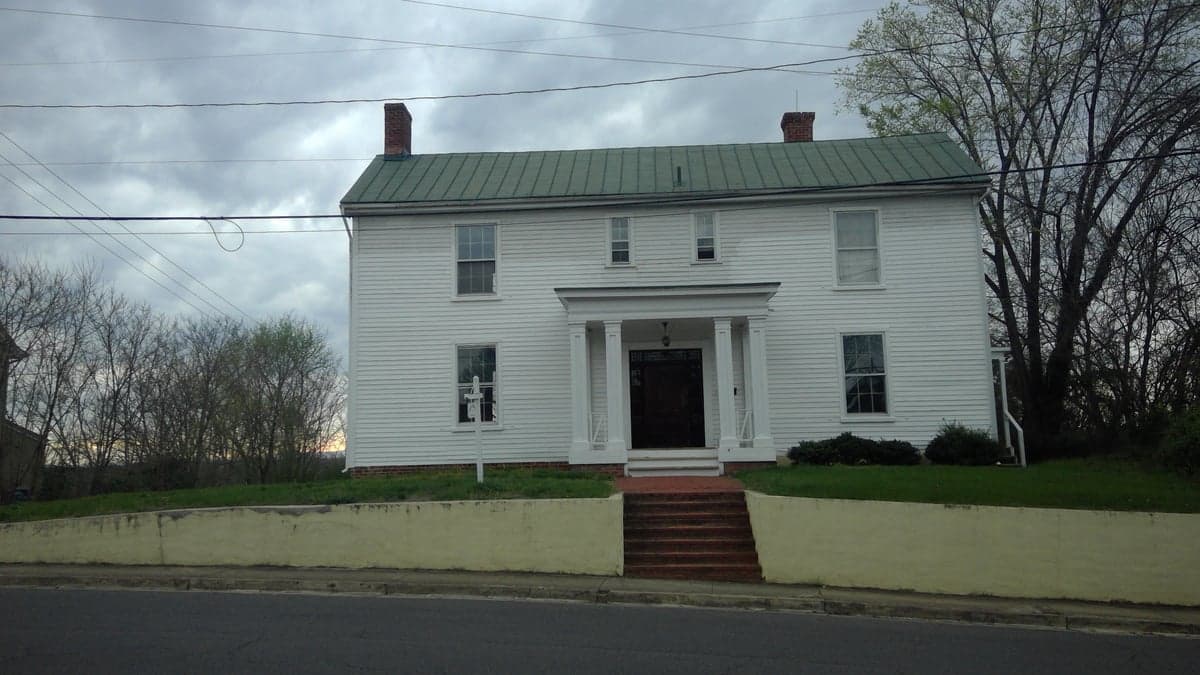
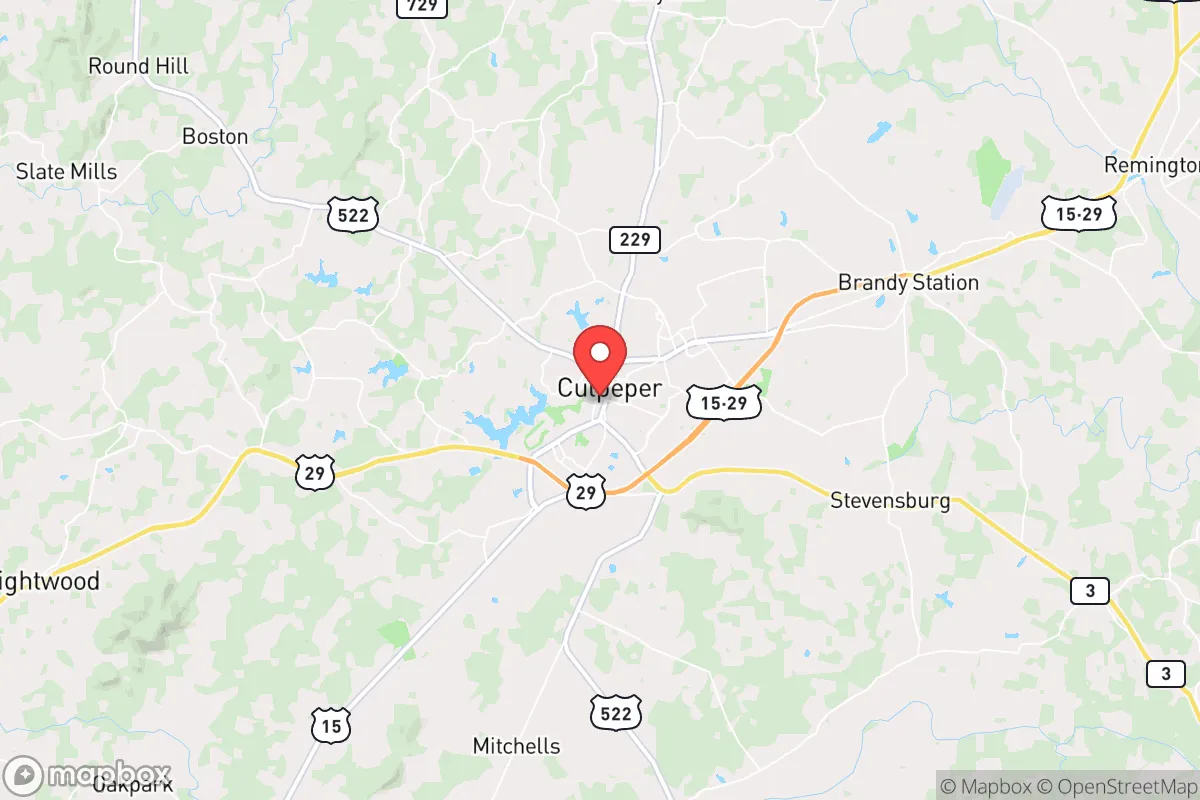
Photo: Wikipedia
Demographics of Culpeper, VA
Affluence Level in Culpeper, VA
A middle-class area roughly in line with national averages across income, home values, education, and employment.
People of Culpeper, VA
The people of Culpeper, VA today form a diverse, majority-minority community of 20,437 residents, where no single ethnic group holds a numerical majority. The city is characterized by a 49.5% White population, a substantial 24.0% Hispanic community, an 18.4% Black population, and smaller but growing East/Southeast Asian (1.8%) and Indian subcontinent (0.4%) groups. With 11.4% foreign-born residents and a 30.2% college-educated rate, Culpeper blends historic Southern roots with a rapidly diversifying, family-oriented identity that is increasingly suburban and commuter-driven.
How the city was settled and grew
Culpeper’s population history begins with its 1749 founding as a crossroads settlement on the Rappahannock River, originally called Fairfax. The town was established to serve as the county seat for the newly formed Culpeper County, drawing its first wave of settlers—primarily English and Scots-Irish farmers—who were granted land parcels under the colonial headright system. These early residents built the town around the historic Old Town Culpeper district, centered on Davis Street and East Street, where many 18th- and 19th-century homes still stand. The arrival of the Orange and Alexandria Railroad in the 1850s spurred a second wave: German and Irish laborers who settled in the Railroad Avenue corridor, building the infrastructure that made Culpeper a regional shipping hub for tobacco, grain, and livestock. By the early 20th century, the city’s population was overwhelmingly White and native-born, with a small Black community concentrated in the West End neighborhood, near the historic Culpeper Colored School (now the George Washington Carver Center). The mid-20th century brought little change; Culpeper remained a quiet, rural county seat of roughly 6,000 residents through the 1960s, with its economy anchored by agriculture, a small furniture factory, and the local hospital.
Modern era (post-1965)
The post-1965 era transformed Culpeper’s population dramatically, driven by two forces: the expansion of Northern Virginia’s commuter shed and the 1986 opening of the Culpeper Regional Airport (now a general aviation hub). The Immigration and Nationality Act of 1965 opened doors for new arrivals, but Culpeper’s modern diversity is largely a product of domestic migration and Hispanic immigration from the 1990s onward. The Hispanic population, now 24.0%, began arriving in the 1990s for work in construction, landscaping, and poultry processing at the nearby Pilgrim’s Pride plant. This wave settled primarily in the Southgate neighborhood and along the Brandy Road corridor, where Spanish-language businesses and churches now anchor a vibrant community. The Black population, 18.4% today, grew through both natural increase and return migration from Northern cities, with many families choosing the East Culpeper area near the historic Carver Center. The East/Southeast Asian community (1.8%) is a smaller, more recent arrival, with Vietnamese and Filipino families drawn by job opportunities in healthcare and the growing data center industry along Route 29. The Indian subcontinent population (0.4%) is tiny but professional, with households concentrated in newer subdivisions like Lakeview Estates. The White population, now a plurality at 49.5%, includes both long-standing Old Town families and newer arrivals from Northern Virginia seeking affordable housing, many settling in the Northpointe subdivision.
The future
Culpeper’s population is heading toward continued diversification and suburbanization, with the Hispanic share likely to grow as families age into childbearing years and new arrivals from Central America join established networks. The White population is projected to decline further as older residents pass away and younger White families continue to move to more rural parts of the county. The Black community is stable but not growing rapidly, while East/Southeast Asian and Indian populations remain small but may increase as the data center corridor expands. The city is not tribalizing into rigid enclaves—neighborhoods like Southgate and East Culpeper are mixed—but distinct ethnic clusters persist around churches, grocery stores, and community centers. The foreign-born share (11.4%) is below the Virginia average (12.6%) but rising, and the college-educated rate (30.2%) lags the state’s 39.4%, reflecting a workforce still tilted toward trades and service jobs. Over the next decade, Culpeper will likely become a more Hispanic-majority city, with a growing professional class drawn by commuter access to Charlottesville and Northern Virginia.
For a conservative-leaning individual or family moving to Culpeper now, the city offers a stable, family-oriented environment with a strong sense of local identity, but one that is undeniably changing. The population is becoming younger, more diverse, and more connected to the broader D.C. metro economy, while retaining its small-town feel and historic core. The key trade-off is between affordable housing and a community that is no longer the homogeneous rural town of the 1950s—but one that is increasingly vibrant, with growing ethnic markets, new subdivisions, and a steady influx of families seeking a quieter, more conservative alternative to Northern Virginia.

* Values derived from national, state, county, city and local statistics and may differ in a specific area. Last updated: 2026-05-01T16:12:37.000Z
Narrative content on this page is AI-generated and may contain mistakes. Verify any details that matter before acting on them.
ReloMaps may earn a commission from affiliate links at no extra cost to you.

