
Photo: Wikipedia
Political ClimatePolitical Climate in Culpeper, VA
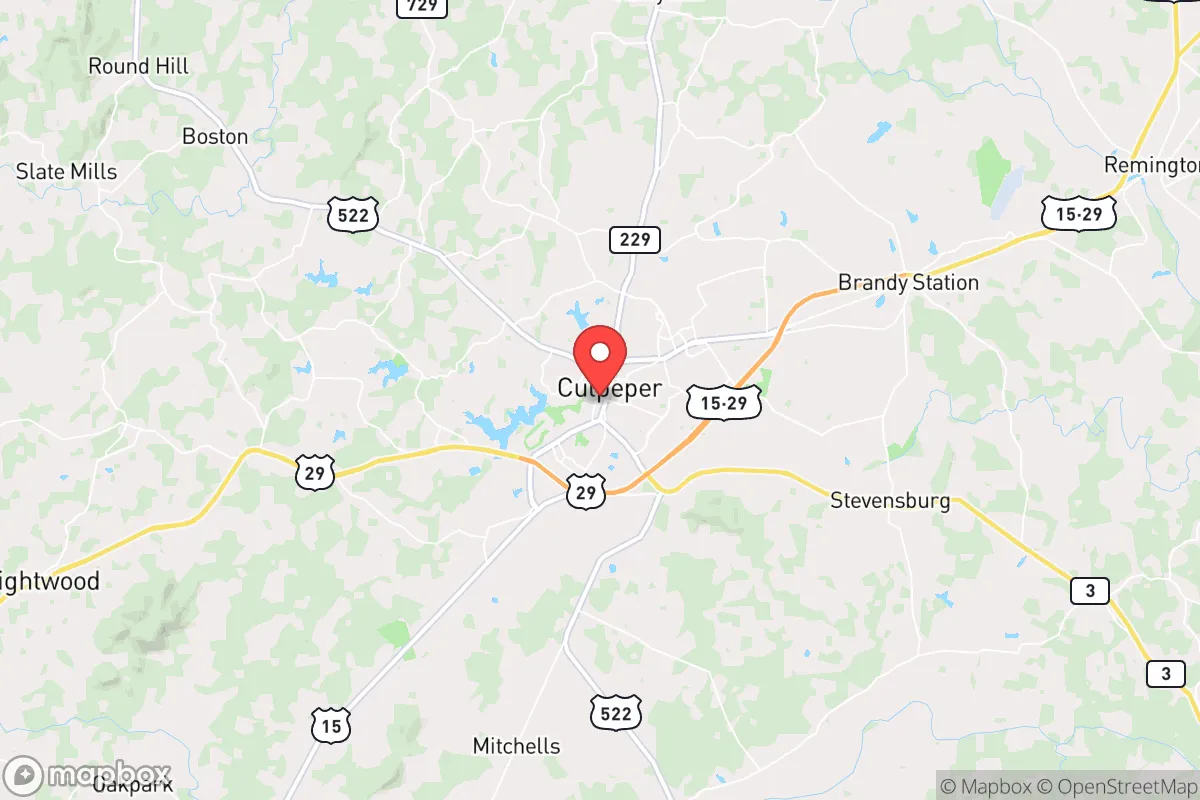
District shown is the primary district for this city’s centroid. Cities may span multiple districts.
Inherited from parent state — no local data available.
Local Political AnalysisPolitical Analysis of Culpeper, VA
Culpeper, Virginia, sits in a bit of a political tug-of-war, and if you’ve been around here long enough, you can feel it shifting under your feet. The Cook PVI clocks the area at D+2, which means it leans just slightly Democratic on paper, but that number doesn’t tell the whole story of a town that’s historically been more conservative and independent-minded. Over the last decade, you’ve seen a steady influx of folks from Northern Virginia—places like Manassas and Fairfax—bringing with them a more progressive voting pattern, and that’s slowly nudging Culpeper away from its traditional roots. For those of us who remember when local elections were a quieter affair, it’s a real change, and not one that sits easy if you value limited government and personal freedoms.
How it compares
Drive 30 minutes north to Warrenton in Fauquier County, and you’ll find a place that’s still solidly red—think R+12 or so—where the local culture pushes back hard on government overreach. Head south to Orange County, and it’s even more conservative, with a strong rural backbone that votes against progressive tax hikes and zoning mandates. Culpeper, though, is the oddball in this stretch of the Piedmont. It’s not as blue as Charlottesville, which is a whole other beast with its university-driven activism, but it’s definitely more purple than its neighbors. The contrast is stark: you can be in a Culpeper diner hearing folks grumble about property taxes and school mandates, then drive ten minutes out and hit farmland where the talk is all about Second Amendment rights and local control. That D+2 rating feels like a warning sign to me—it suggests the progressive wave from NoVA is lapping at our doorstep, and if we’re not careful, we’ll lose the character that made this place worth living in.
What this means for residents
For the average Culpeper resident, this political shift translates into real, everyday friction. You’re seeing it in school board meetings where debates over curriculum and parental rights are getting louder, and in county planning sessions where new housing developments are pushed through without much regard for how they’ll change the community’s feel. The creeping influence of progressive policies—like stricter land-use regulations or talk of “equity” initiatives in local government—raises eyebrows for anyone who thinks the government should stay out of your backyard and your kid’s classroom. Property taxes have ticked up as the county tries to fund services for a growing population, and that hits hard when you’re on a fixed income or running a small business. The concern here is that Culpeper’s independent streak is being worn down by outside pressure, and if you value your rights to live without a bunch of bureaucratic red tape, you’re going to feel the squeeze.
Culturally, Culpeper still holds onto a lot of its old-school charm—there’s a strong sense of community at the Friday night football games and the local farmers market—but the policy direction is what keeps me up at night. You’ve got a town council that’s more divided than it used to be, and every election cycle brings more candidates who talk about “sustainability” and “inclusivity” in ways that sound like code for more government control. The long-term trajectory, if this keeps up, is a Culpeper that looks more like a bedroom community for D.C. than the self-reliant town it’s been for generations. For anyone who moved here to escape the overreach of bigger cities, that’s a bitter pill to swallow. Keep an eye on the local races—that’s where the real fight for Culpeper’s soul is happening right now.

State Political ClimatePolitical Climate in Virginia
State Political AnalysisPolitical Environment in the State
Virginia is a state that has undergone a dramatic political transformation over the past two decades, shifting from a reliably purple swing state to a solidly blue stronghold in statewide and federal elections, driven overwhelmingly by the explosive growth of the Washington, D.C. suburbs. While the state’s overall partisan lean now favors Democrats by roughly 5-10 points in presidential races—Joe Biden won it by 10 points in 2020 and Kamala Harris carried it by about 6 points in 2024—this masks a deep and widening chasm between the urban crescent and the rest of the commonwealth. For a conservative considering relocation, the picture is mixed: you can find strong red enclaves, but the state-level policy environment has grown increasingly hostile to traditional values, with no sign of reversal.
Urban vs. rural divide
The political map of Virginia is essentially a tale of two Virginias. The urban crescent—anchored by Arlington, Alexandria, and Fairfax County in Northern Virginia, plus Richmond and Norfolk/Virginia Beach—generates the vast majority of the state’s Democratic votes. Fairfax County alone, with over 1.1 million residents, delivers a net Democratic margin of roughly 200,000 votes, enough to cancel out the entire rest of the state’s rural and exurban Republican votes. Meanwhile, the rural and exurban areas—places like Lynchburg, Roanoke, Fredericksburg (though it’s trending purple), and the Shenandoah Valley counties like Augusta and Rockingham—vote heavily Republican. The 2024 election saw Lynchburg and its surrounding counties vote +30 to +40 points for Trump, while Virginia Beach, once a military-heavy swing area, has drifted left as its population has diversified. The divide isn’t just ideological; it’s cultural and economic, with the urban core benefiting from federal spending and tech jobs, while rural areas feel left behind by state policy.
Policy environment
Virginia’s state-level policy environment has shifted decisively left since Democrats took full control of the governorship and legislature in 2019. The tax structure is moderate—the state income tax tops out at 5.75%, and sales tax is 5.3% (higher in some localities)—but there’s constant pressure to raise rates. Governor Glenn Youngkin, a Republican elected in 2021, managed to cut taxes modestly and eliminate the grocery tax, but the Democratic-controlled Senate has blocked further cuts. Education policy is a flashpoint: Virginia has adopted the controversial “Model Policies” on transgender students under Youngkin’s predecessor, Ralph Northam, which allowed students to use bathrooms and pronouns matching their gender identity without parental consent. Youngkin rolled those back, but the issue remains litigated. Healthcare is heavily regulated, with Medicaid expansion under the Affordable Care Act in 2018 covering over 400,000 new enrollees. Election laws are a mixed bag: Virginia has no-excuse absentee voting and same-day registration, but also requires photo ID. The state is not a right-to-work state, though it has been historically, and union influence is growing in the public sector.
Trajectory & freedom
On the freedom front, Virginia is trending in a concerning direction for conservatives. The most significant recent contraction of personal liberty came with the 2020 gun control package passed by the Democratic legislature, which included universal background checks, a red-flag law (Extreme Risk Protective Order), a one-handgun-per-month limit, and a ban on assault weapons for those under 21. These laws were a direct response to the 2019 Virginia Beach mass shooting and the subsequent “gun sanctuary” movement in rural counties. On parental rights, the 2020 “Model Policies” on transgender students were a major overreach, effectively sidelining parents in decisions about their children’s gender identity at school. Youngkin’s 2022 executive order restoring parental notification was a step back toward sanity, but the issue remains in court. Medical autonomy took a hit with the state’s strict COVID-19 vaccine mandates for state employees and healthcare workers, though those have since been lifted. Property rights are relatively strong, but zoning battles in Northern Virginia and Richmond are increasingly contentious as localities push for higher density and rent control. The state’s “Clean Economy Act” of 2020 mandates a 100% carbon-free electricity grid by 2050, which has driven up energy costs and regulatory burdens on businesses.
Civil unrest & political movements
Virginia has been a hotbed of political activism on both sides. The 2017 Unite the Right rally in Charlottesville remains a scar on the state’s psyche, leading to a heavy-handed crackdown on free assembly and the removal of Confederate statues statewide. The 2020 George Floyd protests in Richmond saw the toppling of the Robert E. Lee statue and weeks of unrest, with the city’s Democratic leadership largely sympathetic to the protesters. On the right, the “gun sanctuary” movement in 2019 saw over 100 counties pass resolutions declaring themselves Second Amendment sanctuaries, a direct challenge to state authority. Immigration politics are less volatile than in border states, but Northern Virginia’s “sanctuary city” policies in Arlington and Alexandria have drawn criticism from conservatives, as local law enforcement limits cooperation with ICE. Election integrity controversies flared in 2020 and 2024, with Republican activists questioning the state’s widespread use of drop boxes and no-excuse absentee voting, though no major fraud was proven. The 2021 gubernatorial race between Youngkin and Terry McAuliffe was a flashpoint, with Youngkin winning on a platform of parental rights and education reform, but the Democratic legislature has blocked most of his agenda.
Projection
Over the next 5-10 years, Virginia is likely to continue its leftward drift, driven by relentless in-migration to Northern Virginia from blue states like New York and California. The 2020 census showed that Northern Virginia’s population grew by 10% while rural areas stagnated or declined. This demographic shift means that even if Youngkin wins a second term in 2025, the state legislature is unlikely to flip back to Republican control. The 2024 election results confirmed this: Democrats held the state Senate and flipped the House of Delegates back to a narrow majority. Expect more gun control, higher taxes, and expanded government healthcare. The one wild card is the 2025 gubernatorial election: if a Republican wins, they might slow the leftward march, but they won’t reverse it. For a conservative moving in now, the state-level trajectory is clear: Virginia will become more like Maryland or New Jersey over the next decade, with higher costs, more regulation, and less personal freedom.
For a new resident, the bottom line is that Virginia offers a high quality of life in its red enclaves—places like Lynchburg, Roanoke, or the Shenandoah Valley—where you can find good schools, low crime, and a like-minded community. But you’ll be fighting a losing battle at the state level. If you value low taxes, gun rights, and parental control, you’ll need to be strategic about where you live and engaged in local politics. The state is not lost, but it’s on a trajectory that demands vigilance.
* Values derived from national, state, county, city and local statistics and may differ in a specific area. Last updated: 2026-05-01T16:12:37.000Z
Narrative content on this page is AI-generated and may contain mistakes. Verify any details that matter before acting on them.
ReloMaps may earn a commission from affiliate links at no extra cost to you.

