
Photo: Wikipedia
Personal Sovereignty in Danielson, CT
Viable for self-reliance. Generally workable, though some barriers may limit total independence.
What does Personal Sovereignty tell us?
Personal Sovereignty measures your capacity for self-reliance and independence with minimal government friction. Higher scores mean fewer barriers between you and the way you want to live... but it assumes you have the space you need and good neighbors.
What does this tell us?
Personal Sovereignty measures your capacity for self-reliance and independence with minimal government friction. Higher scores mean fewer barriers between you and the way you want to live... but it assumes you have the space you need and good neighbors.
State Policy
Energy independence: Importer (5% of energy produced in-state)
Personal Liberty
Homesteading

Personal Liberty Analysis
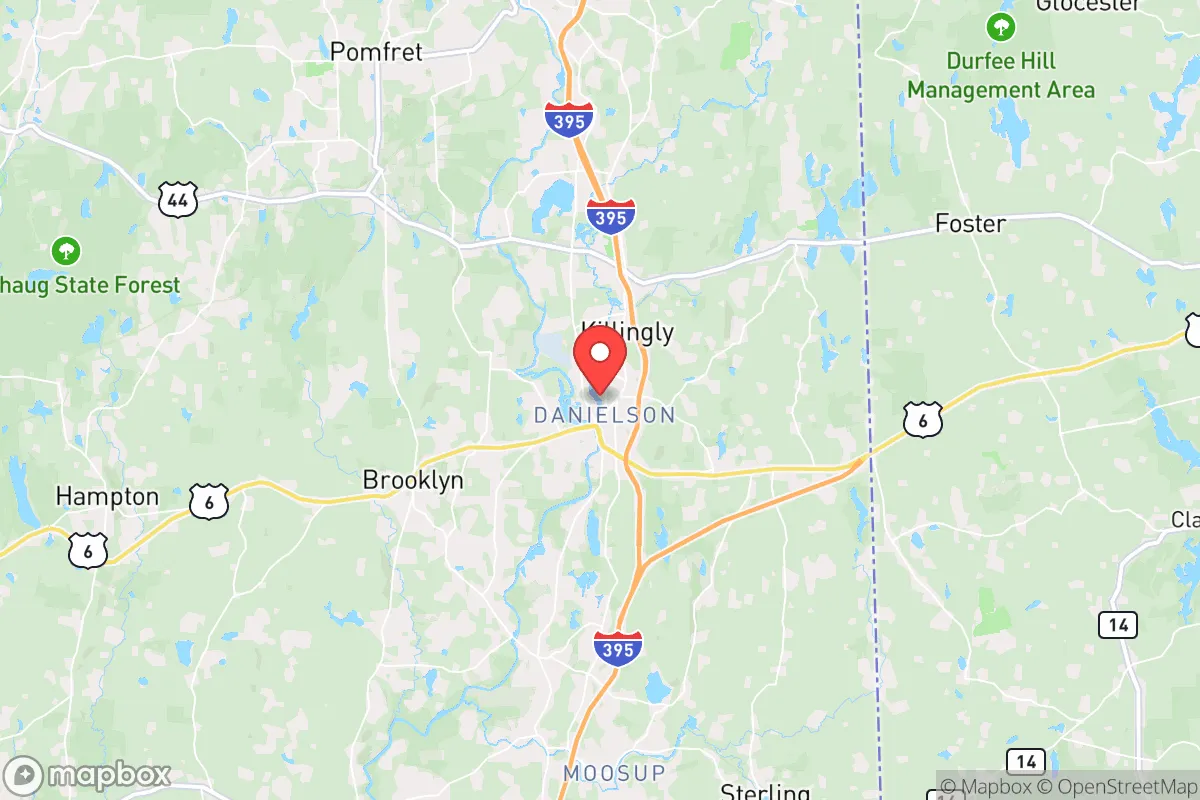
Danielson, Connecticut, offers a mixed bag for those prioritizing personal sovereignty, where the quiet, rural character of the town provides a tangible sense of autonomy, but the heavy hand of state-level governance imposes significant constraints. For the survivalist or prepper, the immediate environment—with its woods, farmland, and relative isolation from major urban centers—feels promising, yet the legal and regulatory framework from Hartford is a constant, unwelcome presence. The key here is understanding that while your day-to-day life in Danielson can be self-directed, the state’s appetite for control over your property, your healthcare choices, and your self-defense rights is a persistent challenge that requires strategic navigation.
Tax burden and regulatory posture: the cost of living free in a blue state
Connecticut’s tax burden is among the highest in the nation, and Danielson residents feel this acutely. The state’s progressive income tax, with rates climbing to nearly 7%, directly reduces the capital you can allocate to self-reliance projects like land improvements, food storage, or alternative energy systems. Property taxes in the Killingly school district, which covers Danielson, are also above the national average, meaning you pay a premium just to hold your land. This is a direct tax on your sovereignty—every dollar sent to Hartford is a dollar you cannot use to harden your property or build your own infrastructure. The regulatory posture is equally aggressive: Connecticut has some of the most stringent building codes in New England, and local zoning in Danielson, while more permissive than in dense suburbs, still requires permits for most structural changes, including sheds, fences, and even certain types of landscaping that could be part of a defensive perimeter or food production system. The state’s environmental regulations also limit what you can do with your land, particularly regarding water rights and wetland buffers, which can complicate off-grid water collection or septic system upgrades. For the prepper, this means every improvement must be planned with an eye toward bureaucratic approval, a constant reminder that the state considers your property a shared resource, not your sovereign domain.
Self-defense and gun law specifics: navigating a restrictive regime
Connecticut’s gun laws are among the most restrictive in the country, and Danielson is not exempt from this reality. The state requires a permit to purchase any firearm, a pistol permit to carry concealed, and a background check for every transfer, including private sales. The "assault weapon" ban, which covers many common semi-automatic rifles, and the 10-round magazine limit are direct infringements on your ability to equip yourself for worst-case scenarios. For the survivalist, this is a critical vulnerability: you cannot legally own the standard-capacity magazines or the types of rifles that are common in more free states. The state also maintains a registry of pistol permit holders, and while Danielson’s local police are generally professional, the legal climate means that any defensive use of a firearm is subject to intense scrutiny. Stand-your-ground laws do not exist in Connecticut; you have a duty to retreat if possible before using deadly force. This legal framework forces a defensive mindset that relies more on avoidance and de-escalation than on the immediate, decisive action that a prepper might prefer. The practical takeaway: if you move to Danielson, you must be prepared to comply with a complex permitting system, accept magazine and firearm type restrictions, and understand that your right to self-defense is heavily circumscribed by state law.
Self-reliance and homesteading viability: lot sizes, zoning, and off-grid feasibility
Danielson’s zoning and lot sizes offer a mixed picture for the homesteader. The town itself is a borough with smaller lots, typically a quarter-acre or less, which limits large-scale food production and livestock. However, the surrounding Killingly area has more rural zones where lots of one to five acres are common, and some parcels exceed ten acres. These larger lots are where the real potential lies. Zoning in these areas generally permits backyard chickens, small-scale vegetable gardens, and even a few goats or sheep, though pigs and cattle may require special permits. The biggest hurdle is off-grid feasibility. Connecticut law requires all habitable dwellings to be connected to the electrical grid, and while solar panels are allowed, you cannot legally disconnect from the utility. Water is another issue: wells are permitted on larger lots, but the state’s Department of Public Health mandates strict testing and permitting, and rainwater collection for potable use is heavily regulated. Septic systems are similarly controlled, with mandatory inspections and pumping schedules. For the prepper seeking true independence, these regulations mean that "off-grid" in Danielson is more of a supplement than a complete break from the system. You can reduce your reliance on the grid, but you cannot sever it entirely. The best strategy is to buy a larger rural lot, install solar with battery backup, drill a well, and build a robust food garden, all while maintaining the legal connections to avoid state intervention.
Personal liberties: parental rights, medical autonomy, speech, and property
Connecticut’s record on personal liberties is a significant concern for those who value parental rights and medical autonomy. The state has mandatory vaccination laws for school attendance, with very limited exemptions, and during the pandemic, it imposed some of the longest-lasting emergency orders in the nation, including mask mandates and business closures. This history suggests that in a future crisis, state overreach into your family’s medical decisions is likely. Parental rights are also under pressure: the state has laws that allow minors to consent to certain medical treatments without parental knowledge, and the educational system has been moving toward more centralized control over curriculum, including health and sex education. On property rights, Connecticut’s eminent domain laws are broad, and the state has a history of using them for economic development projects. Your property is not as secure as it would be in a state with stronger protections. Free speech is protected by the First Amendment, but local ordinances in Danielson can restrict certain types of signage or public gatherings, and the general political climate in the state is hostile to conservative viewpoints, which can create a chilling effect on open expression. For the individualist, this environment requires a defensive posture: you must be prepared to advocate for your rights, possibly through legal channels, and to keep a low profile on controversial issues to avoid unwanted attention from local authorities or neighbors.
Overall, Danielson offers a lower level of personal sovereignty compared to states in the South or the Mountain West, but it is not the worst option in New England. The town’s rural character and the availability of larger lots provide a foundation for self-reliance, but the state’s high taxes, restrictive gun laws, and aggressive regulatory posture are constant drains on your autonomy. For the strategic relocator, Danielson is a compromise: you get a quiet, relatively affordable base with decent land for homesteading, but you must accept that the state will always have a say in your life. If your priority is maximum sovereignty, look elsewhere. If you are willing to work within the system and accept the trade-offs, Danielson can be a functional, if imperfect, place to build a resilient lifestyle.

* Values derived from national, state, county, city and local statistics and may differ in a specific area. Last updated: 2026-04-29T19:22:56.000Z
Narrative content on this page is AI-generated and may contain mistakes. Verify any details that matter before acting on them.
ReloMaps may earn a commission from affiliate links at no extra cost to you.

