Photo: Wikipedia
Political ClimatePolitical Climate in Danielson, CT
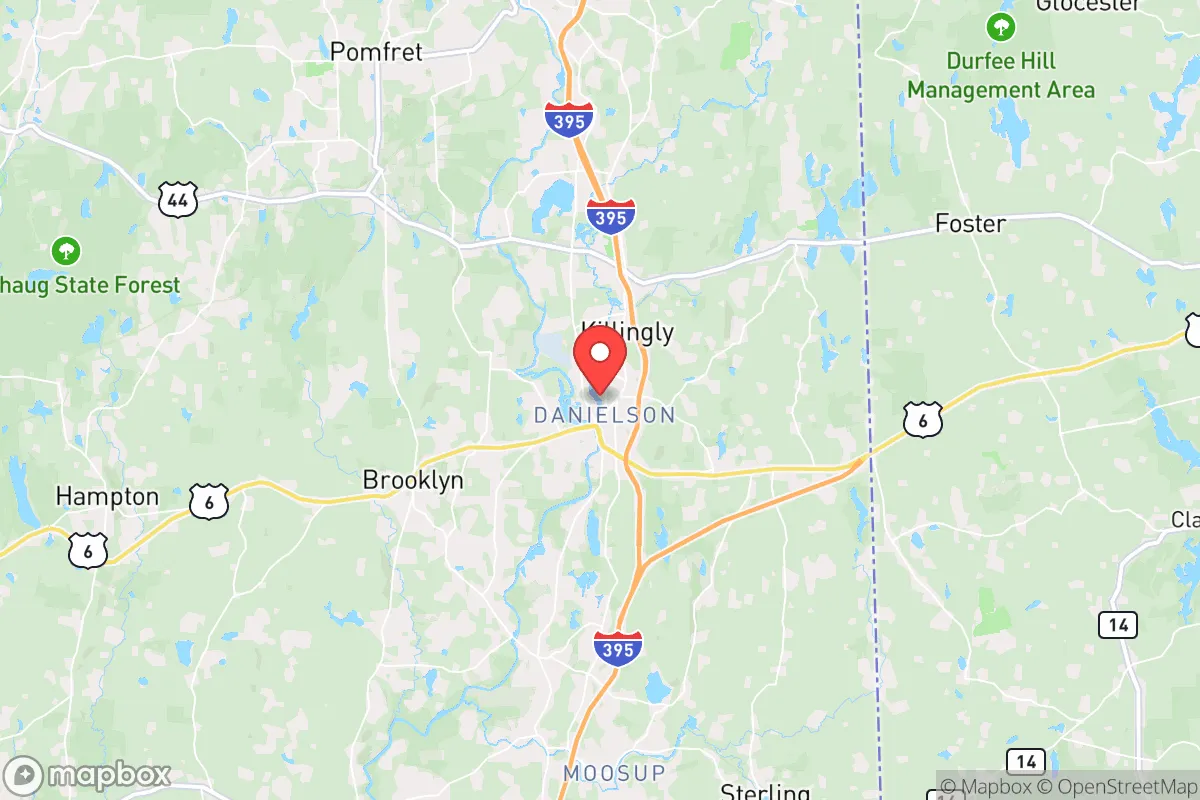
District shown is the primary district for this city’s centroid. Cities may span multiple districts.
Local Political AnalysisPolitical Analysis of Danielson, CT
Danielson’s political climate has shifted noticeably over the past decade, and if you’ve lived here as long as I have, you’ve felt it. The Cook PVI of D+4 tells part of the story—this area leans Democratic, but it wasn’t always this way. Back in the 90s and early 2000s, Danielson and the surrounding Killingly area were more of a purple patch, with a strong independent streak and a lot of folks who voted for the person, not the party. Now, you see more progressive energy in town government and local boards, especially around zoning and school policies. The trajectory is toward a deeper blue, and that’s got a lot of us watching closely, especially when it comes to how much say we still have in our own backyards.
How it compares
Drive ten minutes west to Brooklyn or east to Putnam, and you’ll notice a different vibe. Those towns still lean more conservative, with a heavier presence of hunting clubs, gun shops, and town meetings where folks aren’t shy about pushing back on Hartford mandates. Danielson, being the commercial hub of the Quiet Corner, attracts more state-funded projects and outside investment, which tends to bring along progressive policy strings. Compared to nearby Plainfield—which votes red more often than not—Danielson’s local elections often hinge on issues like affordable housing mandates and environmental regulations that feel like they’re handed down from above. The contrast is stark: you can be in a town that respects your right to keep and bear arms without a permit hassle, then cross into Danielson and find a town council that’s more willing to accept state-driven social agendas.
What this means for residents
For the average family here, the biggest day-to-day impact is on your wallet and your freedoms. Property taxes have crept up as the town takes on more state-mandated programs, and there’s a growing sense that local control is slipping away. School board decisions, for instance, have become more about equity metrics and less about what parents actually want for their kids. If you value the right to opt out of certain curricula or to keep your business from being forced into costly regulations, Danielson’s shift is something to keep an eye on. The long-term concern is that as the political center moves left, the cost of living—and the cost of dissent—goes up. I’ve seen neighbors sell up and move to Thompson or Woodstock just to get a little breathing room from the bureaucracy.
Culturally, Danielson still has its old New England charm—the firemen’s carnival, the diners where everyone knows your name—but the policy undercurrent is changing. There’s been a push for more “inclusive” signage and public art that leans into identity politics, and the local library has hosted drag story hours that split the community. It’s not the end of the world, but it’s a sign of where things are heading. If you’re a conservative who values personal responsibility and limited government, you’ll find plenty of like-minded folks in the surrounding towns, but you’ll also need to stay engaged locally to keep Danielson from drifting further from the common-sense roots that made this area a great place to raise a family. Keep your ear to the ground at town hall meetings—that’s where the real fights are happening.

State Political ClimatePolitical Climate in Connecticut
State Political AnalysisPolitical Environment in the State
Connecticut has shifted from a classic swing state to a reliably Democratic stronghold over the past two decades, with Democrats now holding every statewide office, both U.S. Senate seats, and a supermajority in the state House. The state hasn’t voted for a Republican presidential candidate since George W. Bush in 2004, and in 2024, Kamala Harris carried it by roughly 15 points. The shift has been driven by the consolidation of wealthy, educated suburban voters in Fairfield County and the growing influence of Hartford and New Haven’s urban cores, while the rural eastern and northwestern corners have become increasingly Republican but lack the population to flip the state.
Urban vs. rural divide
The political map of Connecticut is a tale of three regions. The southwestern corner—Fairfield County, home to towns like Greenwich, Stamford, and Westport—has become the engine of Democratic dominance. Once a bastion of moderate Republicanism (think Lowell Weicker), these affluent suburbs now vote 60-70% Democratic, driven by high education levels, professional-class voters, and proximity to New York City’s progressive culture. The Hartford and New Haven metro areas add another 300,000+ Democratic votes, with the state capital’s government workforce and Yale’s academic left anchoring the party. Meanwhile, the Litchfield Hills (northwest) and the Quiet Corner (northeast, around Windham and Killingly) are reliably red, but their small populations can’t offset the urban-suburban coalition. The only real swing territory left is the Naugatuck Valley—towns like Waterbury and Naugatuck—where working-class voters have drifted right on culture but still vote for Democrats on economic issues. In 2020, Trump actually flipped Windham County (northeast) by 4 points, but that’s a drop in the bucket statewide.
Policy environment
Connecticut’s policy environment is a textbook case of progressive governance with a heavy hand. The state has the highest combined state and local tax burden in the nation—roughly 12.6% of income—thanks to a progressive income tax (top rate 6.99%), a 7.35% corporate tax, and some of the highest property taxes in the country (median effective rate around 2.1%). The regulatory climate is dense: the state has its own paid family leave program (CT Paid Leave), a $15.69 minimum wage (indexed to inflation), and strict environmental regulations that often delay construction. On education, Connecticut spends more per pupil than almost any other state ($22,000+), but outcomes are deeply unequal—wealthy suburbs like Darien and Weston have top-tier schools, while Bridgeport and Hartford struggle with chronic underperformance. Healthcare is heavily regulated, with the state running its own exchange (Access Health CT) and expanding Medicaid aggressively. Election laws are among the most liberal: no-excuse absentee voting, early voting (14 days), and automatic voter registration. The state also passed a “sanctuary state” law in 2013 (TRUST Act), limiting local police cooperation with ICE, and expanded it in 2019 to cover more situations.
Trajectory & freedom
On the freedom index, Connecticut is moving decisively in the wrong direction. The most glaring example is gun rights: after the Sandy Hook tragedy in 2012, the state passed some of the strictest gun laws in the country, including an assault weapons ban, universal background checks, and a 10-round magazine limit. In 2023, the legislature passed HB 6667, which expanded the ban to more firearms, required a state-issued permit to purchase any long gun, and increased liability for gun manufacturers. On parental rights, the state passed SB 1 in 2021, which mandates that public schools adopt “affirming” policies for LGBTQ+ students, effectively overriding parental notification in many cases. In 2023, the legislature also passed a law banning conversion therapy for minors, which conservatives argue restricts private medical choices. On medical autonomy, Connecticut has expanded abortion access (codified in 2022 via HB 5414), allowing advanced practice nurses to perform abortions and requiring insurance coverage. Property rights are constrained by strict zoning laws in many suburbs, which limit housing development and drive up costs. The state’s income tax was made permanent in 1991 after being sold as temporary, and there’s no appetite for repeal. The only bright spot for liberty-minded residents is the 2023 repeal of the car tax phase-out—actually, the state did phase out the car tax on vehicles under $28,000 starting in 2024, a small win for property owners.
Civil unrest & political movements
Connecticut’s political activism is generally low-key compared to coastal peers, but flashpoints exist. The Black Lives Matter protests in 2020 were large in Hartford, New Haven, and Stamford, but mostly peaceful. The state’s sanctuary policies have created tension: in 2019, the town of Enfield passed a resolution opposing the TRUST Act, and several smaller towns have considered “Second Amendment sanctuary” resolutions, though none have legal force. The 2020 election integrity debate was muted here—the state’s universal mail-in ballot expansion (due to COVID) was challenged in court but upheld, and there’s no evidence of widespread fraud. The most visible political movement on the right is the “CT 2A” (Second Amendment) groups, which organize at the state capitol during gun bill hearings, often drawing hundreds of activists. On the left, the Working Families Party has real influence, often pushing the Democratic Party further left on taxes and housing. Immigration politics are a live wire: in 2023, the town of East Haven saw protests after a local ICE raid, and the state’s sanctuary law remains a point of contention in rural towns. A new resident would notice the “Keep CT Safe” signs in conservative towns and the “CT for All” bumper stickers in liberal ones—a quiet but real cultural divide.
Projection
Over the next 5-10 years, Connecticut will likely become more Democratic and more progressive, not less. The demographic trends are clear: the state is losing population overall (down about 1% since 2020), but the losses are concentrated in rural and working-class towns, while Fairfield County and the urban cores are stable or growing slightly. The in-migration from New York City (accelerated by remote work) is bringing more high-income, left-leaning professionals to places like Stamford and New Haven. The state’s aging population (median age 41.5) is a wildcard—older voters are more moderate, but younger voters in the cities are solidly progressive. The 2024 election results showed no sign of a rightward shift; even in the Naugatuck Valley, Trump’s gains were modest. Expect more gun control, more housing regulation (the state is pushing “fair share” zoning mandates), and higher taxes to fund pension obligations (the state has $40 billion in unfunded pension liabilities). A conservative moving in now should expect to live in a state where their vote is effectively irrelevant at the statewide level, but local control in towns like Litchfield or Woodstock can still offer a buffer. The state’s fiscal trajectory is unsustainable—pension costs are eating up 20% of the budget—but no major party is proposing real reform.
Bottom line for a new resident: If you’re a conservative looking for a state that respects your values on taxes, guns, and parental rights, Connecticut is a tough sell. You’ll pay high taxes, face heavy regulation, and live in a state where your political voice is marginalized. The upside is excellent schools in the right towns, beautiful natural scenery, and proximity to New York and Boston. But if you’re moving here, do it for the job or the family ties, not for the political climate—and plan to focus your energy on local politics, where you can still make a difference in towns like Middletown or Southbury.
* Values derived from national, state, county, city and local statistics and may differ in a specific area. Last updated: 2026-04-29T19:22:56.000Z
Narrative content on this page is AI-generated and may contain mistakes. Verify any details that matter before acting on them.
ReloMaps may earn a commission from affiliate links at no extra cost to you.

