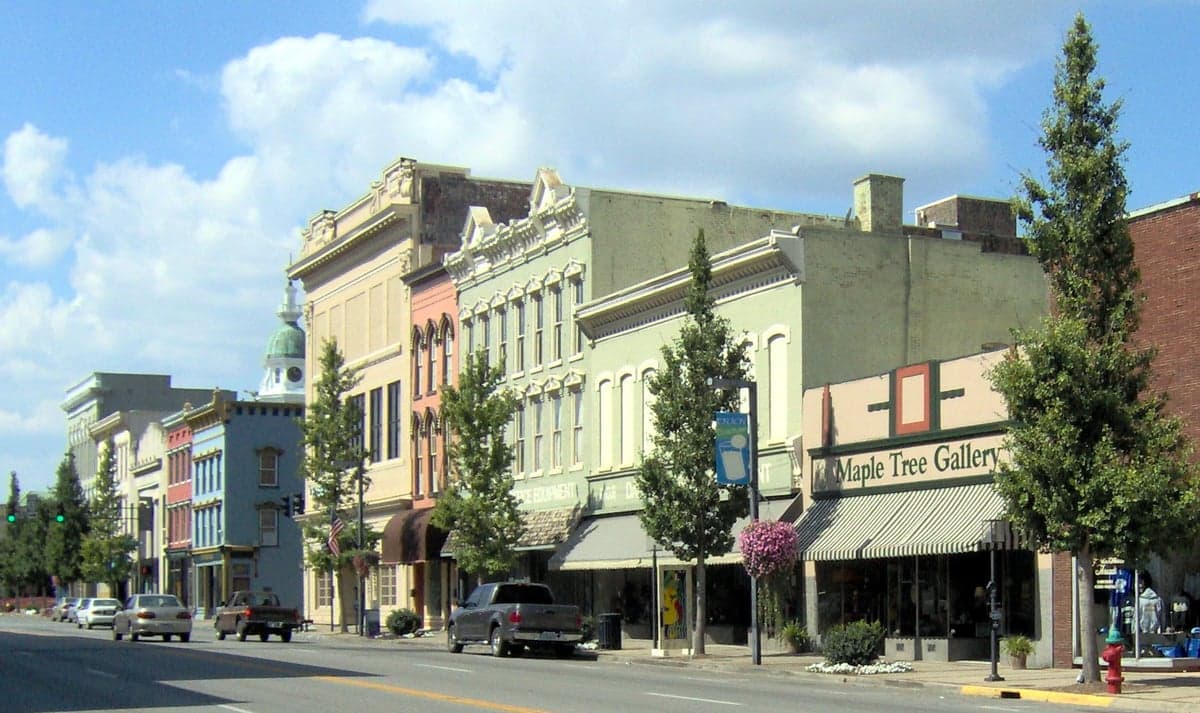

Photo: Wikipedia
Political ClimatePolitical Climate in Danville, KY
District shown is the primary district for this city’s centroid. Cities may span multiple districts.
Local Political AnalysisPolitical Analysis of Danville, KY
Danville, Kentucky, has long been a reliably conservative community, and the numbers back that up with a Cook PVI of R+23. That means the area leans about 23 points more Republican than the national average, which is a pretty solid red stamp. For decades, this place has been a stronghold for traditional values and limited government, and most folks around here still vote that way. But like a lot of small towns, there's been a slow, quiet shift in the air over the last ten years or so, and it's worth keeping an eye on.
How it compares
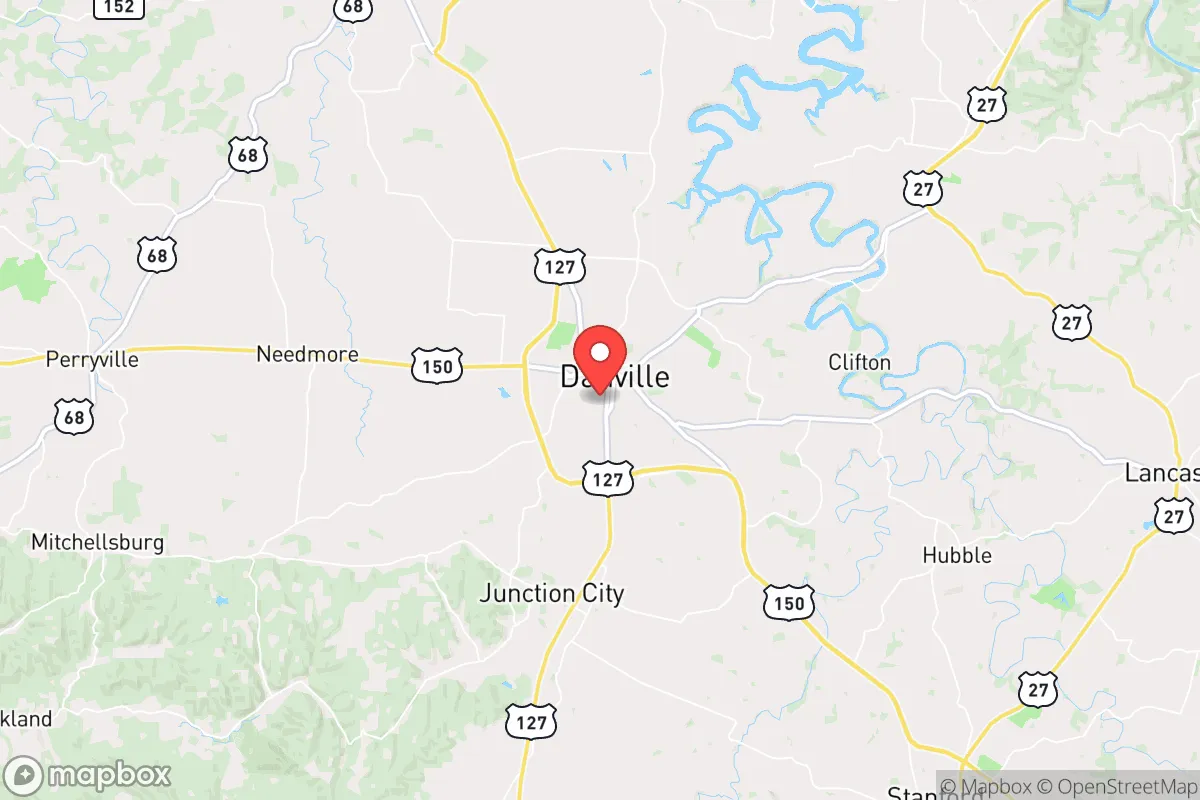
Danville sits in Boyle County, which is a bit of an island compared to the surrounding areas. Head north to Lexington, and you're in a much bluer bubble—a college town with all the progressive energy that brings. Drive west to Bardstown or east to Richmond, and you'll find communities that are more consistently conservative, but with their own local quirks. What makes Danville stand out is its mix: you've got Centre College right in town, which brings in a more liberal-leaning faculty and student body, but the surrounding county is deeply rural and red. That tension shows up in local elections, where you'll sometimes see a moderate Republican win by a hair, while the state-level races go deep red. It's not a blue wave by any stretch, but it's a reminder that even in a R+23 district, the ground can shift under your feet if you're not paying attention.
What this means for residents
For the average family or retiree here, the political climate mostly means you can expect low taxes, a business-friendly environment, and a general hands-off approach from local government. The county commission and city council tend to lean conservative, so you're not seeing a lot of new regulations or overreach into personal freedoms—things like property rights, gun ownership, and school choice are generally respected. That said, there's been a creeping concern among longtime residents about the influence of outside money and progressive activism, especially around issues like zoning changes or diversity initiatives in the schools. It's not a crisis yet, but you can feel the pressure. If you're someone who values local control and minimal government interference, Danville still feels like a safe bet, but you'll want to stay engaged in local meetings and elections to keep it that way.
One thing that sets Danville apart culturally is its strong sense of community and a deep-rooted respect for tradition. You'll still see folks waving the flag at the Boyle County Fair, and the local churches are the backbone of social life. But there's also a growing arts scene and a handful of newer residents from out of state who bring different ideas. The key distinction here is that Danville hasn't gone the way of some other small towns that have been completely transformed by transplants. The conservative majority still holds the line on most policy decisions, and the local government hasn't pushed any major progressive initiatives like sanctuary city policies or heavy-handed mask mandates. If you're looking for a place where you can live your life without the government breathing down your neck, Danville is still a solid choice—just keep your ear to the ground, because the political winds are always shifting, even in a R+23 district.

State Political ClimatePolitical Climate in Kentucky
State Political AnalysisPolitical Environment in the State
Kentucky has long been a reliably red state in federal elections, voting for the Republican presidential candidate by double digits in every cycle since 2000, with Donald Trump carrying the state by 26 points in 2020 and 30 points in 2024. However, the state’s political climate is far from monolithic — it’s a patchwork of deep-red rural counties, increasingly conservative exurbs, and a few stubbornly blue urban islands. Over the past 20 years, the dominant trend has been a steady rightward shift, driven by the collapse of the old Blue Dog Democrat coalition in rural areas and the migration of culturally conservative voters into the Republican fold, while Louisville and Lexington remain progressive strongholds.
Urban vs. rural divide
The political map of Kentucky is a textbook study in the urban-rural split. The two major metros — Louisville (Jefferson County) and Lexington (Fayette County) — are the only reliably Democratic strongholds, delivering 60% or more of their votes to Democratic presidential candidates. Louisville, home to the University of Louisville and a sizable African American population, has a more diverse and union-heavy base, while Lexington’s blue lean is driven by the University of Kentucky and a growing professional class. Outside these two islands, the rest of the state is overwhelmingly Republican. The rural counties of eastern Kentucky — places like Pikeville, Hazard, and Prestonsburg — were once solidly Democratic but have flipped hard red over the past two decades, driven by cultural issues and opposition to national Democratic policies on coal and energy. The northern suburbs of Cincinnati, particularly Boone County and Kenton County, are now reliably Republican, while the western part of the state, including Paducah and Owensboro, leans conservative but retains a few local Democratic officeholders. The most dramatic shift has been in the exurbs of Louisville, like Shelbyville and Mount Washington, which have become deeply red as families flee the city for lower taxes and more conservative school boards.
Policy environment
Kentucky’s policy environment is broadly conservative, with a few notable exceptions that frustrate freedom-minded residents. The state has a flat income tax rate of 4% (down from 6% in 2018, with a path to elimination by 2029), no state-level property tax on vehicles, and relatively low property taxes overall. The regulatory climate is business-friendly, with right-to-work laws and a tort reform system that limits lawsuit abuse. On education, the state has a robust school choice movement — the 2022 passage of HB 563 created education opportunity accounts for special-needs students, and a 2024 expansion allowed tax-credit scholarships for low-income families. However, the state’s public school system remains heavily unionized and resistant to further choice expansion. On healthcare, Kentucky expanded Medicaid under the Affordable Care Act in 2014, a move that many conservatives view as a costly expansion of government dependency, though the state has since imposed work requirements (currently tied up in court). Election laws are moderately secure: voter ID is required, early voting is limited to three days, and no-excuse absentee voting was eliminated after 2020. The state does not have a “sanctuary city” law, and local governments are prohibited from adopting sanctuary policies. On the Second Amendment, Kentucky is a constitutional carry state (since 2019) and has no red-flag law, making it one of the freest states in the nation for gun owners.
Trajectory & freedom
Kentucky has been moving decisively in the direction of greater personal freedom over the past decade, though not without some concerning backsliding. The most significant expansion of liberty came in 2019 with the passage of constitutional carry (SB 150), which eliminated the requirement for a permit to carry a concealed firearm. In 2023, the legislature passed SB 6, which banned gender transition procedures for minors and restricted transgender athletes in school sports — a move that parental rights advocates celebrated as protecting children from irreversible medical decisions. On the economic freedom front, the 2018 tax reform (HB 366) began the phase-down of the income tax, and the 2022 passage of HB 8 further accelerated the cuts. However, there are worrying signs: the state’s pandemic-era emergency powers were used by Governor Andy Beshear (a Democrat) to shut down churches and businesses for extended periods, leading to a 2021 legislative backlash that limited a governor’s ability to issue emergency orders without legislative approval (SB 1). The state also saw a push for school mask mandates in 2021, which were fought by local school boards and ultimately struck down by the courts. On property rights, Kentucky has no statewide zoning preemption, meaning local governments can impose restrictive land-use rules — a concern for those looking to build or develop in more liberal-leaning cities like Louisville.
Civil unrest & political movements
Kentucky has experienced its share of political flashpoints, though they are less frequent than in coastal states. The most visible recent unrest came in 2020 following the death of Breonna Taylor in Louisville, which sparked months of protests, some of which turned violent, including looting and arson. The city’s Democratic leadership was criticized for a slow response and for allowing the protests to disrupt daily life. In response, the state legislature passed HB 1 in 2021, which limited local governments’ ability to defund police and created new penalties for rioting. On the right, the Kentucky Freedom Coalition and local Moms for Liberty chapters have been active in school board races, particularly in suburban counties like Oldham County and Boone County, where they have successfully pushed for parental notification policies and book review committees. Immigration politics are relatively quiet — Kentucky has a small foreign-born population (about 4%), and there are no sanctuary cities. However, the issue of election integrity remains a live concern: the 2020 election saw a temporary shift to widespread mail-in voting due to COVID, which was later rolled back, but some conservatives remain skeptical of the state’s electronic voting machines and lack of paper ballot audits. There has been no serious secession or nullification movement, though some rural counties have passed symbolic “Second Amendment sanctuary” resolutions.
Projection
Over the next 5-10 years, Kentucky is likely to continue its rightward drift, but with some important caveats. The in-migration pattern is a net positive for conservatives: people moving into the state tend to come from higher-tax, higher-regulation states like Illinois, California, and New York, and they are often seeking lower taxes and more personal freedom. The fastest-growing counties are the exurbs of Louisville and Cincinnati — places like Spencer County and Grant County — which are deeply red and likely to stay that way. However, the urban cores of Louisville and Lexington are becoming more progressive, driven by younger, college-educated transplants and a growing Hispanic population. This could create a more polarized state, with the legislature becoming even more conservative while the governor’s office remains competitive (Beshear won re-election in 2023 despite the state’s red tilt). The biggest wildcard is the future of the state’s income tax: if the phase-down continues as planned, Kentucky could become a no-income-tax state by the early 2030s, which would supercharge in-migration and economic growth. On cultural issues, expect further battles over school choice expansion, parental rights in education, and medical freedom — particularly around vaccine mandates and gender treatments. The state’s constitutional carry law is unlikely to be rolled back, but there may be pressure from federal courts or future Democratic administrations.
For a new resident, the bottom line is this: Kentucky offers a high degree of personal freedom, low taxes, and a political climate that is broadly respectful of individual rights, especially on guns, parental authority, and economic liberty. The main risks are the lingering influence of the old Democratic machine in Louisville and Lexington, which can create local headaches on zoning, school policy, and policing, and the possibility of a future Democratic governor using emergency powers to impose restrictions. If you’re looking to escape the overreach of blue states, Kentucky is a solid bet — just be strategic about where you land. Stick to the exurbs and rural counties, and you’ll find a community that values freedom and common sense. Avoid the urban cores unless you’re prepared for the progressive politics that come with them.
* Values derived from national, state, county, city and local statistics and may differ in a specific area. Last updated: 2026-04-21T09:44:24.000Z
Narrative content on this page is AI-generated and may contain mistakes. Verify any details that matter before acting on them.
ReloMaps may earn a commission from affiliate links at no extra cost to you.

