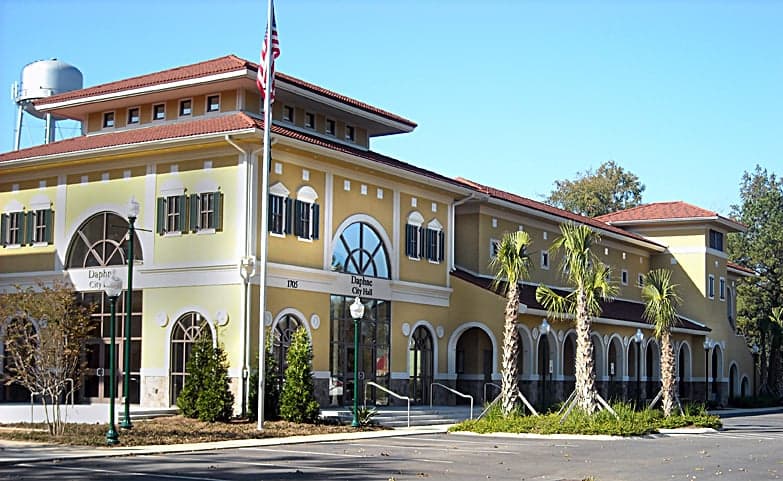
Photo: Wikipedia
Strategic Assessment of Daphne, AL
Meaningful friction. Expect exposure to either population pressure, blast zones, or natural disaster risk. Consider buying a retreat property.
What does the Strategic Assessment tell us?
Our Strategic Assessment grades tactical survivability of an area. Major population centers, military targets, fallout zones, natural disasters, and border exposure all drive risk — lower exposure means a more defensible position in a crisis.
This is heavily inspired by Joel Skousen's Strategic Relocation book. Highly recommended you checkout the book ($)What does this tell us?
Our Strategic Assessment grades tactical survivability of an area. Major population centers, military targets, fallout zones, natural disasters, and border exposure all drive risk — lower exposure means a more defensible position in a crisis.
This is heavily inspired by Joel Skousen's Strategic Relocation book. Highly recommended you checkout the book ($)Strategic Pillars

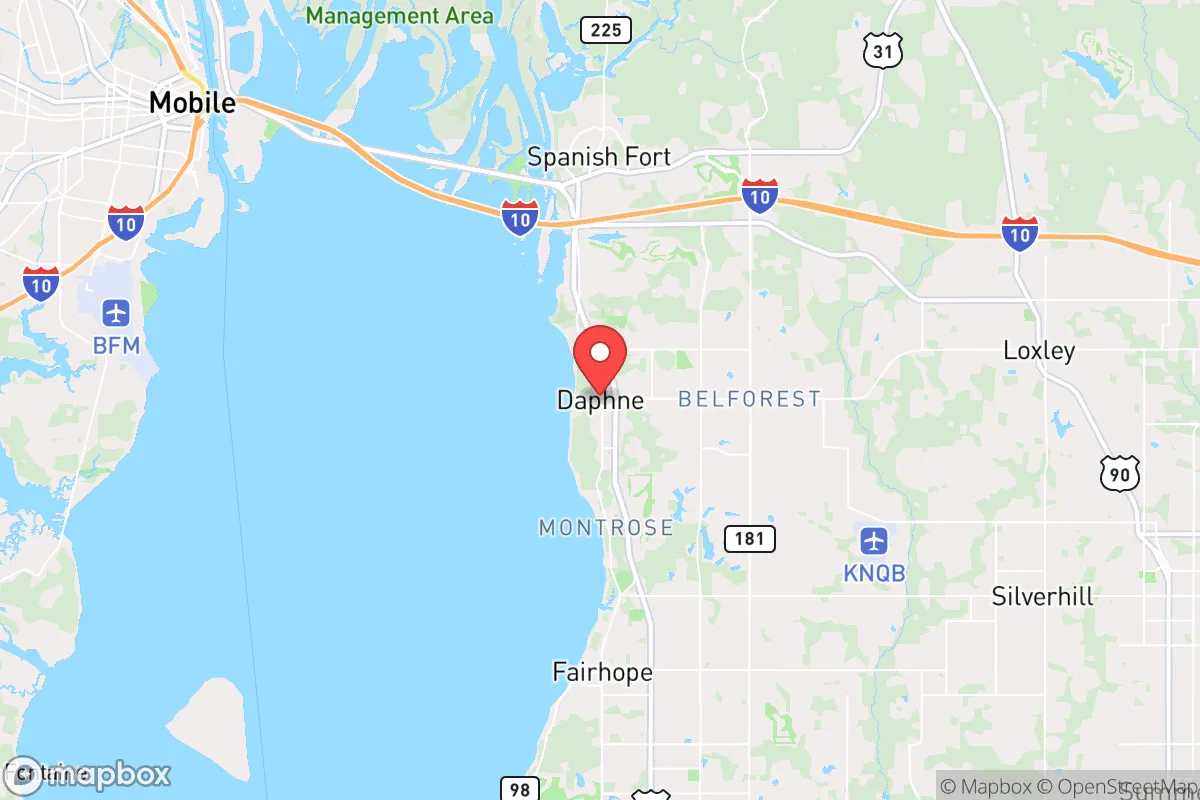
Key Distances
Regional Safe Places
Below is our recommended "safe zones" in Alabama and the surrounding area based on our strategic heuristics. For most people, it's unrealistic to live in a “safe zone” full-time due to work, family or other personal reasons. They tend to be more rural. However, many of these areas are perfect for second homes and retreat properties that double as a vacation home or even a short-term rental.
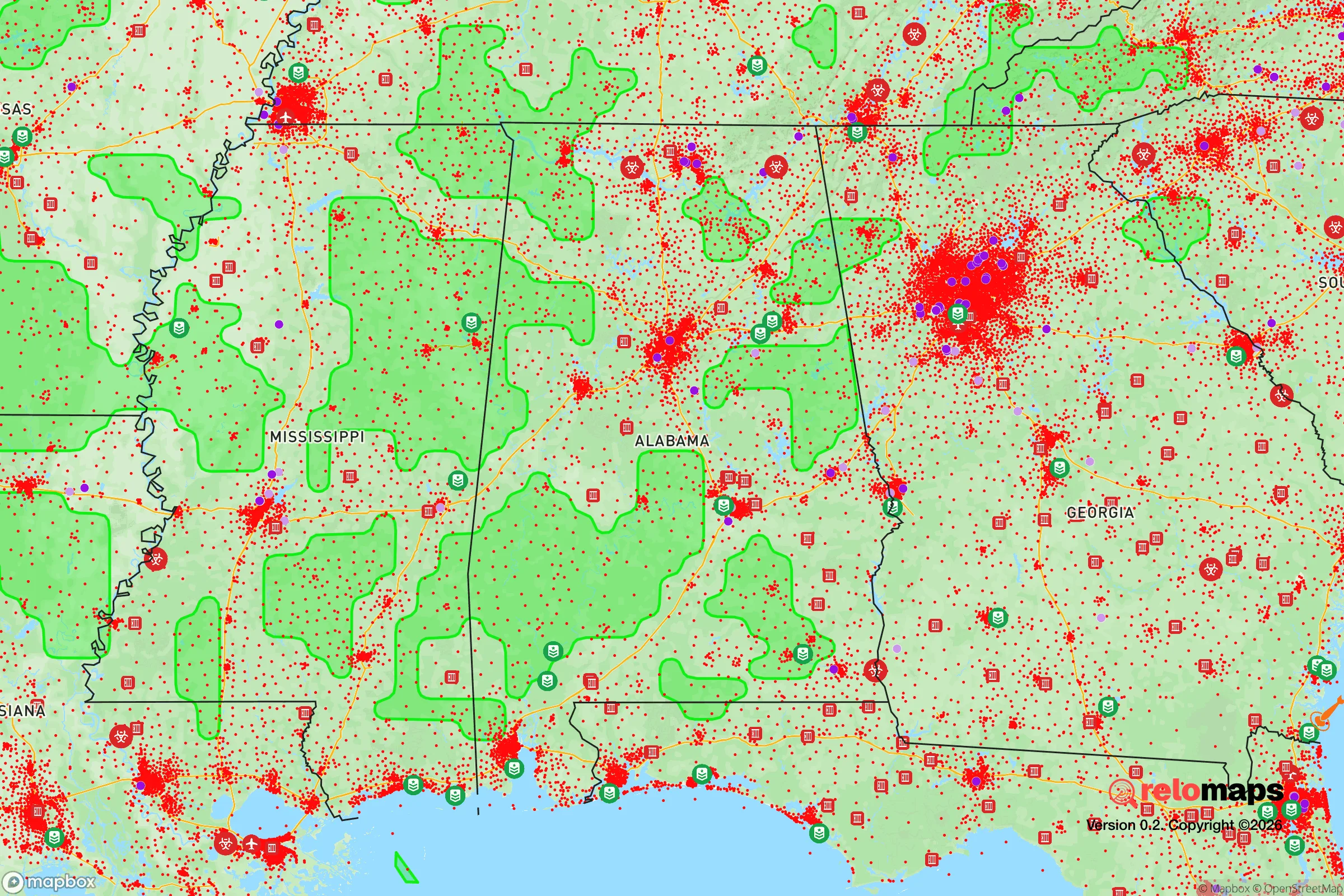
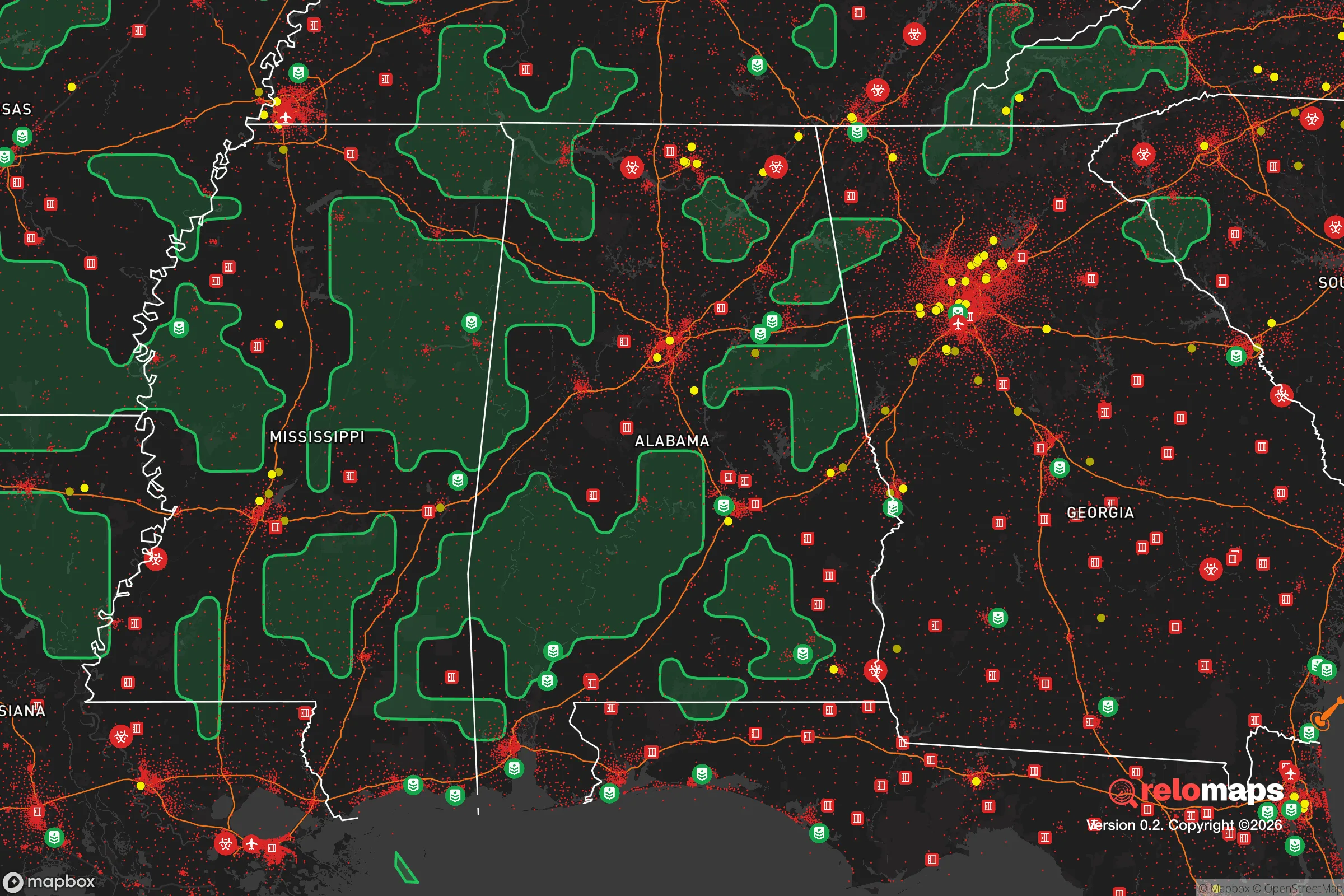


Important Note: For informational purposes only. This does not mean nothing bad ever happens in the green zones. Please use common sense. This is based on public data and modeled with AI. We tried to take a conservative approach but mistakes happen. We update this regularly as new information becomes available.
Solar Generator Recommendations
Backup power matters more here than in safer locations. We've picked three solar generators across budgets and capacity tiers — start with the budget unit if you only need a few essentials, or step up if you want to run a fridge and HVAC for days at a time.

Jackery Portable Power Station Explorer 300
Budget OptionPower on the Go: Weighing only 11 lbs, it's convenient to set up and store with book-sized foldable solar panels

BLUETTI Portable Power Station AC180
Designed for both indoor and outdoor scenarios, AC180 is highly capable as it has a robost capacity and continuous output power.

EF ECOFLOW DELTA Pro Ultra Power Station
Upgraded PickEcoFlow DELTA Pro Ultra is a whole-home energy system designed to grow with your family. Integrated with the Smart Home Panel 2, it scales to meet your evolving energy needs — keeping your home powered, intelligent, and secure through every stage of life.
We earn a commission, at no additional cost to you.
Strategic Assessment Analysis
Daphne, Alabama, sits on the eastern shore of Mobile Bay, and its strategic value for a relocator with a prepper mindset is a mixed bag—strong on natural resource access and community stability, but dangerously close to a major metropolitan area and its associated vulnerabilities. The city’s position offers a buffer from the worst of coastal hurricane surge, yet its proximity to Mobile, a major port and industrial hub, introduces significant fallout risks from both natural disasters and man-made events. For someone serious about long-term resilience, Daphne requires a clear-eyed assessment of its advantages and its glaring exposure points.
Geographic position and natural advantages for long-term survival
Daphne’s location on the Eastern Shore of Mobile Bay provides a few genuine natural advantages. The city sits on a bluff above the bay, which means it’s less prone to the catastrophic storm surge that devastates lower-lying Gulf Coast communities like Gulf Shores or Dauphin Island. The area is part of the Gulf Coastal Plain, with sandy loam soils that drain well—useful if you’re planning to garden or dig a well. The climate is humid subtropical, with a growing season that stretches from March to November, allowing for year-round food production if you’re willing to manage the heat and humidity. The Mobile-Tensaw Delta, a massive river delta system just north of the city, is one of the most biodiverse areas in North America, offering a potential source of wild game, fish, and forage—though it’s also a mosquito factory and a floodplain. The city’s position on I-10 and I-65 gives it road access to the rest of the Gulf Coast, but in a collapse scenario, those same highways become chokepoints for refugees and looters. The real natural advantage here is water: the delta, the bay, and the numerous creeks and rivers mean you’re never far from a freshwater source, provided you can treat it. But don’t mistake “natural advantage” for safety—the region is also a hurricane magnet, and the humidity will rot your gear if you don’t stay on top of maintenance.
Risks, exposures, and proximity to fallout-relevant landmarks
The biggest red flag for Daphne is its proximity to Mobile, Alabama’s only major port and a hub for chemical plants, oil refineries, and military installations. Mobile is home to the Austal USA shipyard, which builds Navy vessels, and the Brookley Aeroplex, a former Air Force base now used for aerospace and defense manufacturing. In a major conflict or terrorist event, these are prime targets. Daphne is roughly 10 miles across the bay from downtown Mobile, close enough that a conventional strike or a major industrial accident at the Mobile Refinery (a large oil refinery) could send a toxic plume or a shockwave across the water. The city is also within 30 miles of the Alabama Port Authority’s container terminal, a potential chokepoint for supply chains that could become a target during civil unrest. On the natural disaster front, Daphne is in Hurricane Alley. While the bluff offers some surge protection, the area is still vulnerable to high winds, tornadoes spawned by landfalling storms, and prolonged power outages. The 2020 Hurricane Sally, which made landfall near Gulf Shores, knocked out power to much of Baldwin County for over a week, and that was a Category 2 storm. A Category 4 or 5 event would be a different beast entirely. The city’s evacuation routes—primarily I-10 and I-65—are notorious for gridlock during hurricane evacuations, turning a strategic retreat into a death trap. For a prepper, the key takeaway is that Daphne is not a remote bunker; it’s a suburb of a vulnerable city, and that proximity is a liability.
Practical resilience for a relocator: food, water, energy, and defensibility
For a relocator looking to build a resilient homestead, Daphne offers a mixed picture. Water is abundant but requires treatment—the city draws from groundwater wells and the Mobile River, but municipal supply is vulnerable to power outages and contamination. A well on your property is a must, but the shallow aquifer in the area can be brackish near the bay, so you’ll need to drill deep (200-300 feet) for reliable freshwater. Rainwater catchment is viable, with the area averaging 66 inches of rain per year, but you’ll need to filter for debris and bacteria. Food production is feasible but labor-intensive—the long growing season lets you grow tomatoes, peppers, squash, and greens from March through November, but the humidity and pests (fire ants, deer, raccoons) will test your patience. The local soil is sandy and acidic, so you’ll need to amend it with compost and lime. Hunting and fishing are options: the delta has deer, turkey, and wild hogs, and the bay offers speckled trout, redfish, and crabs. But don’t count on game being plentiful if a crisis hits—everyone within 50 miles will have the same idea. Energy is a weak point—the grid is served by Alabama Power, which relies heavily on coal and natural gas. Solar is viable, with the area averaging 5.5 peak sun hours per day, but you’ll need a robust battery system to handle the frequent summer thunderstorms that can knock out panels. A backup generator running on propane or diesel is non-negotiable. Defensibility is the biggest challenge—Daphne is a suburban sprawl of subdivisions and strip malls, with few natural chokepoints. Your best bet is to buy acreage on the northern edge of the county, near the delta, where you can create a buffer of woods and water. Even then, you’re within an hour’s drive of 400,000 people in the Mobile metro area. In a collapse scenario, that population will be looking for food and water, and they’ll find you. The local law enforcement presence is decent—Baldwin County has a strong sheriff’s department—but in a prolonged crisis, they’ll be overwhelmed. Your security plan needs to include a tight-knit group of neighbors, a perimeter, and a plan to hold your ground or bug out to a more remote location.
The overall strategic picture for Daphne is one of calculated risk. It’s not a survivalist paradise—it’s a suburban compromise with some genuine natural advantages and some glaring vulnerabilities. If you’re looking for a place to ride out a short-term crisis (a hurricane, a week-long power outage, a brief supply chain disruption), Daphne is workable. The water access, the growing season, and the relatively stable community (Baldwin County is reliably conservative and has a strong sense of local identity) give it a leg up over many other Gulf Coast towns. But if you’re planning for a long-term collapse—a grid-down scenario, a major war, or a prolonged civil unrest event—the proximity to Mobile is a dealbreaker. The city is too close to too many targets, too dependent on fragile infrastructure, and too accessible to too many people. Your best move would be to treat Daphne as a staging ground: buy a property with a well, solar panels, and a garden, but also have a bug-out location further north, in the pine forests of Alabama or Mississippi, where you can disappear if the situation deteriorates. In short, Daphne is a solid B-tier location for a prepper—good for the short haul, but not a place to dig in for the long war.

* Values derived from national, state, county, city and local statistics and may differ in a specific area. Last updated: 2026-04-19T18:47:00.000Z
Narrative content on this page is AI-generated and may contain mistakes. Verify any details that matter before acting on them.
ReloMaps may earn a commission from affiliate links at no extra cost to you.

