Photo: Wikipedia
Find The Best Places To Live
in Mobile
PRO TIP! You can paste a Zillow or Redfin link to get info on that property.
What It's Like Living in Mobile, AL
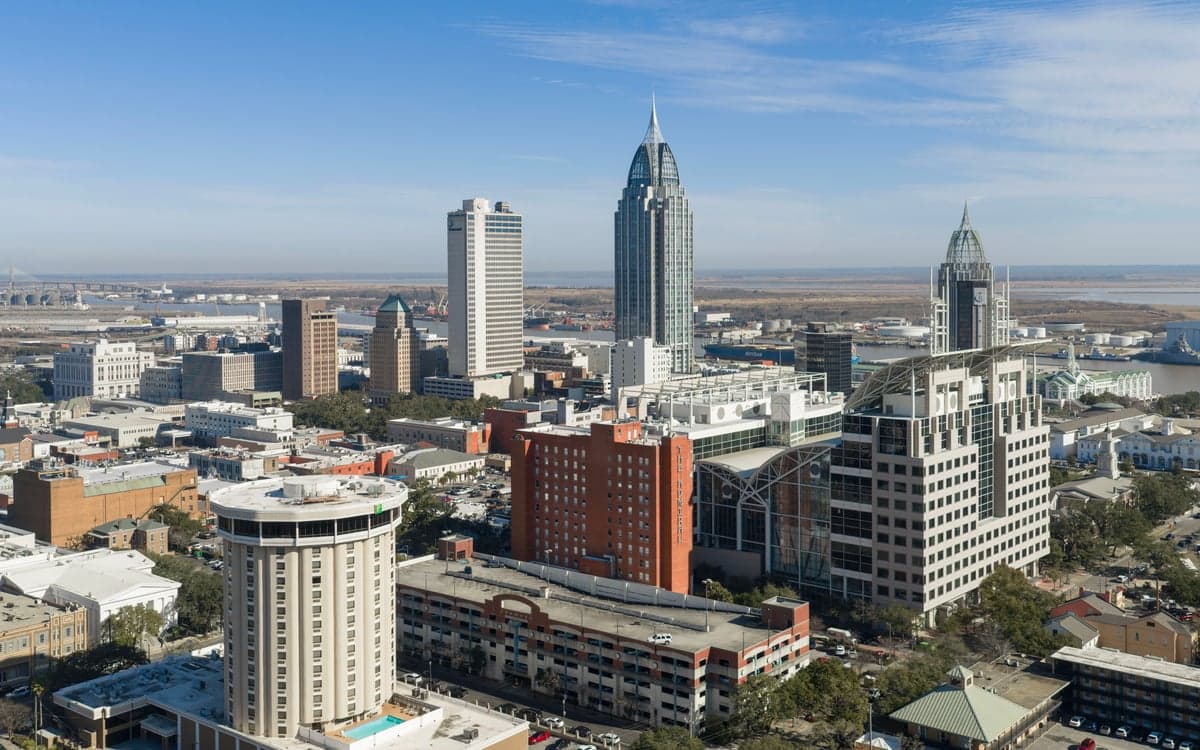
Mobile has a way of growing on you. It’s not a flashy city, but it’s got a deep, lived-in feel—a place where the oak trees drip with Spanish moss, the air smells like the Gulf and paper mills, and people still wave from their front porches. You’ll find a slower, more deliberate pace here, one that rewards patience and a love for good food, saltwater, and a community that knows its own history. It’s a city that feels both Southern and coastal, with a distinct identity that’s neither New Orleans nor Gulf Shores, but something all its own.
Daily Rhythm: What People Actually Do
Life in Mobile moves at a comfortable clip. The average commute is just under 23 minutes, which means you’re not spending half your day in the car. Most people work in healthcare, shipbuilding, or the port—Austal USA and the Mobile Regional Airport are major employers, along with the University of South Alabama and Infirmary Health. Weekends often start with a trip to the Dauphin Street farmers market or a morning at Bienville Square, where you’ll see families with strollers and retirees with dogs. For groceries, locals swear by Rouses Market for seafood and produce, and Callaghan’s Irish Social Club is the unofficial living room for anyone who wants a cold beer and a burger after work. Dinner out might mean oysters at Wintzell’s Oyster House or a plate of fried shrimp at The Dew Drop Inn, a no-frills spot that’s been around since the 1920s.
The kind of person who fits in here is someone who values stability over hustle. The median income is $51,090, and the cost of living index is 77—well below the national average. That means a $170,300 median home value buys you a solid three-bedroom in a decent neighborhood, not a fixer-upper. You’ll find a mix of young families, retired military, and people who work in the trades or at the port. It’s not a city for high-fliers or tech entrepreneurs; it’s a city for people who want a decent job, a yard, and a boat within a 20-minute drive.
Sports, Festivals, and the Social Calendar
Mobile is a sports town, but not in the way you might think. There’s no major pro team, but high school football is a religion—McGill-Toolen, Murphy, and St. Paul’s games draw crowds that rival small colleges. The Mobile BayBears (minor league baseball) are a summer staple, and the University of South Alabama Jaguars basketball and football teams get real local support. But the biggest event of the year isn’t a game—it’s Mardi Gras. Mobile claims to be the birthplace of Mardi Gras in the U.S., and locals take that seriously. Parades start weeks before Fat Tuesday, with mystic societies throwing beads and moon pies from floats. It’s family-friendly, not Bourbon Street chaos, and it’s the one time of year the whole city shuts down to party.
Beyond Mardi Gras, the calendar is packed with festivals. BayFest used to be the big music draw, but it’s been replaced by smaller events like the Mobile International Festival and the Alabama Coastal BirdFest. The USS Alabama Battleship Memorial Park is a must-see for history buffs, and the Mobile Museum of Art punches above its weight for a city this size. For outdoor types, the Mobile-Tensaw Delta is a massive, wild river system perfect for kayaking and fishing, and Dauphin Island is a 45-minute drive for beach days that don’t have the crowds of Gulf Shores.
Pros and Cons of Living Here
Let’s be honest about the trade-offs. The biggest upside is affordability. You can live comfortably on a modest income, and the cost of living is 23% below the national average. The food scene is genuinely excellent—seafood is fresh, and the local Creole and Cajun influence means you’ll eat well. The community is friendly in a real, not performative, way. Neighbors help each other, and it’s easy to get involved in church, civic clubs, or school events.
The downsides are real, though. Violent crime is a concern—the rate is 589.6 per 100,000, which is higher than the national average. That’s concentrated in certain areas, but it’s something to be aware of when choosing a neighborhood. The weather is another factor: summers are long, hot, and humid, and hurricane season runs June through November. You’ll need good insurance and a plan for storms. Traffic isn’t bad by big-city standards, but the Bayway and Wallace Tunnel can back up badly during rush hour. And while the city has charm, it’s not growing fast—job opportunities are limited compared to Birmingham or Huntsville, and the median age of 37.7 reflects a population that skews older and more settled.
One cultural quirk: Mobile is proud but not boastful. Locals will tell you it’s the “other” Alabama city, overshadowed by Birmingham and Huntsville, and they’re fine with that. There’s a quiet confidence here, a sense that you don’t need to prove anything. The schools—like Baker High and UMS-Wright—are community anchors, and PTA meetings are well-attended. If you’re a parent, you’ll find a network of other families who are invested in their kids’ activities, from soccer to band. For singles, the social scene is more about bars and festivals than nightclubs—try The Haberdasher for cocktails or Alchemy Tavern for a laid-back vibe.
Ultimately, Mobile is a place for people who want a real community with a low cost of entry. It’s not for everyone, but for the right person—someone who values history, good food, and a slower pace—it can feel like home from the first Mardi Gras parade.

Similar small cities to Mobile

* Values derived from national, state, county, city and local statistics and may differ in a specific area. Last updated: 2026-04-19T18:58:18.000Z
Narrative content on this page is AI-generated and may contain mistakes. Verify any details that matter before acting on them.
ReloMaps may earn a commission from affiliate links at no extra cost to you.

