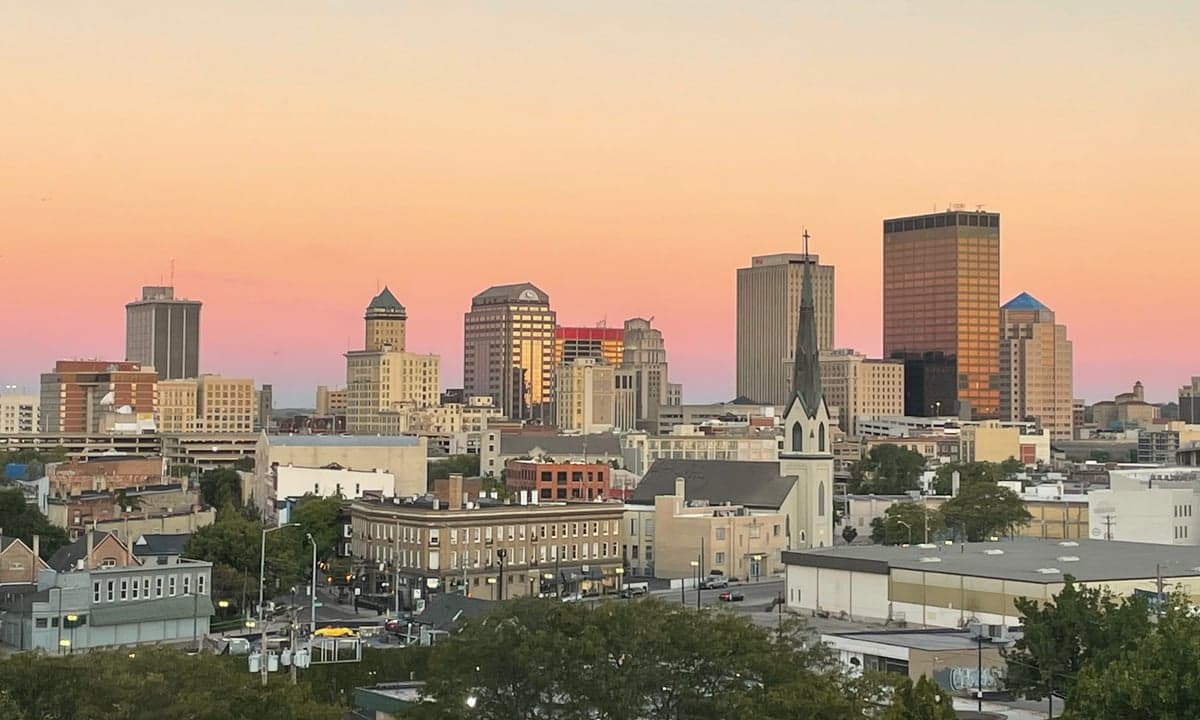
Photo: Wikipedia
Quality of Life in Dayton, OH
A high quality of life with strong walkability, manageable living costs, healthy neighborhood signals, and solid amenity access.
What does Quality of Life tell us?
Quality of Life blends cost of living, nearby amenities, socioeconomic signals, and neighborhood character. City-level scores represent the whole municipality; individual neighborhoods can differ.
What does this tell us?
Quality of Life blends cost of living, nearby amenities, socioeconomic signals, and neighborhood character. City-level scores represent the whole municipality; individual neighborhoods can differ.
Cost of Living
42% below national average
The Real Cost of Living in Dayton, OH for 2026
| Tier | Individual | Family (4) |
|---|---|---|
| Survival | $14k | $26k |
| Comfortable | $23k | $34k |
| Luxury | $78k+ | $122k+ |
| Elite (Top 5%) | $98k+ | $151k+ |
130%
The Area Signal
A metric tracking the socioeconomic signals of the area.
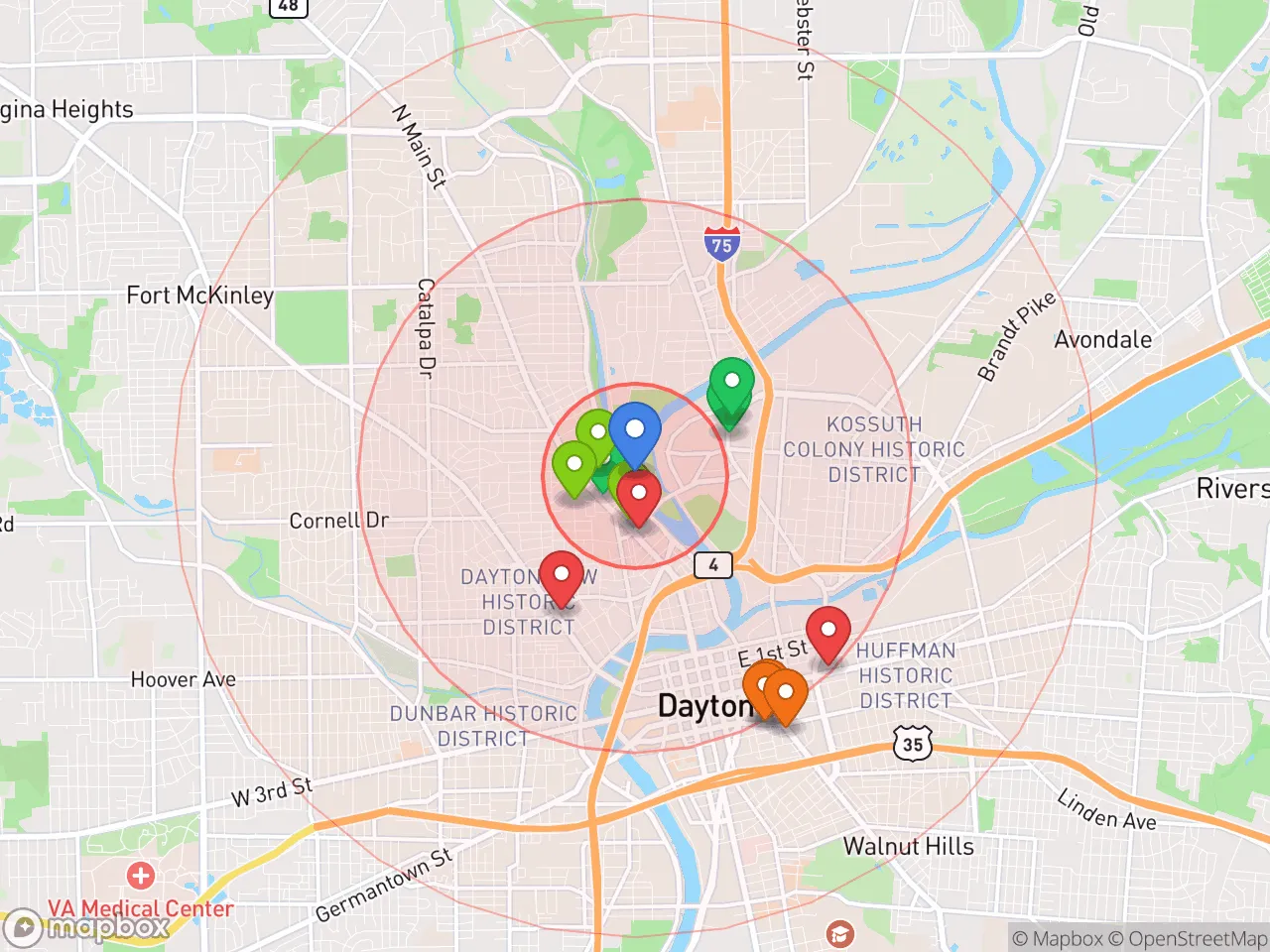
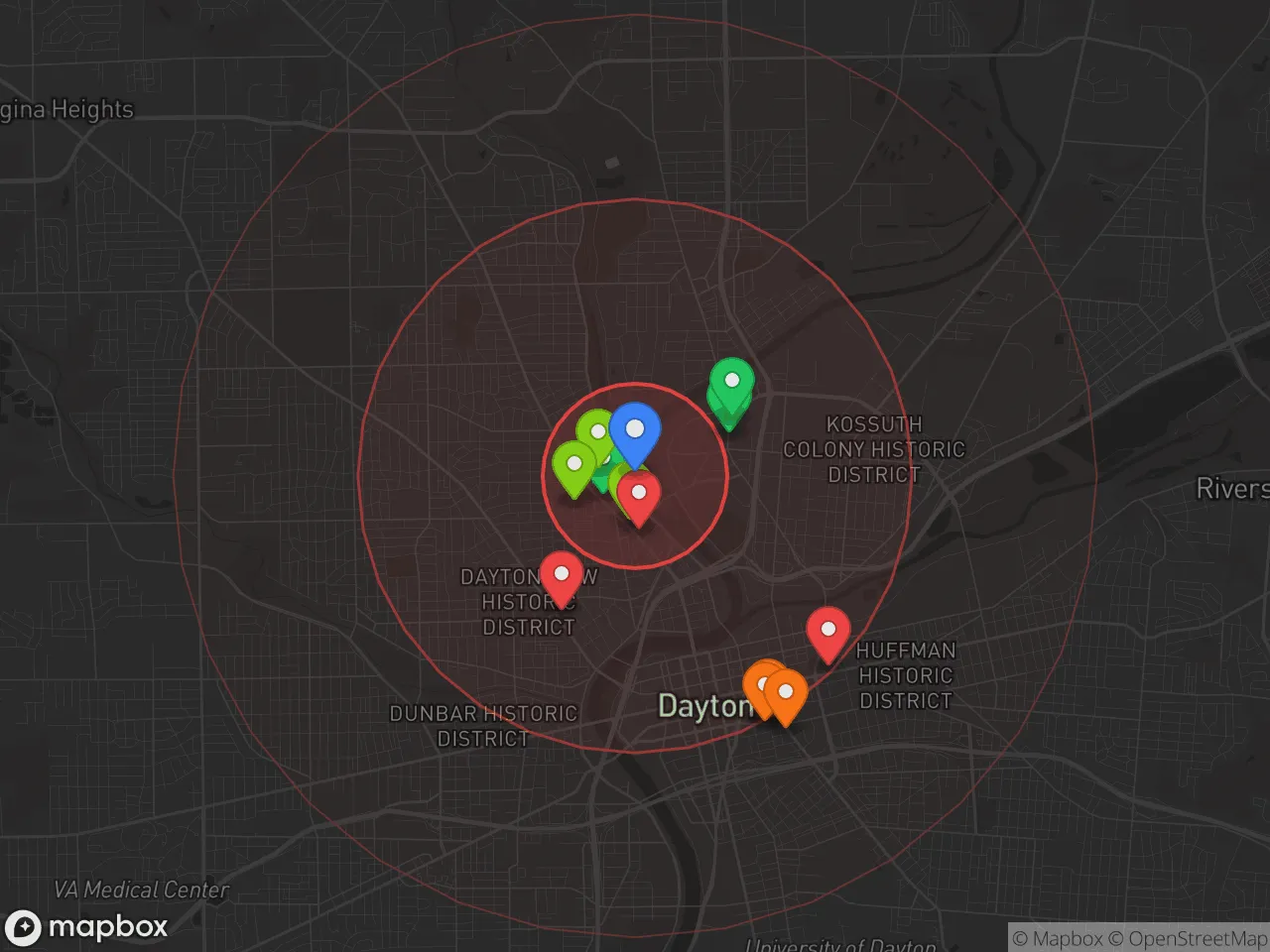
Hobbies
Explore the areaGroceries
5 within 10 miles
Gas
20 within 10 miles
Hospital
20 within 20 miles
Airport
John Glenn Columbus International Airport
Post Office
USPS — Dayton, OH
Critical Amenities
Quality-of-Life Analysis
Dayton, Ohio, offers a quality of life defined by exceptional affordability and a strong sense of community, attracting a mix of young professionals, families, and retirees who prioritize value over high-cost living. With a cost of living index of 58—42 percent below the national average—the city provides a financial cushion that allows residents to own homes, save, and enjoy amenities that would be out of reach in pricier metros. The population is notably diverse in age and background, with a growing number of remote workers and creatives drawn to the city's revitalized downtown and historic neighborhoods.
Cost of living, housing, and how Dayton compares to nearby cities
Dayton's cost of living is among the lowest in the Midwest, making it a standout for budget-conscious movers. The median home value sits at $93,200, a figure that is roughly one-third of the national median and significantly undercutting nearby Columbus (where the median exceeds $300,000) and Cincinnati (around $250,000). Median rent is $866, well below the national average of $1,200, allowing renters to allocate more income to savings or discretionary spending. The average commute time of 20.6 minutes is shorter than the national average of 26 minutes, reducing transportation costs and freeing up time for family or leisure. While property taxes in Montgomery County are moderate (around 1.7% of assessed value), the low home prices keep annual tax bills manageable—often under $2,000 for a typical single-family home. Compared to suburbs like Beavercreek or Centerville, Dayton proper offers lower entry prices but slightly higher crime rates, a trade-off many residents accept for urban proximity.
Schools, amenities, and what daily life feels like in Dayton
Daily life in Dayton revolves around accessible amenities and a slower pace than larger Ohio cities. The city's public school system, Dayton Public Schools, has faced challenges with funding and performance, but several magnet and charter schools—such as Dayton Early College Academy and Stivers School for the Arts—provide strong options for motivated families. For higher education, the University of Dayton and Wright State University anchor the area with cultural events, sports, and research facilities. Parks and recreation are abundant: the Five Rivers MetroParks system offers over 16,000 acres of green space, including the scenic RiverScape MetroPark downtown with its ice rink and concert pavilion. The Dayton Art Institute, the Oregon District's dining and nightlife scene, and the National Museum of the U.S. Air Force provide year-round entertainment. Groceries, healthcare, and basic services are readily available, with major employers like Premier Health and Kettering Health Network ensuring access to quality medical care. The city's walkability is limited outside the core, but the short commute means most errands are a quick drive away.
Dayton is best suited for individuals and families who prioritize financial breathing room over prestige or high-end amenities. First-time homebuyers can enter the market with minimal debt, while retirees appreciate the low cost of living and access to healthcare. Remote workers and creatives will find a supportive community in the Oregon District or the Wright-Dunbar neighborhood, where historic homes are being renovated. However, those seeking top-tier public schools or a vibrant 24-hour urban scene may prefer the suburbs or a larger city. For anyone willing to trade some polish for profound affordability and a genuine sense of place, Dayton delivers a quality of life that is hard to match elsewhere in the Midwest.

Crime in Dayton, OH
Significantly higher crime rates than 91% of comparable U.S. locations.
Violent CrimeViolent Crime Analysis
Property CrimeProperty Crime Analysis
Crime Analysis
Dayton, Ohio, presents a crime and safety profile that demands careful consideration, particularly for those relocating from areas with more conservative justice systems. The city's violent crime rate stands at 257.1 incidents per 100,000 residents, while property crime is reported at 1,326.2 per 100,000. These figures place Dayton in a challenging position relative to national averages, and the local political environment—including progressive judicial and prosecutorial policies—raises additional concerns for public safety and victim justice.
Crime in context
Dayton's violent crime rate of 257.1 per 100,000 is notably higher than the national average of roughly 380 per 100,000, but this comparison is misleading. The city's rate is significantly elevated when measured against other Midwestern metros of similar size, and property crime at 1,326.2 per 100,000 exceeds the national average of approximately 1,954 per 100,000. However, these raw numbers do not capture the full impact of local criminal justice policies. Montgomery County, which encompasses Dayton, has elected progressive prosecutors and judges who have implemented bail reform, reduced sentencing guidelines, and expanded diversion programs. While these policies aim to reduce incarceration, they have a documented effect of increasing recidivism and keeping more offenders on the streets, directly undermining public safety and victim rights.
What residents experience
Residents of Dayton report that property crime—particularly vehicle break-ins, theft from porches, and residential burglary—is the most common safety concern. The city's 1,326.2 property crime rate translates to roughly 3.6 incidents per day, a figure that strains police resources. Violent crime, while less frequent, is concentrated in specific corridors and often involves individuals known to one another. The progressive approach to prosecution means that many property crimes are handled through citation or low-level diversion, resulting in fewer arrests and lower clearance rates. For victims, this translates to a justice system that often prioritizes offender rehabilitation over accountability, leaving many feeling that crimes go unpunished and that the system is sympathetic to perpetrators at the expense of community safety.
Neighborhood-level variation
Safety in Dayton varies dramatically by neighborhood. Areas like Oakwood, Kettering, and Centerville—independent suburbs with their own police departments and more conservative local governance—report crime rates 60-70% lower than the city core. In contrast, neighborhoods such as West Dayton, the Wright-Dunbar area, and parts of the Inner East experience violent crime rates two to three times the city average. The Oregon District, while a popular entertainment hub, has seen an uptick in both property crime and occasional violent incidents, particularly after midnight. Prospective residents should research specific block-level data and consider that the city's progressive judicial policies apply countywide, meaning even safer neighborhoods are affected by the broader leniency in the justice system that keeps repeat offenders cycling through the community.
* Values derived from national, state, county, city and local statistics and may differ in a specific area. Last updated: 2026-04-21T18:42:13.000Z
Narrative content on this page is AI-generated and may contain mistakes. Verify any details that matter before acting on them.
ReloMaps may earn a commission from affiliate links at no extra cost to you.

