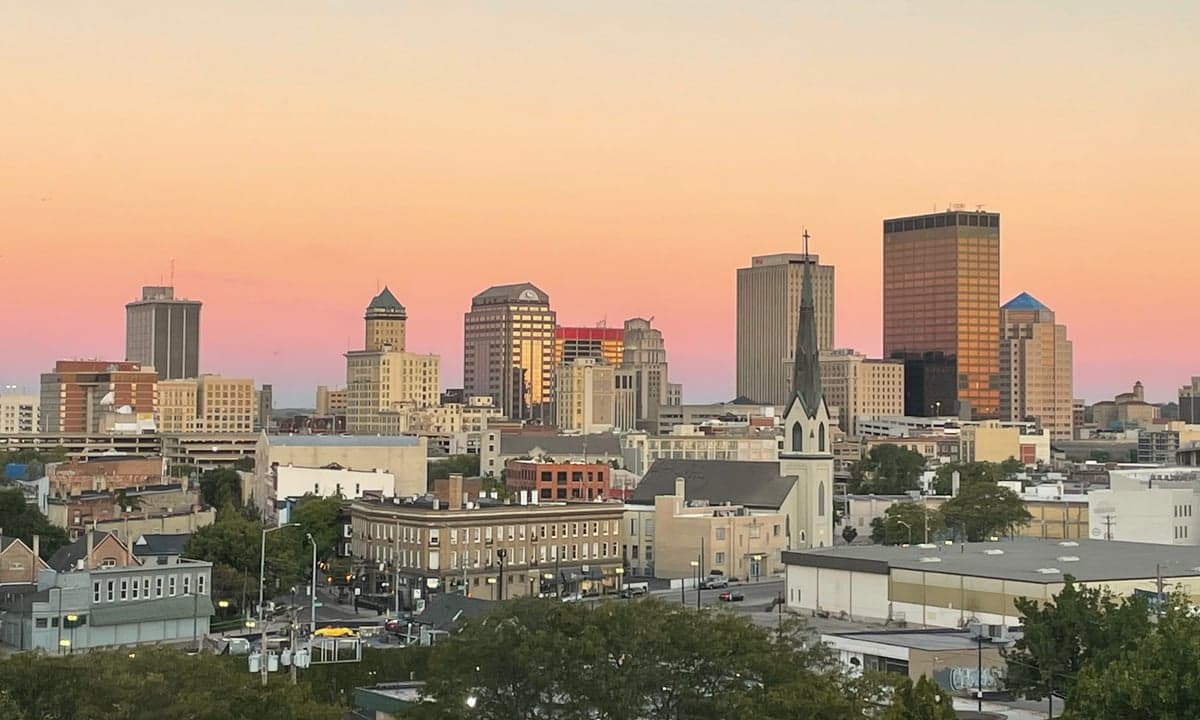
Photo: Wikipedia
Strategic Assessment of Dayton, OH
Meaningful friction. Expect exposure to either population pressure, blast zones, or natural disaster risk. Consider buying a retreat property.
What does the Strategic Assessment tell us?
Our Strategic Assessment grades tactical survivability of an area. Major population centers, military targets, fallout zones, natural disasters, and border exposure all drive risk — lower exposure means a more defensible position in a crisis.
This is heavily inspired by Joel Skousen's Strategic Relocation book. Highly recommended you checkout the book ($)What does this tell us?
Our Strategic Assessment grades tactical survivability of an area. Major population centers, military targets, fallout zones, natural disasters, and border exposure all drive risk — lower exposure means a more defensible position in a crisis.
This is heavily inspired by Joel Skousen's Strategic Relocation book. Highly recommended you checkout the book ($)Strategic Pillars

Key Distances
Regional Safe Places
Below is our recommended "safe zones" in Ohio and the surrounding area based on our strategic heuristics. For most people, it's unrealistic to live in a “safe zone” full-time due to work, family or other personal reasons. They tend to be more rural. However, many of these areas are perfect for second homes and retreat properties that double as a vacation home or even a short-term rental.

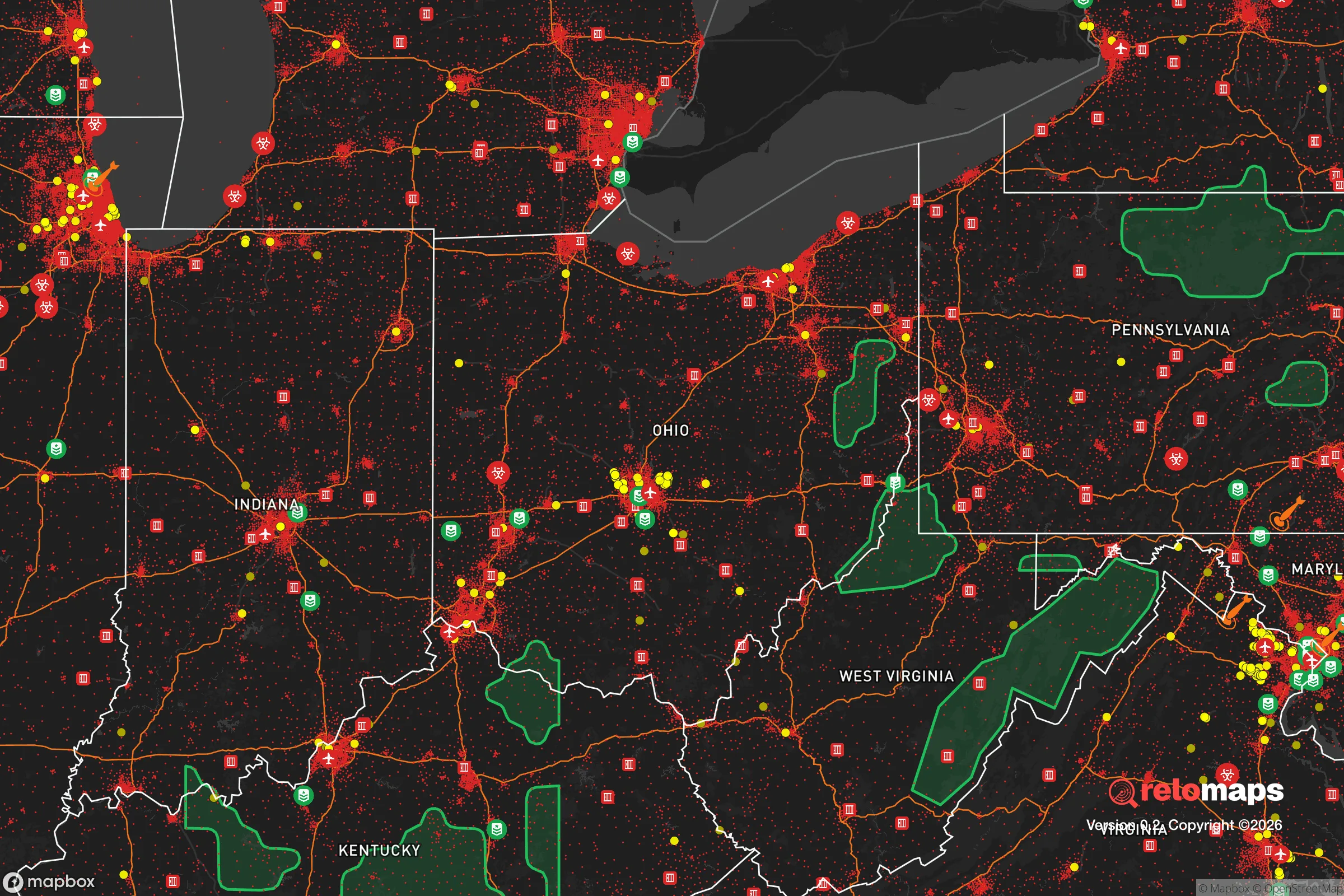


Important Note: For informational purposes only. This does not mean nothing bad ever happens in the green zones. Please use common sense. This is based on public data and modeled with AI. We tried to take a conservative approach but mistakes happen. We update this regularly as new information becomes available.
Solar Generator Recommendations
Backup power matters more here than in safer locations. We've picked three solar generators across budgets and capacity tiers — start with the budget unit if you only need a few essentials, or step up if you want to run a fridge and HVAC for days at a time.

Jackery Portable Power Station Explorer 300
Budget OptionPower on the Go: Weighing only 11 lbs, it's convenient to set up and store with book-sized foldable solar panels

BLUETTI Portable Power Station AC180
Designed for both indoor and outdoor scenarios, AC180 is highly capable as it has a robost capacity and continuous output power.

EF ECOFLOW DELTA Pro Ultra Power Station
Upgraded PickEcoFlow DELTA Pro Ultra is a whole-home energy system designed to grow with your family. Integrated with the Smart Home Panel 2, it scales to meet your evolving energy needs — keeping your home powered, intelligent, and secure through every stage of life.
We earn a commission, at no additional cost to you.
Strategic Assessment Analysis
Dayton, Ohio, sits in a sweet spot that’s hard to beat for a relocator with a survivalist mindset: close enough to major infrastructure to be practical, but far enough from the worst fallout zones to offer genuine breathing room. The city’s industrial backbone—think Wright-Patterson Air Force Base and a legacy of manufacturing—gives it a resilience that many soft, service-economy towns lack. For someone looking to plant roots in a place that can weather civic unrest, supply chain disruptions, or even a mass casualty event, Dayton offers a mix of geographic insulation and hard-asset utility that’s increasingly rare in the Lower 48.
Geographic position and natural advantages for long-term security
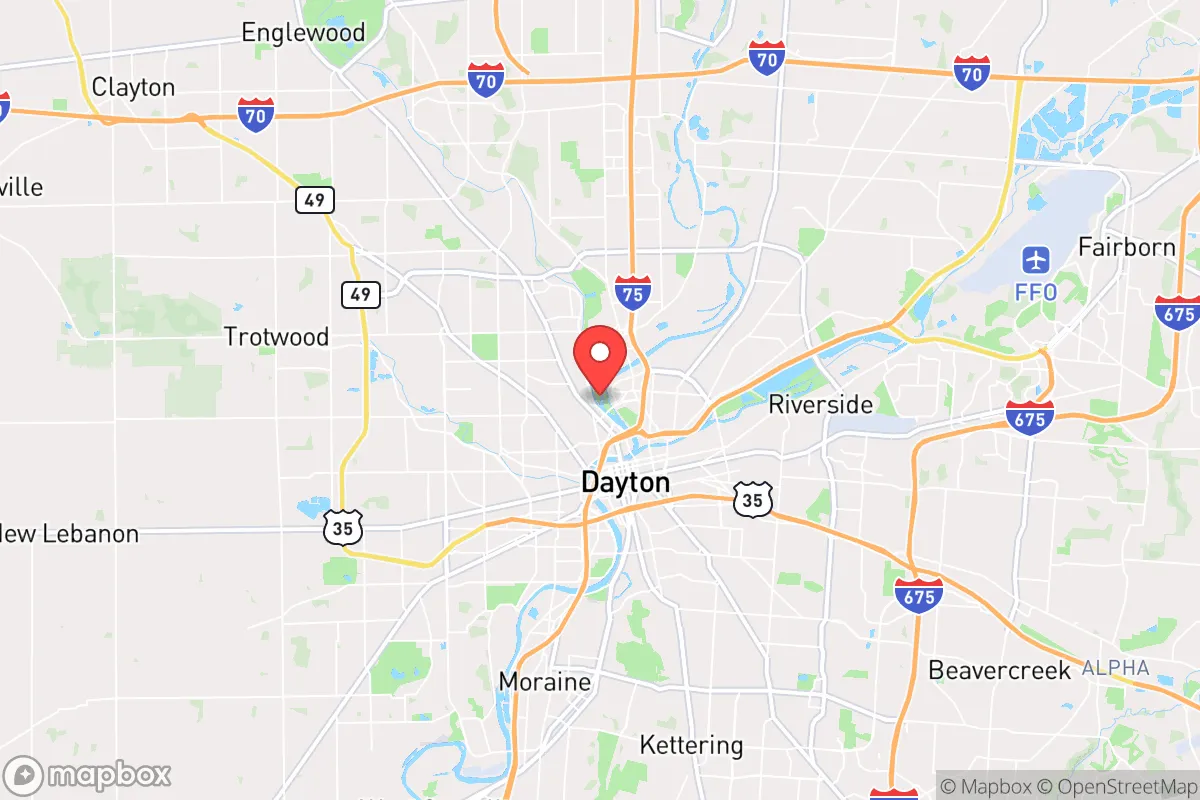
Dayton’s location in the Miami Valley is its first strategic asset. It’s nestled in the southwestern part of Ohio, roughly 50 miles north of Cincinnati and 70 miles west of Columbus—close enough to tap into those metro economies for work or supplies, but far enough that you’re not in the blast radius of a major urban collapse. The region sits on the Great Miami River, which provides a reliable freshwater source, and the surrounding terrain is a mix of rolling hills and fertile farmland. This isn’t flat, exposed prairie; the topography offers natural defensibility and concealment for a rural retreat within a 20-minute drive of downtown. The area’s aquifer is one of the largest in the Midwest, meaning groundwater access is solid—critical if municipal systems go down. For a prepper, the ability to draw from a well or filter river water without relying on a fragile grid is a non-negotiable advantage. Dayton also sits outside the primary wind patterns that would carry fallout from a major event at the nation’s nuclear plants or military targets, though we’ll get to that in a moment.
Risks, exposures, and proximity to fallout-relevant landmarks
No place is a fortress, and Dayton has its share of liabilities. The biggest red flag is Wright-Patterson Air Force Base, located just northeast of the city in Riverside. This is a major Air Force logistics and research hub—home to the National Air and Space Intelligence Center and the Air Force Life Cycle Management Center. In a conflict scenario, that base is a high-value target. A conventional strike or even a dirty bomb event there would put the eastern suburbs in the danger zone. You’d want to live west or south of the city to stay upwind and out of the immediate fallout plume. The other concern is proximity to the Ohio River corridor, which carries barge traffic and industrial facilities that could become choke points or targets during unrest. Dayton is also within 200 miles of the Fermi 2 nuclear plant near Monroe, Michigan, and the Perry plant east of Cleveland. While not in the immediate blast radius, a major release could affect the region depending on wind direction. On the plus side, Dayton lacks the dense urban core that makes a city like Chicago or New York a death trap during a pandemic or riot. The population is spread out, and the city’s decline since the 1970s means there’s plenty of vacant land and abandoned industrial space—ugly for the economy, but useful for a relocator looking to buy cheap acreage with low competition.
Practical resilience for a relocator: food, water, energy, and defensibility
Dayton’s practical resilience comes down to four pillars: local food production, water access, energy redundancy, and community defensibility. The surrounding counties—Montgomery, Greene, Miami, and Warren—are agricultural powerhouses. You’re within a 30-minute drive of dozens of farms selling direct to consumers, from beef and pork to vegetables and honey. The Amish and Mennonite communities in western Ohio, particularly around Greenville and Versailles, are a 45-minute drive west. These groups operate outside the mainstream supply chain and have their own networks for tools, seeds, and livestock. For a prepper, building a relationship with an Amish blacksmith or farmer is worth more than a year’s worth of freeze-dried meals. Water is abundant: the Great Miami River is perennial, and the aquifer beneath the valley is so productive that many rural homes already run on private wells. A simple hand pump or solar-powered well setup can keep you in water when the grid goes dark. Energy-wise, Ohio is a net exporter of electricity, and the local grid is relatively stable compared to coastal states. But the real play is solar: the region gets about 180 sunny days per year—not Arizona, but enough for a modest off-grid array. Defensibility is where Dayton shines for a strategic relocator. The city’s layout is a series of distinct neighborhoods and small towns—Oakwood, Kettering, Centerville, Beavercreek—each with its own police force and community identity. In a collapse scenario, these pockets can lock down independently. The rural areas to the west and south offer wooded lots with long sightlines and limited road access. You can find a 5-acre parcel with a creek and a gravel drive for under $50,000, which is a fraction of what you’d pay in the Rockies or Appalachia. The trade-off is that you’re not in a remote mountain redoubt; you’re in a working-class region where people are used to fixing things themselves. That cultural grit is a resilience multiplier.
The overall strategic picture for Dayton is one of calculated trade-offs. You get a low-cost, low-profile base with solid natural resources and a population that hasn’t been softened by decades of coastal affluence. The risks from Wright-Patterson and the industrial corridor are real, but they’re manageable with smart property placement—west of I-75, south of the base, and preferably on a well. The city’s economic struggles mean you can buy in cheap and build out your setup without drawing attention. For a conservative-leaning relocator who wants to be prepared for the worst while still holding down a job and sending kids to decent schools, Dayton offers a rare combination of affordability, access, and hardscrabble resilience. It’s not a bug-out paradise, but it’s a solid base camp for the long haul.

* Values derived from national, state, county, city and local statistics and may differ in a specific area. Last updated: 2026-04-21T18:42:13.000Z
Narrative content on this page is AI-generated and may contain mistakes. Verify any details that matter before acting on them.
ReloMaps may earn a commission from affiliate links at no extra cost to you.

