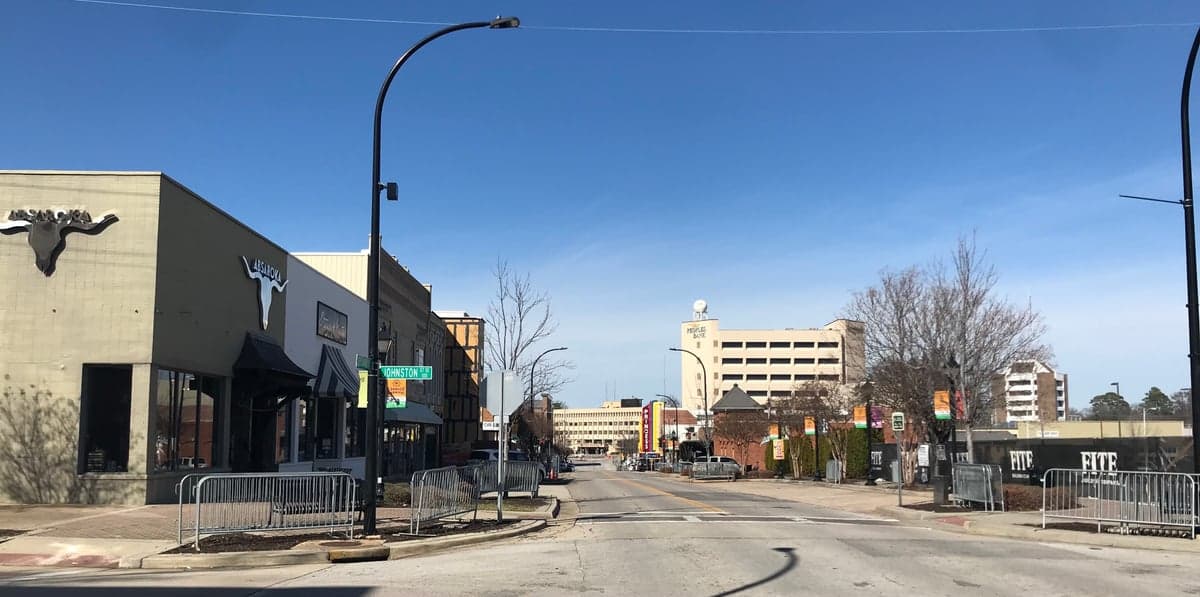
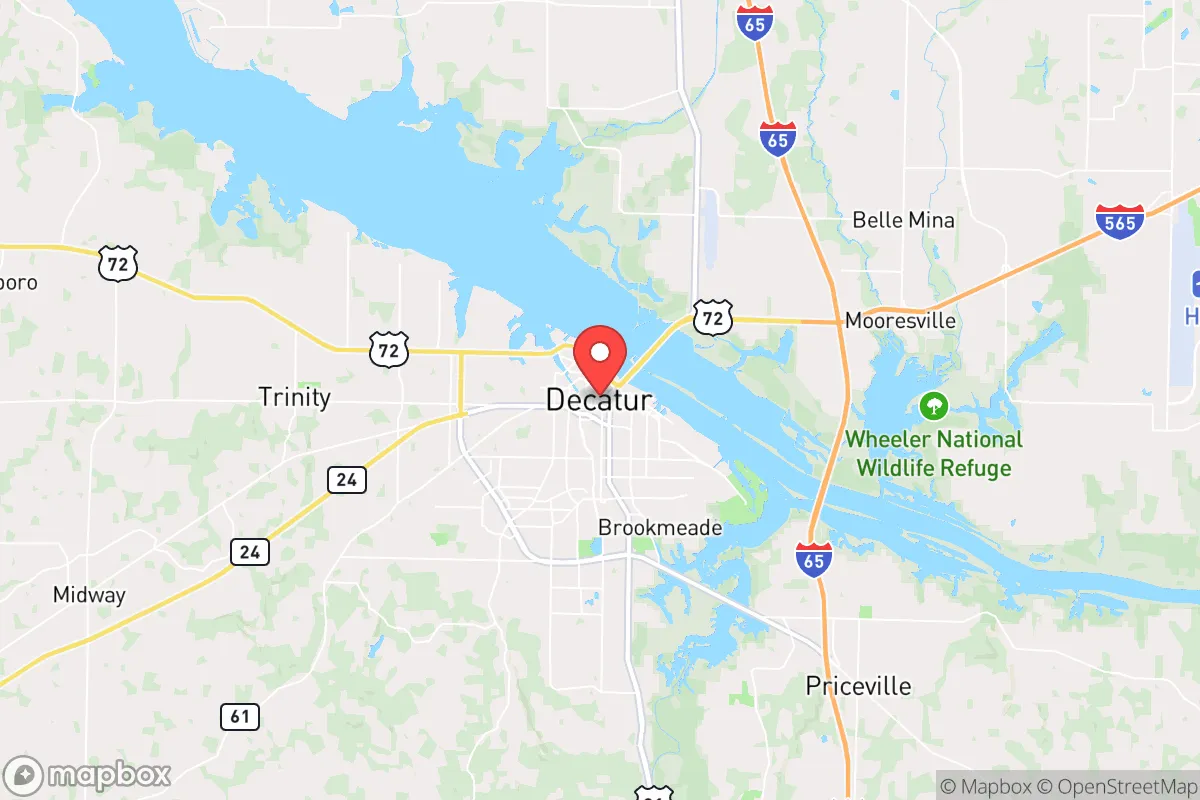
Photo: Wikipedia
Quality of Life in Decatur, AL
A high quality of life with strong walkability, manageable living costs, healthy neighborhood signals, and solid amenity access.
What does Quality of Life tell us?
Quality of Life blends cost of living, nearby amenities, socioeconomic signals, and neighborhood character. City-level scores represent the whole municipality; individual neighborhoods can differ.
What does this tell us?
Quality of Life blends cost of living, nearby amenities, socioeconomic signals, and neighborhood character. City-level scores represent the whole municipality; individual neighborhoods can differ.
Cost of Living
29% below national average
The Real Cost of Living in Decatur, AL for 2026
| Tier | Individual | Family (4) |
|---|---|---|
| Survival | $14k | $26k |
| Comfortable | $37k | $54k |
| Luxury | $108k+ | $167k+ |
| Elite (Top 5%) | $127k+ | $197k+ |
110%
The Area Signal
A metric tracking the socioeconomic signals of the area.


Hobbies
Explore the areaGroceries
1 within 10 miles
Gas
0 within 10 miles
Hospital
3 within 20 miles
Airport
BNA — Nashville International
Post Office
USPS — Madison, AL
Critical Amenities
Quality-of-Life Analysis
Decatur, Alabama, offers a cost of living that is 29% below the national average, with a composite index of 71, making it one of the most affordable mid-sized cities in the Tennessee Valley. The population of roughly 57,000 is a mix of long-term families, skilled tradespeople employed by major manufacturers, and retirees drawn by the low housing costs and slower pace. While not a wealthy enclave, Decatur’s median household income of approximately $52,000 supports a comfortable, middle-class lifestyle, particularly for those who work in the region’s industrial and logistics sectors.
How housing costs and affordability compare to Huntsville and the Shoals
Decatur’s housing market is a standout value in North Alabama. The median home value sits at $190,500, roughly half the median in nearby Huntsville ($370,000) and about 20% less than in Florence. Median rent is $861, well below the state average of $1,100. This affordability is driven by a steady supply of older single-family homes and a slower rate of new construction compared to Huntsville’s booming tech corridor. The average commute of 20.6 minutes is notably shorter than Huntsville’s 25-minute average, meaning residents spend less time in traffic and more time at home. For a family earning the median income, a typical mortgage payment on a $190,500 home at 2026 interest rates would consume roughly 22% of gross monthly income, well within the 28% guideline lenders use.
What daily life is like for families: schools, parks, and local amenities
Daily life in Decatur centers on a relaxed, car-dependent rhythm anchored by the Tennessee River and Point Mallard Park, a 700-acre complex with a water park, golf course, and ice rink. The Decatur City Schools system serves about 8,000 students, with Decatur High School and Austin High School offering dual-enrollment programs with Calhoun Community College. For shopping and dining, residents rely on the Beltline Road corridor (U.S. 31) for big-box retailers and local restaurants like Big Bob Gibson Bar-B-Que, a James Beard-recognized pit stop. The city’s Old Decatur and New Albany historic districts provide walkable pockets with tree-lined streets and local boutiques, though most errands require a car. Healthcare access is solid, with Decatur Morgan Hospital providing a Level II trauma center and the Huntsville Hospital network just 25 minutes east for specialized care.
Who thrives in Decatur and who might look elsewhere
Decatur is best suited for families and individuals who prioritize low housing costs, short commutes, and a slower pace over urban amenities or high-end retail. It works well for workers at major employers like United Launch Alliance, 3M, and Nucor Steel, which anchor the city’s industrial base. Retirees on fixed incomes will find the COL index of 71 and low property taxes (roughly 0.4% of assessed value) especially attractive. However, professionals in tech or finance may find the local job market limited and the cultural scene sparse compared to Huntsville or Nashville (90 minutes north). Young singles without cars may struggle, as public transit is minimal and ride-sharing coverage is thin. For those who value affordability, river access, and a tight-knit community, Decatur delivers a high quality of life at a fraction of the cost of larger Southern cities.

Crime in Decatur, AL
Higher crime rates than 62% of comparable U.S. locations.
Violent CrimeViolent Crime Analysis
Property CrimeProperty Crime Analysis
Crime Analysis
Decatur, Alabama, reports a violent crime rate of 629 incidents per 100,000 residents and a property crime rate of 1,866.4 per 100,000, placing it above both state and national averages for public safety. These figures indicate that while Decatur is not among the most dangerous cities in the region, residents face a notably elevated risk of crime compared to the typical U.S. community. The city's location within a larger metro area and its proximity to Huntsville and Birmingham introduce additional dynamics that affect local safety perceptions and policing challenges.
Crime in context
Decatur's violent crime rate of 629 per 100,000 is roughly 70% higher than the national average of about 370 per 100,000 and significantly exceeds Alabama's statewide rate of approximately 540 per 100,000. Property crime in Decatur, at 1,866.4 per 100,000, also outpaces the national benchmark of roughly 1,950 per 100,000 but is slightly below the Alabama average of about 2,100 per 100,000. These comparisons place Decatur in a challenging middle tier: property crime is near the national norm, but violent offenses—particularly aggravated assault and robbery—occur at a frequency that warrants caution. The city's crime index is roughly 11 out of 100, meaning it is safer than only 11% of U.S. cities, a statistic that underscores the need for proactive safety measures.
What residents experience
For daily life in Decatur, the elevated violent crime rate translates into a tangible sense of risk, especially in certain neighborhoods and during evening hours. Aggravated assault accounts for the largest share of violent incidents, followed by robbery and burglary. Property crimes like theft and vehicle break-ins are common enough that residents routinely take precautions such as installing security systems and avoiding leaving valuables in cars. The presence of progressive judicial philosophies in the broader metro area's court system—including lenient sentencing and reduced pretrial detention—has been linked to higher recidivism and more offenders returning to the streets, which directly undermines public safety. Residents report that this approach can erode trust in the justice system, as repeat offenders face minimal consequences, leading to frustration and a sense that crime is not being effectively deterred.
Neighborhood-level variation in Decatur is notable. Areas near the Tennessee River and downtown, such as the Old Decatur historic district, tend to see higher concentrations of property crime and occasional violent incidents. In contrast, the more suburban neighborhoods on the city's south and west sides, including areas near Point Mallard Park and along Highway 31, generally report lower crime rates. Prospective residents should research specific blocks and consult local police crime maps, as safety can shift dramatically within a few streets. Overall, while Decatur offers affordable living and community amenities, its crime statistics and the impact of progressive justice policies in the region make it a location where vigilance and neighborhood selection are essential.
* Values derived from national, state, county, city and local statistics and may differ in a specific area. Last updated: 2026-04-19T18:47:38.000Z
Narrative content on this page is AI-generated and may contain mistakes. Verify any details that matter before acting on them.
ReloMaps may earn a commission from affiliate links at no extra cost to you.

