Photo: Wikipedia
Quality of Life in Decatur, GA
A high quality of life with strong walkability, manageable living costs, healthy neighborhood signals, and solid amenity access.
What does Quality of Life tell us?
Quality of Life blends cost of living, nearby amenities, socioeconomic signals, and neighborhood character. City-level scores represent the whole municipality; individual neighborhoods can differ.
What does this tell us?
Quality of Life blends cost of living, nearby amenities, socioeconomic signals, and neighborhood character. City-level scores represent the whole municipality; individual neighborhoods can differ.
Cost of Living
82% above national average
The Real Cost of Living in Decatur, GA for 2026
| Tier | Individual | Family (4) |
|---|---|---|
| Survival | $27k | $51k |
| Comfortable | $127k | $187k |
| Luxury | $254k+ | $393k+ |
| Elite (Top 5%) | $307k+ | $477k+ |
75%
The Area Signal
A metric tracking the socioeconomic signals of the area.
Hobbies
Explore the areaGroceries
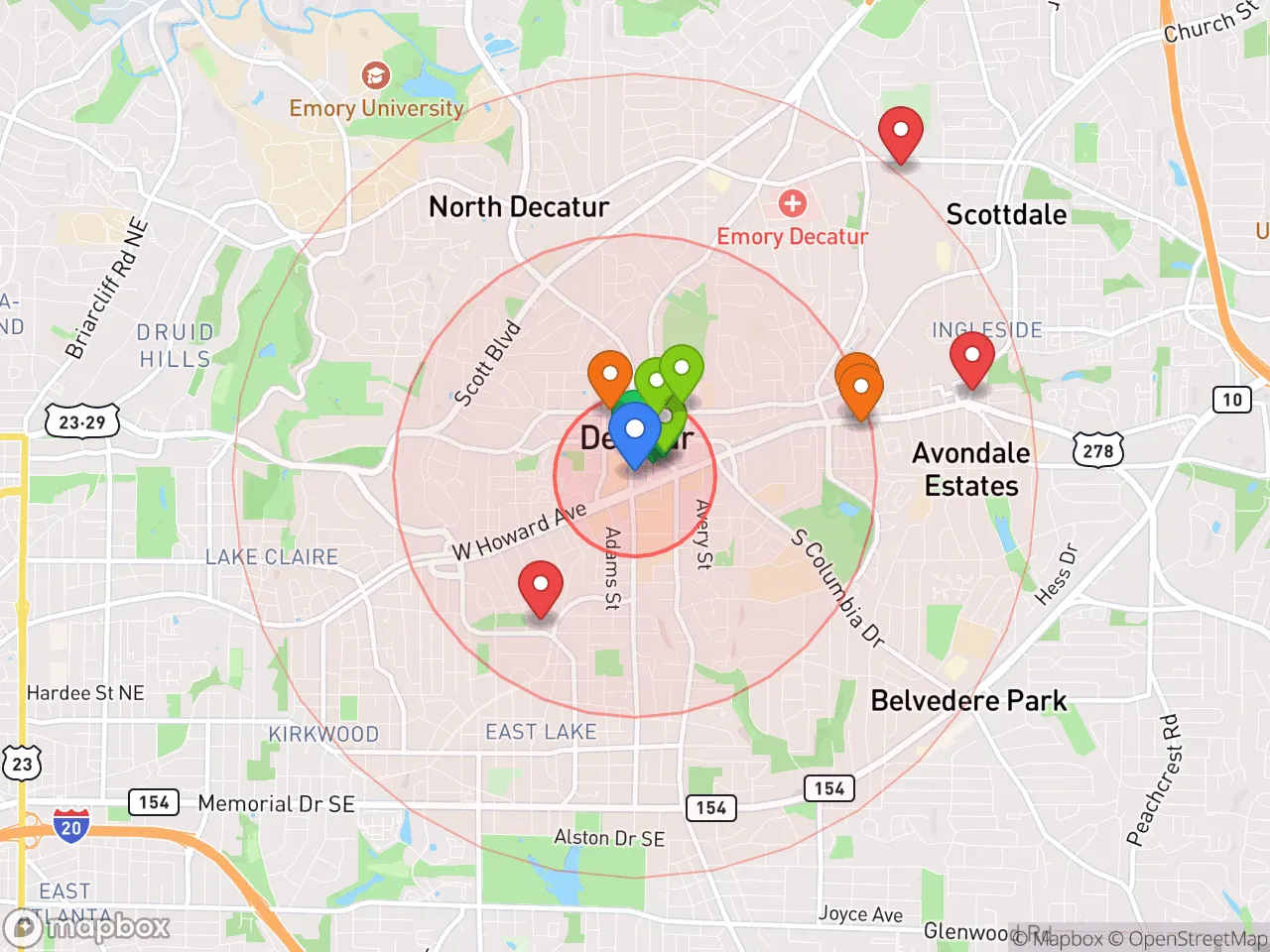
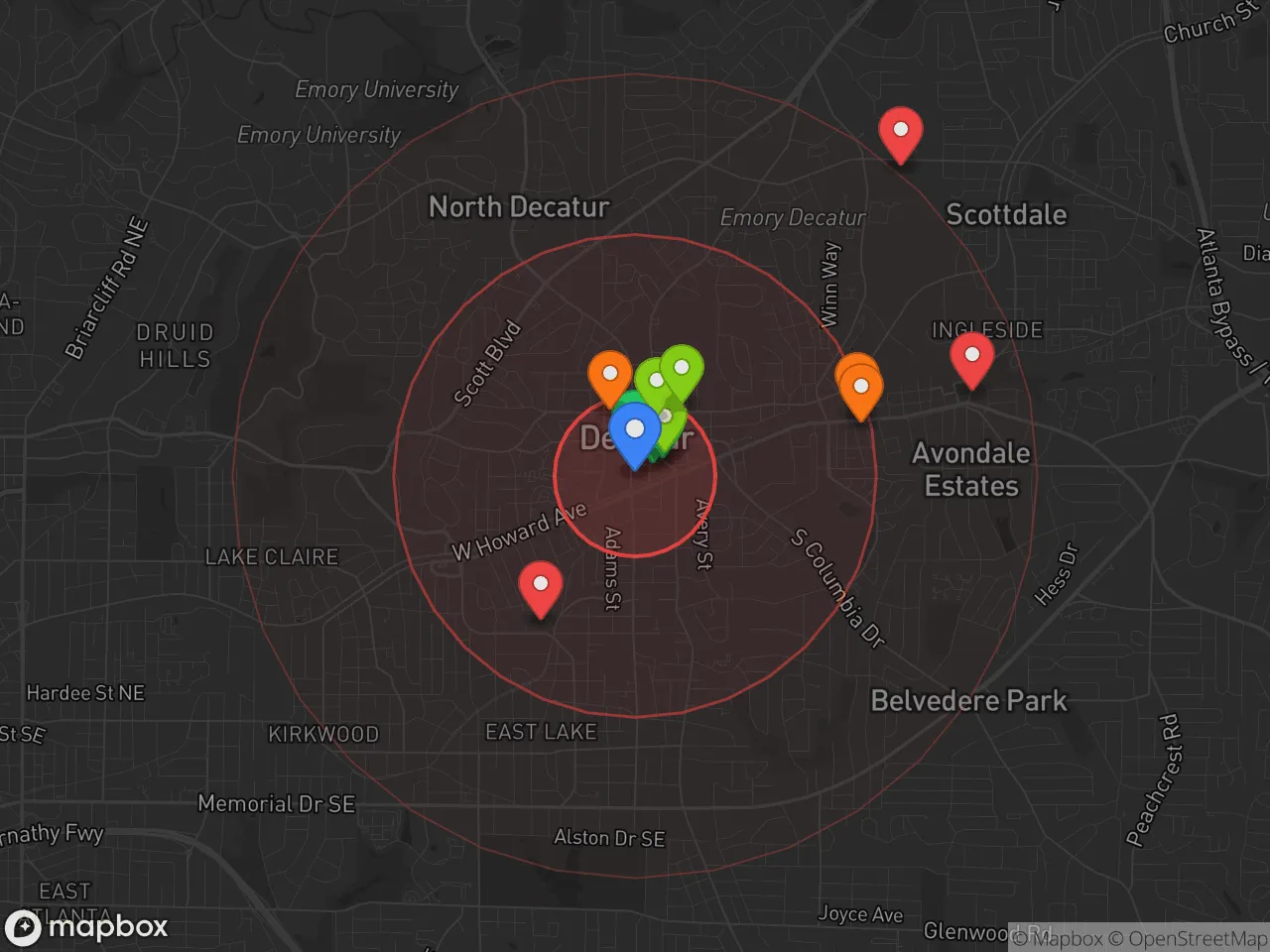
6 within 10 miles
Gas
20 within 10 miles
Hospital
20 within 20 miles
Airport
ATL — Hartsfield–Jackson Atlanta International
Post Office
USPS — Decatur, GA
Critical Amenities
Quality-of-Life Analysis
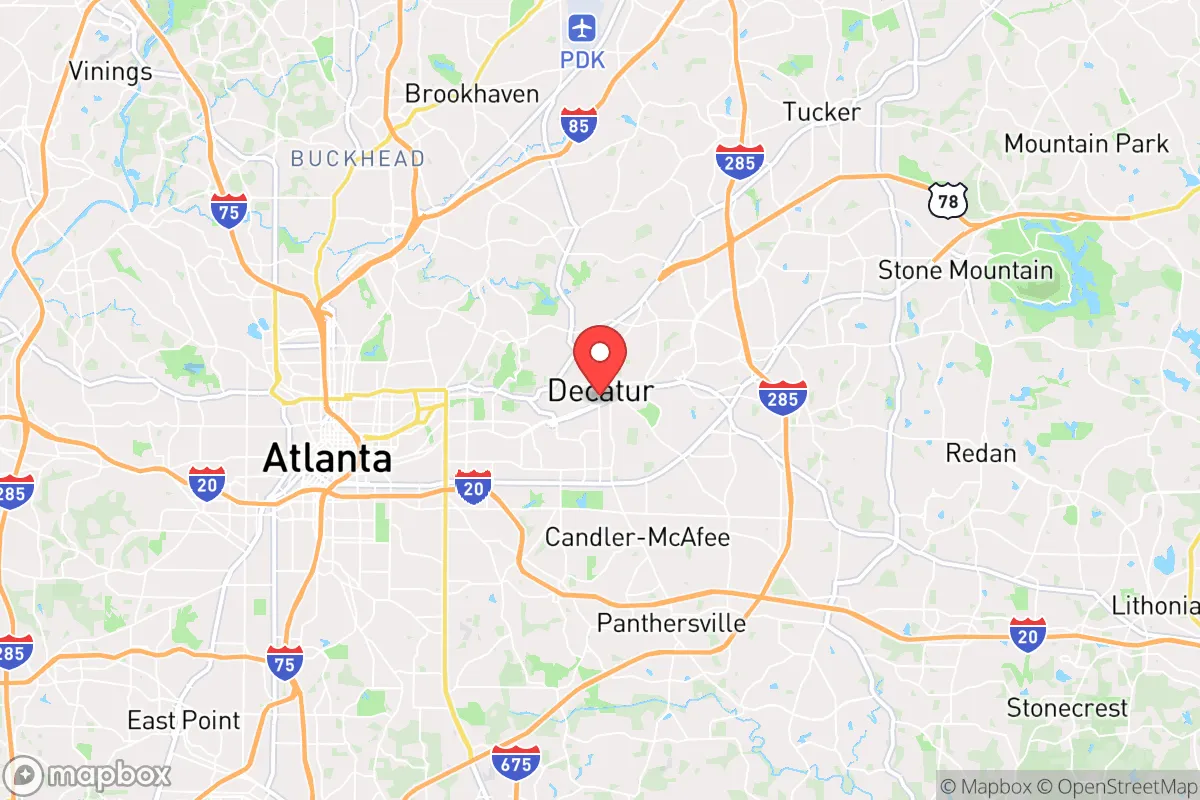
Decatur, Georgia, is an affluent, walkable, and politically progressive enclave just six miles east of downtown Atlanta, attracting a mix of young professionals, academics from nearby Emory University, and long-established families who prize its historic character and strong sense of community. With a cost-of-living index of 182 (82% above the U.S. average), Decatur commands a premium for its small-town feel within a major metro area, drawing residents who are willing to pay more for top-tier schools, a vibrant downtown square, and a lifestyle centered on local shops, parks, and civic engagement rather than suburban sprawl.
Cost of living, housing, and how Decatur compares to Atlanta and the suburbs
Decatur’s housing market is the primary driver of its high cost of living. The median home value sits at $655,900, roughly double the national median and significantly higher than many neighboring intown Atlanta neighborhoods like Kirkwood or East Atlanta, where comparable homes often run 15–20% less. Median rent is $1,716, which is competitive with Atlanta proper but notably higher than outlying suburbs such as Stone Mountain or Tucker, where rents can fall below $1,400 for similar square footage. The average commute of 26.2 minutes is slightly longer than the national average of 26 minutes, reflecting the fact that many residents work in Atlanta or at Emory/Centers for Disease Control and Prevention (CDC) campuses, yet it remains shorter than the 30+ minute commutes typical of far-flung suburbs like Cumming or Kennesaw. Property taxes in Decatur are higher than in unincorporated DeKalb County due to the independent city school system’s millage rate, but many residents consider the premium worthwhile for the direct benefit of local schools and services.
What daily life is like for families: amenities, schools, and the downtown square
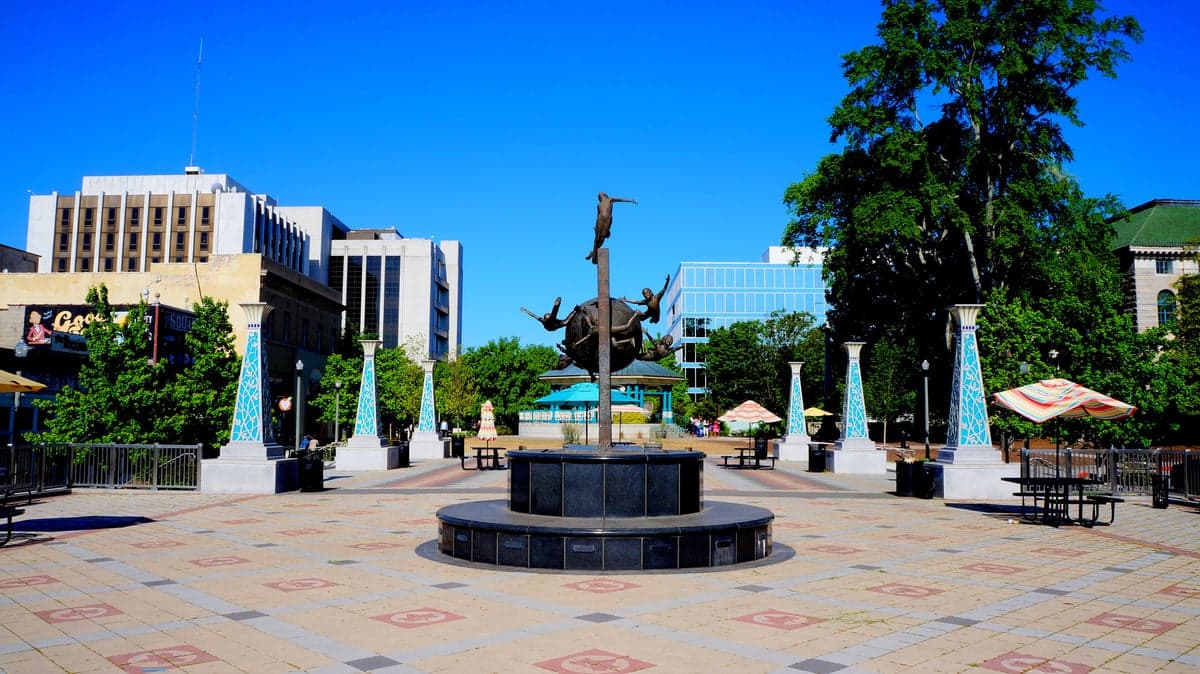
Daily life in Decatur revolves around its compact, pedestrian-friendly downtown, anchored by the historic Decatur Square with its farmers market, independent bookstores, and restaurants like Kimball House and Leon’s Full Service. The city’s Decatur City Schools district is consistently ranked among Georgia’s top 10, with schools like Decatur High School and Renfroe Middle School drawing families who might otherwise consider private education. Parks are abundant and well-used: Oakhurst Park, Glenlake Park, and the 185-acre Legacy Park offer playgrounds, sports fields, and walking trails that host community events year-round. The city’s MARTA rail station provides a direct 15-minute train ride to downtown Atlanta’s Five Points station, making car-free commuting feasible for many. The rhythm of life here is notably slower than in Atlanta proper—residents walk dogs, push strollers, and gather at coffee shops like Dancing Goats—but the trade-off is a higher price per square foot and less square footage than what a similar budget would buy in the suburbs.
Decatur is best suited for professionals and families who prioritize walkability, school quality, and a tight-knit community over space and affordability. Those who thrive here are typically willing to accept a smaller home or higher rent in exchange for being able to walk to dinner, the farmers market, or the train station, and who value a politically engaged, environmentally conscious local culture. It is less ideal for buyers seeking large lots, low property taxes, or a quiet suburban buffer from city life—those households are better served by Decatur’s outer-ring neighbors like Avondale Estates or Clarkston, where home prices drop by 15–25% and lot sizes increase. For the right resident, Decatur offers a rare combination of urban access, historic charm, and top-tier public education that justifies its premium cost.

Crime in Decatur, GA
Generally safer than 74% of comparable U.S. locations.
Violent CrimeViolent Crime Analysis
Property CrimeProperty Crime Analysis
Crime Analysis
Decatur, Georgia, reports a violent crime rate of 110.8 per 100,000 residents and a property crime rate of 1,706.4 per 100,000, figures that present a mixed safety picture for this small city within the Atlanta metropolitan area. While the violent crime rate is notably lower than both the Georgia state average and the national median, the property crime rate sits significantly higher than national benchmarks, making property-related offenses the primary safety concern for most residents. The city's progressive political environment, including its local judiciary and district attorney's office, has drawn scrutiny from those who argue that lenient sentencing philosophies may contribute to recidivism and a diminished deterrent effect for property crimes.
Crime in context
Decatur's violent crime rate of 110.8 per 100,000 is roughly one-third the national average of approximately 380 per 100,000, placing it among the safer small cities in Georgia for violent offenses like homicide, robbery, and aggravated assault. However, the property crime rate of 1,706.4 per 100,000 exceeds the national average of about 1,950 per 100,000 by a narrower margin and is substantially higher than many neighboring DeKalb County communities. This disparity is often attributed to Decatur's dense, walkable urban core and its proximity to Atlanta, which increases opportunities for theft, vehicle break-ins, and burglary. Critics of the local justice system point to progressive policies—such as diversion programs and reduced cash bail—as factors that may embolden repeat property offenders, as these approaches prioritize rehabilitation over incarceration.
What residents experience
Daily life in Decatur involves a heightened awareness of property crime, with residents frequently reporting incidents of package theft, bicycle theft, and car break-ins, particularly in the downtown and Oakhurst neighborhoods. The Decatur Police Department maintains a community-oriented policing model and publishes regular crime maps, but response times and clearance rates for property crimes are often lower than residents expect. The city's liberal political leadership has championed criminal justice reform, including the Decatur Municipal Court's focus on restorative justice and alternatives to jail time for non-violent offenders. While these measures aim to reduce incarceration rates and address root causes of crime, they have generated concern among homeowners and business owners who feel the system does not adequately prioritize victim restitution or public safety. For violent crime, the risk remains low, but the perception of a permissive judicial environment can erode confidence in long-term safety.
Neighborhood-level variation is significant in Decatur. Areas closer to the downtown square and the Decatur MARTA station experience higher foot traffic and correspondingly higher rates of theft and vandalism, while quieter residential streets in the Winnona Park and Glennwood Estates neighborhoods report fewer incidents. The city's annexation of unincorporated DeKalb County pockets has also introduced disparities in policing coverage and code enforcement. Prospective residents should examine block-level crime data and consider that the progressive judicial philosophy, while well-intentioned, may result in a higher tolerance for low-level property crime than in more conservative jurisdictions nearby, such as Avondale Estates or Tucker.
* Values derived from national, state, county, city and local statistics and may differ in a specific area. Last updated: 2026-04-23T05:25:18.000Z
Narrative content on this page is AI-generated and may contain mistakes. Verify any details that matter before acting on them.
ReloMaps may earn a commission from affiliate links at no extra cost to you.

