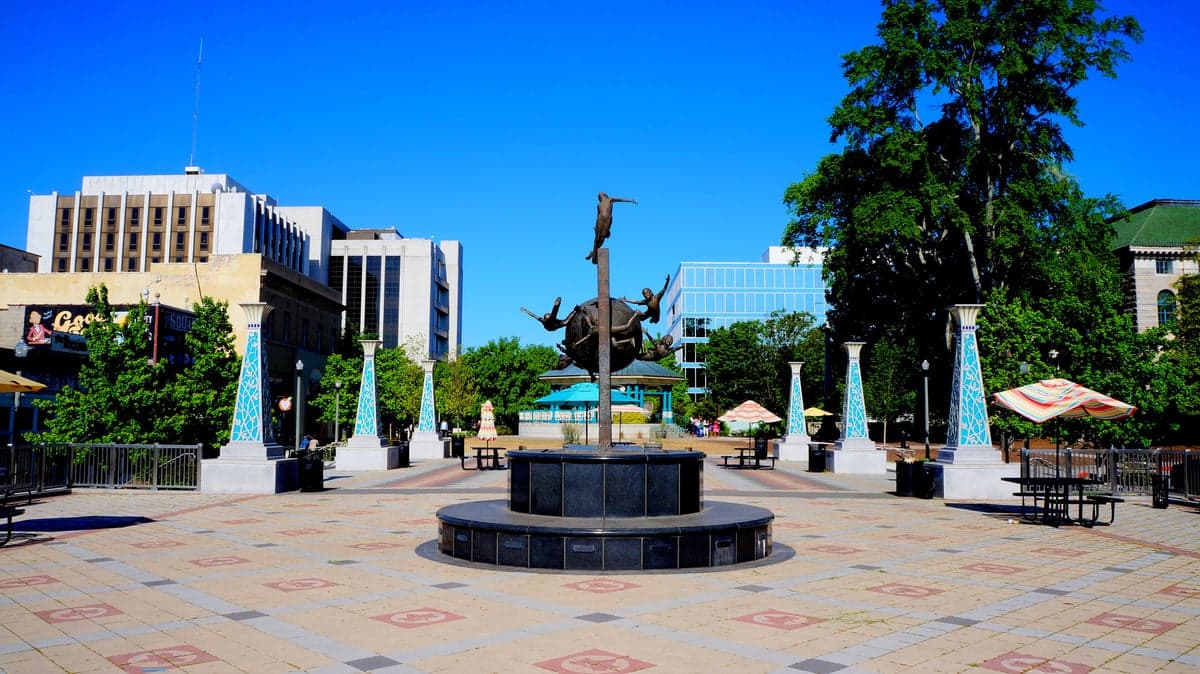
Photo: Wikipedia
Strategic Assessment of Decatur, GA
Multiple tactical vulnerabilities. Population density, target proximity, or disaster risk are likely compounding. A retreat property and exit planning is required.
What does the Strategic Assessment tell us?
Our Strategic Assessment grades tactical survivability of an area. Major population centers, military targets, fallout zones, natural disasters, and border exposure all drive risk — lower exposure means a more defensible position in a crisis.
This is heavily inspired by Joel Skousen's Strategic Relocation book. Highly recommended you checkout the book ($)What does this tell us?
Our Strategic Assessment grades tactical survivability of an area. Major population centers, military targets, fallout zones, natural disasters, and border exposure all drive risk — lower exposure means a more defensible position in a crisis.
This is heavily inspired by Joel Skousen's Strategic Relocation book. Highly recommended you checkout the book ($)Strategic Pillars

Key Distances
Regional Safe Places
Below is our recommended "safe zones" in Georgia and the surrounding area based on our strategic heuristics. For most people, it's unrealistic to live in a “safe zone” full-time due to work, family or other personal reasons. They tend to be more rural. However, many of these areas are perfect for second homes and retreat properties that double as a vacation home or even a short-term rental.
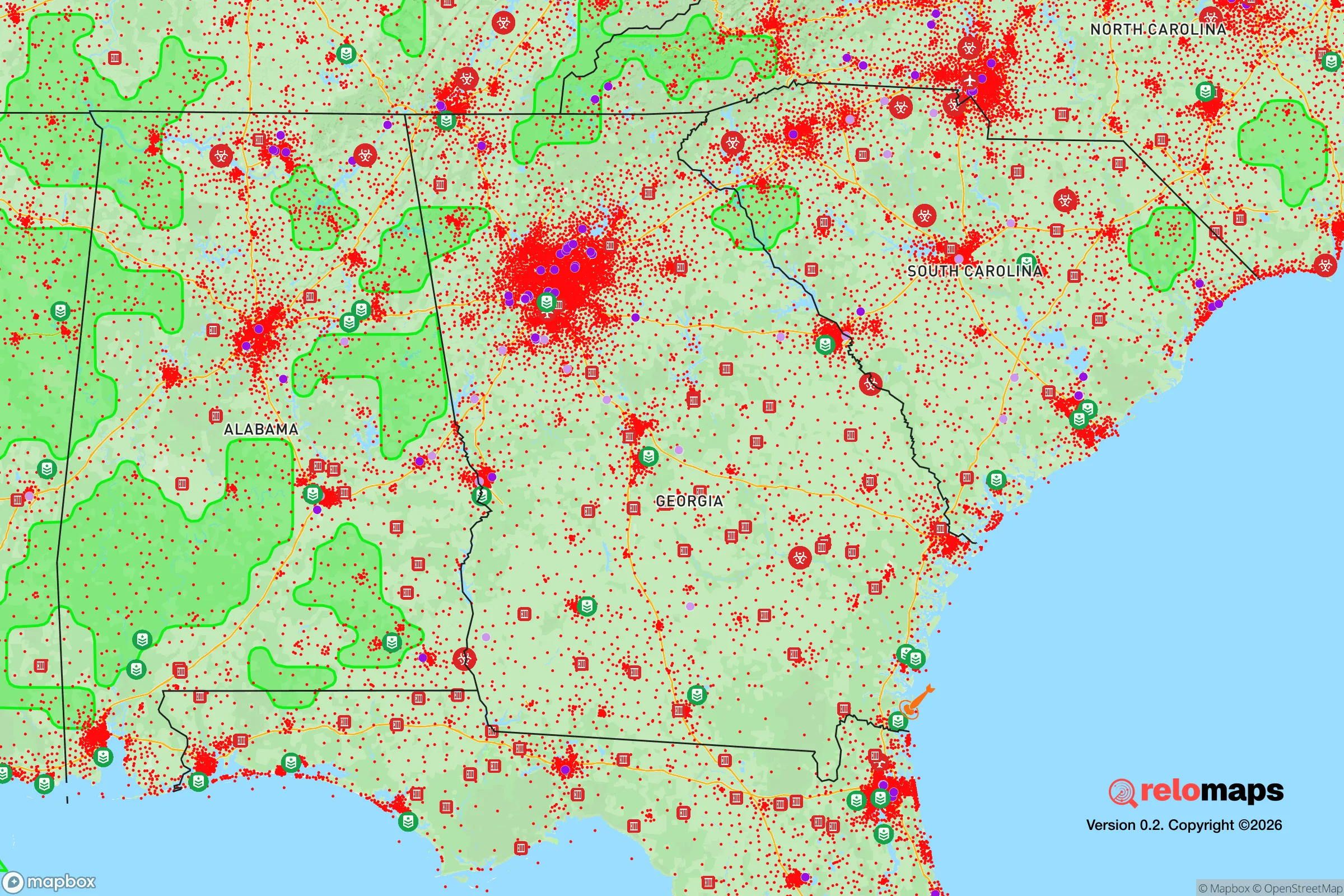
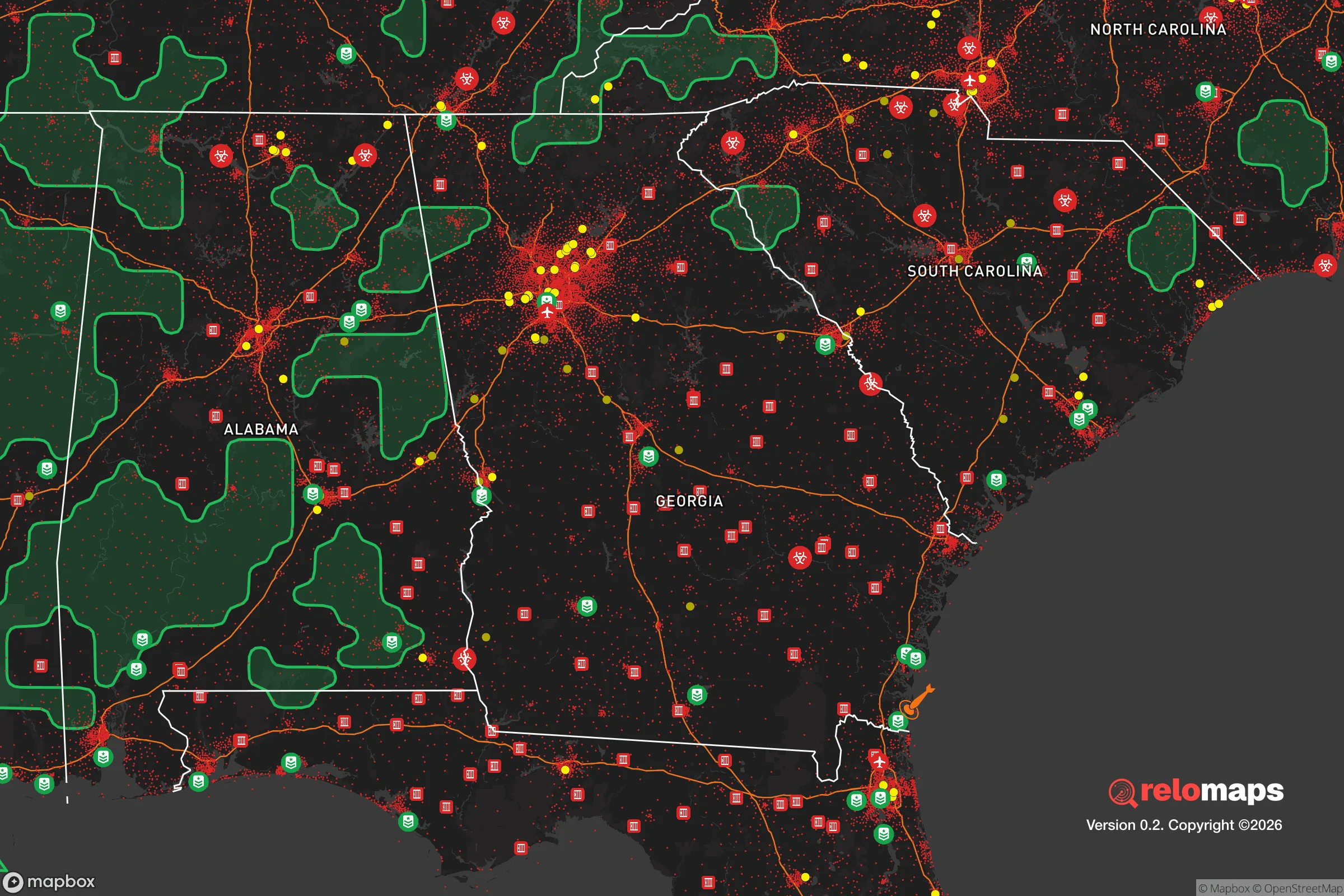


Important Note: For informational purposes only. This does not mean nothing bad ever happens in the green zones. Please use common sense. This is based on public data and modeled with AI. We tried to take a conservative approach but mistakes happen. We update this regularly as new information becomes available.
Solar Generator Recommendations
Backup power matters more here than in safer locations. We've picked three solar generators across budgets and capacity tiers — start with the budget unit if you only need a few essentials, or step up if you want to run a fridge and HVAC for days at a time.

Jackery Portable Power Station Explorer 300
Budget OptionPower on the Go: Weighing only 11 lbs, it's convenient to set up and store with book-sized foldable solar panels

BLUETTI Portable Power Station AC180
Designed for both indoor and outdoor scenarios, AC180 is highly capable as it has a robost capacity and continuous output power.

EF ECOFLOW DELTA Pro Ultra Power Station
Upgraded PickEcoFlow DELTA Pro Ultra is a whole-home energy system designed to grow with your family. Integrated with the Smart Home Panel 2, it scales to meet your evolving energy needs — keeping your home powered, intelligent, and secure through every stage of life.
We earn a commission, at no additional cost to you.
Strategic Assessment Analysis
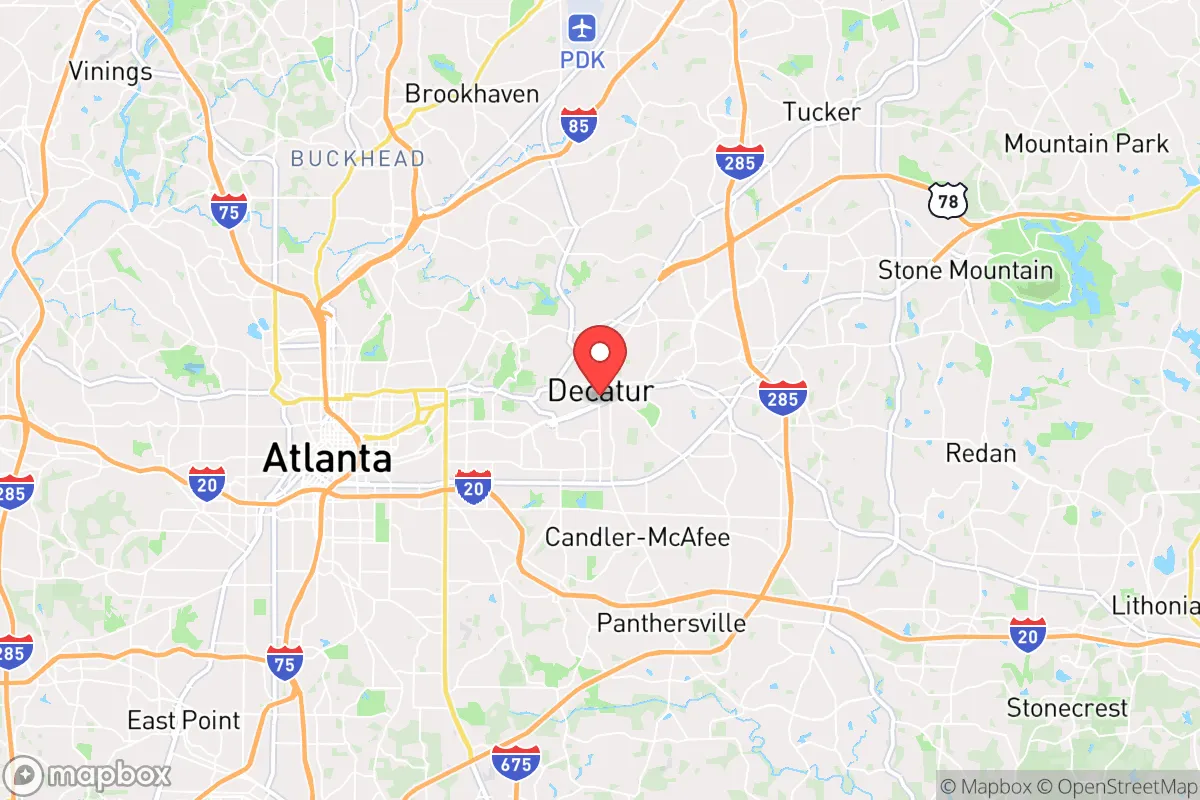
Decatur, Georgia, presents a complex strategic picture for the conservative prepper. On one hand, its location just six miles east of downtown Atlanta places it squarely in the bullseye of any major urban collapse, civil unrest, or infrastructure failure. On the other hand, its position within DeKalb County offers a surprising mix of resilience factors—mature tree canopy, a robust local water supply via the Chattahoochee River watershed, and a dense network of state and county roads that, while congested in normal times, provide multiple egress routes. The city’s historic core and established neighborhoods give it a defensible, walkable character that many newer suburban sprawls lack. For the relocator weighing long-term stability against immediate risk, Decatur is a high-risk, high-reward proposition: you are close enough to Atlanta to be affected by its worst days, but the area’s natural advantages and community infrastructure could make it a viable base of operations if you plan ahead.
Geographic position and natural advantages for long-term survival
Decatur sits on the eastern edge of the Piedmont region, characterized by rolling hills, granite bedrock, and dense hardwood forests. The city’s elevation—roughly 1,000 feet above sea level—offers modest defensive terrain advantages over the flatter areas to the south and west. The primary natural asset is water. Decatur lies within the Chattahoochee River watershed, and the river itself is only about 10 miles west. More immediately, the area is dotted with small creeks and ponds, including Glenn Creek, Peachtree Creek, and the South River, which run through DeKalb County. While these are not large enough for sustained withdrawal, they provide a surface water source for filtration in a grid-down scenario. The soil is generally clay-heavy, which complicates gardening but also slows erosion and retains moisture better than sandy loam. The tree canopy—predominantly oaks, maples, and pines—offers natural cover, firewood, and raw materials for shelter or tools. For a prepper, the key takeaway is that Decatur’s natural environment is not a desert or a floodplain; it is a temperate, well-watered zone that can support subsistence living if you know how to work the land.
Risks, exposures, and proximity to fallout-relevant landmarks
The most glaring vulnerability is proximity to Atlanta. Decatur is directly adjacent to the I-285 perimeter and within a 15-minute drive of Hartsfield-Jackson Atlanta International Airport, one of the busiest airports in the world. In a national emergency—whether a pandemic, terrorist attack, or economic collapse—this airport becomes a primary vector for disease, refugees, and military lockdowns. The city is also near Fort Gillem (a former Army depot now used for federal logistics) and Dobbins Air Reserve Base, both of which could become staging areas for federal response or, in a worst-case scenario, targets for adversaries. Decatur itself hosts DeKalb County government buildings and the DeKalb County Jail, which could become flashpoints during civil unrest. The city’s grid is heavily dependent on Georgia Power and AT&T infrastructure, both of which are vulnerable to cyberattacks or physical sabotage. The CSX rail line running through Decatur carries hazardous materials, including chlorine and ammonia, which could be released in a derailment or attack. For the conservative relocator, these are not abstract risks—they are concrete, measurable threats that demand a layered defense plan.
Practical resilience for a relocator: food, water, energy, and defensibility
For a single individual or family looking to hunker down, Decatur offers a mixed bag. Water is the most critical resource. The city’s municipal supply comes from the Chattahoochee River, treated at the Hemphill Water Treatment Plant. In a prolonged outage, that plant is a single point of failure. A prepper should plan for at least two weeks of stored water per person, plus a Berkey or similar gravity filter for creek water. Food is easier. Decatur has a strong local food scene, including the Decatur Farmers Market (seasonal) and multiple grocery stores like Publix, Kroger, and Whole Foods. But in a crisis, these will empty within hours. A better bet is the DeKalb Farmers Market on East Ponce de Leon Avenue—a massive international market with bulk dry goods, grains, and canned items. For long-term food production, the clay soil requires raised beds or container gardening; the Decatur Community Garden network is a resource, but you’ll need your own plot. Energy is a weak point. The grid is reliable in normal times but vulnerable to weather events (ice storms, tornadoes) and cyberattacks. Solar panels are feasible given the area’s 217 sunny days per year, but homeowners associations (HOAs) in some Decatur neighborhoods restrict visible panels. A generator and a 50-gallon propane tank are a more practical first step. Defensibility is where Decatur shines relative to open suburbs. The city’s street grid is a mix of narrow, tree-lined roads and a few main arteries (Ponce de Leon, Scott Boulevard, North Decatur Road). This creates natural chokepoints. A determined group could block off a few key intersections and create a secure perimeter. The Decatur Police Department is well-funded and responsive, but in a collapse scenario, you cannot rely on them. Your best defense is a tight-knit neighborhood watch and a plan to consolidate with trusted neighbors. The DeKalb County Sheriff’s Office has a strong presence, but their jurisdiction is vast; response times in a crisis will be measured in hours, not minutes.
The overall strategic picture for Decatur is one of calculated risk. It is not a remote retreat—it is a suburban outpost on the edge of a major metropolitan area. For the conservative prepper who values community, infrastructure, and access to resources, it offers a viable base if you are willing to invest in hardening your home, building local alliances, and maintaining a low profile. The proximity to Atlanta is a double-edged sword: it provides jobs, medical facilities (including Emory University Hospital and Children’s Healthcare of Atlanta), and supply chains, but it also guarantees that any national-level disaster will hit Decatur hard and fast. The city’s political leanings are overwhelmingly progressive, which may create friction for a conservative relocator, but in a survival scenario, ideology matters less than competence and trust. If you are looking for a place to ride out the storm with a solid plan, Decatur can work—but only if you treat it as a forward operating base, not a final redoubt. The smart move is to use Decatur as a staging point while identifying a secondary location farther out, perhaps in the North Georgia mountains, for a true bug-out scenario. In short: Decatur is a place to live prepared, not to hide.

* Values derived from national, state, county, city and local statistics and may differ in a specific area. Last updated: 2026-04-23T05:25:18.000Z
Narrative content on this page is AI-generated and may contain mistakes. Verify any details that matter before acting on them.
ReloMaps may earn a commission from affiliate links at no extra cost to you.

