Photo: Wikipedia
Find The Best Places To Live
in Decatur
PRO TIP! You can paste a Zillow or Redfin link to get info on that property.
What It's Like Living in Decatur, GA
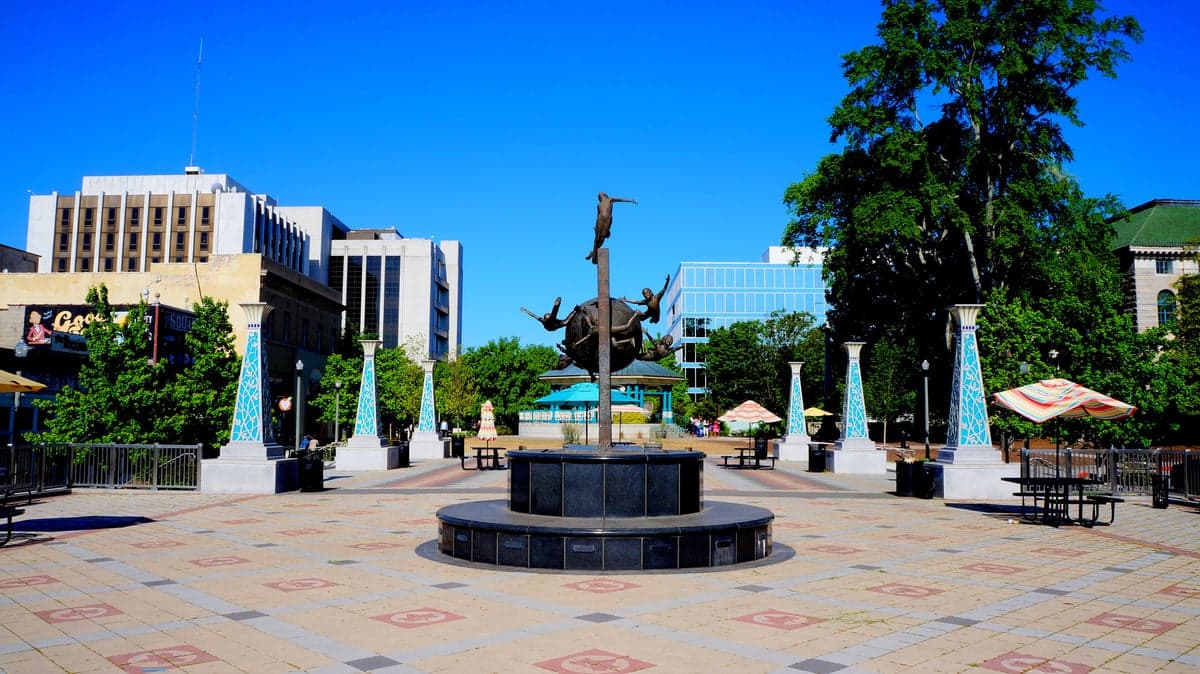
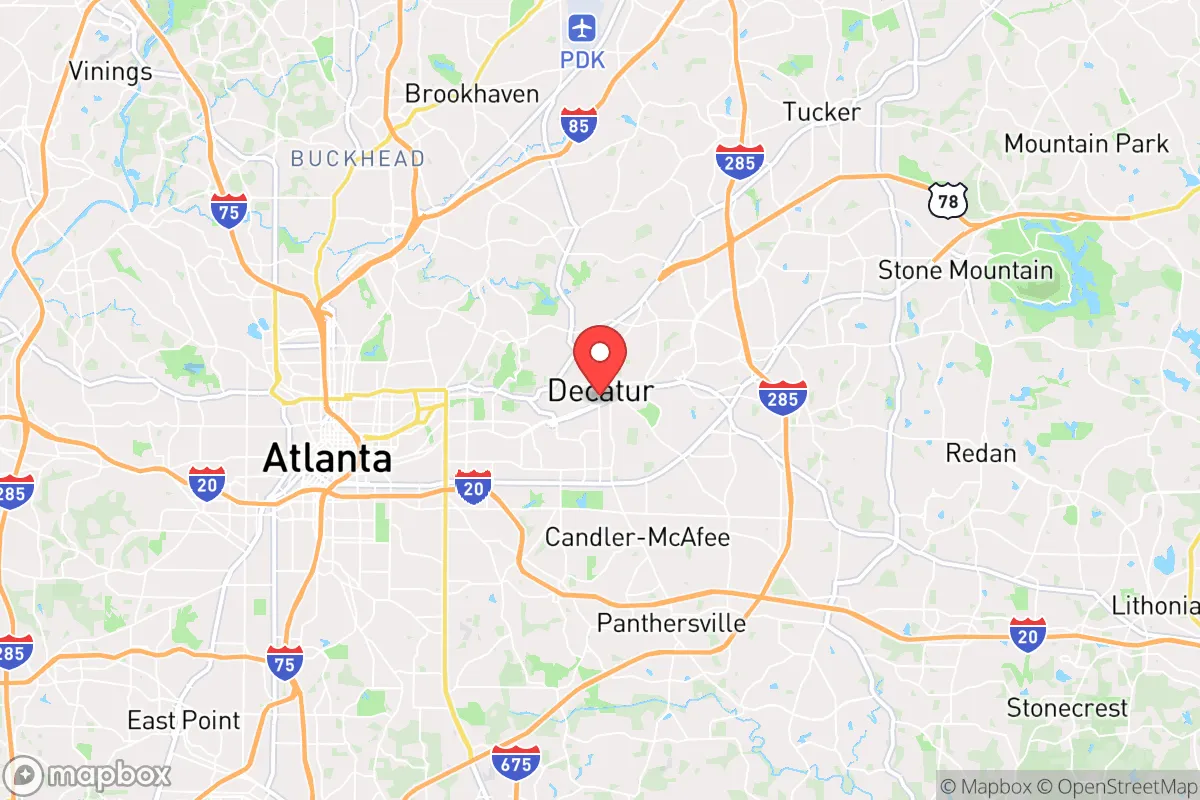
Decatur, Georgia, is a small, fiercely independent city that feels more like a walkable, tree-shaded college town than a suburb of Atlanta, even though it’s completely surrounded by the capital. With a population just under 24,500, it has its own school system, its own downtown square, and a distinct identity that residents guard proudly. Living here means trading sprawling lawns and chain restaurants for front-porch neighborhoods, independent bookstores, and a civic life that revolves around the local farmers market and high school football games.
The Daily Rhythm: Walkable Blocks, Local Spots, and a 26-Minute Commute
Daily life in Decatur centers on its compact downtown square, anchored by the historic Old Courthouse. On a typical weekday, you’ll see parents pushing strollers to Java Monkey for coffee, office workers grabbing lunch at Taqueria del Sol (the line moves fast), and kids biking to the Decatur Recreation Center after school. The city’s median age of 39.6 reflects a population heavy on established professionals and families who chose Decatur specifically for its walkability and top-rated schools. Grocery shopping means a trip to the Decatur location of Your DeKalb Farmers Market — a cavernous, international food hall that’s a weekend ritual for many — or the smaller, pricier Kroger on East College Avenue. The average commute is about 26 minutes, which is shorter than the Atlanta metro average, but that number can spike to 45 minutes if you’re driving into Midtown during rush hour. Most residents accept the trade-off: a 15-minute drive to the airport or a 10-minute Uber to a Braves game, in exchange for a neighborhood where you can walk to dinner and know your mail carrier by name.
Sports, Schools, and Saturday Mornings: Where Community Happens
High school sports are a genuine cultural force here. Decatur High School football games on Friday nights draw hundreds of residents — not just parents, but empty-nesters and young couples who never attended the school. The Bulldogs’ rivalry with nearby Columbia High School is the biggest ticket in town. For pro sports, Atlanta’s teams are a 15-minute drive or MARTA ride away: Atlanta United (soccer) has a passionate following among younger Decaturites, and Braves games at Truist Park are a common weekend outing, though the stadium’s location in Cobb County means a 30-minute drive. What really defines community life, though, is the Decatur Farmers Market on Saturday mornings from April to November. It’s less a shopping trip and more a social event — you’ll see neighbors catching up over crepes from a food truck, kids running through the Oakhurst neighborhood’s grassy lots, and local musicians playing near the square. The city’s many parks, like Glenlake Park and Adair Park, host youth soccer leagues and pickup basketball games that feel like the backbone of weekend life.
What There Is to Do: Festivals, Music, and the Quirks of a Small City
Decatur punches above its weight in entertainment. The Decatur Book Festival, held over Labor Day weekend, is one of the largest independent book festivals in the country, drawing authors and crowds from across the Southeast. The Decatur Arts Festival in May fills the square with local painters, potters, and live music. For nightlife, the Eddie’s Attic music venue is a local institution — it’s a small, listening-room style club where John Mayer and the Indigo Girls played early in their careers. The bar scene leans toward craft beer and wine: Brick Store Pub is a nationally recognized beer bar with a Belgian-focused upstairs room, and Leon’s Full Service is a popular spot for cocktails and oysters. A notable cultural quirk: Decatur has a city-wide ban on chain restaurants in its historic downtown core, which means the square is filled with local spots like Kimball House (oysters and cocktails) and Cakes & Ale (farm-to-table). This gives the city a distinctly independent, slightly artsy feel — you won’t find a Starbucks on the square, though there is one a block away.
Pros and Cons of Living Here: What Residents Actually Say
The biggest pro is the school system. Decatur City Schools are consistently ranked among the top in Georgia, and the community’s high property taxes (part of the reason for the cost of living index of 182) directly fund them. The violent crime rate of 110.8 per 100,000 is notably lower than Atlanta’s (around 1,200 per 100,000) and feels even safer in practice — most crime is property-related and concentrated near commercial corridors. The biggest con is cost. The median home value of $655,900 and median household income of $140,480 mean that many residents are house-rich and cash-poor; it’s a place where two-income professional couples or dual-career families can afford a 3-bedroom bungalow, but single people on a median salary will struggle to buy. Traffic on Ponce de Leon Avenue and Church Street can be frustrating during peak hours, and the city’s popularity means that popular restaurants often have 45-minute waits on weekends. Another frustration: parking. The downtown square has limited free parking, and residents complain about the city’s aggressive enforcement of two-hour limits. But for those who fit — educated, community-minded, willing to pay for walkability and schools — Decatur offers a quality of life that’s hard to find elsewhere in metro Atlanta.

Similar towns to Decatur
* Values derived from national, state, county, city and local statistics and may differ in a specific area. Last updated: 2026-04-23T05:25:18.000Z
Narrative content on this page is AI-generated and may contain mistakes. Verify any details that matter before acting on them.
ReloMaps may earn a commission from affiliate links at no extra cost to you.

