Photo: Wikipedia
Demographics of Delaware City, DE
Affluence Level in Delaware City, DE
A middle-class area roughly in line with national averages across income, home values, education, and employment.
People of Delaware City, DE
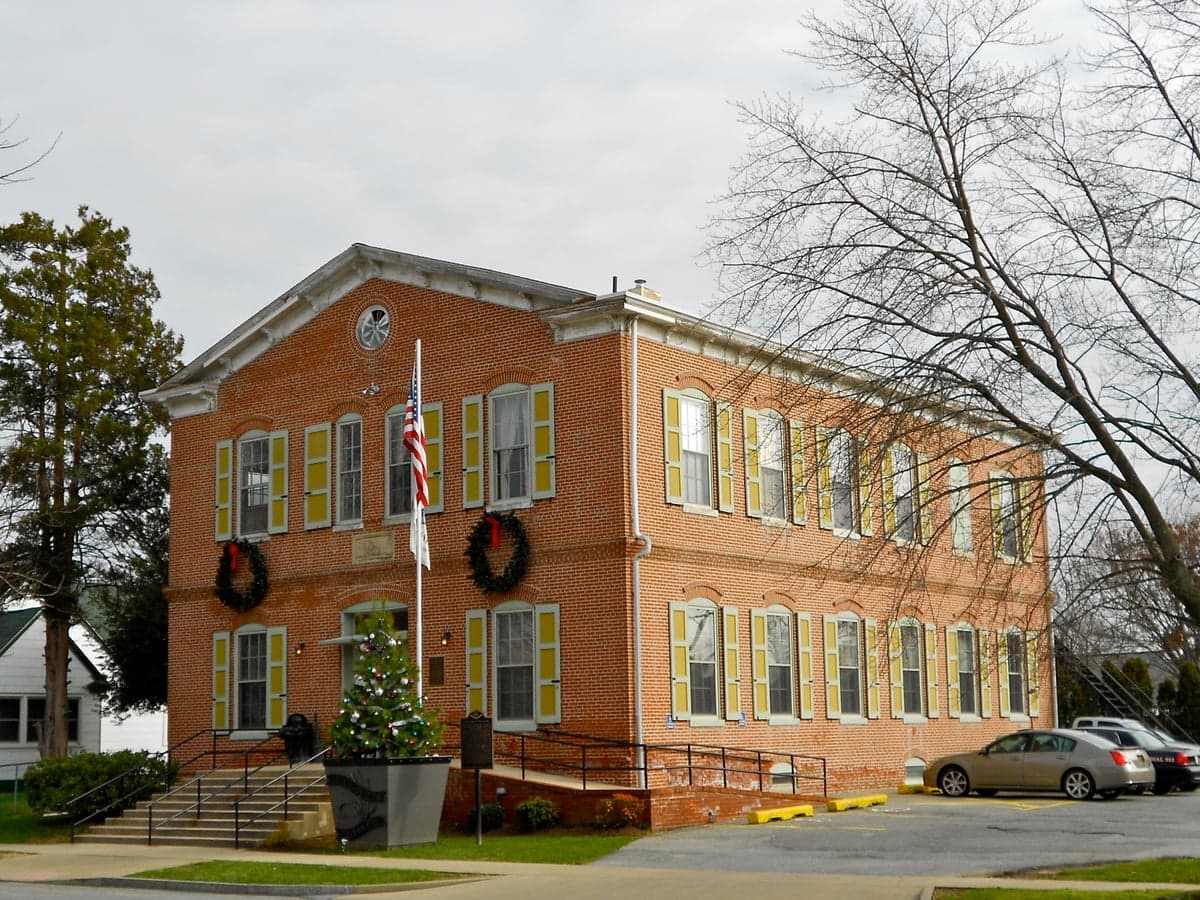
Delaware City, Delaware, is a small, tight-knit community of 1,976 residents that retains a distinctly historic, working-class character. The population is predominantly White (74.3%), with a Hispanic minority of 9.6% and a Black population of 8.1%, while the foreign-born share is negligible at just 0.4%. The city feels like a preserved pocket of pre-suburban Delaware, where a quarter of adults hold a college degree (21.5%), and the pace of life is shaped by the C&D Canal and the nearby Delaware River.
How the city was settled and grew
Delaware City was founded in 1826 as a planned port town, built specifically to serve as the eastern terminus of the Chesapeake & Delaware Canal. The original population was overwhelmingly of English, Scottish, and Irish descent, drawn by canal construction jobs and maritime trade. The earliest residents clustered in the Historic District, a grid of streets laid out around Clinton Street and the waterfront, where canal workers and ship captains built modest brick and frame homes. A second wave of Irish immigrants arrived during the 1830s and 1840s to dig the canal's deeper locks, settling in what became known as Irish Row along Fifth Street. The city's growth stalled after the canal was rerouted in the 1920s, leaving the population largely static and ethnically homogeneous through the mid-20th century. By 1950, Delaware City was nearly all White, with a small Black population concentrated in the South Side area near the former ferry landing.
Modern era (post-1965)
After the 1965 Immigration and Nationality Act, Delaware City saw almost no new foreign-born arrivals—the 0.4% foreign-born share today is among the lowest in New Castle County. Instead, the city's modest demographic change came from domestic migration. The Hispanic population, now 9.6%, began growing in the 1990s as Mexican and Central American families moved into older housing stock in the West End, near the intersection of Fifth Street and Clinton Street, drawn by low rents and proximity to agricultural and landscaping jobs in surrounding New Castle County. The Black population, 8.1%, is largely composed of long-established families who have lived in the South Side and along Fourth Street for generations, with little new in-migration from outside the region. The Asian population remains at 0.0%, and the Indian-subcontinent population is also 0.0%, reflecting the city's lack of the professional job base or university presence that attracts those groups to other parts of Delaware. The college-educated share, at 21.5%, is significantly below the state average of about 33%, consistent with a blue-collar economy centered on the nearby Delaware City Refinery and the Delaware Memorial Bridge's maintenance operations.
The future
Delaware City's population is slowly aging and shrinking, with no major new housing developments or employment centers on the horizon. The Hispanic share may continue to grow modestly as families in the West End expand, but the city's limited rental stock and lack of new construction will keep overall growth near zero. The White population, while still dominant, is likely to decline gradually as younger residents leave for job opportunities in Wilmington or Newark. The Black and Asian populations are expected to remain stable at current low levels, as the city does not attract the immigrant or professional flows that are reshaping nearby areas like Middletown or Bear. The city is not tribalizing into distinct ethnic enclaves—its small size and historic housing stock mean that neighborhoods remain mixed by income and race, with no single group dominating any block.
For someone moving in now, Delaware City offers a stable, low-diversity community with a strong sense of place and very low crime, but limited economic opportunity and little demographic change ahead. It is a place for those who value quiet, historic small-town life over the diversity and dynamism of larger Delaware suburbs. The population will likely remain below 2,000 for the foreseeable future, with a character that feels more like 1950 than 2026.

* Values derived from national, state, county, city and local statistics and may differ in a specific area. Last updated: 2026-04-29T22:29:56.000Z
Narrative content on this page is AI-generated and may contain mistakes. Verify any details that matter before acting on them.
ReloMaps may earn a commission from affiliate links at no extra cost to you.

