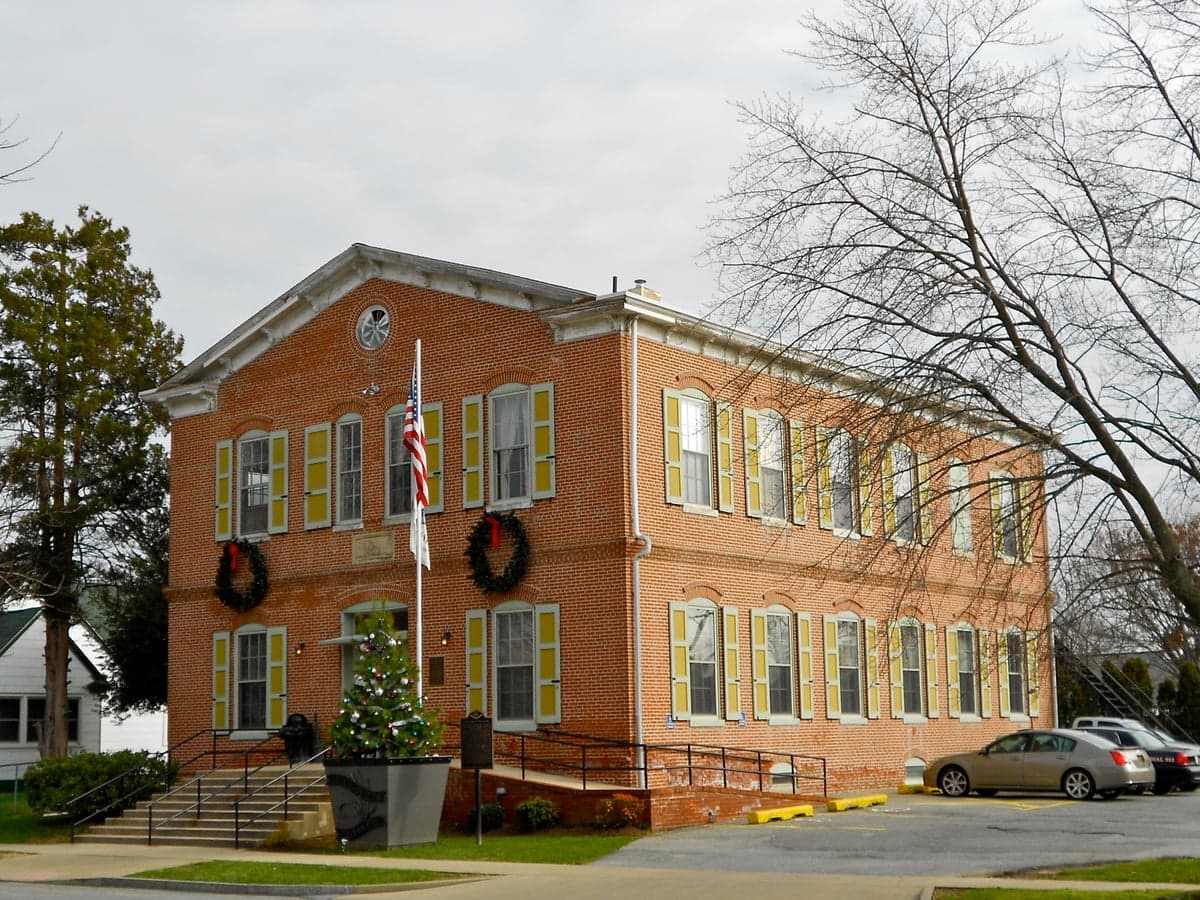
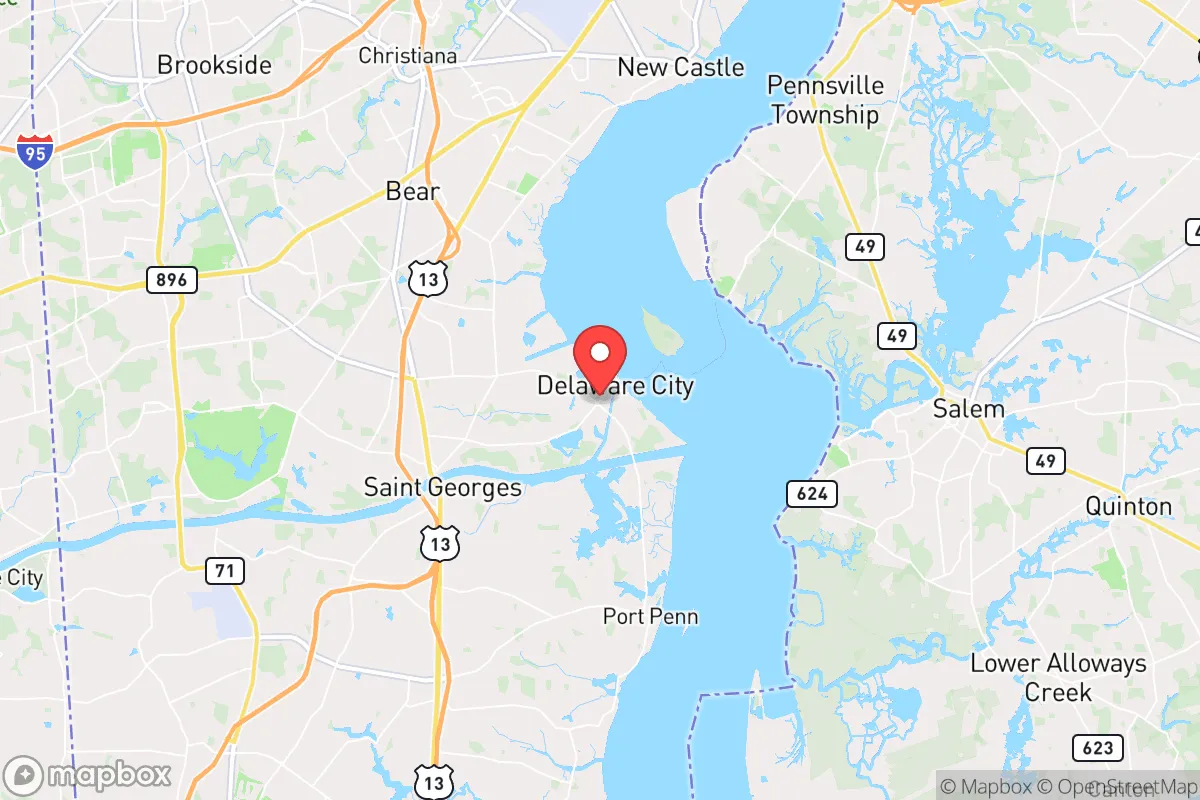
Photo: Wikipedia
Political ClimatePolitical Climate in Delaware City, DE
District shown is the primary district for this city’s centroid. Cities may span multiple districts.
Inherited from parent state — no local data available.
Local Political AnalysisPolitical Analysis of Delaware City, DE
Delaware City, Delaware, sits in a political bubble that’s become more pronounced over the last decade. The area’s Cook Partisan Voting Index (PVI) of D+8 tells you the official story—solidly Democratic—but what that number doesn’t capture is how much the local culture has shifted away from the independent, live-and-let-live attitude that used to define this small river town. If you’ve been around here long enough, you remember when folks didn’t vote straight party lines; they voted for the person they trusted at the diner or the hardware store. Now, the political machinery in Dover and Wilmington has pulled Delaware City into a progressive orbit that feels increasingly disconnected from the everyday concerns of people who just want to be left alone to run their businesses, raise their kids, and keep their property without a new regulation every time the legislature meets.
How it compares
Drive ten miles west to Odessa or fifteen miles south to Middletown, and you’ll find a completely different political atmosphere. Those towns lean more conservative, with Middletown’s rapid growth attracting families who moved specifically to escape the higher taxes and tighter restrictions in New Castle County. Delaware City, by contrast, is increasingly lumped in with the progressive corridor that runs from Wilmington down through Newark. The contrast is stark: in Middletown, you still hear people talk about property rights and school choice as if they matter; in Delaware City, the conversation at the local coffee shop is more likely to be about the latest state mandate on energy efficiency or zoning changes that make it harder to build a simple shed without a permit. The D+8 rating masks the fact that many long-time residents here feel like their votes are being drowned out by newcomers who bring big-city ideas about how government should run every aspect of life.
What this means for residents
For anyone who values personal freedom, the trend is concerning. The state government in Dover has been pushing a steady stream of legislation that chips away at local autonomy—think stricter building codes, higher minimum wages that squeeze small businesses, and environmental rules that make it expensive to maintain a waterfront property. Property taxes in New Castle County have risen faster than in neighboring counties, and while Delaware City itself isn’t the worst offender, the county-level policies hit everyone. If you’re a gun owner, you’ve watched the state tighten carry laws and magazine restrictions year after year. If you run a small contracting or landscaping business, you’ve seen the paperwork multiply. The long-term trajectory points toward more of the same: more regulations, more fees, and less room for the kind of self-reliance that used to be the backbone of this community.
One cultural distinction worth noting: Delaware City has a strong historic preservation streak, which sounds nice until you realize it’s been used to block new development and limit what homeowners can do with their own property. The town’s charm is real, but the price of that charm is a local government that’s increasingly comfortable telling you what color you can paint your front door or whether you can park your boat in your own driveway. Combine that with the state-level push toward progressive policies, and you’ve got a place where the old-timers feel like they’re living in a museum that someone else is curating. If the trend continues, expect more families to head west to Kent County or south to Sussex, where the political climate still respects the idea that you ought to be the boss of your own life.

State Political ClimatePolitical Climate in Delaware
State Political AnalysisPolitical Environment in the State
Delaware, despite its small size, is a politically complex state that has leaned reliably Democratic for decades, but with a conservative undercurrent in its southern counties that makes it more nuanced than its "blue state" label suggests. Over the past 10-20 years, the state has shifted leftward, driven by explosive growth in New Castle County (Wilmington and its suburbs) and a steady influx of out-of-state professionals, while Sussex and Kent counties have held the line as Republican strongholds. The overall trajectory is concerning for conservatives: the state has moved from a purple swing state in the 1990s to a solidly blue one in presidential elections, with Democrats now controlling the governorship, both legislative chambers, and all statewide offices.
Urban vs. rural divide
The political map of Delaware is a tale of three counties. New Castle County, home to over 55% of the state's population, is the Democratic engine. Wilmington, Newark, and the I-95 corridor suburbs like Bear and Middletown vote heavily blue, driven by union households, university communities (University of Delaware), and a growing professional class commuting to Philadelphia or working in the state's financial and legal sectors. Kent County, anchored by Dover, is a true battleground — the capital city itself leans Democratic, but the surrounding rural areas and towns like Milford and Harrington vote Republican, making the county competitive but trending left. Sussex County is the conservative heartland, with beach towns like Rehoboth Beach and Lewes showing a surprising mix: the coastal resort areas are increasingly liberal (attracting retirees from the Northeast), while inland farming communities and towns like Georgetown and Seaford remain deeply Republican. The divide is stark: in 2024, New Castle County gave Democrats a 30-point margin, while Sussex County went Republican by 12 points.
Policy environment
Delaware's policy environment has become a cautionary tale for conservatives. The state has no sales tax, which sounds appealing, but it makes up for it with high property taxes (especially in New Castle County) and a progressive income tax that tops out at 6.6% on income over $60,000 — a relatively low threshold that hits middle-class families hard. The regulatory posture is heavy: Delaware is notorious for its corporate-friendly incorporation laws (over 60% of Fortune 500 companies are incorporated here), but for individuals, the state imposes strict environmental regulations, a statewide building code that drives up housing costs, and a recent push for electric vehicle mandates. Education policy is a mixed bag: school choice exists through charter schools, but the state's powerful teachers' union has blocked meaningful voucher programs. In 2023, Governor John Carney signed a law requiring all public schools to adopt "culturally responsive" curricula, which conservatives view as ideological indoctrination. Election laws are concerning: Delaware has no voter ID requirement, automatic voter registration through the DMV, and same-day registration — policies that raise integrity concerns. The state also legalized recreational marijuana in 2023, but with heavy taxation and licensing that favors large corporations over small businesses.
Trajectory & freedom
Delaware is moving in a decidedly less free direction. The most alarming trend is on gun rights: in 2022, the legislature passed a sweeping "assault weapons" ban, a 10-round magazine limit, and a permit-to-purchase requirement for handguns — one of the strictest packages in the nation. The state also passed a "red flag" law in 2018 that allows courts to temporarily seize firearms without a criminal conviction. On parental rights, the situation is deteriorating: in 2024, the legislature passed a law prohibiting schools from notifying parents if a child changes their gender identity or pronouns, overriding parental authority. Medical freedom took a hit with strict COVID-19 mandates that lasted longer than in neighboring states, and the state maintains one of the highest vaccination rates for schoolchildren. Property rights are under pressure from aggressive zoning laws in New Castle County that limit development and drive up home prices. On the positive side, Delaware has no inheritance tax and relatively low estate taxes, which is a draw for retirees — but the overall trajectory is toward more government control over daily life.
Civil unrest & political movements
Delaware has seen its share of political flashpoints. Wilmington experienced significant civil unrest in 2020 following the George Floyd protests, with looting and property damage that led to a National Guard deployment. The city remains a focal point for progressive activism, with groups like the Delaware Poor People's Campaign and the Delaware Working Families Party pushing for rent control, defunding the police, and reparations. On the right, the Delaware GOP has been revitalized by grassroots groups like the Delaware Patriots and the Sussex County Republican Club, which have organized against vaccine mandates, critical race theory in schools, and the gun ban. Immigration politics are relatively quiet compared to border states, but Delaware is a "sanctuary state" in practice: state law prohibits law enforcement from inquiring about immigration status, and the state offers driver's licenses to undocumented immigrants. Election integrity remains a hot-button issue: the 2020 election saw widespread use of mail-in ballots without a signature verification requirement, and the state's permanent absentee voter list has been criticized as ripe for abuse. The most visible flashpoint for a new resident would be the constant political signage battles along Route 1 in Sussex County, where "Trump Won" signs still dot the landscape alongside "Hate Has No Home Here" yard signs.
Projection
Over the next 5-10 years, Delaware will likely continue its leftward drift. Demographic trends are the driver: New Castle County is growing faster than the rest of the state, and the influx of remote workers from New York and New Jersey is accelerating. The beach towns of Sussex County are also becoming more liberal as wealthy retirees from blue states buy second homes and register to vote locally. The Republican Party is increasingly confined to the rural inland areas of Sussex and Kent counties, which are losing population relative to the coastal and suburban areas. A new resident moving in now should expect: higher taxes (the state is considering a mileage tax for electric vehicles and a wealth tax on capital gains), more restrictions on firearms, continued erosion of parental rights in schools, and a political culture that increasingly mirrors New Jersey or Maryland. The one wild card is the state's fiscal health: Delaware faces a looming pension crisis and a shrinking corporate tax base as more companies reincorporate elsewhere, which could force a reckoning that shifts the political conversation toward fiscal conservatism.
Bottom line for a conservative moving to Delaware: you are moving to a state where your vote will be marginalized in statewide elections, but you can find refuge in Sussex County or the rural parts of Kent County. The policy environment is hostile to gun rights, parental authority, and fiscal conservatism, but the state's low crime rate (outside Wilmington), excellent schools in certain districts, and lack of sales tax are genuine draws. If you value personal freedom, you will need to be politically active — join the local GOP, attend school board meetings, and fight every battle. Delaware is not Texas or Florida, but it is not California either — yet.
* Values derived from national, state, county, city and local statistics and may differ in a specific area. Last updated: 2026-04-29T22:29:56.000Z
Narrative content on this page is AI-generated and may contain mistakes. Verify any details that matter before acting on them.
ReloMaps may earn a commission from affiliate links at no extra cost to you.

