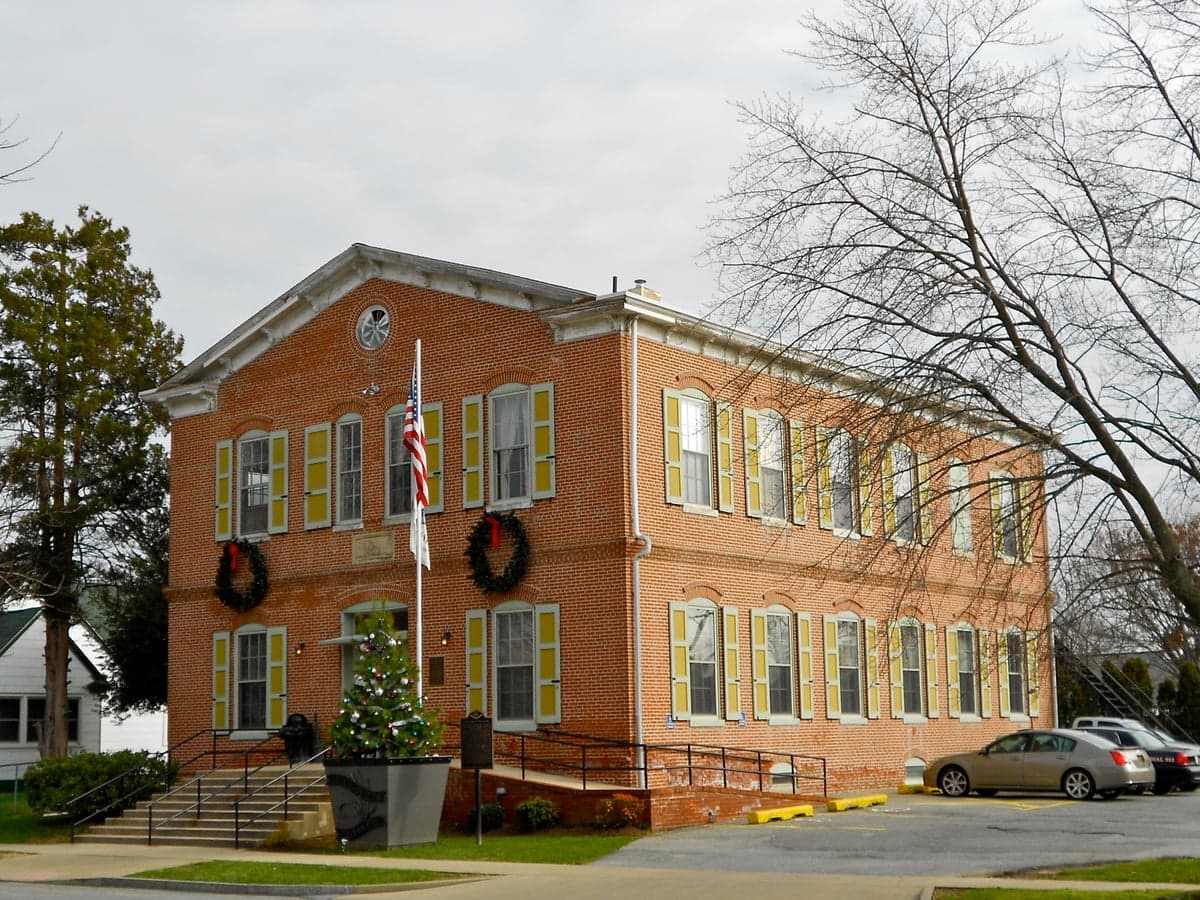
Photo: Wikipedia
Personal Sovereignty in Delaware City, DE
Viable for self-reliance. Generally workable, though some barriers may limit total independence.
What does Personal Sovereignty tell us?
Personal Sovereignty measures your capacity for self-reliance and independence with minimal government friction. Higher scores mean fewer barriers between you and the way you want to live... but it assumes you have the space you need and good neighbors.
What does this tell us?
Personal Sovereignty measures your capacity for self-reliance and independence with minimal government friction. Higher scores mean fewer barriers between you and the way you want to live... but it assumes you have the space you need and good neighbors.
State Policy
Energy independence: Importer (2% of energy produced in-state)
Personal Liberty
Homesteading

Personal Liberty Analysis
Delaware City, Delaware, offers a mixed bag for those prioritizing personal sovereignty, where a low-tax, business-friendly state reputation clashes with some of the most restrictive gun laws in the nation and a regulatory environment that can feel intrusive to the self-reliant. For the conservative-leaning individual or parent evaluating this small coastal town as a potential redoubt, the calculus is less about outright freedom and more about strategic trade-offs. The state’s lack of a sales tax and relatively low property taxes are genuine draws, but the legal framework around self-defense, medical autonomy, and parental rights requires careful scrutiny. Here is the unvarnished analysis of what personal sovereignty looks like on the ground in Delaware City.
Tax burden and regulatory posture: Low visible taxes, hidden compliance costs
Delaware’s tax structure is often cited as a major advantage, and for good reason. There is no state or local sales tax, which immediately puts more money back into your pocket on every purchase—a meaningful benefit for preppers stockpiling supplies or families managing tight budgets. Property taxes in New Castle County, where Delaware City sits, are among the lowest in the Northeast, typically hovering around 0.55% to 0.65% of assessed value. A $300,000 home might carry an annual tax bill of roughly $1,800, far less than neighboring Maryland or Pennsylvania. However, the regulatory posture is less friendly. Delaware’s corporate-friendly reputation masks a thicket of state-level permitting and environmental regulations, particularly in coastal zones like Delaware City. The state’s Department of Natural Resources and Environmental Control (DNREC) has broad authority over land use, wetlands, and construction, which can complicate any off-grid or homesteading projects. For the survivalist, this means the low tax burden is real, but the bureaucratic overhead for building a self-sufficient property is higher than in more rural, less regulated states like West Virginia or Idaho.
Self-defense and gun law specifics: A restrictive regime that demands compliance
This is the most significant sovereignty compromise in Delaware City. Delaware is not a constitutional carry state; it requires a permit to carry a concealed firearm, and the process is neither quick nor cheap. You must complete a certified firearms training course, submit fingerprints, pass a background check, and pay fees that can total over $100. Open carry is legal without a permit, but in practice, this invites unwanted attention from law enforcement and the public in a small, liberal-leaning town. More concerning for the prepper mindset: Delaware bans "assault weapons" and high-capacity magazines (over 15 rounds for handguns, over 17 for rifles) under state law, and a 2022 law raised the minimum purchase age for long guns to 21. The state also has a "red flag" law (Extreme Risk Protection Order) that allows authorities to seize firearms without a criminal conviction based on a civil petition. For parents, this means teaching your children firearm safety is legal, but the state’s legal environment is hostile to the idea of an armed citizenry as a check on government overreach. If self-defense is a non-negotiable pillar of your sovereignty, Delaware City is a weak option compared to states like Texas, Florida, or New Hampshire.
Self-reliance and homesteading viability: Zoning and lot sizes limit off-grid potential
Delaware City is a small town (population roughly 1,700) with a historic district overlay, and that matters for homesteading. Most residential lots are 0.1 to 0.25 acres—typical for an older, dense coastal town. Zoning regulations in New Castle County generally prohibit keeping livestock like chickens or goats on standard residential lots, and any agricultural use requires specific zoning (AG or AR). Off-grid feasibility is poor: the town is connected to municipal water and sewer, and disconnecting from the grid would likely violate building codes. Solar panels are allowed but must comply with historic district aesthetic guidelines, which can be restrictive. Rainwater collection is not explicitly prohibited, but the state’s water rights are complex and favor municipal systems. For the serious prepper looking to grow food, raise animals, and reduce dependency on infrastructure, Delaware City is not the place. You would need to look at rural Sussex County (southern Delaware) or cross the border into Maryland’s Eastern Shore for larger parcels and looser zoning. The town’s small size does offer a lower population density than Wilmington, but it is still a suburban environment with neighbors close enough to notice unusual activity.
Personal liberties: Parental rights, medical autonomy, speech, and property
On parental rights, Delaware is a mixed jurisdiction. The state has mandatory vaccination requirements for school attendance (with medical and religious exemptions available, though religious exemptions have faced legal challenges). Homeschooling is legal but requires annual notification and submission of a curriculum outline to the local school district—a level of oversight that some conservative parents find intrusive. Medical autonomy is constrained: Delaware expanded Medicaid under the ACA and has a state-run health insurance exchange, which some view as government overreach. Vaccine mandates for healthcare workers and school staff have been enforced, and there is no state-level protection for alternative medical treatments like ivermectin or off-label use of drugs. On speech, Delaware is generally protective of First Amendment rights, but the state has a "hate crime" statute that enhances penalties for speech deemed to incite violence—a gray area for those who speak bluntly about political or cultural issues. Property rights are relatively strong, but the state’s environmental regulations (DNREC) can limit what you do with your land, especially near waterways. Eminent domain is used sparingly, but the state’s coastal zone management laws give government broad authority to restrict development. For the parent concerned about curriculum content or medical choices, Delaware City offers less latitude than states like Florida or Tennessee.
Overall, Delaware City presents a sovereignty profile that is strong on tax burden but weak on self-defense and homesteading. It is a place where you can keep more of your money but must accept a government that is skeptical of armed self-reliance and independent living. Compared to a place like rural New Hampshire (no sales or income tax, constitutional carry, strong property rights) or Idaho (minimal regulation, large lots, gun-friendly), Delaware City feels like a compromise—a low-tax coastal town where you can live quietly, but where the state retains significant leverage over your personal choices. For the strategic relocator, it works best as a temporary base or a retirement spot for those who prioritize low taxes over maximal freedom. If your vision of sovereignty includes a well-stocked armory, a few acres of crops, and minimal government oversight, look elsewhere. If you can live within the lines and value financial efficiency over absolute liberty, Delaware City might be worth a second look—but keep your exit plan ready.

* Values derived from national, state, county, city and local statistics and may differ in a specific area. Last updated: 2026-04-29T22:29:56.000Z
Narrative content on this page is AI-generated and may contain mistakes. Verify any details that matter before acting on them.
ReloMaps may earn a commission from affiliate links at no extra cost to you.

