Photo: Wikipedia
Quality of Life in Delaware, OH
A high quality of life with strong walkability, manageable living costs, healthy neighborhood signals, and solid amenity access.
What does Quality of Life tell us?
Quality of Life blends cost of living, nearby amenities, socioeconomic signals, and neighborhood character. City-level scores represent the whole municipality; individual neighborhoods can differ.
What does this tell us?
Quality of Life blends cost of living, nearby amenities, socioeconomic signals, and neighborhood character. City-level scores represent the whole municipality; individual neighborhoods can differ.
Cost of Living
2% above national average
The Real Cost of Living in Delaware, OH for 2026
| Tier | Individual | Family (4) |
|---|---|---|
| Survival | $19k | $36k |
| Comfortable | $54k | $80k |
| Luxury | $133k+ | $206k+ |
| Elite (Top 5%) | $157k+ | $243k+ |
116%
The Area Signal
A metric tracking the socioeconomic signals of the area.
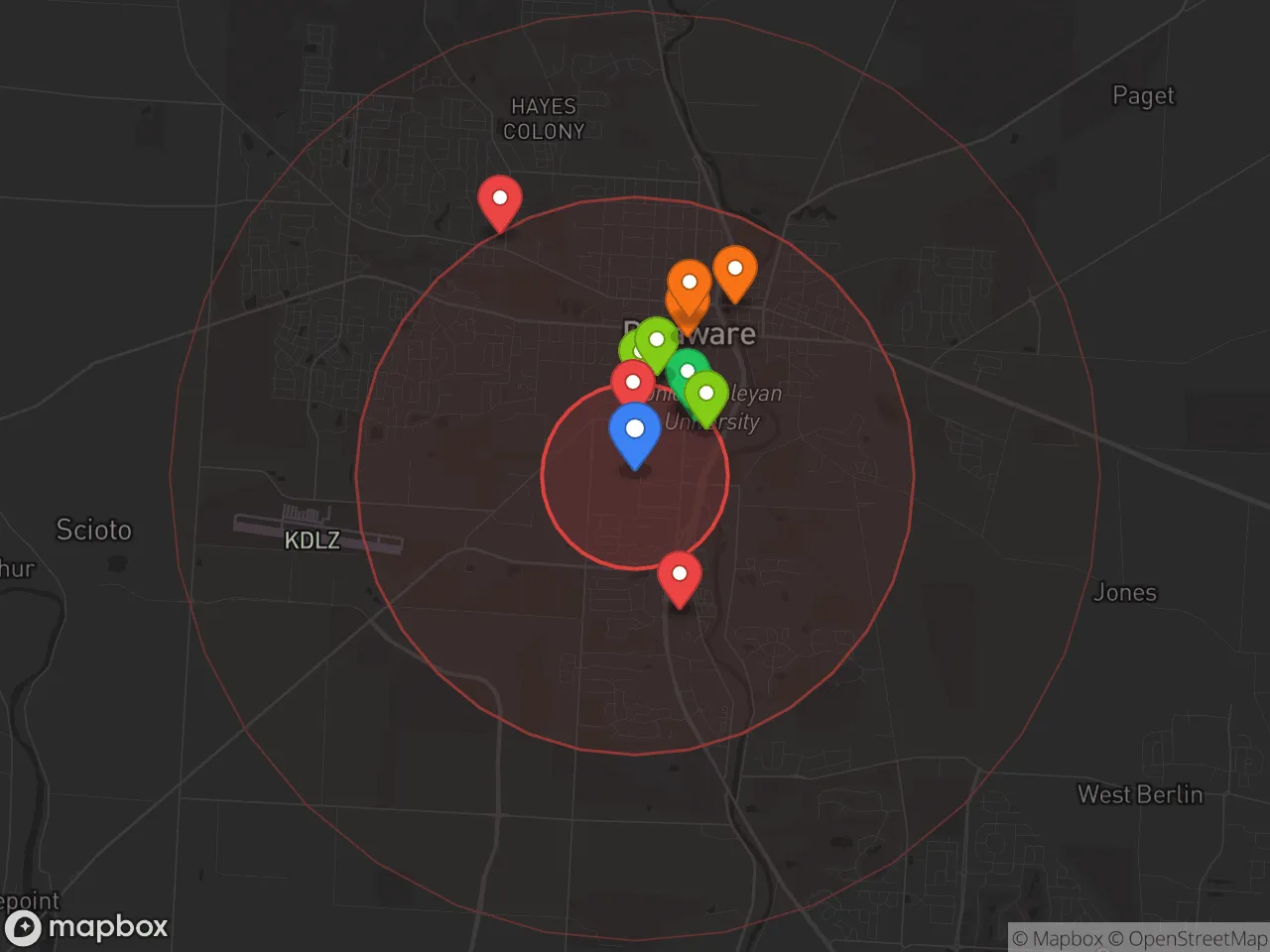
Hobbies
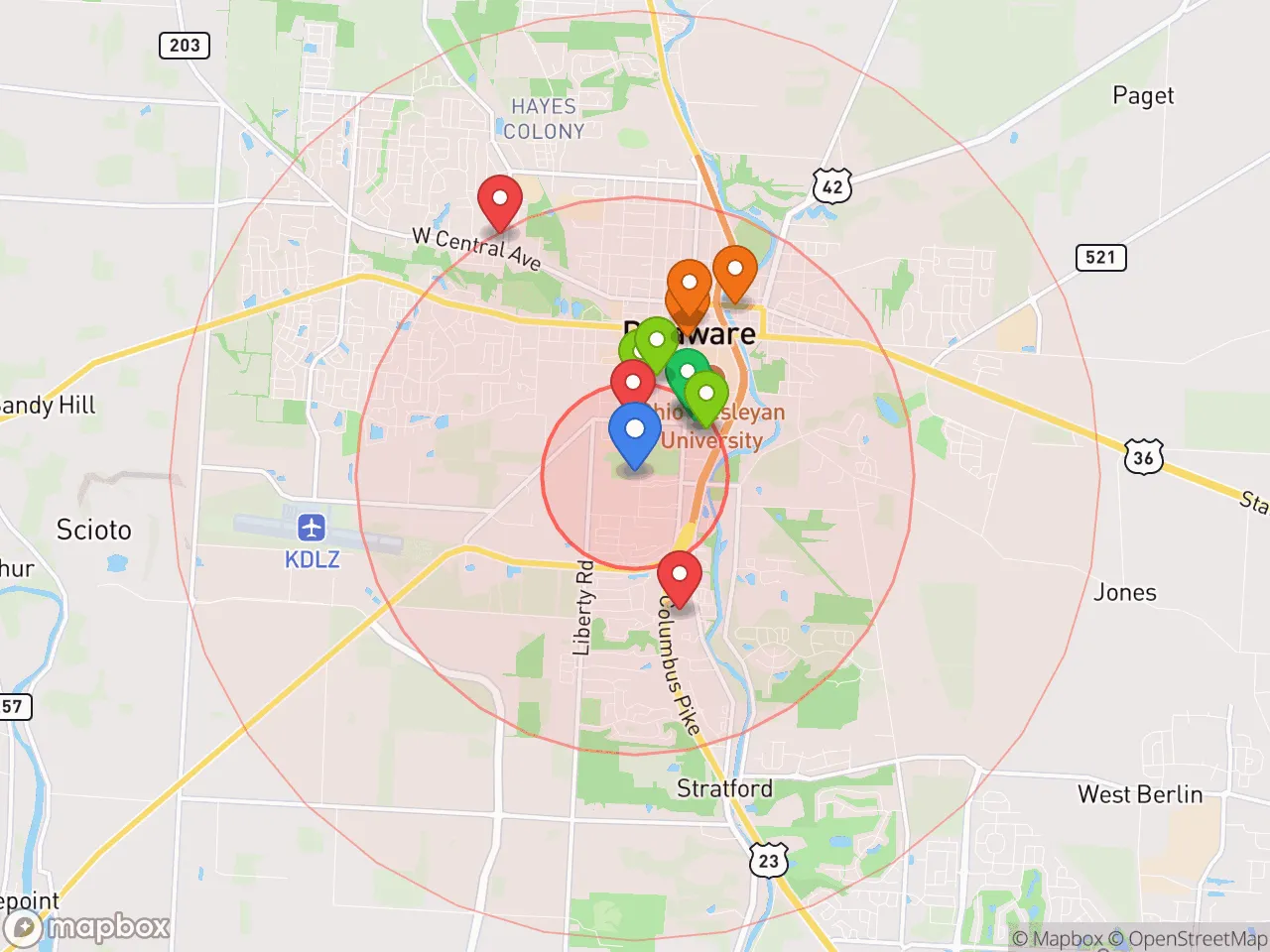
Explore the areaGroceries
7 within 10 miles
Gas
20 within 10 miles
Hospital
15 within 20 miles
Airport
John Glenn Columbus International Airport
Post Office
USPS — Delaware, OH
Critical Amenities
Quality-of-Life Analysis
Delaware, Ohio, is an affluent and growing suburban community in Central Ohio, home to roughly 41,000 residents who are predominantly white-collar professionals, families, and Ohio Wesleyan University affiliates. The city’s cost of living index sits at 102—just 2% above the national average—while median home values of $279,400 and median rents of $1,203 offer relative affordability compared to nearby Columbus suburbs like Dublin or Powell, where home prices often exceed $400,000. This balance of modest premium and strong local amenities attracts a mix of young families, university faculty, and long-term residents seeking a walkable historic downtown with modern conveniences.
Cost of living, housing affordability, and how Delaware compares to nearby suburbs
Delaware’s housing market remains competitive but accessible for the region. The median home value of $279,400 is roughly 15% below the Columbus metropolitan average for suburban single-family homes, while the median rent of $1,203 is about 10% lower than in neighboring Polaris or Worthington. Property taxes in Delaware County are moderate, with an effective rate around 1.5% of assessed value, and no city income tax for residents—a notable advantage over Columbus proper, which levies a 2.5% income tax. The average commute of 26.2 minutes is slightly longer than the national average of 26 minutes, but most residents drive to jobs in Columbus (via US-23 or I-71) or to local employers like the OhioHealth Grady Memorial Hospital and the city’s growing logistics sector. Utilities and groceries are near the national baseline, keeping overall monthly expenses manageable for a household earning the area’s median income of roughly $75,000.
What daily life is like for families: schools, parks, and local amenities
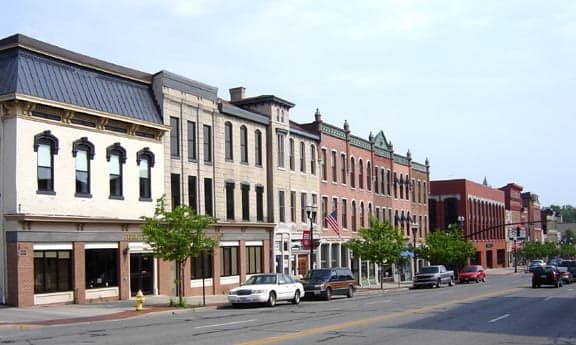
Daily life in Delaware centers on a compact, historic downtown with a courthouse square, independent shops, and a weekly farmers market from May through October. The Delaware City Schools district serves about 5,800 students and earns an A rating from Niche, with Hayes High School offering International Baccalaureate programs and strong extracurriculars. For younger children, the city operates 12 public parks, including the 100-acre Mingo Park with sports fields and a dog park, plus the Olentangy River Trail for biking and walking. The Strand Theatre, a restored 1916 movie house, hosts live performances and films, while Ohio Wesleyan University adds cultural events, lectures, and Division III athletics open to the public. Residents also have quick access to the Columbus Zoo and Aquarium (15 minutes south) and the Alum Creek State Park for boating and hiking. The overall pace is slower than Columbus but faster than rural Delaware County, with a strong sense of community evident in high participation at local festivals like the Little Brown Jug harness race and the Delaware Arts Festival.
Delaware is best suited for families seeking a safe, well-rated school district with a walkable downtown and reasonable commute to Columbus jobs, as well as retirees or university affiliates who value cultural amenities without big-city congestion. Singles and young professionals may find the social scene limited compared to Columbus neighborhoods like the Short North, but the city’s affordability and low crime rate (violent crime is roughly 60% below the national average) make it a strong choice for those prioritizing stability and space. For anyone wanting a suburban lifestyle with historic character and direct access to a major metro, Delaware offers a compelling, data-backed option in Central Ohio.

Crime in Delaware, OH
Lower crime rates than 83% of comparable U.S. locations.
Violent CrimeViolent Crime Analysis
Property CrimeProperty Crime Analysis
Crime Analysis
Delaware, Ohio, presents a mixed safety profile for prospective residents. The city’s violent crime rate of 192.4 incidents per 100,000 residents sits below the national average, but its property crime rate of 943.4 per 100,000 is notably higher than both state and national benchmarks. As a small city within the Columbus metropolitan area, Delaware’s proximity to a large urban center introduces crime pressures that are often exacerbated by the progressive judicial philosophies common in Franklin County and surrounding jurisdictions.
Crime in context
Delaware’s violent crime rate is roughly half the U.S. average, making serious offenses like homicide, robbery, and aggravated assault relatively rare. However, the property crime rate is approximately 30% higher than the national median, driven largely by theft and vehicle break-ins. This pattern mirrors many suburban communities near major metros, where transient criminal activity from the urban core raises local risk. The city’s location in Delaware County—historically more conservative—offers some buffer, but the influence of progressive district attorneys in the broader Columbus region can lead to lighter sentencing and faster recidivism, directly impacting property crime trends.
What residents experience
Daily life in Delaware feels generally safe, especially in well-established neighborhoods and near the historic downtown. Most violent crime is concentrated in specific areas, often tied to domestic disputes or drug-related incidents. Property crime, however, is a more pervasive concern. Residents report frequent incidents of unlocked car thefts, package thefts from porches, and occasional garage break-ins. The city’s police department has responded with targeted patrols and a community alert system, but the underlying challenge remains: a justice system that prioritizes rehabilitation over incarceration can leave repeat offenders on the streets, undermining deterrence.
Neighborhood-level variation is significant. Areas closer to the Ohio Wesleyan University campus and along the US-23 corridor see higher foot traffic and opportunistic crime. In contrast, newer subdivisions on the city’s north and west sides, such as those near Stratford Road, report lower incident rates. Prospective buyers should check block-level crime maps and consider that homes near major thoroughfares or rental-heavy zones carry elevated property crime risk. Overall, Delaware offers a livable environment for those who take standard precautions—locking vehicles, using outdoor lighting, and staying aware of local judicial trends that may affect long-term safety.
* Values derived from national, state, county, city and local statistics and may differ in a specific area. Last updated: 2026-04-21T19:15:25.000Z
Narrative content on this page is AI-generated and may contain mistakes. Verify any details that matter before acting on them.
ReloMaps may earn a commission from affiliate links at no extra cost to you.

