Photo: Wikipedia
Political ClimatePolitical Climate in Delaware, OH
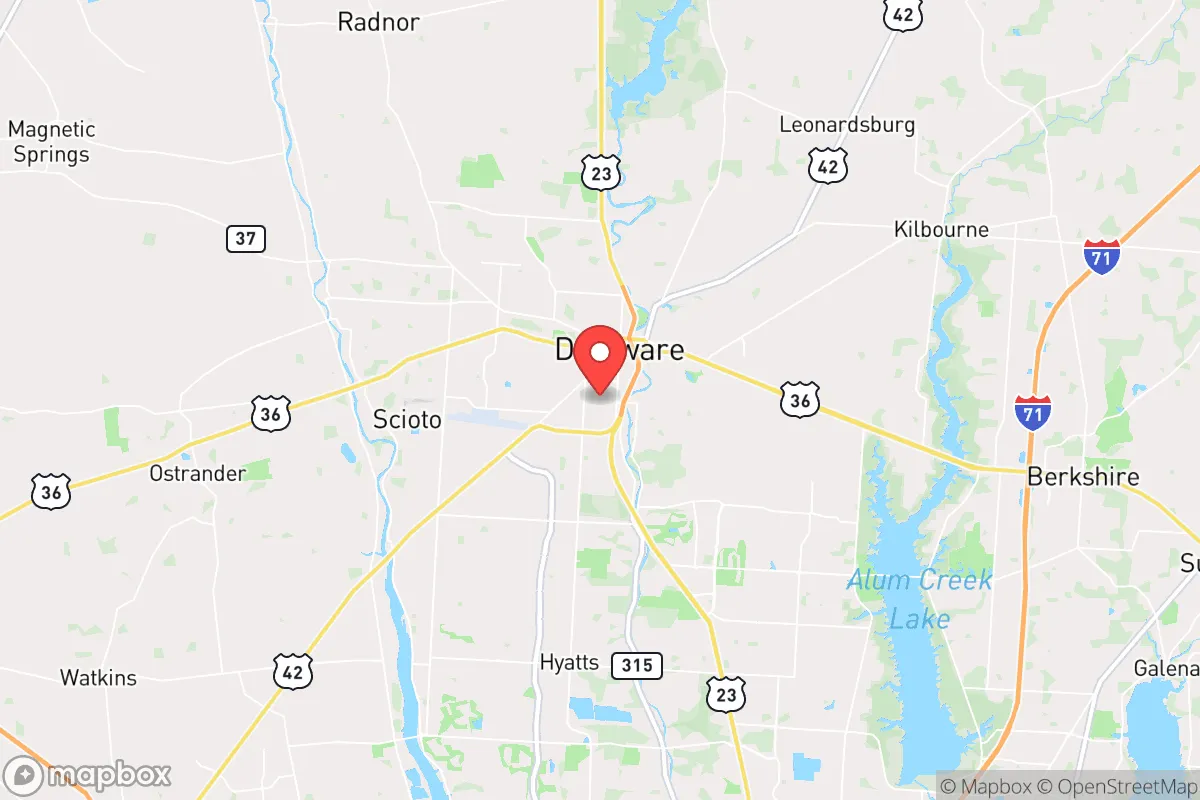
District shown is the primary district for this city’s centroid. Cities may span multiple districts.
Local Political AnalysisPolitical Analysis of Delaware, OH
Delaware, Ohio, has long been a rock-solid conservative stronghold, and the numbers back it up with a Cook PVI of R+18. That means this area votes about 18 points more Republican than the national average, and for anyone who’s lived here a while, that’s no surprise. The political lean here is deeply rooted in a tradition of limited government, personal responsibility, and a healthy skepticism of federal overreach. You see it in local elections, in the school board meetings, and in the way folks talk about property rights and the Second Amendment. But like a lot of places in Ohio, there’s been a slow, creeping shift in the more suburban pockets, and it’s something worth keeping an eye on if you value the kind of freedom that lets you live your life without a bureaucrat looking over your shoulder.
How it compares
Drive 20 minutes south to Columbus, and you’re in a completely different world politically. Franklin County is a deep blue stronghold, and the contrast is stark. Delaware County, where Delaware sits, is one of the last bulwarks against that progressive tide in central Ohio. Compared to nearby towns like Powell or Dublin, which have seen an influx of out-of-state transplants and a noticeable shift toward more moderate or even left-leaning politics, Delaware proper has held the line better. The rural areas surrounding the city—like those up toward Marion or east toward Knox County—are even more conservative, but Delaware City itself is the battleground. The old-timers here remember when you could leave your doors unlocked and the biggest political fight was over the school levy. Now, you’ve got folks pushing for things like diversity, equity, and inclusion initiatives in the schools and zoning changes that feel like they’re designed to bring in more of that Columbus-style governance. It’s a real contrast, and it’s why local elections matter more than ever.
What this means for residents
For the average resident, the political climate here means you still have a lot of breathing room compared to the chaos in the big cities. Property taxes are reasonable, the local government is generally responsive to residents who show up to council meetings, and there’s a strong sense that your voice actually counts. But the warning signs are there. The push for more government control—whether it’s through overreaching health mandates, land-use restrictions that tell you what you can do with your own property, or school curriculum changes that prioritize ideology over academics—is real. The R+18 rating isn’t a guarantee; it’s a responsibility. If you’re the kind of person who believes that your rights come from your Creator, not the government, you’ll find a lot of like-minded neighbors here. But you’ll also need to stay engaged, because the progressive machine in Columbus is constantly trying to export its agenda northward.
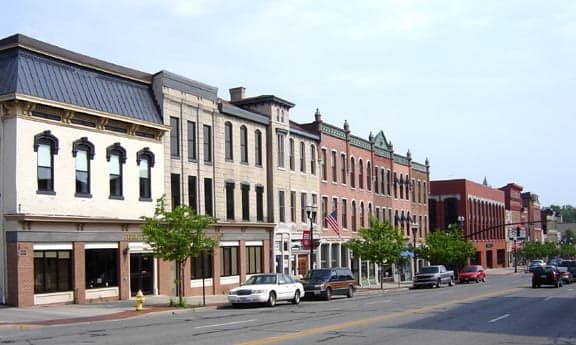
Culturally, Delaware still feels like a place where common sense rules. The city has a charming historic downtown, but it hasn’t been completely sanitized by boutique shops and overpriced coffee. You’ll still see pickup trucks with gun racks and American flags flying high. The policy distinctions that matter most here are the ones that protect your freedoms: a strong local police force that isn’t defunded, a school board that hasn’t caved to critical race theory, and a city council that generally understands that the best government is the one that stays out of your way. The long-term trajectory depends on whether the transplants moving in are looking for that same freedom, or if they’re bringing the big-government baggage with them. For now, Delaware is a good place to raise a family and keep your liberty intact, but it’s a fight that won’t end anytime soon.

State Political ClimatePolitical Climate in Ohio
State Political AnalysisPolitical Environment in the State
Ohio has long been the quintessential bellwether state, but over the past decade it’s shifted from a true purple battleground to a solidly red-leaning state, with Republicans now holding all five statewide executive offices and commanding supermajorities in both legislative chambers. The 2024 presidential election saw Donald Trump carry the state by roughly 11 points, a stark contrast to the 8-point margin in 2020 and the 8-point margin in 2016—a clear rightward trajectory that accelerated after the 2020 COVID lockdowns and the subsequent cultural backlash. The dominant coalition is a mix of working-class voters in small cities and rural areas, suburbanites fleeing progressive overreach, and a growing conservative-leaning exurban population, while the Democratic strongholds are increasingly confined to the urban cores of Cleveland, Columbus, and Cincinnati, plus a handful of college towns like Athens and Oberlin.
Urban vs. rural divide
The political map of Ohio is a textbook case of the urban-rural chasm. The three major metros—Cleveland (Cuyahoga County), Columbus (Franklin County), and Cincinnati (Hamilton County)—vote reliably Democratic, with Cuyahoga County delivering over 66% for Biden in 2020. But the real story is the surrounding exurbs and rural counties that have swung hard right. Delaware County, just north of Columbus, was once a swing county but now votes +20 Republican, driven by families fleeing the city’s rising crime and progressive school policies. Butler County, north of Cincinnati, is a GOP stronghold (+30 points) thanks to its mix of manufacturing workers and conservative suburbanites. The rural southeast, including Athens County (home to Ohio University), is a rare blue pocket, but the vast majority of the state’s 88 counties—especially in the northwest (like Van Wert County, +40 R) and the Appalachian east—are deep red. The divide isn’t just about population density; it’s cultural, with urban areas embracing progressive governance while the rest of the state prioritizes gun rights, low taxes, and traditional values.
Policy environment
Ohio’s policy environment is a mixed bag for conservatives, but the trend is broadly positive. The state has a flat income tax rate of 3.5% (down from 4.8% in 2020) and no tax on Social Security benefits, making it attractive for retirees. Property taxes are moderate, though they vary wildly by county—Delaware County has some of the highest rates due to school funding demands, while rural counties like Knox County are far cheaper. The regulatory posture is business-friendly, with right-to-work laws (though not a full “right-to-work” state) and a tort reform system that limits lawsuit abuse. Education policy is a flashpoint: Ohio has a robust school choice program, including the EdChoice voucher system that lets families use public funds for private or religious schools, a huge win for parental rights. However, the state’s public school system is still heavily unionized, and the 2023 “Parents’ Bill of Rights” (HB 8) was watered down after opposition from the teachers’ unions. Healthcare is a mixed bag—Medicaid expansion under the Affordable Care Act was accepted in 2013, but the state has resisted further expansion and has a strong telehealth and direct-primary-care market. Election laws have tightened: voter ID requirements were strengthened in 2023 (SB 23), and early voting hours were standardized, though the state still allows no-excuse absentee voting. The overall posture is one of cautious conservatism, with a legislature that’s willing to push back on federal overreach but still operates within a relatively moderate Midwest framework.
Trajectory & freedom
Ohio is becoming more free in several key areas, but the trajectory is uneven. On gun rights, the state passed constitutional carry (permitless carry) in 2022 (HB 227), a major win for the Second Amendment, and has preempted local gun control ordinances, meaning cities like Cleveland can’t enact their own bans. On parental rights, the 2023 “Save Women’s Sports Act” (HB 68) bans biological males from competing in female sports, and a 2024 law (SB 83) restricts gender transition procedures for minors—both controversial but popular with conservative families. Medical autonomy took a hit with the 2023 passage of Issue 2, which legalized recreational marijuana via ballot initiative, though the legislature quickly moved to regulate it heavily, including a ban on home grow and high taxes. Property rights are strong, with no statewide rent control and a robust “right to farm” law that protects agricultural operations from nuisance lawsuits. Taxation is trending downward, with the flat income tax rate scheduled to drop to 2.75% by 2026. However, the state’s freedom is constrained by its reliance on federal funding (about 35% of the state budget) and a lingering “blue law” that restricts Sunday alcohol sales in some counties. The biggest red flag for liberty-minded residents is the growing influence of local governments—Cincinnati and Columbus have enacted “sanctuary city” policies that limit cooperation with ICE, and Cleveland has a paid sick leave mandate that preempts state law. The state legislature is fighting back with preemption bills, but the urban-rural split means freedom looks different depending on where you live.
Civil unrest & political movements
Ohio has seen its share of civil unrest, but the most notable flashpoints in recent years have been around racial justice protests and election integrity. The 2020 George Floyd protests in Columbus and Cincinnati led to property damage and clashes with police, but the state avoided the widespread looting seen in Portland or Seattle. More recently, the 2023 East Palestine train derailment sparked a populist backlash against corporate negligence and federal inaction, with both local residents and conservative activists demanding accountability—a rare moment of bipartisan anger. Immigration politics are relatively muted compared to border states, but the 2024 surge of migrants into Cleveland and Columbus (via busing from Texas) has created tension, with some suburbs passing resolutions to limit shelter capacity. Election integrity remains a hot-button issue: the 2020 election in Ohio was relatively smooth, but the 2022 midterms saw a controversy in Mahoning County (Youngstown) over ballot drop boxes, leading to a state law (SB 23) that standardized drop box locations and hours. Organized activist movements include the Buckeye Firearms Association (powerful on gun rights) and the Ohio Right to Life (influential on abortion), while the left has the Ohio Organizing Collaborative and the ACLU of Ohio. A new resident would notice that political signs are everywhere—especially in rural areas—and that local news is dominated by debates over school boards, library funding, and zoning laws, all of which have become proxies for larger cultural battles.
Projection
Over the next 5-10 years, Ohio is likely to continue its rightward drift, but with important caveats. The in-migration patterns are favorable: the state is seeing a net inflow of domestic migrants, particularly from blue states like California and Illinois, who are drawn to lower taxes and housing costs. These newcomers tend to be conservative-leaning, but they’re also often moderate on social issues, which could create a tension between the hardline rural base and the more pragmatic exurban voters. The demographic shift is also driven by the growth of the Columbus metro area, which is adding population faster than the rest of the state and is becoming more diverse—this could eventually make Franklin County more competitive, but for now, the surrounding counties are growing even faster. The biggest wildcard is the state’s education system: if the school choice movement continues to expand, it could accelerate the exodus from urban districts and further entrench the suburban-rural conservative coalition. On the policy front, expect more preemption battles between the state and cities, particularly on housing (rent control, zoning) and environmental regulations. The 2026 gubernatorial race will be a key test: if a hardline conservative wins, the state could move further right on issues like abortion (a 6-week ban is currently blocked by the courts) and election laws. For a new resident, the bottom line is that Ohio will remain a reliably red state for the foreseeable future, but the flavor of that conservatism will depend on whether the legislature prioritizes economic freedom or cultural battles.
For someone moving to Ohio, the practical takeaway is that you’ll find a state that broadly respects your right to live as you see fit—low taxes, strong gun rights, and a growing school choice ecosystem—but you’ll need to choose your county carefully. If you want the full conservative experience, head to Delaware County or Butler County, where the schools are strong, the taxes are manageable, and the politics are reliably red. If you’re more moderate, the suburbs of Cincinnati (like Mason or West Chester) offer a mix of conservative economics with a more tolerant social vibe. Avoid the urban cores of Cleveland and Columbus if you’re concerned about crime and progressive governance, and be aware that the state’s freedom is still a work in progress—especially on issues like medical freedom and local preemption. Overall, Ohio is a solid bet for a conservative-leaning family or individual who wants a stable, affordable, and increasingly free state to call home.
* Values derived from national, state, county, city and local statistics and may differ in a specific area. Last updated: 2026-04-21T19:15:25.000Z
Narrative content on this page is AI-generated and may contain mistakes. Verify any details that matter before acting on them.
ReloMaps may earn a commission from affiliate links at no extra cost to you.

