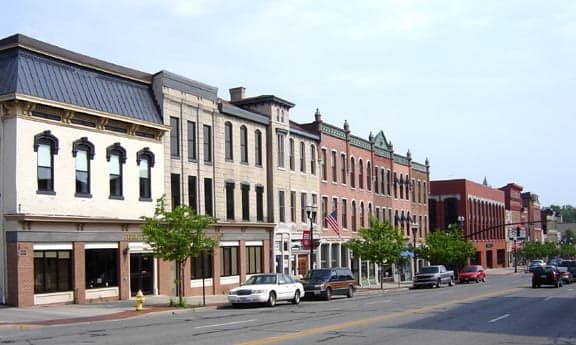
Photo: Wikipedia
Strategic Assessment of Delaware, OH
Meaningful friction. Expect exposure to either population pressure, blast zones, or natural disaster risk. Consider buying a retreat property.
What does the Strategic Assessment tell us?
Our Strategic Assessment grades tactical survivability of an area. Major population centers, military targets, fallout zones, natural disasters, and border exposure all drive risk — lower exposure means a more defensible position in a crisis.
This is heavily inspired by Joel Skousen's Strategic Relocation book. Highly recommended you checkout the book ($)What does this tell us?
Our Strategic Assessment grades tactical survivability of an area. Major population centers, military targets, fallout zones, natural disasters, and border exposure all drive risk — lower exposure means a more defensible position in a crisis.
This is heavily inspired by Joel Skousen's Strategic Relocation book. Highly recommended you checkout the book ($)Strategic Pillars

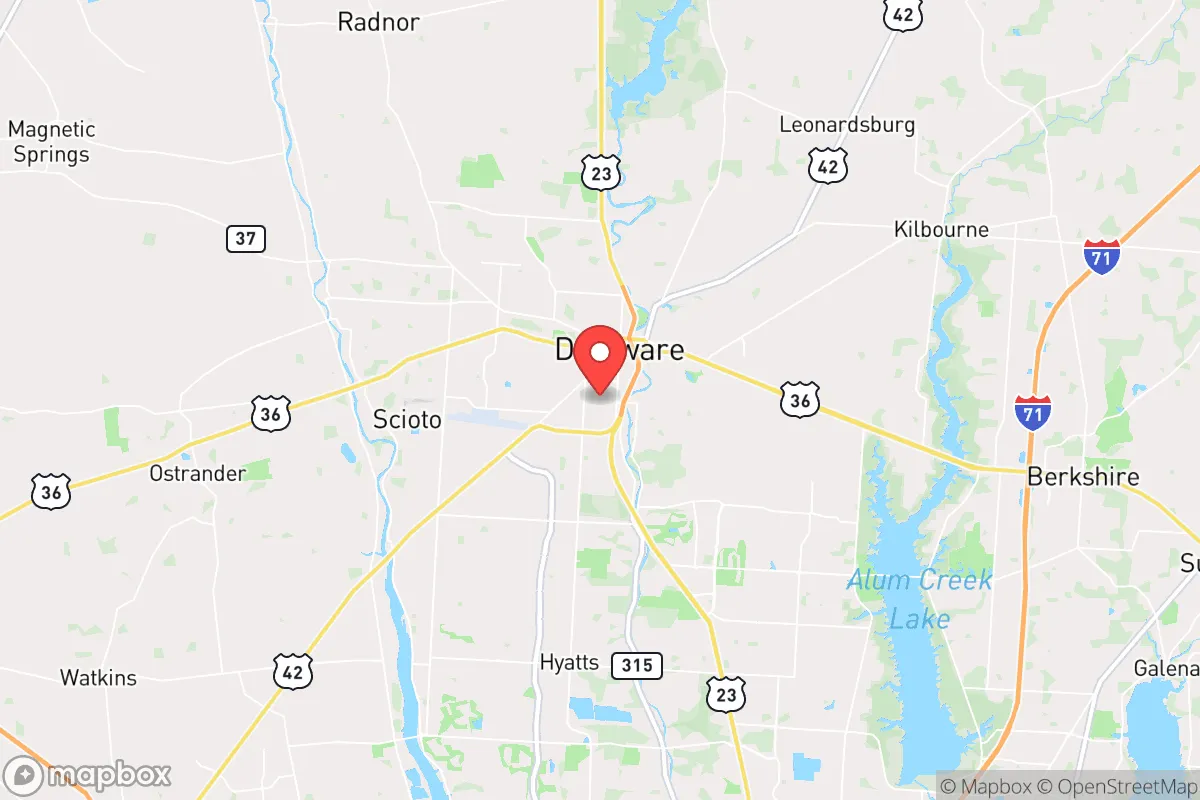
Key Distances
Regional Safe Places
Below is our recommended "safe zones" in Ohio and the surrounding area based on our strategic heuristics. For most people, it's unrealistic to live in a “safe zone” full-time due to work, family or other personal reasons. They tend to be more rural. However, many of these areas are perfect for second homes and retreat properties that double as a vacation home or even a short-term rental.

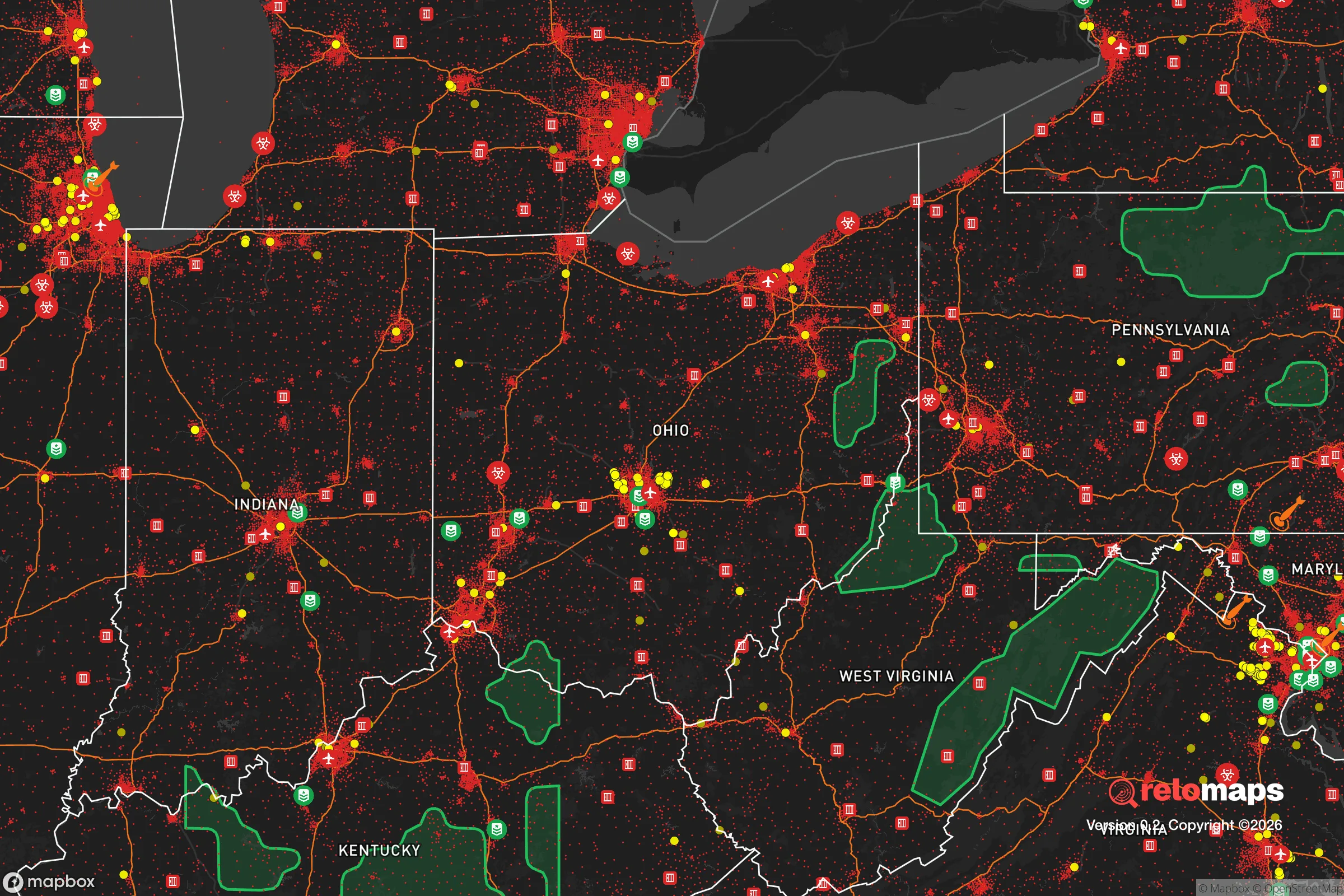


Important Note: For informational purposes only. This does not mean nothing bad ever happens in the green zones. Please use common sense. This is based on public data and modeled with AI. We tried to take a conservative approach but mistakes happen. We update this regularly as new information becomes available.
Solar Generator Recommendations
Backup power matters more here than in safer locations. We've picked three solar generators across budgets and capacity tiers — start with the budget unit if you only need a few essentials, or step up if you want to run a fridge and HVAC for days at a time.

Jackery Portable Power Station Explorer 300
Budget OptionPower on the Go: Weighing only 11 lbs, it's convenient to set up and store with book-sized foldable solar panels

BLUETTI Portable Power Station AC180
Designed for both indoor and outdoor scenarios, AC180 is highly capable as it has a robost capacity and continuous output power.

EF ECOFLOW DELTA Pro Ultra Power Station
Upgraded PickEcoFlow DELTA Pro Ultra is a whole-home energy system designed to grow with your family. Integrated with the Smart Home Panel 2, it scales to meet your evolving energy needs — keeping your home powered, intelligent, and secure through every stage of life.
We earn a commission, at no additional cost to you.
Strategic Assessment Analysis
Delaware, Ohio, offers a surprisingly solid strategic position for those prioritizing resilience and self-sufficiency, balancing proximity to the economic engine of Columbus with the physical separation needed to avoid the worst of a major urban collapse. The city sits in a sweet spot—roughly 30 miles north of the state capital—close enough to access critical supplies and medical infrastructure in a crisis, yet far enough to avoid being swept up in the initial chaos of a mass casualty event or civil unrest. Its location along the Olentangy River and within the fertile agricultural belt of central Ohio provides natural advantages for long-term sustainability, while the surrounding Delaware County’s relatively low population density and conservative political leanings offer a cultural buffer against the instability plaguing larger metro areas.
Geographic position and natural advantages for long-term security
Delaware’s geography is its first line of defense. The city sits on the eastern edge of the Scioto River watershed, with the Olentangy River cutting through its core, providing a reliable freshwater source that could sustain a household or small community through a prolonged grid-down scenario. The surrounding terrain is gently rolling, with ample forest cover in places like the 1,300-acre Delaware State Park to the north, offering both concealment and a source of firewood and game. The area’s agricultural heritage means that within a 15- to 20-mile radius, you’ll find working farms, orchards, and Amish communities—a critical asset for bartering or direct food sourcing if supply chains falter. The region is also far enough from major fault lines, hurricane zones, and flood plains to avoid the most common natural disasters, though winter ice storms and occasional tornado warnings are the baseline risks. For a relocator thinking in decades, not months, the moderate climate and fertile soil make Delaware a viable location for establishing a semi-self-sufficient homestead without the extremes of the Deep South or the arid West.
Risks, exposures, and proximity to fallout-relevant landmarks
No strategic assessment is honest without acknowledging the downsides, and Delaware has several that demand attention. The most glaring is its proximity to Columbus—a city of nearly 1 million people that, in a scenario of economic collapse or widespread civil unrest, could become a source of refugee flow, resource competition, and secondary violence. The I-71 corridor, which runs just east of Delaware, is a natural funnel for anyone fleeing a metropolitan collapse, and the city’s own population of roughly 42,000 could swell rapidly if the state government or Ohio State University becomes a target. Additionally, the nearby Ohio State University Airport and Rickenbacker Air National Guard Base (south of Columbus) are plausible targets for aerial or drone-based attacks in a conflict scenario, though Delaware itself is far enough from these to avoid direct blast effects. The region also sits within the shadow of the Davis-Besse Nuclear Power Station, roughly 70 miles northwest near Toledo—a distance that would likely spare Delaware from acute fallout but could still expose residents to low-level contamination depending on wind patterns. More concerning is the potential for a dirty bomb or radiological dispersal device in Columbus, which could render the entire central Ohio region a secondary hazard zone. For the serious prepper, these risks are manageable with proper planning—maintaining a go-bag, a reliable vehicle, and a secondary retreat location further north or east—but they cannot be ignored.
Practical resilience for a relocator: food, water, energy, and defensibility
On the ground, Delaware offers a mix of suburban convenience and rural practicality that makes it a strong candidate for a staged resilience plan. Water is the first priority: the Olentangy River is a year-round surface source, but it’s also a public water supply for the city, meaning it could be contaminated or cut off in a crisis. A well on private property is the gold standard here, and many homes in the outlying townships (like Berlin or Orange) already have them. For those renting or buying in town, a Berkey filter or a stash of purification tablets is non-negotiable. Food security is bolstered by the local farmers’ markets and the presence of several bulk-food stores (like the Delaware Farm Market), but the real advantage is the ability to grow your own: the growing season runs from April to October, and the soil is rich enough for potatoes, squash, and leafy greens without heavy amendment. Energy is a mixed bag—the grid is reliable by Ohio standards, but winter storms in 2022 and 2023 caused multi-day outages in rural pockets. Solar panels with battery backup are a smart investment, and natural gas is widely available for heating, which is a plus if the grid goes down but gas lines remain pressurized. Defensibility is where Delaware shines for the prepared individual. The city’s layout—with a compact historic downtown, residential neighborhoods on grid-like streets, and a ring of farmland and woods—allows for multiple egress routes. The Delaware County Sheriff’s Office is well-funded and generally responsive, but in a prolonged crisis, you’ll want to rely on your own perimeter: a home on a few acres with a clear line of sight to the road, a good fence, and a well-stocked armory is the ideal. The local gun culture is strong, with several ranges and gun shops in the county, and Ohio’s constitutional carry law means you can defend yourself without bureaucratic hurdles.
Overall, Delaware, Ohio, represents a calculated trade-off for the conservative-minded relocator. It’s not a remote bunker in the mountains—it’s a working town with schools, hospitals, and a Walmart, which means it’s also a target for looting and refugee pressure in a collapse. But its agricultural base, freshwater access, and distance from the worst of Columbus’s problems make it a far better bet than staying inside the city or moving to a truly isolated area where you’d starve in a supply-chain failure. The key is to treat Delaware as a base of operations, not a final redoubt: build relationships with local farmers, stockpile supplies for 90 days minimum, and have a plan to bug out to a more remote location (think Knox County or the Hocking Hills region) if the situation deteriorates beyond local control. For the single professional or family willing to put in the work, Delaware offers a rare combination of opportunity and security in an increasingly uncertain world.

* Values derived from national, state, county, city and local statistics and may differ in a specific area. Last updated: 2026-04-21T19:15:25.000Z
Narrative content on this page is AI-generated and may contain mistakes. Verify any details that matter before acting on them.
ReloMaps may earn a commission from affiliate links at no extra cost to you.

