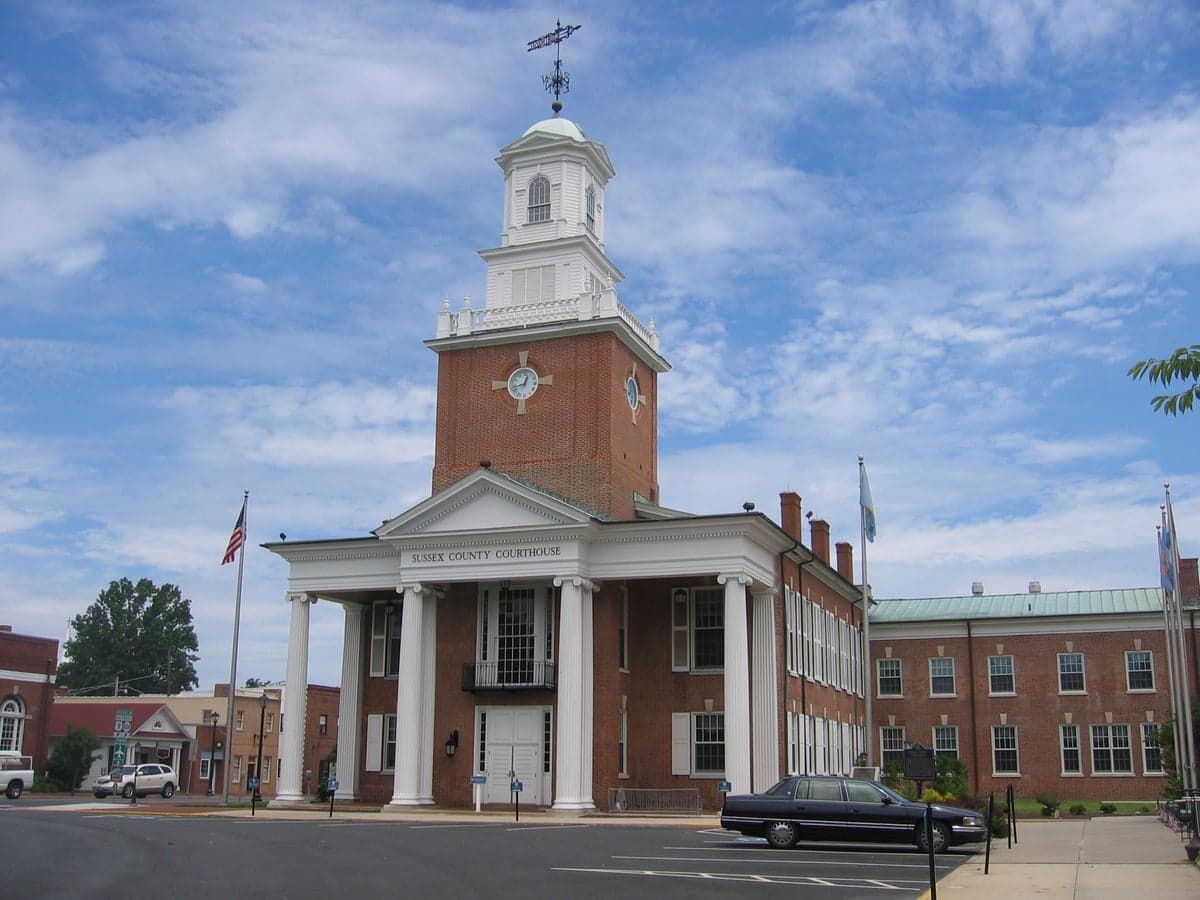
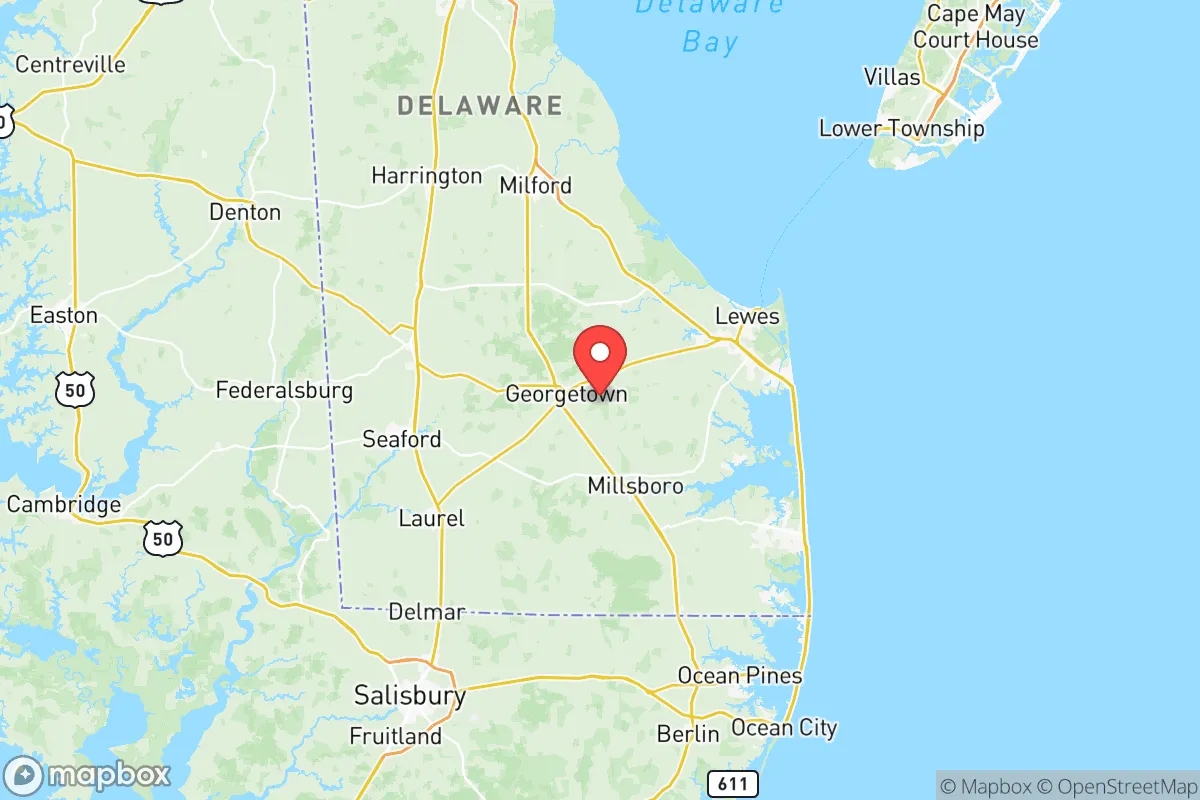
Photo: Wikipedia
Quality of Life in Sussex County
A livable area that tracks near national norms for affordability, walkability, and neighborhood health.
What does Quality of Life tell us?
Quality of Life measures an area by evaluating factors like cost of living, nearby amenities, country club access, airport proximity, socioeconomic signals and neighborhood character. For large states, this is a general average — quality of life can vary dramatically between metro areas, suburbs, and rural communities within the same state.
What does this tell us?
Quality of Life measures an area by evaluating factors like cost of living, nearby amenities, country club access, airport proximity, socioeconomic signals and neighborhood character. For large states, this is a general average — quality of life can vary dramatically between metro areas, suburbs, and rural communities within the same state.
Cost of Living
13% above national average
77%
The Real Cost of Living in Sussex County for 2026
| Tier | Individual | Family (4) |
|---|---|---|
| Survival | $19k | $37k |
| Comfortable | $69k | $101k |
| Luxury | $141k+ | $219k+ |
| Elite (Top 5%) | $168k+ | $261k+ |
Quality-of-Life Analysis
Sussex County, Delaware, offers a broad quality-of-life spectrum that ranges from bustling coastal resort towns to quiet agricultural hamlets, attracting retirees, second-home buyers, and working families alike. The county’s character shifts dramatically between its Atlantic beach communities, its inland county seat, and the sprawling farmlands that still define much of its interior. With a cost-of-living index of 113 (100 = U.S. average), a median home value of $353,300, and a median rent of $1,221, Sussex County presents a more affordable alternative to neighboring resort areas while still commanding a premium over Delaware’s more rural upstate counties.
Largest town(s) & population centers
The county’s largest population center is Georgetown, the county seat, with roughly 7,000 residents. Daily life here centers on the historic downtown square, county government offices, and a mix of local retail and dining. Georgetown feels distinctly inland and agricultural, with a slower pace than the coast. The next major population hub is Seaford (pop. ~8,000), a Nanticoke River town that serves as a regional commercial and medical center. Seaford’s economy historically revolved around the DuPont nylon plant, and today it offers more affordable housing stock and a working-class character. On the coast, Rehoboth Beach (pop. ~1,500 year-round, swelling to 25,000+ in summer) is the county’s most famous destination, known for its boardwalk, outlet shopping, and seasonal tourism economy. Year-round residents in Rehoboth enjoy walkable streets, a vibrant restaurant scene, and proximity to Cape Henlopen State Park, but face high seasonal congestion and premium real estate prices. Lewes, just north of Rehoboth, offers a quieter coastal experience with a historic district, ferry access to Cape May, and a growing retiree population. The average commute across the county is 27.2 minutes, reflecting the spread between residential areas and employment centers.
Smaller towns & rural pockets
Beyond the main towns, Sussex County contains dozens of smaller communities that offer distinct lifestyles. Millsboro (pop. ~4,500) sits at the intersection of Route 113 and Route 24, experiencing rapid growth as a bedroom community for coastal workers; its downtown retains a small-town feel with a hardware store and diner. Milton (pop. ~3,000) is an arts-oriented town along the Broadkill River, with a walkable historic district, a brewery, and a growing number of galleries. Bridgeville (pop. ~2,000) is a classic agricultural crossroads town with a quiet main street and proximity to the Trap Pond State Park. Dagsboro and Frankford are unincorporated villages where farmland meets new subdivisions, offering lower land costs and a more rural pace. The truly rural pockets are found in the county’s western and southern reaches, such as Gumboro, Laurel, and Delmar (straddling the Maryland line), where poultry farming and grain agriculture dominate the landscape and homes sit on acreage rather than quarter-acre lots.
Cost & lifestyle range
The cost of living and lifestyle options vary dramatically across Sussex County. At the high end, Rehoboth Beach and Lewes command median home values well above the county’s $353,300 average, often exceeding $600,000 for single-family homes within a mile of the ocean. Rentals in these areas are scarce and expensive, with seasonal rates pushing monthly costs far above the $1,221 county median. At the low end, Seaford and Laurel offer median home values closer to $250,000–$280,000, with rental availability more aligned with the county median. Inland towns like Georgetown and Millsboro sit in the middle, with home values around $320,000–$370,000 and a mix of older homes and new subdivisions. Lifestyle differences are equally stark: coastal residents enjoy beach access, seasonal events, and a dense amenity base, while inland residents trade proximity to the ocean for larger lots, lower property taxes, and quieter streets. The county’s property tax rate remains among the lowest in the nation (roughly 0.5% of assessed value), which helps offset the higher coastal home prices for long-term owners.
Sussex County best suits those who value geographic diversity within a single county — retirees and remote workers who want coastal access without full-time resort pricing, families seeking affordable land near growing employment centers, and agricultural workers tied to the poultry and grain industries. The county’s lack of a dominant urban core means residents often drive 20–30 minutes for specialized shopping or medical care, but the trade-off is a low-stress daily environment and some of the lowest property taxes on the East Coast. Those who thrive here are comfortable with a car-dependent lifestyle and appreciate the contrast between the boardwalk bustle of Rehoboth and the soybean fields of Gumboro.

Crime in Sussex County
Crime rates similar to the national median for U.S. locations.
Violent CrimeViolent Crime Analysis
Property CrimeProperty Crime Analysis
Crime Analysis
Sussex County, Delaware, reports a violent crime rate of 342.6 per 100,000 residents and a property crime rate of 1,551.4 per 100,000, placing it in a middle tier for safety within the state. While not the most dangerous county in Delaware, these figures are notably higher than the safest rural areas of the state, and the county’s growing population—particularly in coastal towns like Rehoboth Beach and Lewes—has introduced new public safety challenges. The overall safety picture is mixed: property crime is the dominant concern, while violent incidents are less frequent but still a factor, especially in more densely populated corridors.
Crime in context
Sussex County’s violent crime rate of 342.6 per 100,000 is roughly 15% higher than the national average of approximately 300 per 100,000 (2023 FBI data), and significantly above Delaware’s statewide violent crime rate of about 410 per 100,000, which is elevated by Wilmington’s high numbers. Property crime in Sussex, at 1,551.4 per 100,000, is below the national average of 1,954 per 100,000 but still a persistent issue. Compared to neighboring Kent County (which has a violent crime rate near 400 per 100,000), Sussex is safer, but it lags behind the safest rural counties in the Mid-Atlantic. The county’s crime profile is heavily influenced by seasonal tourism: the summer population in beach towns like Bethany Beach and Fenwick Island can triple, driving up thefts from vehicles and burglaries in vacation rentals. The Delaware State Police handle most rural patrols, while local police in incorporated towns like Seaford and Georgetown manage their own jurisdictions, creating a patchwork of enforcement intensity.
What residents experience
For residents, property crime is the most tangible safety concern. Larceny-theft accounts for over 60% of all reported crime in Sussex County, with vehicle break-ins and package thefts common in suburban developments near Millsboro and the Route 1 corridor. Violent crime is less random: most incidents involve domestic disputes or arguments among acquaintances, concentrated in lower-income areas of Seaford and Laurel. A key factor shaping public safety is the judicial philosophy in Sussex County. The county falls under Delaware’s Superior Court system, and while local judges are generally considered moderate, the state’s overall trend toward progressive criminal justice reforms—including bail reform and reduced sentencing for certain drug offenses—has raised concerns among residents. Progressive policies that prioritize offender rehabilitation over incarceration can lead to higher recidivism and a perception that repeat property offenders face minimal consequences. This is particularly felt in areas like Georgetown, where the county seat’s court docket sees frequent re-arrests for theft and drug-related crimes. Residents in coastal towns like Lewes and Rehoboth Beach often report feeling safer due to robust local police presence and community watch programs, but they still face seasonal spikes in opportunistic crime.
Neighborhood-level variation
Safety varies significantly within Sussex County. The beach resort towns of Bethany Beach and Fenwick Island consistently report the lowest violent crime rates, often below 100 per 100,000, due to affluent demographics, strong local policing, and limited year-round populations. In contrast, the inland towns of Seaford and Laurel have violent crime rates that can exceed 500 per 100,000, driven by poverty and drug-related activity. The unincorporated areas around Millsboro and the rapidly growing developments near Long Neck see moderate property crime but fewer violent incidents. For those considering relocation, the safest bets are the coastal communities and newer subdivisions with active homeowners’ associations, while older downtown areas in Seaford and Georgetown warrant closer scrutiny of block-level crime maps. The county’s reliance on the Delaware State Police for rural coverage means response times can vary, with some remote areas near the Nanticoke River experiencing delays of 15–20 minutes for non-emergency calls.
* Values derived from national, state, county, city and local statistics and may differ in a specific area. Last updated: 2026-05-12T06:25:49.000Z
Narrative content on this page is AI-generated and may contain mistakes. Verify any details that matter before acting on them.
ReloMaps may earn a commission from affiliate links at no extra cost to you.

