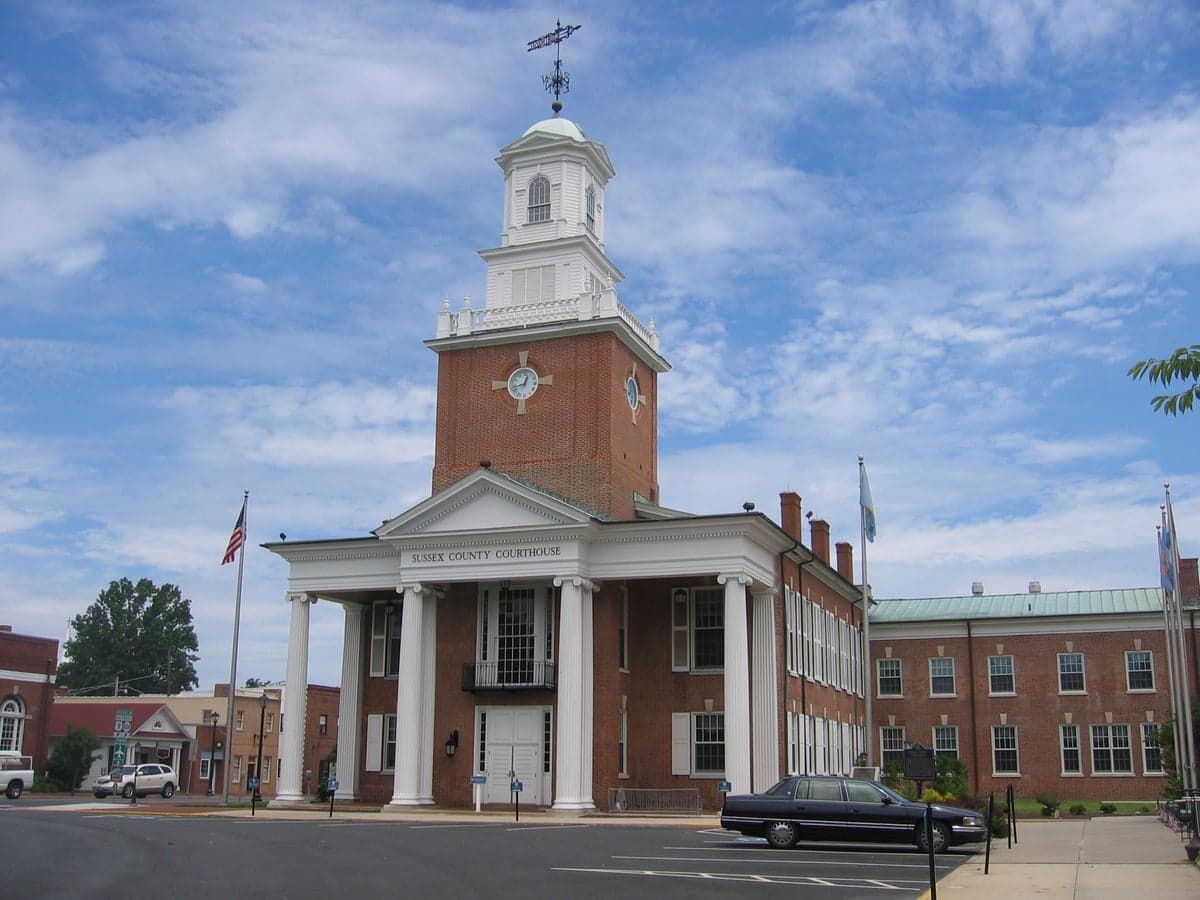
Photo: Wikipedia
Political ClimatePolitical Climate in Sussex County
Showing state-level results — no local-only data available.
Local Political AnalysisPolitical Analysis of Sussex County
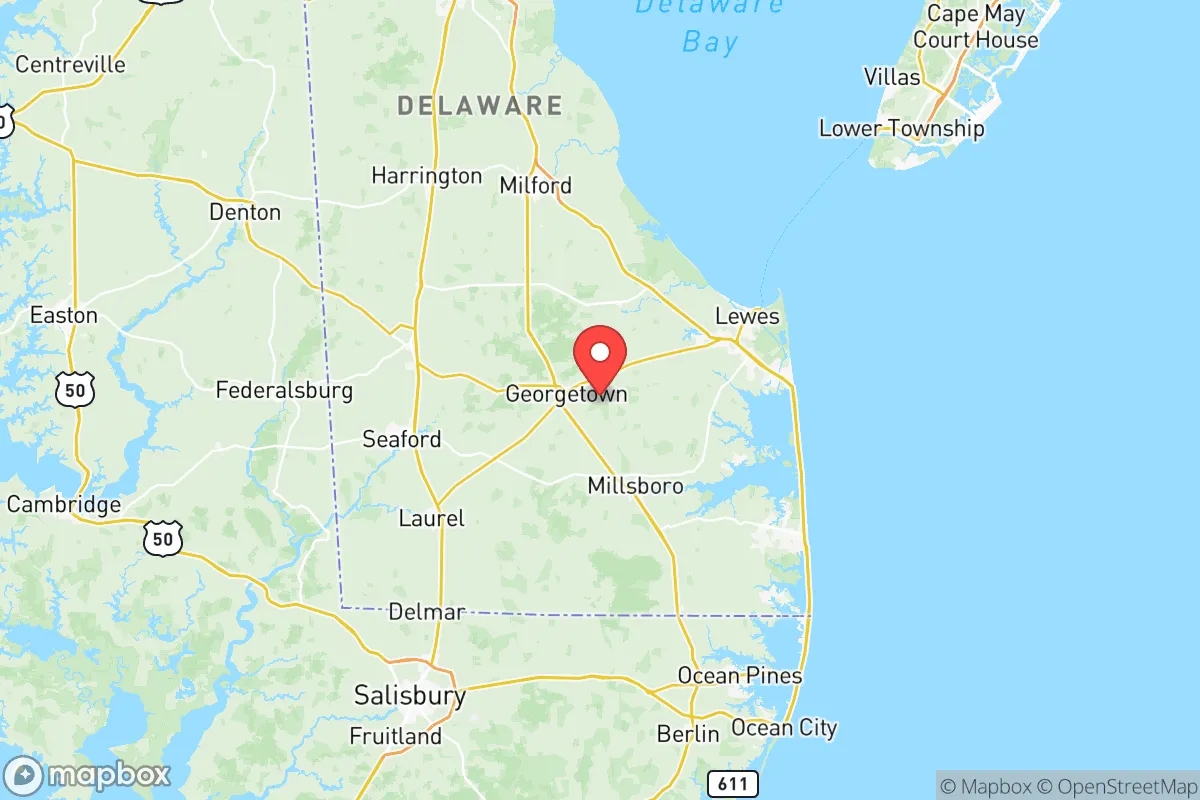
Sussex County, Delaware, has long been the state’s conservative stronghold, but that’s changing faster than a lot of us old-timers are comfortable with. While the county’s Cook Partisan Voting Index (PVI) is listed as D+8—matching the state’s overall D+8—that number masks a deep internal split. The northern and coastal areas, especially around Rehoboth Beach and Lewes, have been trending blue for years, driven by an influx of out-of-state retirees and second-home owners. Meanwhile, the inland towns like Georgetown, Seaford, and Laurel still hold the line, voting reliably red. The real battleground is now in the central corridor, places like Millsboro and Long Neck, where new housing developments are bringing in folks who don’t share our traditional values of limited government and personal liberty.
How it compares
On paper, Sussex County and Delaware have the same PVI, but that’s a statistical illusion. The rest of the state—New Castle County, especially Wilmington and Newark—is overwhelmingly progressive, with a D+15 or worse lean. Kent County is a mixed bag, but it’s been sliding blue too. That means Sussex County is the last line of defense against a state government that’s increasingly cozy with overreach. We’re seeing it in Dover: new gun restrictions, higher taxes on small businesses, and mandates that tell you how to run your own property. The difference is that in Sussex, you still have a fighting chance to push back. Towns like Georgetown and Seaford have local leaders who remember when government was supposed to stay out of your life. But the coastal precincts in Rehoboth and Lewes are now voting for the same policies that ruined New Castle County. It’s a tale of two counties under one roof.
What this means for residents
For those of us who value personal freedoms, the writing is on the wall. The progressive wave is real, and it’s being driven by people who moved here specifically to change the place to match their old, failed ideas. If you live in or near Millsboro or Long Neck, you’re in the swing zone—every election is going to be a nail-biter. We’re already seeing the effects: property taxes are creeping up to fund new “community” programs, and there’s talk of county-level zoning that would tell you what you can do on your own land. The state legislature is one bad election away from passing a red flag law that lets the government take your guns without due process. It’s not paranoia; it’s watching the same playbook that ran other states into the ground.
Look, I’ve been here long enough to remember when Sussex County was a place where you could live your life without a bureaucrat looking over your shoulder. The inland towns—Georgetown, Seaford, Laurel—still have that spirit. But the coastal areas, especially Rehoboth Beach and Lewes, have become a different world. You’ll see more “We’re all in this together” signs than “Don’t Tread on Me” flags. The cultural divide is real: it’s about whether you think your neighbor’s business is your business. For now, we’re holding the line in the rural precincts, but every new housing development brings another wave of folks who think government knows best. Keep your eyes on the county council races and the state house seats in the 35th and 36th districts—those are the front lines. If we lose those, we lose the last redoubt of personal liberty in Delaware.

State Political ClimatePolitical Climate in Delaware
State Political AnalysisPolitical Environment in the State
Delaware, despite its small size, packs a surprisingly deep blue punch, carrying a Cook PVI of D+8 that makes it one of the most reliably Democratic states in the nation. Over the last 10-20 years, the state has shifted steadily leftward, driven by explosive growth in the northern suburbs of Wilmington and the influx of federal contractors and finance professionals into New Castle County. While the southern two counties — Kent and Sussex — have remained more conservative, their influence is increasingly diluted by the sheer population weight of the liberal north, and the statewide trajectory is one of accelerating progressive control.
Urban vs. rural divide
The political map of Delaware is essentially a tale of three counties, but the power dynamic is lopsided. New Castle County, home to Wilmington, Newark, and the sprawling suburbs along the I-95 corridor, casts roughly 55% of the state’s vote and leans heavily Democratic. Wilmington itself is a deep-blue city with a strong union and minority coalition, while Newark, home to the University of Delaware, adds a large student and faculty progressive vote. In contrast, Sussex County — the beach and agricultural region including Rehoboth Beach, Lewes, and Georgetown — has long been the GOP’s stronghold, but even there, the rapid influx of out-of-state retirees and second-home owners from the Northeast is slowly shifting the coastal towns purple. Kent County, with Dover and the central farmlands, is the swingiest of the three, but it’s not enough to flip the state. The rural-urban divide is stark: drive 20 minutes south of Dover and you’ll find Trump signs and gun shops; drive 20 minutes north of Wilmington and you’re in deep-blue suburbia where “Defund the Police” signs were common in 2020.
Policy environment
Delaware’s policy environment is a mixed bag that leans heavily toward government intervention, especially for a state that prides itself on being a corporate haven. Taxes are a major concern: the state has a progressive income tax topping out at 6.6%, and while there’s no state sales tax, property taxes are moderate. The real sting comes from the regulatory posture — Delaware is notorious for its business-friendly incorporation laws (over 60% of Fortune 500 companies are incorporated here), but that’s a corporate carve-out that doesn’t extend to individuals. Education policy is increasingly centralized; the state has moved toward Common Core and progressive curricula, and parental rights groups have struggled to gain traction in Dover. Healthcare is heavily regulated, with Medicaid expansion under the ACA fully embraced. Election laws are among the most liberal in the country: no-excuse absentee voting, same-day registration, and automatic voter registration are all in place, making it easy to vote but raising concerns about election integrity among conservatives. The state also has a strict gun control regime, including a 2022 “assault weapons” ban and a 2024 law raising the purchase age to 21 for all firearms — a clear red flag for Second Amendment advocates.
Trajectory & freedom
Delaware is becoming less free by almost any measure, and the pace has accelerated since 2020. The most concerning trend for conservatives is the steady erosion of gun rights: the 2022 Delaware Gun Safety Act banned so-called “assault weapons” and large-capacity magazines, and a 2024 law requires a permit to purchase any firearm. Parental rights took a hit with the 2023 “Healthy Children” law, which mandates comprehensive sex education in public schools, including LGBTQ+ content, with no opt-out for parents. Medical autonomy was curtailed during COVID with some of the nation’s strictest and longest-lasting mask and vaccine mandates in schools, and the state has since codified broad emergency powers for the governor. On the plus side, Delaware has no personal income tax on Social Security benefits, which is a small win for retirees, but the overall trajectory is toward more government control over daily life. The state’s property rights are also under pressure from aggressive zoning and environmental regulations, particularly in Sussex County where development is tightly controlled.
Civil unrest & political movements
Delaware has seen its share of political flashpoints, though they tend to be quieter than in larger states. Wilmington was a hotspot for Black Lives Matter protests in 2020, with several nights of property damage and clashes with police, and the city’s progressive mayor has since pushed for police reform. Immigration politics are a growing issue: Delaware is a sanctuary state in practice, with state law prohibiting local law enforcement from cooperating with ICE detainers, and the influx of migrants into the Wilmington area has strained social services. Election integrity is a persistent concern among conservatives, especially after the 2020 election saw widespread use of drop boxes and mail-in ballots without strict signature verification. Organized conservative movements are small but active, with groups like the Delaware Family Alliance and local Moms for Liberty chapters fighting school board battles, particularly in Sussex County. The most visible flashpoint for a new resident would be the stark cultural divide between the liberal north and the conservative south — you’ll see it in the yard signs, the church parking lots, and the local news coverage.
Projection
Over the next 5-10 years, Delaware is likely to become even more Democratic and more progressive. The demographic trends are clear: New Castle County continues to grow with young professionals and remote workers from the Northeast, while Sussex County’s conservative base is aging and being diluted by new arrivals who bring their blue-state voting habits with them. The state’s in-migration is heavily from New York, New Jersey, and Pennsylvania, and these newcomers tend to support the same policies they left behind. Expect further gun control measures, expansion of government healthcare, and more progressive education mandates. The one wild card is the corporate tax base — if Delaware’s business-friendly incorporation laws ever come under federal pressure, the state’s budget could crater, forcing a reckoning. But for now, the path is clear: more regulation, higher taxes, and less personal freedom.
Bottom line for a new resident: If you’re a conservative looking to relocate, Delaware offers a beautiful coastline and low property taxes, but you’ll be living in a state where your political voice is increasingly marginalized. The northern suburbs are solidly blue, the beaches are turning purple, and the state government is firmly in progressive hands. You’ll find like-minded communities in Sussex County and parts of Kent, but don’t expect to change the statewide trajectory. If personal freedom — especially gun rights, parental control over education, and low taxes — is your top priority, Delaware is likely a step in the wrong direction. Come for the beaches, but be prepared to fight for your values at every level of government.
* Values derived from national, state, county, city and local statistics and may differ in a specific area. Last updated: 2026-05-12T06:25:49.000Z
Narrative content on this page is AI-generated and may contain mistakes. Verify any details that matter before acting on them.
ReloMaps may earn a commission from affiliate links at no extra cost to you.

