Photo: Wikipedia
Demographics of Derby Center, VT
Affluence Level in Derby Center, VT
A below-average socioeconomic profile. Incomes, home values, and educational attainment trail the U.S., with higher poverty and unemployment.
People of Derby Center, VT
Derby Center, Vermont, is a small, tightly-knit village of 684 residents that remains overwhelmingly white (98.7%) and native-born, with a foreign-born population of just 1.2%. Its character is defined by a quiet, rural resilience—a place where families have deep roots, the local economy is modest, and the population has remained remarkably stable for decades. For those considering a move, Derby Center offers a low-density, traditional New England setting where community ties are strong and demographic change has been minimal.
How the city was settled and grew
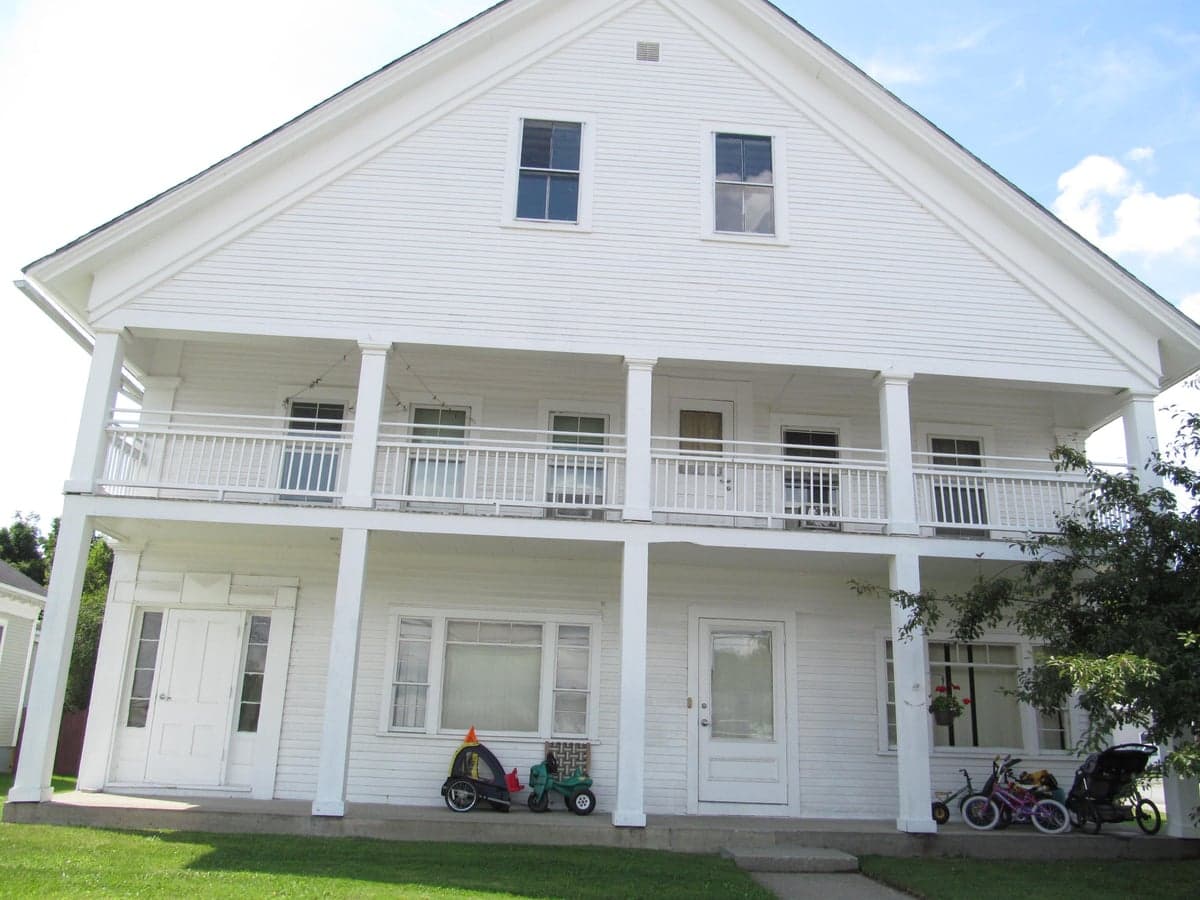
Derby Center’s human history begins with the original Abenaki inhabitants, who used the region for seasonal hunting and fishing along the shores of Lake Memphremagog. European settlement began in the late 18th century, primarily by Yankee farmers from southern New England seeking land grants in the Northeast Kingdom. The village of Derby Center itself developed as a commercial hub for surrounding agricultural communities, with its growth tied to the arrival of the railroad in the mid-19th century. The Derby Village Historic District, centered around Main Street, was built by these early English and Scottish settlers, with many of the original homes and churches still standing today. A second wave of settlement came in the late 1800s with French-Canadian families migrating south from Quebec for work in the region’s lumber mills and farms. These families established a distinct presence in the West Derby area, where French surnames remain common. The population peaked around 1,200 in the early 20th century before gradually declining as agriculture mechanized and younger generations moved to larger cities.
Modern era (post-1965)
Since the 1960s, Derby Center has experienced minimal demographic change. The 1965 Hart-Cellar Act, which reshaped immigration patterns in much of the U.S., had virtually no impact here. The village’s foreign-born population has consistently hovered around 1%, and the racial composition has remained nearly all-white. Domestic in-migration has been limited, with most new residents coming from elsewhere in Vermont or neighboring New Hampshire. The Lake Memphremagog shoreline has attracted a small number of seasonal residents and retirees, but these newcomers have not altered the village’s fundamental character. The Derby Center Village core, with its historic homes and small businesses, has seen little new construction, while the Derby Line area (just north) has absorbed most of the region’s modest growth. The college-educated share of the population stands at 18.1%, reflecting the area’s working-class roots and limited white-collar employment base. The local economy is anchored by small-scale manufacturing, retail, and services tied to the nearby Canadian border crossing.
The future
Derby Center’s population is projected to remain stable or decline slightly over the next 10-20 years. The village is not homogenizing—it has been homogeneous for generations—nor is it tribalizing into distinct ethnic enclaves. The Hispanic population is a tiny 1.0%, and there are no recorded Black, East/Southeast Asian, or Indian-subcontinent residents. The most notable demographic trend is aging: the median age is rising as younger adults leave for educational and job opportunities in Burlington or beyond. The Pleasant Street and School Street neighborhoods, once filled with young families, now have a higher proportion of empty-nesters and retirees. There is no evidence of growing immigrant communities; the foreign-born share is likely to remain negligible. The village’s future depends on whether it can attract a modest number of remote workers or retirees seeking a low-cost, quiet lifestyle, which could stabilize the population without changing its essential character.
For a conservative-leaning individual or family considering a move, Derby Center represents a place where the population is stable, traditional, and unlikely to change dramatically. It is a community where neighbors know each other, the pace of life is slow, and the demographic trends of larger cities have not arrived. The trade-off is limited economic opportunity and a shrinking base of young families, but for those seeking a predictable, safe, and deeply rooted environment, Derby Center remains a consistent choice.

* Values derived from national, state, county, city and local statistics and may differ in a specific area. Last updated: 2026-04-29T21:27:37.000Z
Narrative content on this page is AI-generated and may contain mistakes. Verify any details that matter before acting on them.
ReloMaps may earn a commission from affiliate links at no extra cost to you.

