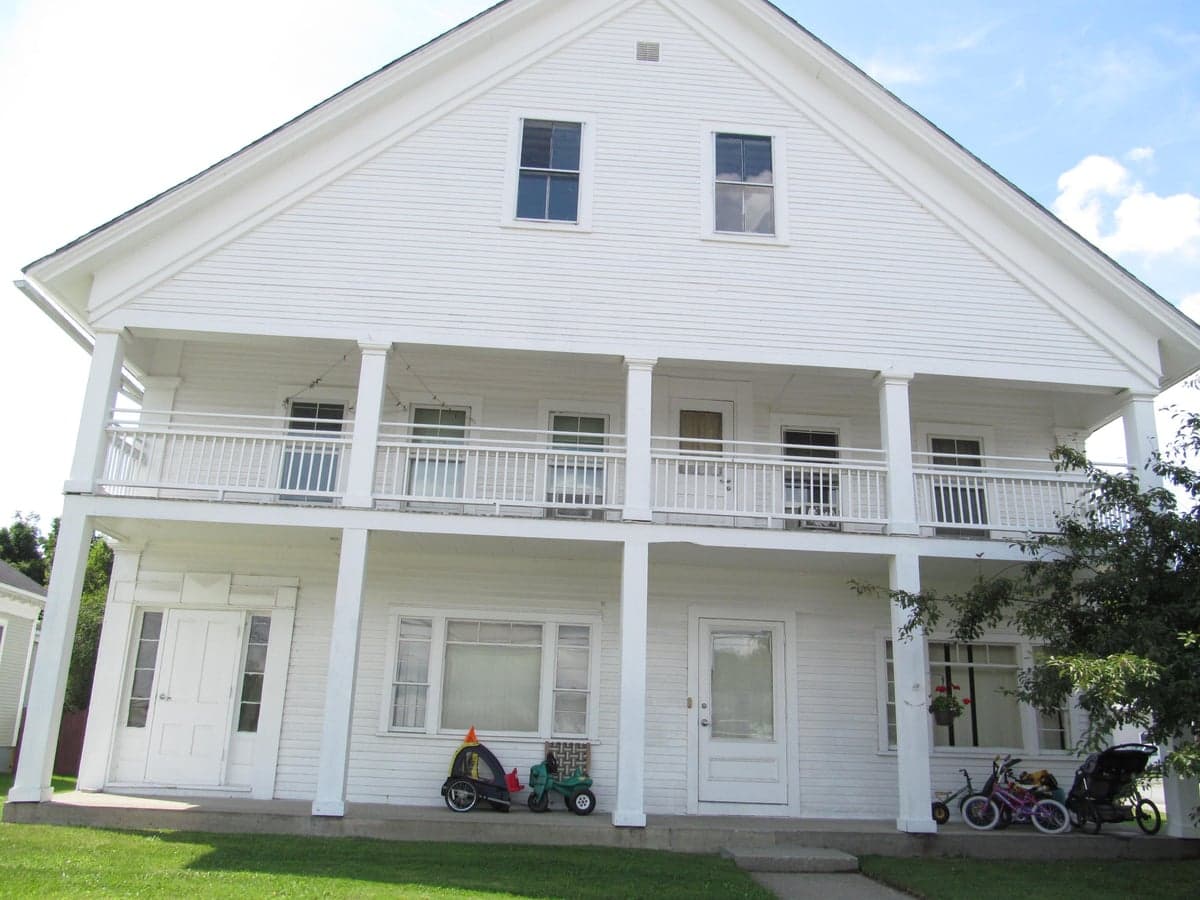
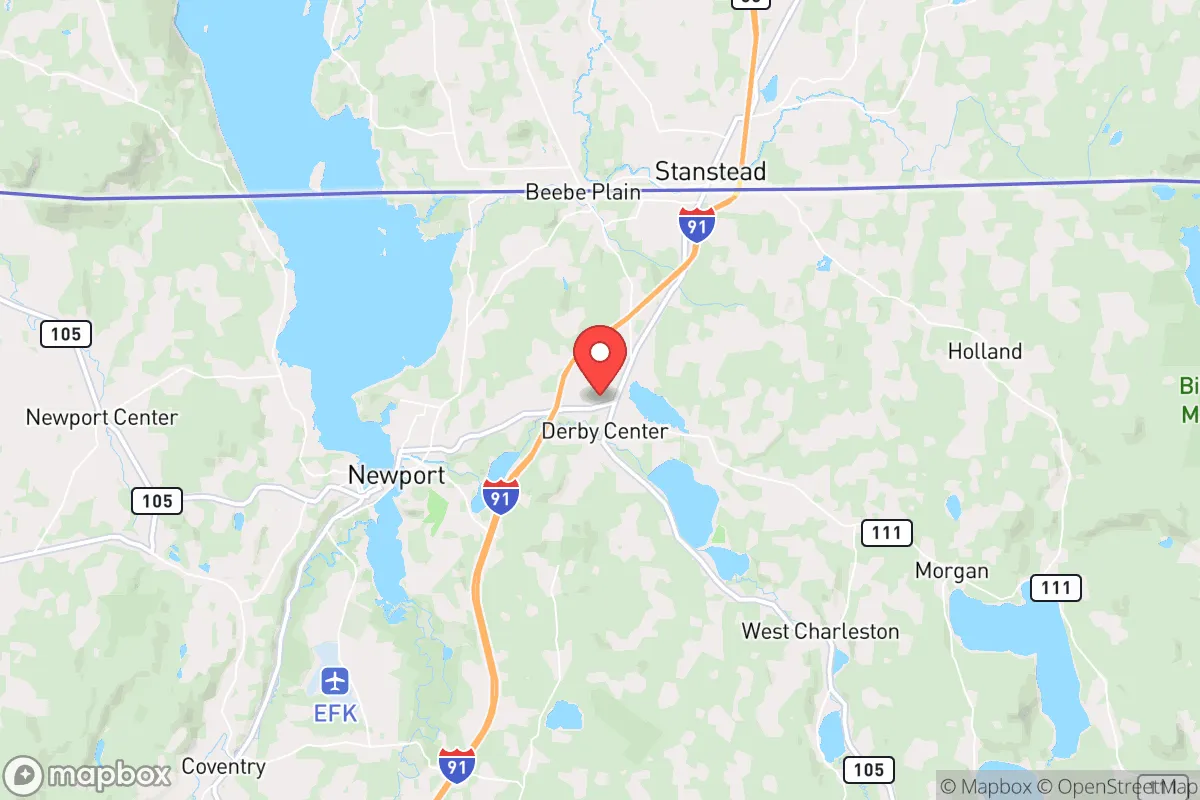
Photo: Wikipedia
Political ClimatePolitical Climate in Derby Center, VT
District shown is the primary district for this city’s centroid. Cities may span multiple districts.
Inherited from parent state — no local data available.
Local Political AnalysisPolitical Analysis of Derby Center, VT
Derby Center, Vermont, sits in a county that has historically leaned more conservative than the rest of the state, but the town itself has shifted hard left in recent years, with a Cook PVI of D+17. That means the area now votes about 17 points more Democratic than the national average, which is a far cry from the independent-minded, live-and-let-live community I remember growing up here. The trajectory has been steady since the early 2000s, and it’s accelerating—what was once a place where folks kept their politics to themselves is now feeling the weight of progressive policy priorities coming down from Montpelier.
How it compares
If you drive ten miles south to Newport City, you’ll find a more balanced political scene—still blue, but with a stronger Republican minority that actually wins local seats. Head west to Orleans, and you’re in a town that votes more like the rest of rural Vermont, with a mix of libertarian-leaning independents and traditional conservatives. But Derby Center is different. It’s become a bedroom community for state workers and remote professionals who commute to Burlington or work for the state government, and that influx has flipped the local dynamic. The surrounding towns like Derby Line and Holland are still more purple, but Derby Center itself is now reliably blue in every election cycle.
What this means for residents
For those of us who value personal freedom and limited government, the shift is concerning. Local school boards and town committees are increasingly filled with activists pushing policies that feel like they’re coming from a city council, not a small Vermont town. You’re seeing more zoning restrictions, higher property taxes to fund state-mandated social programs, and a general attitude that government knows best. The Second Amendment rights that were once a given here are now under constant pressure, with new state laws on magazine capacity and waiting periods that feel like a direct overreach into our homes. If you’re a conservative or even a moderate who believes in local control, you’ll find yourself on the losing end of most votes at town meeting.
What daily life is like for families
On the ground, most folks still get along fine—neighbors help each other with snow removal and share garden produce regardless of party. But the political climate creates a quiet tension. You learn to avoid certain topics at the post office or the general store. The local paper’s letters page is dominated by progressive voices, and conservative viewpoints are often dismissed as out of touch. For families, the biggest practical impact is on school choice and curriculum. The local public school has adopted state-mandated diversity, equity, and inclusion programs that many parents feel push a specific worldview on their kids. Some families are opting for homeschooling or driving to private schools in Newport, but that’s a financial burden not everyone can bear.
Culturally, Derby Center still has its old Vermont charm—the maple syrup stands, the volunteer fire department, the annual fair—but the policy direction is unmistakable. The state government in Montpelier has passed paid family leave, a carbon tax on heating fuels, and strict renewable energy mandates that hit rural homeowners hard. If you’re looking for a place where your personal freedoms are respected and government stays out of your business, Derby Center is becoming a tough sell. The long-term trend suggests it will only get bluer, so newcomers should be prepared for a community that increasingly votes like a small city, not the quiet, independent-minded town it used to be.

State Political ClimatePolitical Climate in Vermont
State Political AnalysisPolitical Environment in the State
Vermont has long been a deep blue state, but its political climate is far more complex than the national narrative suggests. The state has voted Democratic in every presidential election since 1992, but the dominant coalition is a unique blend of progressive urbanites, independent-minded rural conservatives, and a shrinking but stubbornly libertarian-leaning Yankee Republican base. Over the last 10-20 years, the state has shifted noticeably leftward on social and environmental policy, but a strong undercurrent of fiscal conservatism and property rights advocacy remains, especially in the Northeast Kingdom and southern counties. For a conservative-leaning individual or family, Vermont offers a mixed bag: stunning natural beauty and a strong sense of local community, but also some of the highest taxes and most aggressive government intervention in the country.
Urban vs. rural divide
The political map of Vermont is a tale of two distinct worlds. The urban corridor along the I-89 spine—Burlington, Montpelier, and Winooski—is the engine of the state’s progressive politics. Burlington, home to the University of Vermont and the state’s largest city, consistently votes over 80% Democratic and is a hotbed of activist energy, from climate protests to housing-first policies. In contrast, the rural expanses of the Northeast Kingdom (Orleans, Essex, and Caledonia counties) and the southern tier (Rutland, Bennington, and Windham counties) are where Republicans and independents hold sway. In 2024, Essex County voted for Trump by a 20-point margin, while Burlington’s Chittenden County went for Biden by over 50 points. The divide isn’t just about population density—it’s about economic reliance on farming, logging, and tourism versus the tech and education sectors. Towns like St. Johnsbury and Newport feel culturally closer to northern New Hampshire than to Burlington, and their residents often express frustration with Montpelier’s one-size-fits-all policies.
Policy environment
Vermont’s policy environment is a double-edged sword for conservatives. The state has the highest combined state and local tax burden in the nation, according to the Tax Foundation, driven by a progressive income tax (top rate 8.75%) and property taxes that fund one of the most generous education systems per pupil in the country. The regulatory posture is aggressive: Act 250, the state’s landmark land-use law, gives state agencies broad power over development, making it notoriously difficult to build new housing or expand businesses. On education, Vermont has universal pre-K and a school choice system that includes public, private, and homeschooling options—but homeschoolers face some of the strictest reporting requirements in New England. Healthcare is dominated by the state-run Vermont Health Connect exchange, and a single-payer push failed in 2014 but remains a goal for the progressive wing. Election laws are among the most accessible in the country: automatic voter registration, no-excuse absentee voting, and same-day registration. For a conservative, the takeaway is that the state’s high taxes and heavy regulation are a constant friction point, even if the local culture in many towns remains neighborly and self-reliant.
Trajectory & freedom
Vermont’s trajectory over the last decade has been toward expanding government control over personal freedoms, which is a major red flag for conservative newcomers. The most glaring example is gun rights: in 2018, after the Parkland shooting, Vermont passed Act 95, which banned magazines over 10 rounds, raised the purchase age to 21, and mandated universal background checks. This was a seismic shift in a state that had historically been one of the most gun-friendly in the nation, with no permit required for concealed carry. Since then, a red-flag law (Act 69) was added in 2019, allowing police to seize firearms without a criminal conviction. On parental rights, Vermont passed Act 1 in 2024, which codifies broad protections for LGBTQ+ students and effectively limits a parent’s ability to opt their child out of certain curriculum materials—a flashpoint for many conservative families. Medical autonomy took a hit with the 2023 passage of a law requiring COVID-19 vaccine mandates for healthcare workers, though it was later softened. Property rights are under constant pressure from Act 250 and local zoning boards that can block even modest home improvements. The state’s freedom index, as measured by the Cato Institute, has dropped from the top 10 in the 2000s to the middle of the pack today, driven largely by economic and regulatory restrictions.
Civil unrest & political movements
Vermont has seen its share of political flashpoints, though they tend to be more organized and less violent than in other states. The Burlington area has been a hub for left-wing activism, including the 2020 racial justice protests that led to the removal of a statue of a Civil War general and calls to defund the police—though the city council ultimately rejected that. On the right, the Vermont Republican Party has been revitalized by the “Take Back Vermont” movement, which started in the early 2000s over gun control and has morphed into a broader push for local control and tax relief. The Northeast Kingdom has seen a rise in Second Amendment sanctuary resolutions, with over 30 towns passing symbolic measures against state gun laws. Immigration politics are relatively quiet—Vermont has no sanctuary city policies, but Burlington’s mayor has declared the city a “welcoming city” for immigrants. Election integrity controversies are minimal, as Vermont’s all-mail voting system has broad bipartisan support. A notable flashpoint for newcomers is the annual Montpelier protest against the state’s carbon tax proposal, which draws hundreds of rural residents and small business owners who argue it will crush the state’s economy.
Projection
Looking ahead 5-10 years, Vermont is likely to become more progressive, not less, driven by two demographic trends. First, the state is aging rapidly—it has the second-oldest population in the nation—and younger, more liberal transplants from Massachusetts and New York are replacing retiring locals in towns like Brattleboro and Middlebury. Second, the state’s housing crisis, exacerbated by Act 250 and local NIMBYism, is pushing out working-class families and young conservatives who can’t afford the median home price of $350,000. The progressive wing in Montpelier is pushing for a wealth tax, a public bank, and a statewide rent control law, all of which would further strain the state’s economic freedom. However, there is a countercurrent: the growing “secessionist” movement in the Northeast Kingdom, where some towns have discussed joining New Hampshire or forming a new state. While unlikely to succeed, it signals a deep dissatisfaction that could lead to more local control measures. For someone moving in now, expect to see higher taxes, tighter regulations, and a cultural environment that increasingly prioritizes collective goals over individual liberty.
Bottom line for a conservative moving to Vermont: You’ll find beautiful landscapes, strong communities, and a slower pace of life, but you’ll also face the highest taxes in the country, a government that is actively expanding its reach into your personal choices, and a political culture that is moving left faster than the rest of New England. If you’re looking for a place where your values align with the majority, Vermont is not it. But if you’re willing to fight for local control and find a niche in the rural counties, you can carve out a life here—just be prepared for a constant uphill battle against Montpelier.
* Values derived from national, state, county, city and local statistics and may differ in a specific area. Last updated: 2026-04-29T21:27:37.000Z
Narrative content on this page is AI-generated and may contain mistakes. Verify any details that matter before acting on them.
ReloMaps may earn a commission from affiliate links at no extra cost to you.

