Photo: Wikipedia
Strategic Assessment of Derby Center, VT
Meaningful friction. Expect exposure to either population pressure, blast zones, or natural disaster risk. Consider buying a retreat property.
What does the Strategic Assessment tell us?
Our Strategic Assessment grades tactical survivability of an area. Major population centers, military targets, fallout zones, natural disasters, and border exposure all drive risk — lower exposure means a more defensible position in a crisis.
This is heavily inspired by Joel Skousen's Strategic Relocation book. Highly recommended you checkout the book ($)What does this tell us?
Our Strategic Assessment grades tactical survivability of an area. Major population centers, military targets, fallout zones, natural disasters, and border exposure all drive risk — lower exposure means a more defensible position in a crisis.
This is heavily inspired by Joel Skousen's Strategic Relocation book. Highly recommended you checkout the book ($)Strategic Pillars

Key Distances
Regional Safe Places
Below is our recommended "safe zones" in Vermont and the surrounding area based on our strategic heuristics. For most people, it's unrealistic to live in a “safe zone” full-time due to work, family or other personal reasons. They tend to be more rural. However, many of these areas are perfect for second homes and retreat properties that double as a vacation home or even a short-term rental.
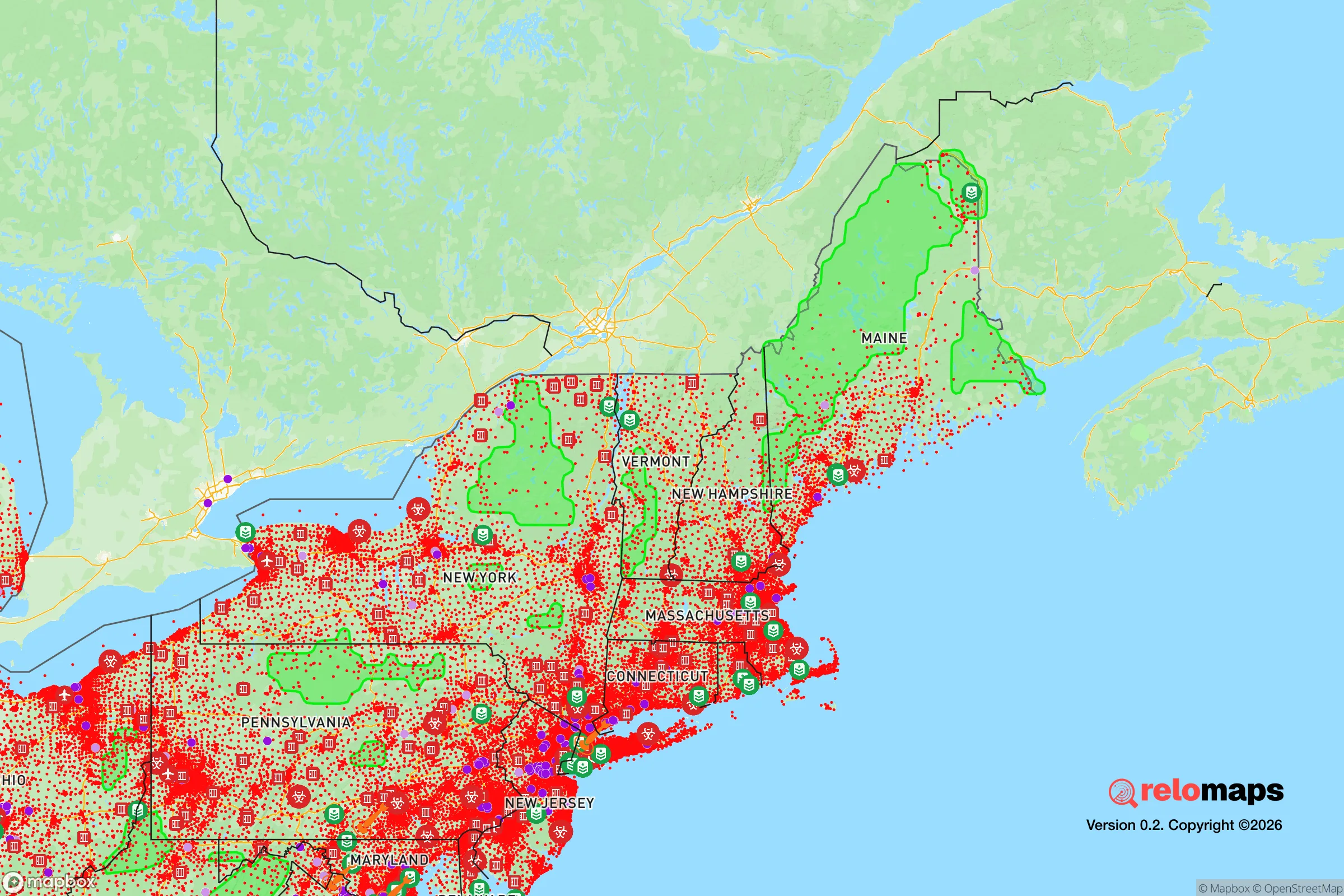
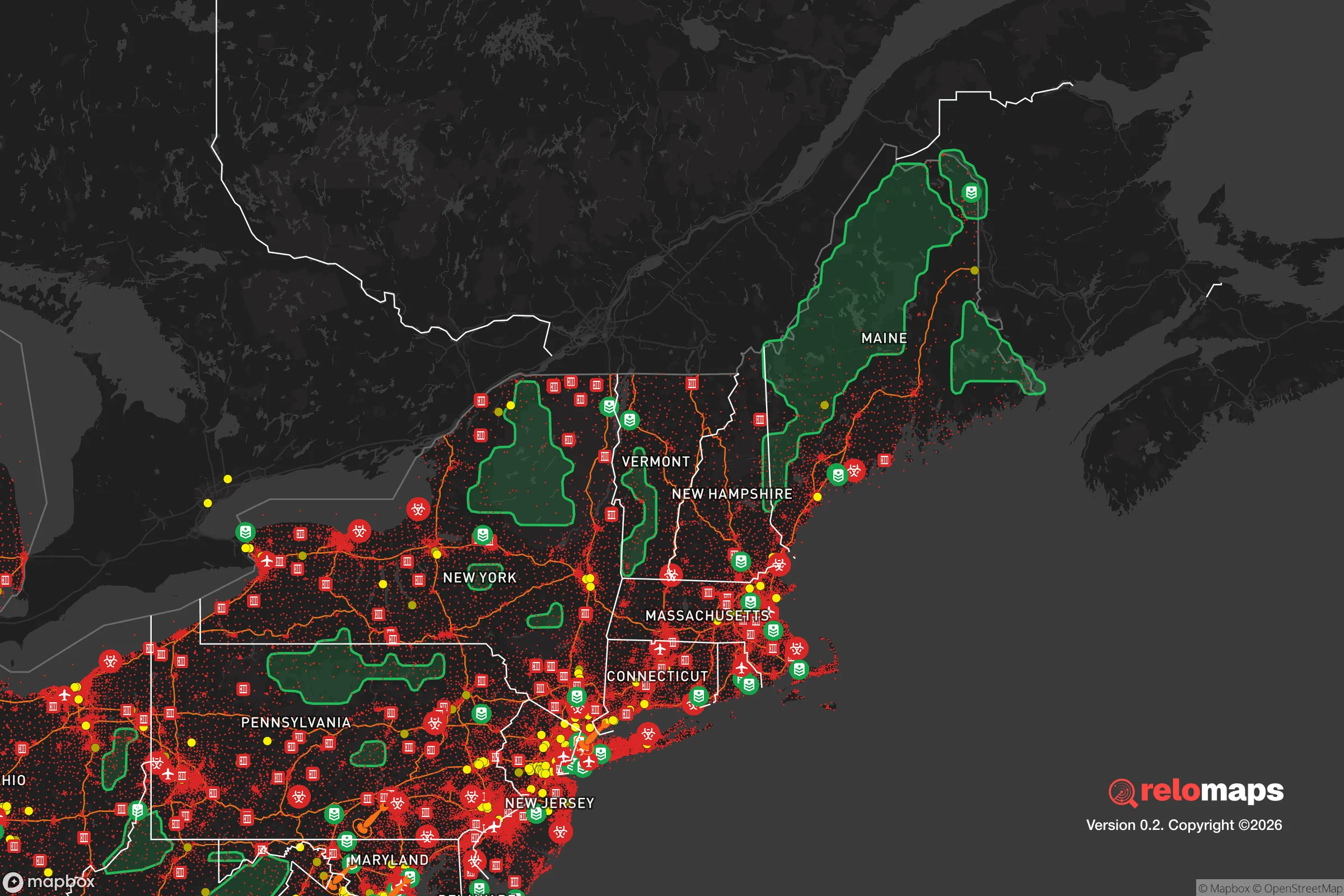


Important Note: For informational purposes only. This does not mean nothing bad ever happens in the green zones. Please use common sense. This is based on public data and modeled with AI. We tried to take a conservative approach but mistakes happen. We update this regularly as new information becomes available.
Solar Generator Recommendations
Backup power matters more here than in safer locations. We've picked three solar generators across budgets and capacity tiers — start with the budget unit if you only need a few essentials, or step up if you want to run a fridge and HVAC for days at a time.

Jackery Portable Power Station Explorer 300
Budget OptionPower on the Go: Weighing only 11 lbs, it's convenient to set up and store with book-sized foldable solar panels

BLUETTI Portable Power Station AC180
Designed for both indoor and outdoor scenarios, AC180 is highly capable as it has a robost capacity and continuous output power.

EF ECOFLOW DELTA Pro Ultra Power Station
Upgraded PickEcoFlow DELTA Pro Ultra is a whole-home energy system designed to grow with your family. Integrated with the Smart Home Panel 2, it scales to meet your evolving energy needs — keeping your home powered, intelligent, and secure through every stage of life.
We earn a commission, at no additional cost to you.
Strategic Assessment Analysis
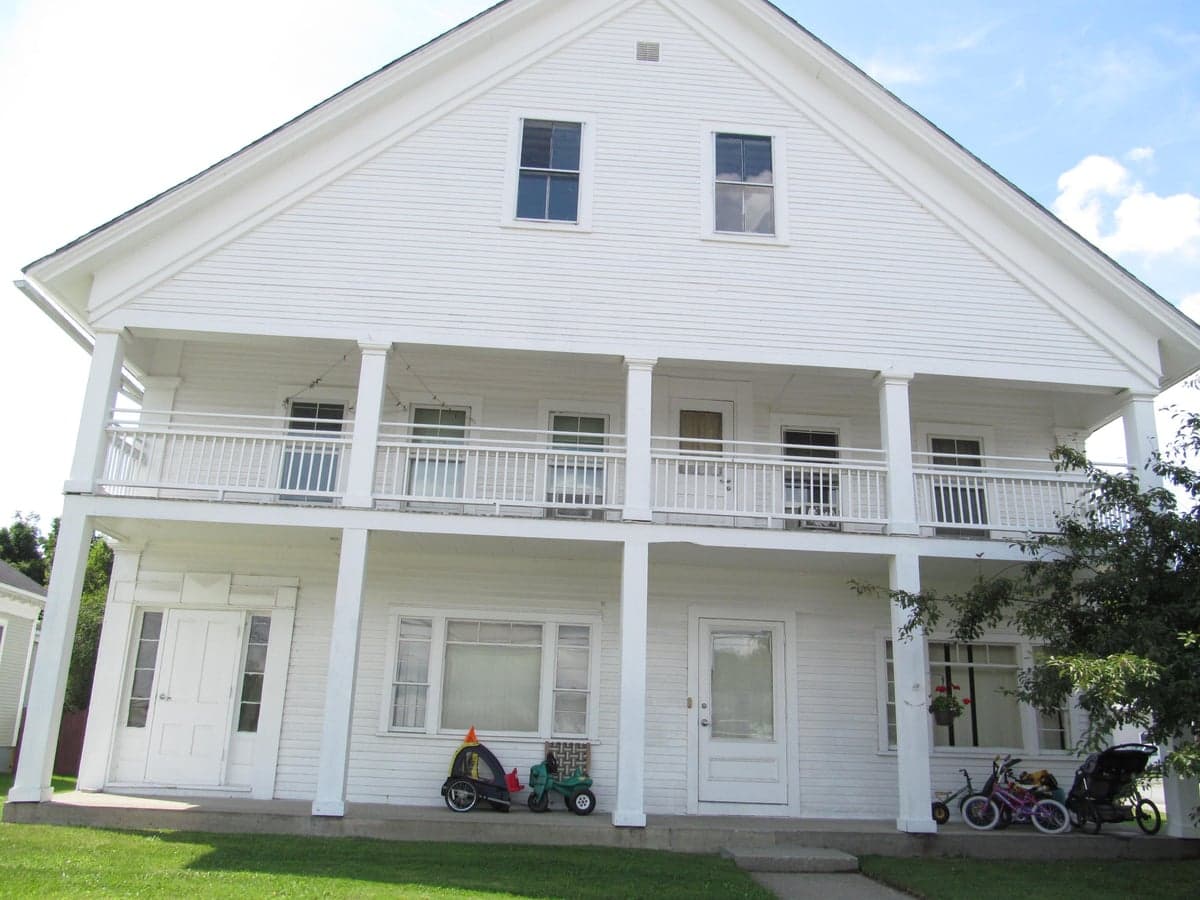
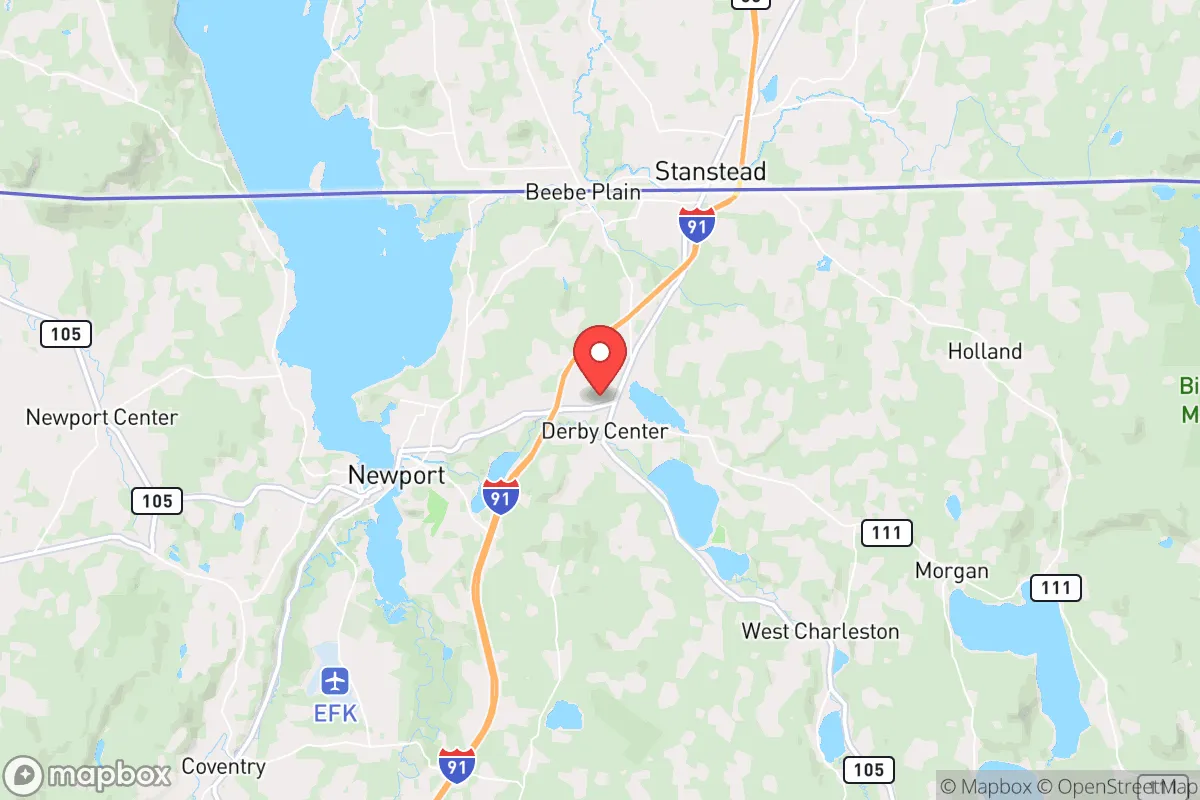
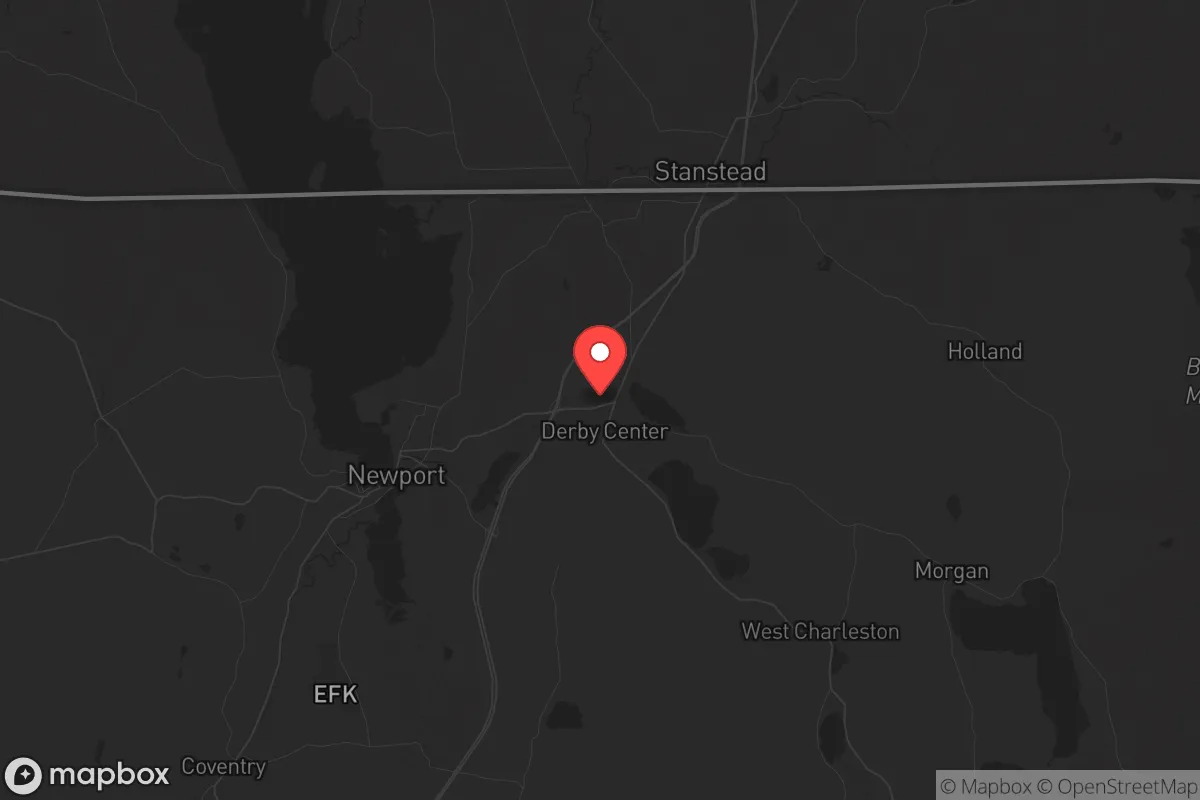
Derby Center, Vermont, sits in a unique strategic pocket that offers genuine resilience advantages for those prioritizing self-sufficiency and distance from major population centers. Located in Orleans County, less than 10 miles from the Canadian border and roughly 90 miles from Montreal, this small town of under 800 residents provides a buffer from the chaos of urban collapse while still maintaining access to cross-border supply lines. The area's low population density, cold climate, and agricultural heritage make it a serious consideration for anyone looking to weather societal disruptions, though its northern location brings distinct trade-offs in terms of growing season and accessibility.
Geographic position and natural advantages for long-term survival
Derby Center's location in the Northeast Kingdom of Vermont is defined by its remoteness and natural barriers. The town sits near the southern end of Lake Memphremagog, a 30-mile-long lake that stretches into Quebec, providing a substantial freshwater resource and a natural boundary that complicates approach from the north. The surrounding terrain is a mix of forested hills, small farms, and scattered wetlands, offering multiple avenues for concealment and retreat if needed. The area is roughly 50 miles from the nearest interstate highway (I-91), which means major transit corridors are not immediately adjacent, reducing the risk of refugee flows or military movements passing through. The Canadian border crossing at Derby Line, just 5 miles north, is a potential chokepoint that could be monitored or controlled, but it also offers an escape route or supply link if relations remain stable. The region's elevation, averaging around 1,000 feet, provides some protection against flooding and gives vantage points for observation. The cold winters, while harsh, also serve as a natural deterrent to unprepared travelers and limit the spread of many vector-borne diseases. The area's agricultural history means that soil quality in the valleys is decent for subsistence farming, and the presence of working farms means local knowledge and equipment are available if you integrate into the community.
Risks, exposures, and proximity to fallout-relevant landmarks
The primary risk for Derby Center is its proximity to the Canadian border and the potential for cross-border instability. Montreal, a major metropolitan area of over 4 million people, is roughly 90 miles northwest, and in a scenario of civil unrest or economic collapse, that population could push southward. The border itself is lightly guarded but could become a flashpoint if Canada faces its own crises. There are no major military bases, nuclear power plants, or large industrial targets within 50 miles of Derby Center. The closest significant infrastructure is the Vermont Yankee nuclear plant in Vernon, over 150 miles south, which is decommissioned but still contains spent fuel. The nearest active rail lines run through Newport, about 5 miles south, and while they carry freight, they are not high-value targets. The area is far from any major population centers in the U.S.—Burlington is 90 miles south, Boston is 200 miles southeast, and New York City is over 350 miles away. This distance from primary targets is a major positive for fallout and secondary effects. However, the region is not immune to natural disasters. Ice storms are common and can knock out power for weeks, as seen in the 1998 ice storm that devastated northern Vermont. Flooding along the Clyde River and Lake Memphremagog shoreline is a periodic concern, but most of Derby Center sits on higher ground. The biggest practical risk is the harsh winter, which can isolate the area for days at a time and requires serious preparation for heating, food storage, and transportation.
Practical resilience for a relocator: food, water, energy, and defensibility
For someone serious about self-sufficiency, Derby Center offers a mix of advantages and challenges. Water is abundant—Lake Memphremagog, the Clyde River, and numerous smaller streams and ponds provide year-round sources, though treatment or boiling will be necessary for most surface water. Groundwater is generally good, and many properties have wells. The growing season is short, typically from late May to early September, which limits what you can cultivate. Cold-hardy crops like potatoes, root vegetables, kale, and certain grains are viable, but you will need a greenhouse or indoor growing setup to extend the season. The area has a strong hunting and fishing culture; deer, moose, turkey, and small game are present, and the lake holds lake trout, salmon, and bass. Foraging for mushrooms, berries, and maple syrup is also viable. Energy is a concern—grid power is reliable in normal times but vulnerable to ice storms. Wood heat is the standard backup, and most homes have wood stoves or boilers. Solar is feasible but limited in winter due to short days and snow cover; a hybrid system with a generator and stored fuel is more practical. Defensibility is mixed. The terrain offers good cover and chokepoints on the few roads leading into town, but the area is not easily fortified. The population is small and generally rural-minded, which means you can build trust and mutual aid networks, but you will also be visible as an outsider. The local economy is based on tourism (hunting, fishing, snowmobiling), small-scale agriculture, and some light manufacturing. Jobs are scarce, so you need to bring either remote work or a plan for self-employment. The nearest hospital is in Newport, 10 minutes south, but it is a small critical-access facility; serious trauma care requires a 90-minute drive to Burlington. Law enforcement presence is minimal—the Orleans County Sheriff's Office and Vermont State Police cover a large area, so response times in an emergency can be long.
The overall strategic picture for Derby Center is one of trade-offs. It offers genuine distance from the major population centers and infrastructure that would be targets in a national crisis, and its natural resources—water, timber, game—are solid for a long-term survival scenario. The Canadian border is both a risk and an opportunity, depending on how events unfold. The harsh climate and short growing season are real constraints that require serious preparation, not just a bug-out bag mentality. For a conservative-leaning individual or family looking to opt out of the system before it breaks, Derby Center is a viable option if you are willing to invest in winter-ready infrastructure, build local relationships, and accept a slower, more isolated lifestyle. It is not a place for those who want to ride out a short-term disruption and then return to normalcy—it is a place to build a new normal, on your own terms, far from the noise. If you can handle the cold and the quiet, this corner of Vermont offers a level of strategic depth that few other locations in the Northeast can match.

* Values derived from national, state, county, city and local statistics and may differ in a specific area. Last updated: 2026-04-29T21:27:37.000Z
Narrative content on this page is AI-generated and may contain mistakes. Verify any details that matter before acting on them.
ReloMaps may earn a commission from affiliate links at no extra cost to you.

