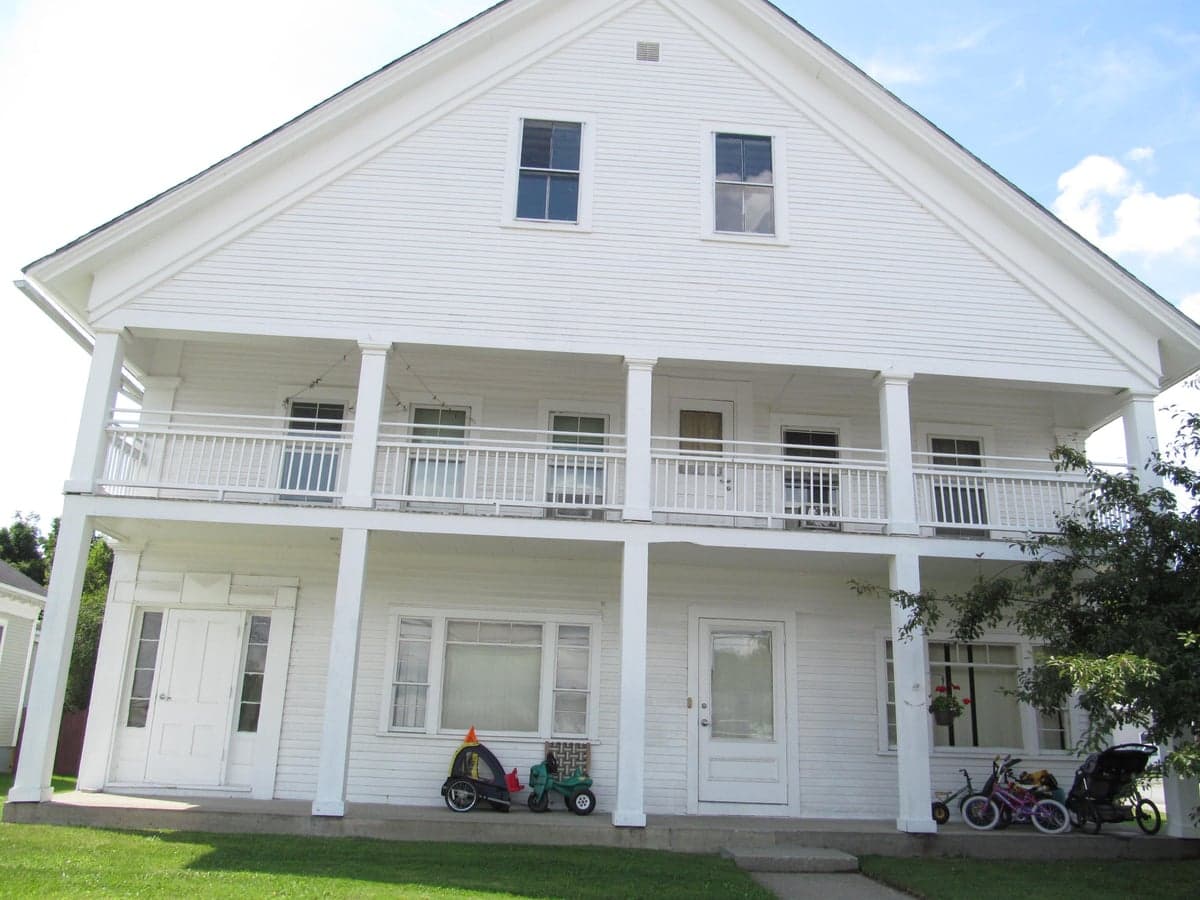
Photo: Wikipedia
Personal Sovereignty in Derby Center, VT
Moderate friction. Expect trade-offs in some aspect of personal liberty and independence.
What does Personal Sovereignty tell us?
Personal Sovereignty measures your capacity for self-reliance and independence with minimal government friction. Higher scores mean fewer barriers between you and the way you want to live... but it assumes you have the space you need and good neighbors.
What does this tell us?
Personal Sovereignty measures your capacity for self-reliance and independence with minimal government friction. Higher scores mean fewer barriers between you and the way you want to live... but it assumes you have the space you need and good neighbors.
State Policy
Energy independence: Importer (15% of energy produced in-state)
Personal Liberty
Homesteading

Personal Liberty Analysis
Derby Center, Vermont, offers a unique sovereignty calculus for those prioritizing personal autonomy, but it is not a straightforward haven. The town sits in Orleans County, a region that leans more conservative than the state's Chittenden County core, yet it remains under the thumb of Montpelier's increasingly progressive governance. For a survivalist or prepper mindset, the key tension here is between a rural, self-reliant lifestyle and a state-level regulatory environment that can feel intrusive. You get the land and the space to breathe, but you must navigate a state government that has shown a willingness to override local and personal decisions, particularly on health mandates and property use. The net assessment: a high ceiling for individual sovereignty if you are willing to fight for it, but a floor that is lower than in states like New Hampshire or Texas.
Tax burden and regulatory posture: how much the state takes and controls
Vermont's tax burden is among the highest in the nation, and Derby Center residents feel it directly. The state levies a progressive income tax with a top marginal rate of 8.75%, and the statewide property tax for education averages around $1.59 per $100 of assessed value — one of the highest rates in the country. For a prepper looking to hold land and assets, this is a significant drain. The regulatory posture is equally aggressive. Vermont has some of the strictest land-use laws under Act 250, which can require a state permit for any development that impacts more than 10 acres or creates more than 10 parking spaces. This means even building a modest homestead or a workshop can trigger a costly and time-consuming review. The state also mandates a renewable energy standard that effectively forces utilities to buy expensive power, driving up electricity costs. For someone seeking to minimize government dependency, the tax and regulatory climate in Derby Center is a persistent headwind, not a tailwind.
Self-defense and gun law specifics: what you can own and where you can carry
On firearms, Vermont is a mixed bag for the liberty-minded. The state has a constitutional right to bear arms, and until recently, it was a permitless carry state. However, in 2023, the legislature passed Act 68, which bans the carrying of firearms in a wide range of "sensitive places," including hospitals, schools, and municipal buildings. This is a direct erosion of the traditional Vermont freedom to carry without government permission. More concerning for preppers, the state also passed a ban on "large capacity" magazines (over 10 rounds for long guns, 15 for handguns) and a universal background check law. There is no state preemption on local gun ordinances, meaning Derby Center's town government could theoretically pass its own restrictions, though it has not done so. The practical reality: you can still own most rifles and handguns, but the magazine ban and sensitive places restrictions create a legal minefield. For a survivalist, this is a clear example of government overreach into a fundamental right, and it is a reason to look at neighboring New Hampshire, which has stronger preemption and no magazine ban.
Self-reliance and homesteading viability: lot sizes, zoning, and off-grid feasibility
This is where Derby Center shines for the self-reliant. The town is rural, with most residential lots ranging from 1 to 10 acres, and larger parcels of 20+ acres are common and affordable. Zoning is minimal — the town has no comprehensive zoning ordinance, only subdivision regulations. This means you can generally build a house, a barn, or a workshop without a local permit, though you still need state-level Act 250 approval for larger projects. Off-grid living is legally feasible. Vermont has no state law requiring a grid connection, and you can install solar panels, wind turbines, or a generator without significant red tape. However, the state does require that any dwelling have a "potable water supply" and a "sanitary disposal system," which typically means a well and a septic system — both of which require permits and inspections. For a prepper, the key advantage is the ability to buy a large, cheap parcel of land and build a self-sufficient homestead with minimal local interference. The downside is that the state's environmental regulations can still bite you if you try to do anything that affects wetlands, streams, or rare species habitat.
Personal liberties: parental rights, medical autonomy, speech, and property
This is the most contentious area for a conservative audience. Vermont has some of the strongest "medical autonomy" laws in the country, but they are framed from a progressive perspective. The state has a legal right to die with dignity, and it has no law requiring parents to vaccinate their children for school attendance — a significant win for parental rights. However, during the COVID-19 pandemic, the state imposed some of the longest-lasting emergency mandates in the nation, including a mask mandate for schools that lasted into 2022. The state also passed a law in 2023 that allows minors to receive gender-affirming care without parental consent, which is a direct assault on parental authority. On property rights, Vermont is weak. The state's "right to farm" law provides some protection for agricultural operations, but Act 250 gives the state broad power to restrict land use based on "aesthetics" and "community character." This means a neighbor can challenge your homestead expansion on subjective grounds. Free speech is generally protected, but the state has a "malicious harassment" law that can be used to prosecute speech deemed to be hateful. For a prepper, the bottom line is that Vermont's government is willing to override personal and parental decisions when it disagrees with them, and the legal system is not reliably protective of traditional liberties.
Overall, Derby Center offers a paradoxical sovereignty profile. The town itself is hands-off, with cheap land, minimal zoning, and a culture of self-reliance. But it sits inside a state that is increasingly hostile to gun rights, parental authority, and property freedom. For a survivalist, the calculus is simple: you can live cheaply and independently on your own land, but you must be prepared to fight the state government on multiple fronts. Compared to a place like Coeur d'Alene, Idaho, or rural New Hampshire, Derby Center is a compromise — you get the space and the silence, but you pay for it with higher taxes and a more intrusive state. If you are willing to be a "sovereign individual" in the truest sense, meaning you accept the burden of constant vigilance against government overreach, this area can work. If you want a state that actively protects your rights, look elsewhere.

* Values derived from national, state, county, city and local statistics and may differ in a specific area. Last updated: 2026-04-29T21:27:37.000Z
Narrative content on this page is AI-generated and may contain mistakes. Verify any details that matter before acting on them.
ReloMaps may earn a commission from affiliate links at no extra cost to you.

