Photo: Wikipedia
Demographics of Derby Line, VT
Affluence Level in Derby Line, VT
A middle-class area roughly in line with national averages across income, home values, education, and employment.
People of Derby Line, VT
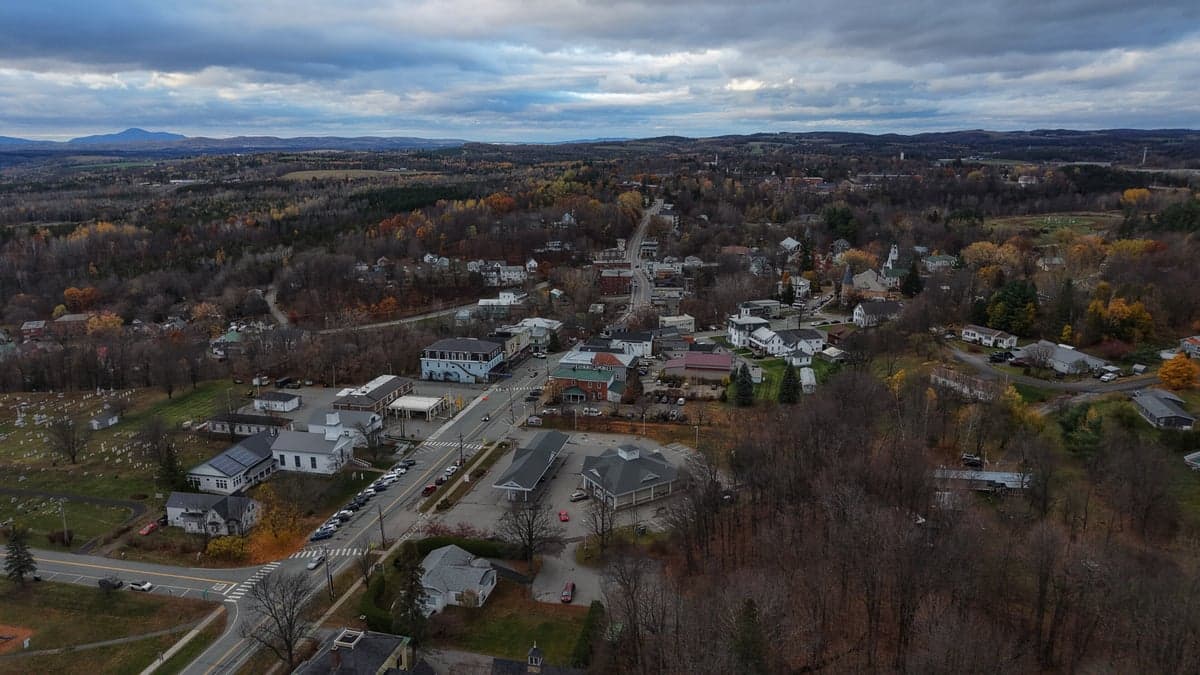
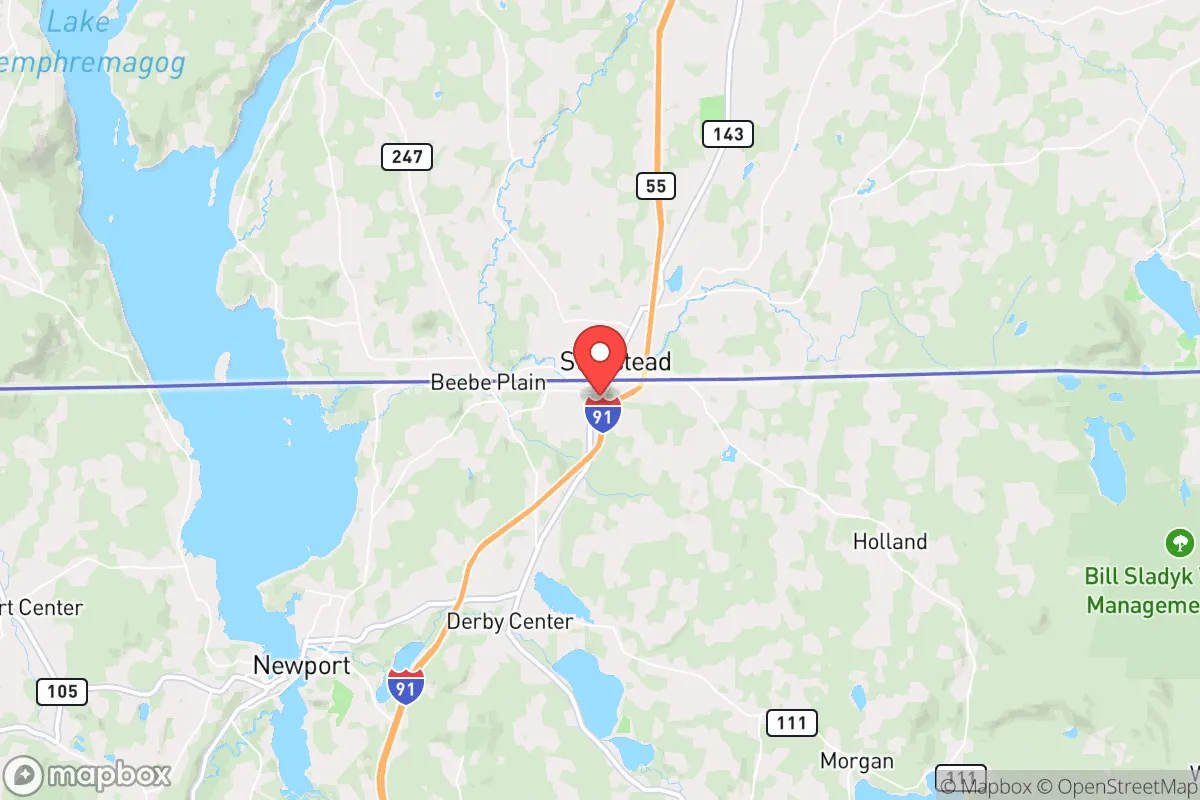
Derby Line, Vermont, is a small, tight-knit border community of 860 residents that remains overwhelmingly white (95.8%) and native-born, with a foreign-born population of just 2.6%. Its character is defined by a quiet, rural independence and a deep connection to the Canadian border, where daily life often involves crossing into Stanstead, Quebec. The population is older and well-educated (39.6% college-educated), but the town faces demographic stagnation, with little recent in-migration and a shrinking youth population.
How the city was settled and grew
Derby Line’s human history begins not with a land grant but with the border itself. After the Treaty of Washington (1842) fixed the U.S.-Canada boundary, the village grew up directly on the line, astride the route of the Grand Trunk Railway (completed 1853). The first major wave of settlers were Anglo-American farmers and tradesmen from southern New England and New Hampshire, drawn by cheap land and the promise of cross-border commerce. They built the earliest homes in the Village Center, clustered around Main Street and the railroad depot. By the 1870s, the border location spurred a second wave: French-Canadian laborers who crossed from Quebec to work in Derby Line’s textile mills and granite quarries. These families settled in the Mill District along the Tomifobia River, creating a distinct Franco-American enclave with its own Catholic parish, St. Edward’s (founded 1886). A smaller wave of Irish immigrants arrived in the 1880s, working on the railroad and settling in the Railroad Flats area near the depot. By 1900, Derby Line was a bustling border town of roughly 1,200, with English and French spoken interchangeably in its shops and schools.
Modern era (post-1965)
The post-1965 period brought no major immigration wave to Derby Line. The 1965 Hart-Cellar Act, which reshaped U.S. immigration, had little effect here: the town’s foreign-born share has never exceeded 3%. Instead, the dominant demographic shift was domestic out-migration. As the textile and granite industries declined through the 1970s and 1980s, younger residents left for Burlington or out of state, and the population fell from a peak of 1,100 in 1960 to 860 today. The Mill District saw its Franco-American character fade as mill housing was converted to seasonal or second homes. The Village Center became increasingly residential, with fewer storefronts. The only notable in-migration has been a small number of retirees and remote workers from southern New England, attracted by low property taxes and the border’s novelty. These newcomers have concentrated in the Lake Area around Seymour Lake, where newer single-family homes sit on larger lots. The town’s racial composition has remained static: 95.8% white, 1.3% Black, 0.9% Hispanic, and no measurable East/Southeast Asian or Indian-subcontinent population. The Black and Hispanic residents are almost entirely individuals employed in border services or healthcare, not part of a larger community enclave.
The future
Derby Line’s population is heading toward further homogenization and slow decline. The town’s median age is rising (estimated at 48–50), and the school-age population has dropped by roughly 15% since 2010. There is no sign of a new immigrant wave: the 2.6% foreign-born share is unlikely to grow, given the lack of entry-level jobs and affordable rental housing. The Mill District and Railroad Flats are likely to see continued conversion to seasonal homes, reducing the year-round population. The Lake Area may attract a few more remote workers, but high property prices there limit that inflow. The town is not tribalizing into distinct ethnic enclaves—it is simply aging in place, with the few non-white residents dispersed across the Village Center. Over the next 10–20 years, Derby Line will likely stabilize at 800–850 residents, becoming an even quieter, older, and more homogeneous bedroom community for the Newport area and southern Quebec.
For someone moving in now, Derby Line offers a stable, low-crime, and deeply rooted community—but one with little demographic dynamism. It is a place where the past is still present, and where new arrivals will find a welcoming but insular population that values privacy and self-reliance. The town is not growing or diversifying; it is preserving what remains.

* Values derived from national, state, county, city and local statistics and may differ in a specific area. Last updated: 2026-04-30T04:04:39.000Z
Narrative content on this page is AI-generated and may contain mistakes. Verify any details that matter before acting on them.
ReloMaps may earn a commission from affiliate links at no extra cost to you.

