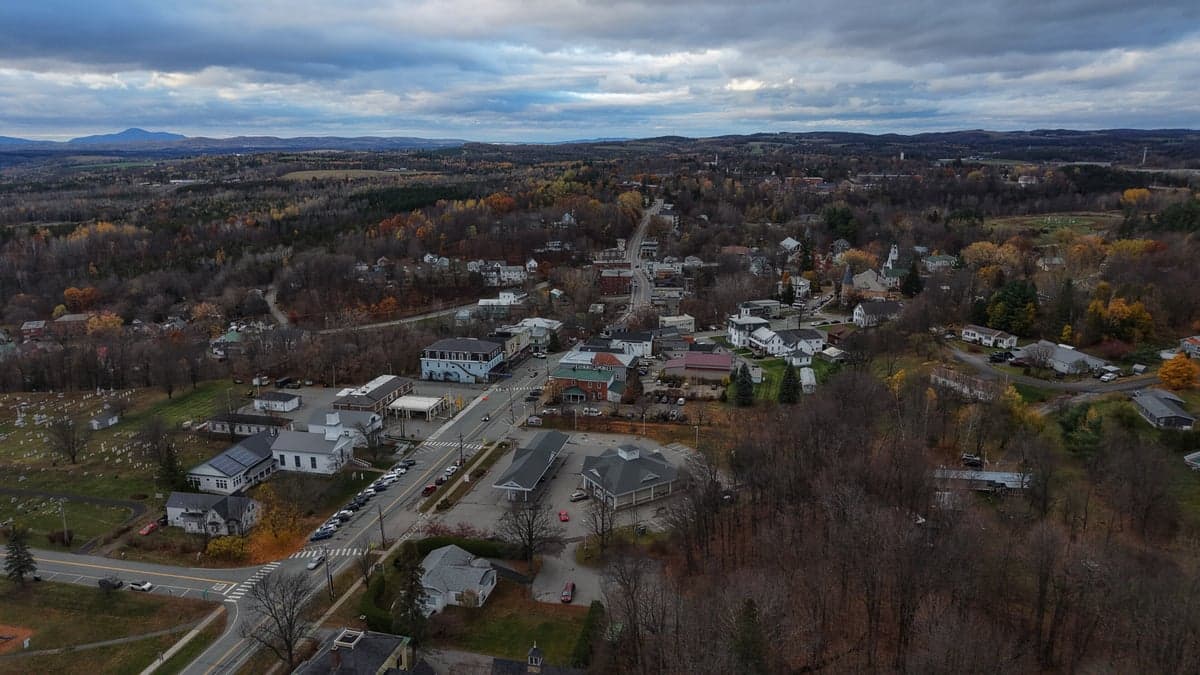
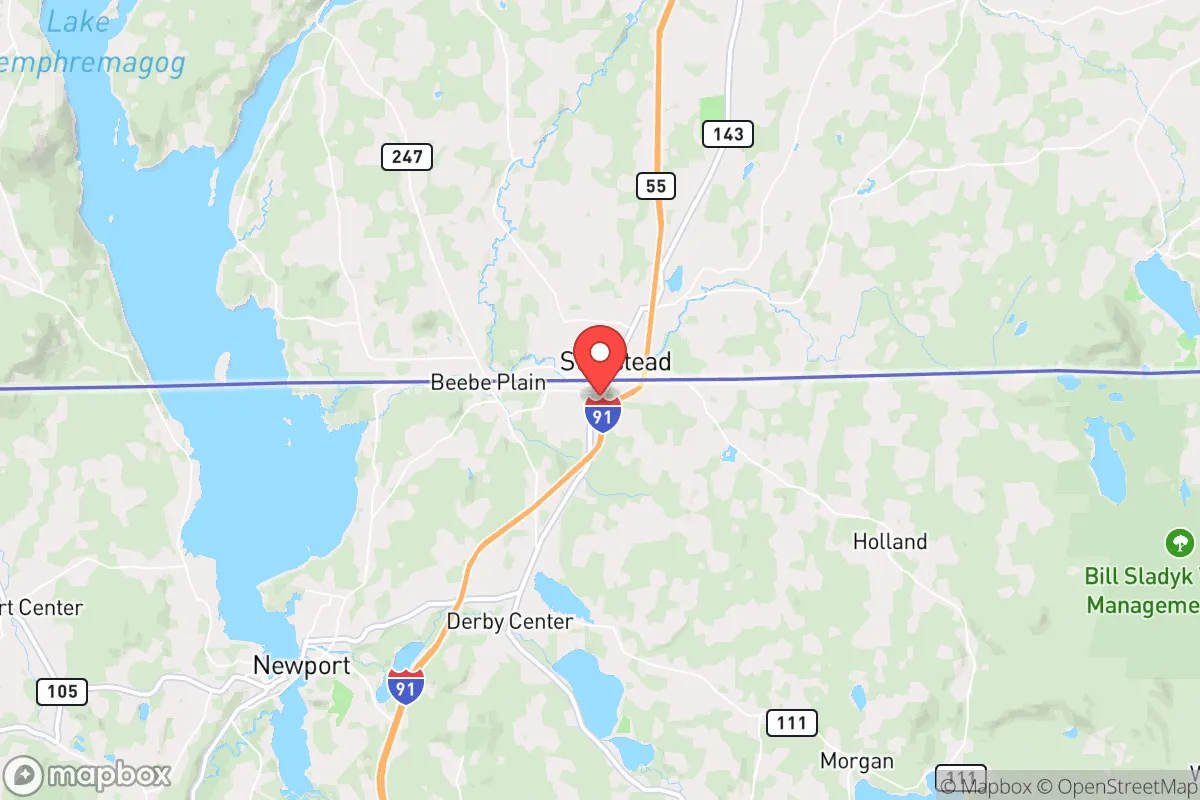
Photo: Wikipedia
Personal Sovereignty in Derby Line, VT
Moderate friction. Expect trade-offs in some aspect of personal liberty and independence.
What does Personal Sovereignty tell us?
Personal Sovereignty measures your capacity for self-reliance and independence with minimal government friction. Higher scores mean fewer barriers between you and the way you want to live... but it assumes you have the space you need and good neighbors.
What does this tell us?
Personal Sovereignty measures your capacity for self-reliance and independence with minimal government friction. Higher scores mean fewer barriers between you and the way you want to live... but it assumes you have the space you need and good neighbors.
State Policy
Energy independence: Importer (15% of energy produced in-state)
Personal Liberty
Homesteading

Personal Liberty Analysis
Derby Line, Vermont, presents a complex sovereignty picture that demands careful scrutiny from anyone prioritizing personal autonomy. While Vermont’s national reputation leans progressive, the state’s deep-rooted tradition of local control and fierce independence creates a surprisingly mixed environment for those seeking to minimize government overreach. For the survivalist or prepper, the key takeaway is that Derby Line offers genuine opportunities for self-reliance, but only if you navigate a regulatory landscape that can be both permissive and intrusive, depending on the issue. The town’s position on the Canadian border adds a unique layer of strategic consideration, but also invites federal presence that can feel like an overstep into local affairs.
Tax burden and regulatory posture: what you pay and what you can do
Vermont’s tax burden is among the highest in the nation, and Derby Line is not exempt. Property taxes are a significant concern, with effective rates often exceeding 1.8% of assessed value, which can strain a fixed-income or prepper budget. The state income tax is progressive, topping out at 8.75%, and sales tax is 6%. For someone trying to stockpile supplies or invest in land, these recurring costs eat into capital that could otherwise go toward self-sufficiency projects. On the regulatory side, Vermont is known for stringent environmental and land-use laws, particularly Act 250, which can delay or block development on parcels over 10 acres. However, Derby Line’s rural character means many smaller-scale projects—like building a shed, installing a solar array, or drilling a well—often fall under local permitting that is less onerous than in Chittenden County. The state’s push for renewable energy mandates can feel like an overreach, but it also means net-metering policies that make off-grid solar setups financially viable. Overall, the tax and regulatory environment is a net negative for personal sovereignty, but the town’s remoteness provides some buffer from the most aggressive state-level enforcement.
Self-defense and gun law specifics: what you can keep and carry
Vermont has some of the most permissive gun laws in the Northeast, and this is a bright spot for personal sovereignty in Derby Line. The state requires no permit to purchase rifles, shotguns, or handguns, and there is no waiting period for most firearms. Open carry is legal without a license, and concealed carry is also permitless for residents 21 and older. This means you can keep a firearm in your vehicle, home, or on your person without jumping through bureaucratic hoops. Magazine capacity is not restricted, and there is no state-level assault weapons ban, though local ordinances in some towns have attempted to create restrictions—Derby Line has not followed that path. The 2023 passage of a "red flag" law (Extreme Risk Protection Order) is a notable overreach, allowing courts to temporarily seize firearms based on a complaint without a criminal conviction. For the prepper, this is a red flag in itself, as it introduces a mechanism for government confiscation based on subjective judgment. Still, compared to neighboring New York or Massachusetts, Vermont’s gun culture is far more aligned with individual rights. The border location also means you must be aware of federal laws regarding international transport of firearms—crossing into Canada with a weapon is a felony without proper paperwork.
Self-reliance and homesteading viability: lot sizes, zoning, and off-grid feasibility
Derby Line’s rural zoning and available land make it a viable location for serious homesteading. Minimum lot sizes in the town’s agricultural and residential districts typically start at 1 to 2 acres, but larger parcels of 5 to 20 acres are common and affordable compared to southern Vermont. Zoning allows for keeping livestock, including chickens, goats, and even a few cattle, without special permits as long as you meet setback requirements. Off-grid living is feasible but requires navigating state building codes. Vermont does not legally require a grid connection, but you must meet the state’s residential building code for structural safety and sanitation. A composting toilet or septic system is permitted, but must be approved by the local health officer. Rainwater collection is legal for non-potable uses, but potable systems require treatment and testing. Solar panels are widely accepted, and the state’s net-metering policy means you can sell excess power back to the grid—though this ties you to a utility. For the prepper who wants true independence, the biggest hurdle is the state’s strict wetland and shoreland protection laws, which can limit where you build or dig a pond. Overall, Derby Line offers a solid foundation for self-reliance, but you must be willing to work within a regulatory framework that sometimes feels like it was designed by people who distrust individual initiative.
Personal liberties: parental rights, medical autonomy, speech, and property
On parental rights, Vermont has moved in a direction that many conservative-leaning individuals find troubling. The state mandates that public schools adopt curricula aligned with "culturally responsive" and "social-emotional learning" standards, which some parents view as ideological overreach. There is no statewide school choice program, though Derby Line is part of the Orleans Central Supervisory Union, which has a limited open enrollment policy. Homeschooling is legal but requires annual notification and portfolio review, which is more oversight than in states like Idaho or Texas. Medical autonomy is a mixed bag. Vermont has no state-level vaccine mandate for adults, but it does require certain immunizations for school attendance, with only medical exemptions allowed—no religious or philosophical exemptions. This is a significant concern for parents who want full control over their children’s healthcare decisions. The state also legalized assisted suicide in 2013, which some view as a slippery slope toward government-sanctioned end-of-life decisions. On speech, Vermont has no specific laws that restrict political speech beyond federal limits, but the state’s "fair housing" and "public accommodation" laws have been used to penalize individuals for expressing certain religious or political views in commercial contexts. Property rights are generally respected, but the state’s "right to farm" law provides some protection for agricultural operations against nuisance lawsuits, which is a plus for homesteaders. However, the state’s environmental regulations can feel like a backdoor infringement on how you use your land, especially if you want to clear timber or alter drainage.
In the broader context of personal sovereignty, Derby Line sits in a middle tier among U.S. locations. It is far more permissive than the coastal Northeast or the West Coast on guns and land use, but it lags behind the Mountain West or the Deep South on tax burden, medical autonomy, and parental rights. For the survivalist or prepper who values low government interference above all, states like New Hampshire or Idaho offer a cleaner slate. But if you are drawn to Vermont’s natural resources, low population density, and border proximity for strategic reasons, Derby Line provides a workable base—provided you are willing to fight for your freedoms at the local level and accept that the state government will occasionally act as an adversary rather than an ally. The key is to buy land with clear title, understand your zoning bylaws, and build relationships with neighbors who share your values. In a town this small, community is your best defense against overreach.

* Values derived from national, state, county, city and local statistics and may differ in a specific area. Last updated: 2026-04-30T04:04:39.000Z
Narrative content on this page is AI-generated and may contain mistakes. Verify any details that matter before acting on them.
ReloMaps may earn a commission from affiliate links at no extra cost to you.

