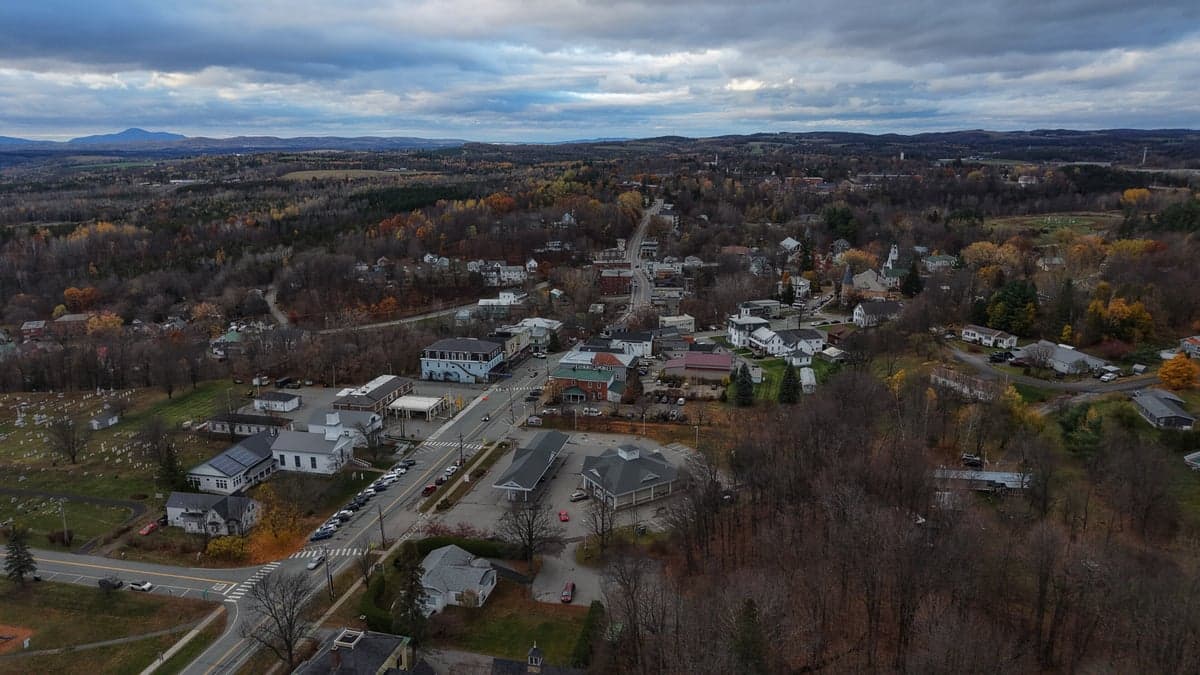
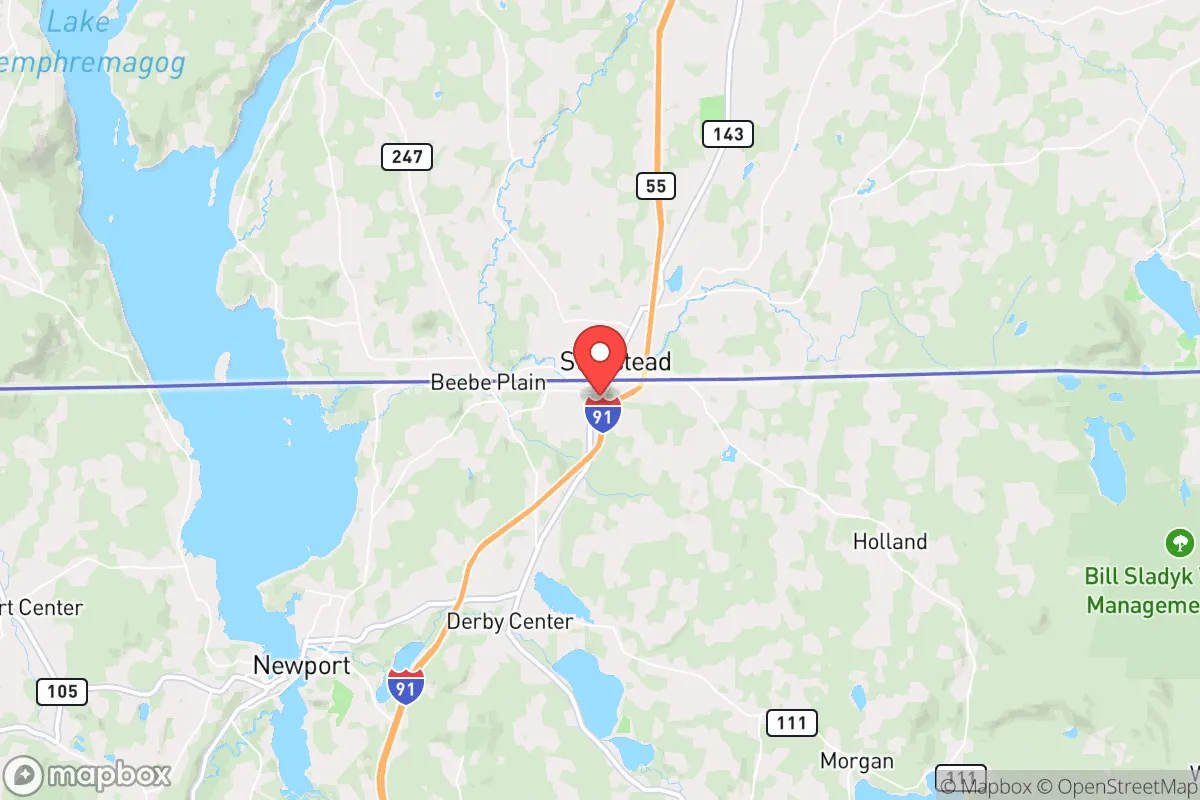
Photo: Wikipedia
Political ClimatePolitical Climate in Derby Line, VT
District shown is the primary district for this city’s centroid. Cities may span multiple districts.
Inherited from parent state — no local data available.
Local Political AnalysisPolitical Analysis of Derby Line, VT
Derby Line, Vermont, sits in a deep blue pocket of an already blue state, with a Cook PVI of D+17 that tells you all you need to know about the local voting patterns. But if you’ve lived here as long as I have, you know that political lean isn’t just about election results—it’s about a slow, steady shift away from the independent, live-and-let-live spirit that used to define this border town. Back in the day, folks here didn’t care much about party labels; they cared about keeping the government out of their barns, their businesses, and their backyards. Now, that’s changing, and not for the better.
How it compares
Drive ten miles south to Newport or twenty miles west to Irasburg, and you’ll find a different world—places where the Cook PVI flips to something closer to R+5 or R+10, where people still wave at you from their trucks and don’t appreciate being told how to heat their homes or what to teach their kids. Derby Line, by contrast, has become a sort of progressive outpost, heavily influenced by the college crowd and second-home owners from Burlington and beyond. The contrast is stark: while Orleans County as a whole voted for Trump in 2020 by a slim margin, Derby Line’s precincts went heavily for Biden. That’s not just a data point; it’s a sign that the local culture is being pulled away from its roots. The town’s unique position on the Canadian border used to mean a focus on practical, cross-border issues—trade, travel, family ties. Now, it feels like the conversation has shifted to climate mandates and social engineering, things that don’t exactly resonate with the folks who’ve been farming this land for generations.
What this means for residents
For those of us who value personal freedom, the political climate here is getting uncomfortable. You see it in the local school board meetings, where debates over curriculum and parental rights have turned heated. You feel it in the town budget, where more money goes to “equity initiatives” and less to fixing the potholes on Main Street. The state government in Montpelier, which leans heavily progressive, has a long reach into Derby Line, pushing mandates on renewable energy, gun control, and land use that feel like they were written for someone living in a downtown condo, not a rural border town. Property taxes are already among the highest in the nation, and every new regulation—whether it’s on wood stoves or short-term rentals—adds another layer of cost and hassle. The long-term trajectory is concerning: if the trend continues, Derby Line could become a place where only the wealthy or the ideologically committed can afford to stay, while the working-class families who built this community get priced out or pushed out.
Culturally, there’s still a strong sense of neighborliness here—people help each other through harsh winters and tough times—but the policy landscape is increasingly at odds with that spirit. The town’s proximity to Canada used to be a practical advantage; now, it’s a reminder of how different things are on the other side of the border, where government control is even tighter. If you’re considering a move here, just know that the political climate is real and it affects everything from your tax bill to your kids’ education. It’s not all bad—the scenery is gorgeous, the community is tight-knit, and there’s still a stubborn streak of independence in the older generation. But if you value limited government and personal autonomy, keep an eye on the local elections and the school board. That’s where the real fight for Derby Line’s future is happening.

State Political ClimatePolitical Climate in Vermont
State Political AnalysisPolitical Environment in the State
Vermont has long been one of the most reliably Democratic states in the nation, but its political climate is far more complex than a simple blue label suggests. Over the past 20 years, the state has shifted from a moderate, fiscally conservative New England tradition to a solidly progressive stronghold, with Democrats holding supermajorities in the legislature and the governorship flipping between parties. However, a deep urban-rural divide means that while Burlington and its suburbs drive the leftward tilt, vast swaths of the Northeast Kingdom and southern counties remain stubbornly Republican or independent-minded. For a conservative considering relocation, the state offers breathtaking natural beauty and a strong sense of local community, but the policy environment has become increasingly hostile to personal freedoms, particularly in taxation, education, and gun rights.
Urban vs. rural divide
The political map of Vermont is a study in contrasts. The state’s most populous city, Burlington, is a progressive bastion that routinely elects Democratic Socialists to city council and the state legislature. Chittenden County, which includes Burlington and its suburbs like South Burlington and Essex Junction, reliably delivers 65-70% of its vote to Democratic candidates. This metro area alone accounts for nearly a third of the state’s population and effectively decides statewide elections. In contrast, the Northeast Kingdom—counties like Orleans, Essex, and Caledonia—votes heavily Republican, often by margins of 20-30 points. Towns like Newport and St. Johnsbury are conservative strongholds, where gun rights and local control are paramount. The divide is stark: in the 2022 gubernatorial race, Republican Phil Scott won 58% of the vote in rural Caledonia County but only 28% in Chittenden. The southern counties, including Bennington and Windham, are more mixed, with small towns leaning conservative but college towns like Bennington itself trending left. This geographic split means that while the state legislature is dominated by progressives, the governor’s office has been held by a moderate Republican since 2017—a dynamic that creates constant tension over policy.
Policy environment
Vermont’s policy environment is a mixed bag for conservatives, with some bright spots but a clear trend toward government expansion. The state has one of the highest tax burdens in the nation: a progressive income tax that tops out at 8.75%, property taxes among the highest in the country (averaging 1.8% of home value), and a sales tax of 6% that exempts food but hits most goods. In 2023, the legislature passed a paid family leave program funded by a payroll tax, adding another 0.55% to worker paychecks. Education policy is dominated by the Agency of Education, which has pushed for equity-based funding and school consolidation, reducing local control. In 2024, the state enacted a universal school meals program funded by a new income tax surcharge on high earners. Healthcare is heavily regulated, with a Green Mountain Care Board that sets hospital budgets and insurance rates, effectively a single-payer system in all but name. Election laws are among the most liberal: automatic voter registration, same-day registration, no-excuse absentee voting, and universal mail-in ballots for all elections since 2020. For a conservative, the regulatory posture feels suffocating—permitting for new housing or businesses can take years, and the state’s Act 250 land-use law gives neighbors and activists broad power to block development. The only saving grace is Governor Phil Scott, who has vetoed several tax increases and gun control bills, but his vetoes are routinely overridden by the supermajority legislature.
Trajectory & freedom
Vermont is becoming less free by nearly any measure a conservative would care about. The most alarming trend is on gun rights: in 2023, the legislature overrode Scott’s veto to pass S.4, a law banning the sale of many semi-automatic firearms and magazines over 10 rounds, and raising the purchase age to 21. This came on top of a 2018 law that created a “red flag” order system and universal background checks. On parental rights, the state passed Act 1 in 2024, which codifies “gender-affirming care” as a protected right for minors, overriding parental consent requirements in some cases. Medical autonomy took a hit with the state’s strict COVID-19 mandates, which included one of the longest-running school mask mandates in the country (until 2022). Property rights are under assault from Act 250 and a 2023 law that allows municipalities to impose rent control. On taxation, the trend is clear: the legislature passed a carbon tax on heating fuels in 2024, set to phase in by 2027, which will hit rural homeowners hardest. The only area where freedom has expanded is in school choice: Vermont has long had a robust town-tuitioning system that allows students in towns without public high schools to attend private or out-of-district schools at public expense. But even that is under threat, with progressives pushing to end tuitioning to religious schools. For a conservative, the trajectory is unmistakable: more taxes, more regulation, and less personal liberty.
Civil unrest & political movements
Vermont has seen its share of political activism, but it’s largely one-sided. The most visible flashpoints have been around gun rights: in 2023, thousands of gun owners rallied at the Statehouse in Montpelier to protest S.4, with many carrying long guns and wearing orange. The Vermont Federation of Sportsmen’s Clubs has been a vocal opponent, but their influence has waned as the legislature grows more progressive. On the left, the Rights and Democracy coalition has organized protests for climate action and racial justice, including a 2020 occupation of the Statehouse lawn that lasted weeks. Immigration politics are relatively quiet, but Vermont is a sanctuary state by practice—state law prohibits local law enforcement from cooperating with ICE detainers. There have been no major election integrity controversies, as the state’s universal mail-in system has been in place for years without major fraud allegations. However, a 2022 ballot initiative to create a “right to repair” law for farm equipment passed overwhelmingly, showing a populist streak that crosses party lines. The most notable political movement is the “Secession of the Northeast Kingdom” rhetoric, which flares up occasionally on conservative talk radio but has never gained serious traction. For a new resident, the most visible sign of unrest might be the “thin blue line” flags flying from pickup trucks in rural towns, a quiet but persistent symbol of resistance to the state’s progressive direction.
Projection
Looking ahead 5-10 years, Vermont is likely to become more progressive, not less. The demographic trends are clear: young, college-educated professionals are moving to Chittenden County and the ski towns of Stowe and Killington, while rural areas are losing population. The 2020 Census showed that the state’s population grew by only 2.8%, the slowest in New England, and that growth was concentrated in the Burlington metro. This means the political power of rural conservatives will continue to shrink. The legislature’s supermajority is unlikely to break, as Republicans have not held a majority in either chamber since 2008. Governor Scott, who is term-limited after 2026, will likely be replaced by a Democrat, removing the last check on progressive policy. Expect more tax increases, a potential move toward a single-payer healthcare system, and further gun restrictions. The only wildcard is the in-migration of remote workers from other states—many of whom are conservative-leaning—but they tend to settle in rural areas and are unlikely to change the state’s political calculus. For a conservative considering a move, the realistic outlook is that Vermont will continue to be a state where personal freedoms are constrained by government, and where your vote will have little impact on state-level policy.
Bottom line for a new resident: If you value low taxes, gun rights, and local control over education and land use, Vermont is a tough sell. The natural beauty and tight-knit communities are real, but they come with a heavy price tag in both dollars and liberty. You’ll find like-minded neighbors in the Northeast Kingdom or southern towns like Manchester and Dorset, but you’ll be fighting a losing battle at the state level. If you’re willing to accept that your vote won’t change much and focus on the quality of life—clean air, low crime, and stunning landscapes—Vermont can still be a great place to live. Just don’t expect the state to become more conservative anytime soon.
* Values derived from national, state, county, city and local statistics and may differ in a specific area. Last updated: 2026-04-30T04:04:39.000Z
Narrative content on this page is AI-generated and may contain mistakes. Verify any details that matter before acting on them.
ReloMaps may earn a commission from affiliate links at no extra cost to you.

