 Popular
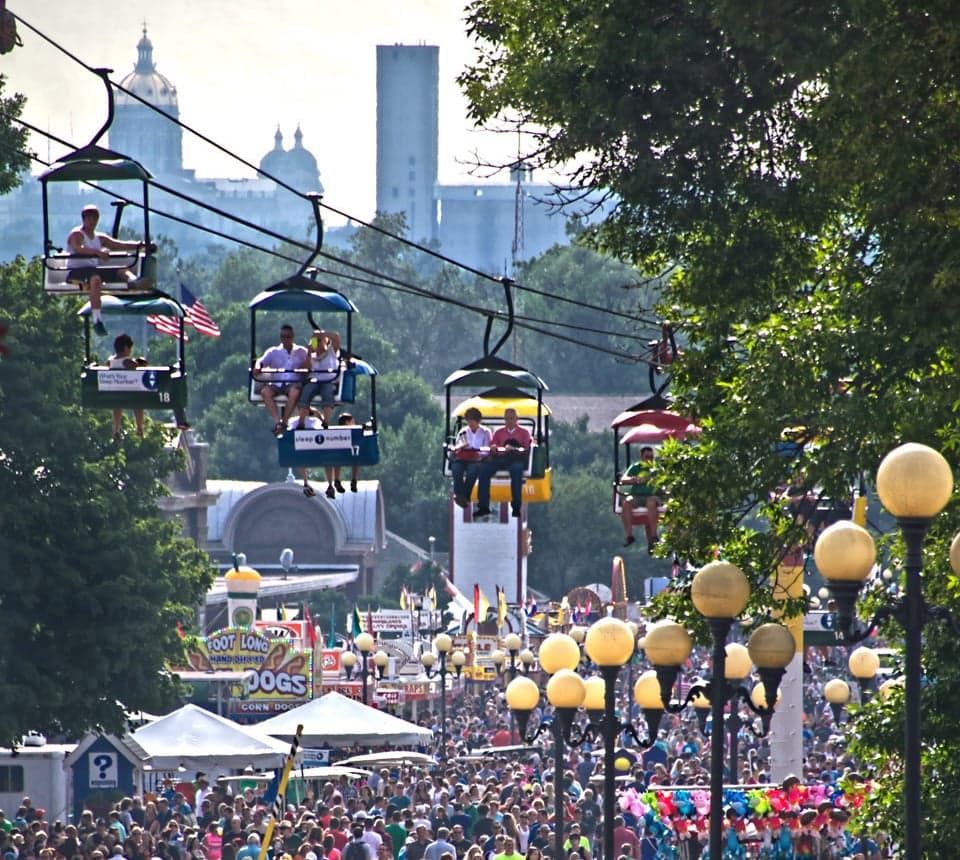
Photo: Wikipedia
Demographics of Des Moines, IA
Affluence Level in Des Moines, IA
A below-average socioeconomic profile. Incomes, home values, and educational attainment trail the U.S., with higher poverty and unemployment.
People of Des Moines, IA
The people of Des Moines, Iowa, today number 212,464, forming a city that is 61.7% white, 16.0% Hispanic, 11.8% Black, 5.0% East/Southeast Asian, and 1.2% Indian (subcontinent), with 8.0% foreign-born and 29.0% college-educated. This population is notably younger and more diverse than the state average, driven by a mix of native-born Midwesterners and a growing immigrant workforce. The city’s character is pragmatic and community-oriented, shaped by a history of agricultural commerce, insurance industry stability, and successive waves of domestic and international migration. Des Moines is neither a coastal melting pot nor a homogeneous heartland town; it is a mid-sized capital where distinct ethnic enclaves and suburbanizing families coexist within a relatively compact urban footprint.
How the city was settled and grew
Des Moines was founded in 1843 as a fort and trading post at the confluence of the Des Moines and Raccoon Rivers, originally inhabited by Sauk and Meskwaki peoples before Euro-American settlement. The city’s first major growth wave came with the arrival of Irish and German laborers in the 1850s and 1860s, who built the railroads and worked in the coal mines that dotted the surrounding hills. These groups settled in what is now the River Bend neighborhood and the near south side, establishing Catholic parishes and ethnic social halls that remained active for generations. A second wave, from the 1880s through 1910, brought Scandinavian immigrants—Swedes, Norwegians, and Danes—who were drawn by jobs in the city’s expanding insurance and publishing industries. They concentrated in the Beaverdale and North of Grand areas, building the frame houses and Lutheran churches that still define those neighborhoods. By 1920, Des Moines was a solidly white, native-born city of 126,000, with a small Black population (under 5,000) living mainly in the Center Street corridor, a segregated district that became the heart of the city’s early African American community.
Modern era (post-1965)
The 1965 Hart-Cellar Act and subsequent refugee resettlement programs fundamentally reshaped Des Moines’ demographics. The most dramatic shift began in the 1970s and accelerated through the 1990s, when the city became a primary resettlement site for Bosnian refugees fleeing the Yugoslav Wars. Today, Des Moines has one of the largest Bosnian populations in the United States, concentrated heavily in the Beaverdale and Merle Hay areas, where Bosnian bakeries, cafes, and Islamic centers are now landmarks. Simultaneously, a wave of Latino immigrants—primarily from Mexico and Central America—arrived to work in meatpacking plants and construction, settling in the East Side neighborhoods around East 14th Street and in the South Side near the old stockyards. The Hispanic share of the city rose from under 3% in 1980 to 16.0% today. The East/Southeast Asian population (5.0%) grew more recently, driven by Burmese and Thai refugees resettled through Lutheran and Catholic charities, with a visible cluster in the Highland Park and Oak Park neighborhoods. The Indian (subcontinent) community (1.2%) is smaller and more dispersed, composed largely of professionals in healthcare and technology, with no single ethnic enclave. The Black population (11.8%) has remained relatively stable since the 1970s, with many families now living in the King Irving and Drake neighborhoods, though suburbanization to Ankeny and West Des Moines has reduced inner-city concentration.
The future
Des Moines’ population is trending toward greater diversity but at a slower pace than in the 1990s and 2000s. The foreign-born share (8.0%) is plateauing as refugee resettlement has slowed under federal policy changes, though family reunification continues to bring Bosnians and Latinos. The white share (61.7%) is declining gradually, driven by an aging native-born population and out-migration of younger Iowans to larger metros. The Hispanic and East/Southeast Asian communities are growing through natural increase and secondary migration from other U.S. cities, but they are not forming new enclaves; instead, they are dispersing into the suburbs of Urbandale and Clive. The Indian community remains small and professional, unlikely to expand significantly without a major tech employer. The city is not tribalizing into sharply divided ethnic zones—most neighborhoods are moderately mixed—but economic segregation is increasing, with higher-income white and Asian households moving to the western suburbs while lower-income Hispanic and Black households remain in the central and eastern parts of the city.
For a conservative-leaning individual or family considering relocation, Des Moines offers a stable, family-oriented environment with a growing but manageable level of diversity. The city is becoming more suburban and less dense, with ethnic communities that are integrating rather than isolating. The next decade will likely see continued slow growth, a slightly more diverse population, and a city that remains recognizably Midwestern—practical, polite, and politically moderate—even as its neighborhoods reflect the global migrations of the past fifty years.

* Values derived from national, state, county, city and local statistics and may differ in a specific area. Last updated: 2026-04-23T04:20:56.000Z
Narrative content on this page is AI-generated and may contain mistakes. Verify any details that matter before acting on them.
ReloMaps may earn a commission from affiliate links at no extra cost to you.

