 Popular
Photo: Wikipedia
Quality of Life in Des Moines, IA
A high quality of life with strong walkability, manageable living costs, healthy neighborhood signals, and solid amenity access.
What does Quality of Life tell us?
Quality of Life blends cost of living, nearby amenities, socioeconomic signals, and neighborhood character. City-level scores represent the whole municipality; individual neighborhoods can differ.
What does this tell us?
Quality of Life blends cost of living, nearby amenities, socioeconomic signals, and neighborhood character. City-level scores represent the whole municipality; individual neighborhoods can differ.
Cost of Living
20% below national average
The Real Cost of Living in Des Moines, IA for 2026
| Tier | Individual | Family (4) |
|---|---|---|
| Survival | $17k | $32k |
| Comfortable | $36k | $52k |
| Luxury | $110k+ | $171k+ |
| Elite (Top 5%) | $129k+ | $201k+ |
122%
The Area Signal
A metric tracking the socioeconomic signals of the area.
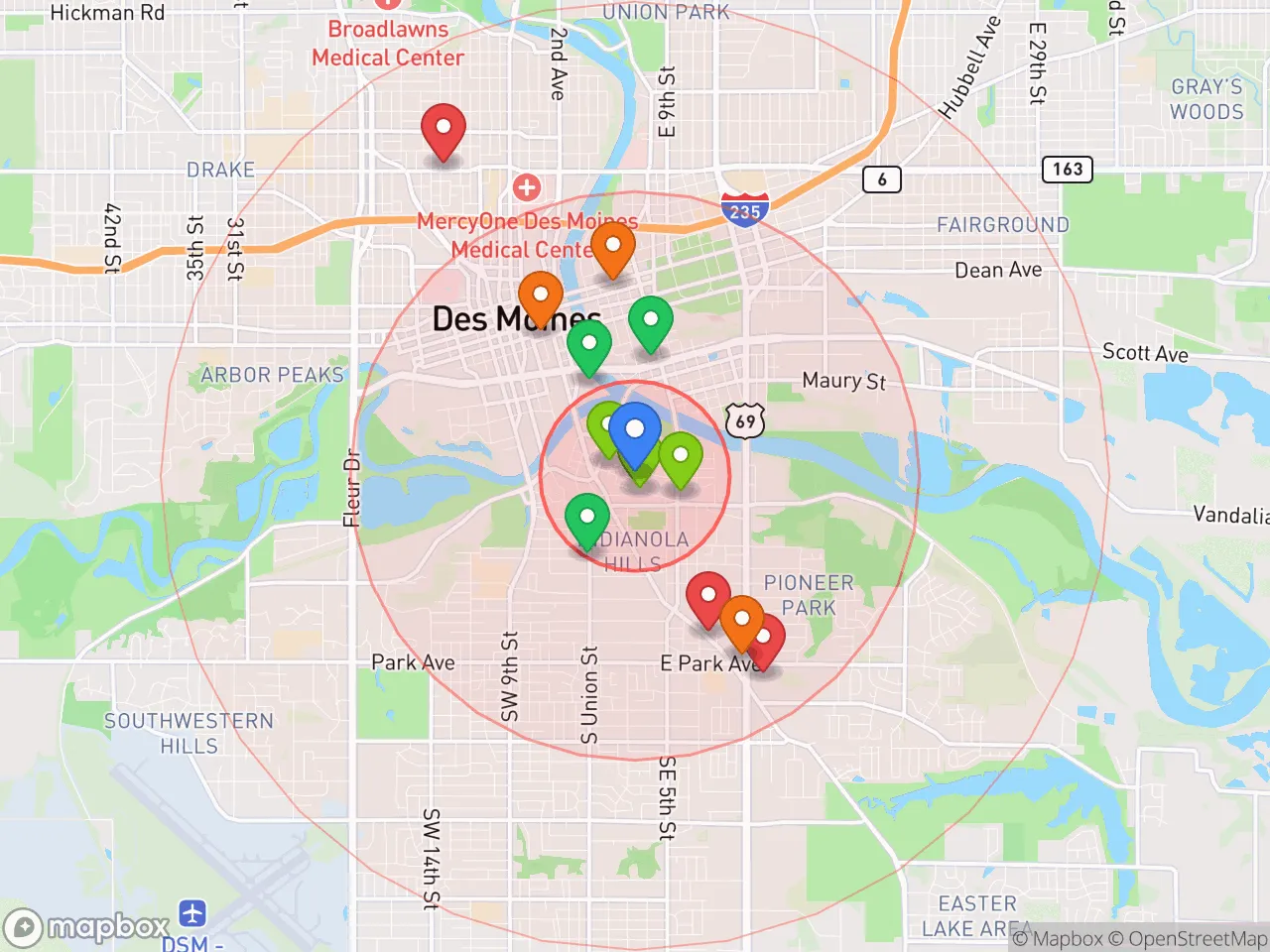
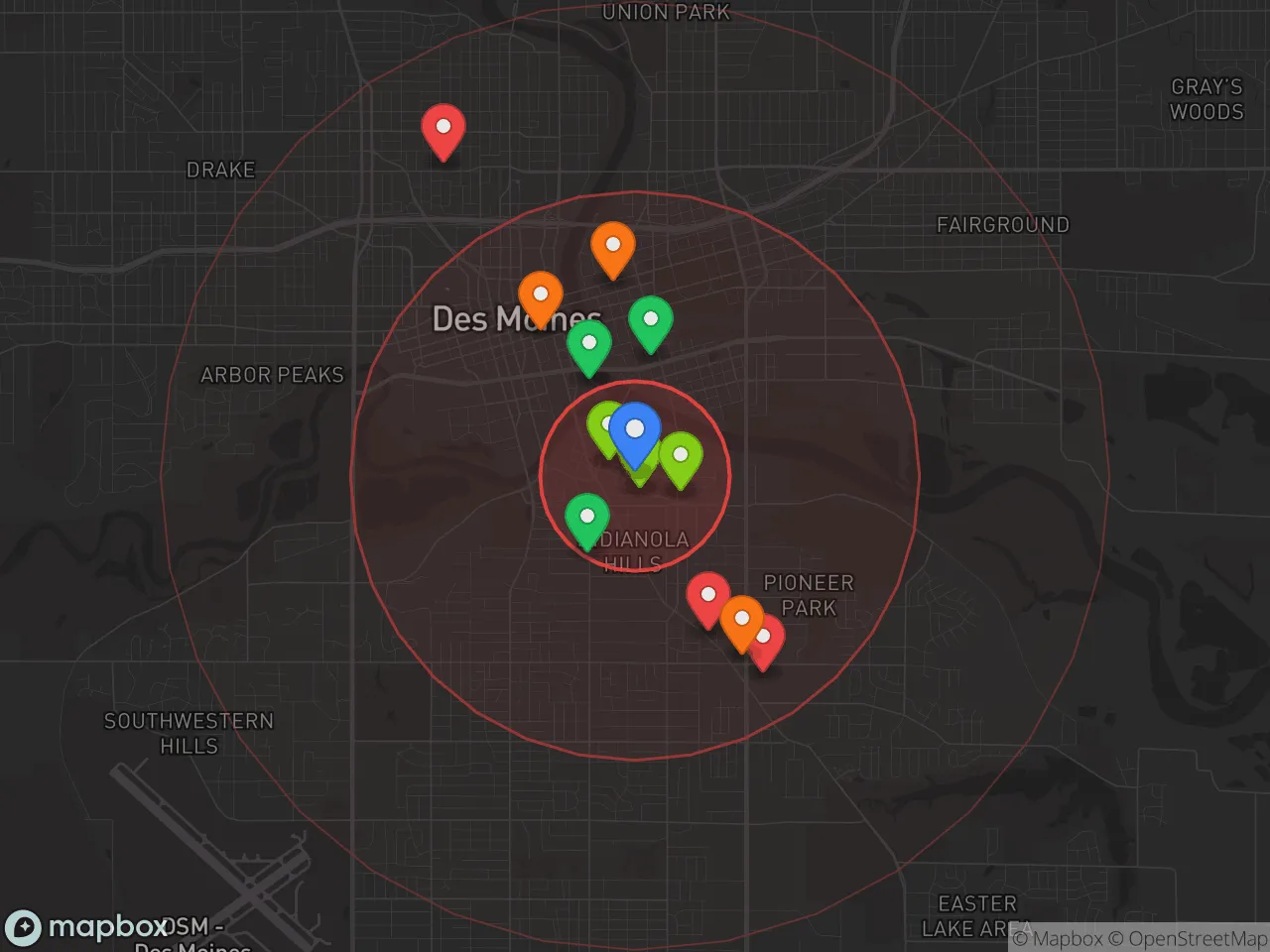
Hobbies
Explore the areaGroceries
4 within 10 miles
Gas
20 within 10 miles
Hospital
9 within 20 miles
Airport
MCI — Kansas City International
Post Office
USPS — Des Moines, IA
Critical Amenities
Quality-of-Life Analysis
Des Moines offers a quality of life defined by solid middle-class stability, with a cost of living that consistently ranks well below the national average. The area attracts a mix of young professionals drawn to the insurance and financial services sectors, families seeking affordable homeownership, and retirees looking to stretch their savings. With a cost of living index of 80 (where 100 is the U.S. average), the city provides a notably higher standard of living for its price point compared to coastal metros or even regional peers like Minneapolis or Chicago.
How housing costs and everyday expenses compare to nearby areas
The most striking advantage for residents is housing affordability. The median home value in Des Moines sits at $183,700, a figure that is roughly half the national median and significantly lower than in nearby cities like Omaha ($210,000) or Madison, Wisconsin ($340,000). Renters also benefit, with a median rent of $1,054, making it feasible for single-income households and young couples to live comfortably without a roommate. Everyday expenses—groceries, utilities, and transportation—all track below the national average, and the average commute of just 19.6 minutes is a major lifestyle perk. This short drive time means less time in traffic and more time for family or recreation, a sharp contrast to the 30+ minute commutes common in larger Midwestern hubs.
What daily life is like for families and professionals in Des Moines
Daily life in Des Moines centers on a manageable, car-dependent urban core with strong suburban options. The city's public school system, Des Moines Public Schools, is the largest in Iowa and offers several magnet programs and International Baccalaureate options, though many families also look to high-performing suburban districts like Waukee, West Des Moines, and Ankeny. Amenities punch above the city's size: the Des Moines Art Center, the Science Center of Iowa, and the Pappajohn Sculpture Park provide cultural anchors, while the Greater Des Moines Botanical Garden and the extensive network of trails along the Raccoon and Des Moines Rivers support outdoor recreation. The restaurant scene has matured significantly, with a concentration of farm-to-table dining and craft breweries in the East Village and Ingersoll Avenue corridors. For professionals, the city's economy is anchored by major employers like Principal Financial Group, Wells Fargo, and Nationwide, creating a stable job market that rarely experiences the boom-and-bust cycles of tech-heavy cities.
Des Moines is best suited for those who prioritize financial stability, short commutes, and a slower pace of life over the high-energy, high-cost offerings of larger metros. Young families will find the housing market particularly forgiving, while remote workers and retirees can maximize their income in a city with reliable infrastructure and low stress. The trade-off is a less diverse nightlife and fewer big-city entertainment options, but for residents who value a strong sense of community, four distinct seasons, and the ability to own a home on a single salary, Des Moines delivers a quality of life that is hard to match at this price point.

Crime in Des Moines, IA
Higher crime rates than 61% of comparable U.S. locations.
Violent CrimeViolent Crime Analysis
Property CrimeProperty Crime Analysis
Crime Analysis
Des Moines, Iowa, presents a crime picture that demands careful consideration for anyone evaluating relocation. The city's violent crime rate stands at 640.6 incidents per 100,000 residents, and its property crime rate reaches 2,824.8 per 100,000—both figures that significantly exceed national averages and warrant concern, particularly given the progressive judicial philosophy prevalent in Polk County.
Crime in context
To understand Des Moines's safety landscape, it is essential to compare these numbers against state and national benchmarks. The national violent crime rate for 2023 was approximately 380 per 100,000, meaning Des Moines's rate is nearly 70% higher. Property crime nationally sits around 1,950 per 100,000, making Des Moines's rate roughly 45% above the U.S. average. Iowa's statewide violent crime rate is about 280 per 100,000, placing Des Moines at more than double the state figure. These disparities are not random; they correlate with the area's liberal prosecutorial policies. Polk County's elected district attorney has emphasized diversion programs and reduced sentencing for nonviolent offenses, a philosophy that, while well-intentioned, often results in repeat offenders cycling back onto the streets quickly. This approach directly undermines public safety by prioritizing offender rehabilitation over victim protection and community deterrence.
What residents experience
For daily life in Des Moines, these statistics translate into tangible risks. Property crime—including theft, burglary, and motor vehicle theft—is the most common concern, with residents reporting frequent package thefts, car break-ins, and garage burglaries, especially in neighborhoods near downtown and along major corridors like University Avenue. Violent crime, while less common, is concentrated in specific areas: aggravated assaults and robberies occur disproportionately in the central core and near the city's southern and eastern edges. The progressive justice system's leniency means that even when arrests are made, offenders often face minimal consequences. For example, a 2025 report by the Iowa Department of Public Safety noted that repeat property crime offenders in Polk County face a 40% lower likelihood of incarceration compared to similar offenders in more conservative counties like Dallas or Warren. This creates a frustrating cycle where residents feel the justice system is not on their side.
Neighborhood-level variation is stark. Safer enclaves like the Waterbury and Beaverdale areas see crime rates closer to the national average, while the King-Irving and River Bend neighborhoods experience rates two to three times the city average. Suburbs like West Des Moines and Ankeny, which operate under more traditional prosecutorial policies, report violent crime rates below 200 per 100,000—a dramatic contrast. For those considering relocation, the choice is clear: living within Des Moines city limits means accepting the consequences of a justice system that, in practice, prioritizes offender leniency over public safety and victim justice.
* Values derived from national, state, county, city and local statistics and may differ in a specific area. Last updated: 2026-04-23T04:20:56.000Z
Narrative content on this page is AI-generated and may contain mistakes. Verify any details that matter before acting on them.
ReloMaps may earn a commission from affiliate links at no extra cost to you.

