 Popular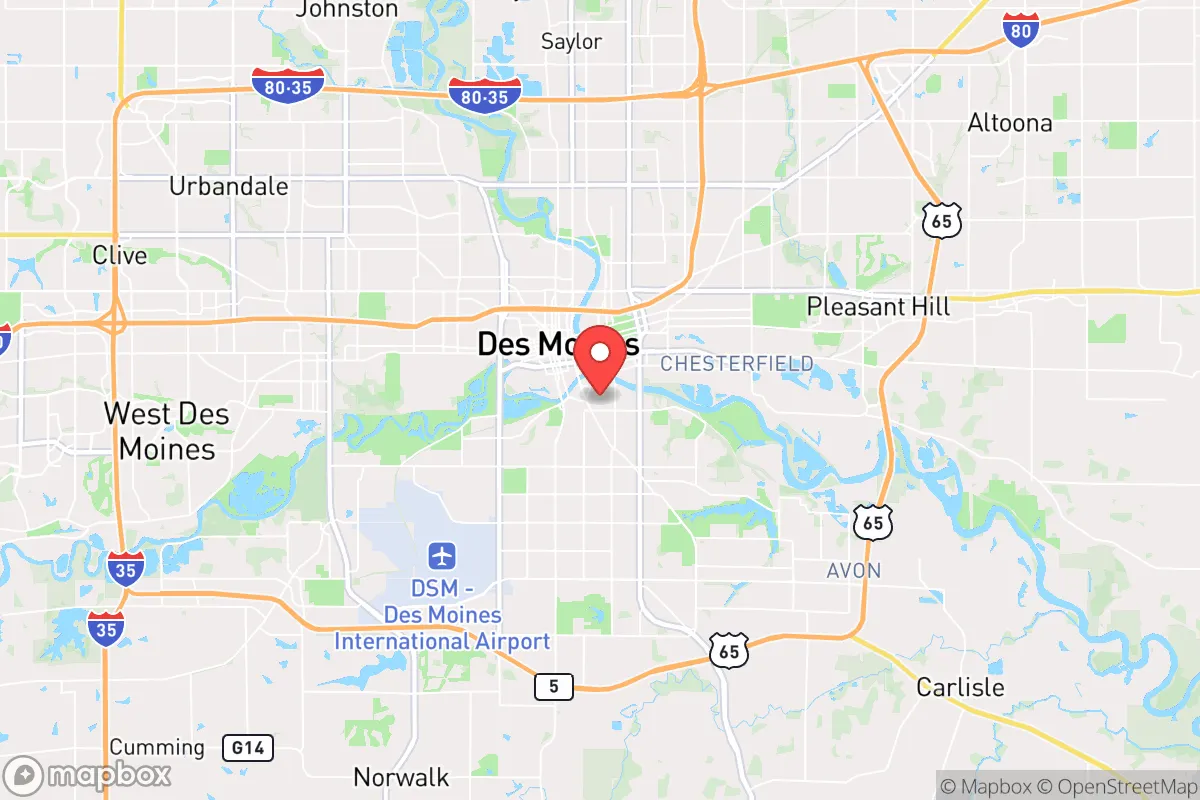
Photo: Wikipedia
Political ClimatePolitical Climate in Des Moines, IA
District shown is the primary district for this city’s centroid. Cities may span multiple districts.
Local Political AnalysisPolitical Analysis of Des Moines, IA
Des Moines sits in a political tug-of-war that’s gotten a lot more tense over the past decade. The city itself leans left, but the surrounding Polk County and the state as a whole are still a battleground—the Cook PVI is R+2, meaning the district is just two points more Republican than the national average. That number used to feel like a comfortable middle ground, but lately, it’s been shifting faster than a lot of folks around here are comfortable with. You can feel the change in local elections, school board meetings, and even just chatting with neighbors at the Hy-Vee.
How it compares
Drive twenty minutes west to Waukee or thirty minutes north to Ankeny, and you’ll find communities that still vote reliably conservative—places where property rights and school choice are taken seriously. But Des Moines proper has been drifting in a different direction. The city council and county board have pushed through zoning changes and mask mandates that felt heavy-handed to many residents, especially during the 2020-2021 period. Compare that to smaller towns like Indianola or Adel, where local government tends to keep its nose out of your business. The contrast is stark: in Des Moines, you’re more likely to run into new regulations on short-term rentals, noise ordinances, or even restrictions on how you can use your own backyard. It’s not the same live-and-let-live Iowa I grew up in.
What this means for residents
For families and small business owners, the practical effect is a slow creep of government overreach. Property taxes in Des Moines have climbed faster than in surrounding suburbs, partly to fund expanded city programs that many residents didn’t vote for. The school board has adopted curriculum changes that prioritize social-emotional learning over core academics, which has sparked heated debates at parent-teacher conferences. If you value personal freedom—whether that’s choosing your child’s education, deciding how to use your land, or keeping more of your paycheck—you’ll find the suburbs or rural areas around Des Moines a better fit. The city’s progressive tilt means more bureaucracy, more fees, and more rules that assume the government knows best.
On the cultural side, Des Moines has become a hub for out-of-state transplants who bring big-city attitudes with them. The downtown farmers’ market is still great, but the vibe has shifted from “Iowa nice” to “Iowa woke.” You’ll see more pride flags on storefronts and hear more talk about equity initiatives than you would have ten years ago. That’s fine if you’re into that, but it’s a real turn-off for folks who just want to live their lives without being lectured. The long-term trajectory worries me: if the current trend holds, Des Moines could end up like a smaller version of Portland or Seattle—a place where progressive policies drive up costs and drive out the middle class. For now, it’s still a decent place to work and raise a family, but you’ve got to keep your eyes open and your vote sharp.

State Political ClimatePolitical Climate in Iowa
State Political AnalysisPolitical Environment in the State
Iowa has been a reliably Republican state in presidential elections since 2016, but its political landscape is far more nuanced than a simple red-state label suggests. The state’s overall partisan lean is roughly R+6, driven by a coalition of rural conservatives, evangelical Christians, and a growing number of fiscally conservative suburbanites. However, the last 15 years have seen a dramatic shift: the state that gave Barack Obama a double-digit win in 2008 is now a solid GOP stronghold, with Republicans controlling the governorship, both legislative chambers, and both U.S. Senate seats. This trajectory accelerated after 2020, when the state’s four congressional districts split 3-1 Republican, and the GOP swept every statewide office. The key driver has been the exodus of moderate Democrats from rural areas and the consolidation of conservative voters in the western and central parts of the state.
Urban vs. rural divide
The political map of Iowa is a textbook case of the urban-rural chasm. The state’s two largest metros, Des Moines and Iowa City, are the Democratic strongholds. Polk County (Des Moines) voted for Joe Biden in 2020 by about 12 points, while Johnson County (Iowa City) went for Biden by a staggering 40 points. These areas are home to the state’s largest universities, corporate headquarters, and a growing population of young professionals and government workers. In contrast, the rest of the state is deeply red. Counties like Sioux County in the northwest (home to the conservative Dordt University) and Plymouth County routinely vote 70-80% Republican. The real story, though, is the suburban shift. Places like Ankeny and Waukee—fast-growing Des Moines suburbs—have moved from swing areas to solidly Republican over the past decade, driven by families fleeing the city’s rising taxes and progressive school policies. Meanwhile, the Mississippi River counties like Dubuque and Scott County (Davenport) remain competitive but are trending redder as union Democrats age out and are replaced by younger, more conservative voters.
Policy environment
Iowa’s policy environment is a clear win for conservatives. The state has a flat income tax of 3.9% (down from 8.98% in 2021), with a plan to phase it out entirely by 2027. Property taxes are relatively low, and there is no inheritance tax. The regulatory posture is business-friendly, with right-to-work laws and minimal red tape for small businesses. On education, Iowa passed a universal school voucher program in 2023, allowing any family to use state funds for private or homeschool expenses—a major victory for school choice advocates. Healthcare is a mixed bag: the state expanded Medicaid under the Affordable Care Act, but the current administration is pushing for work requirements and privatization. Election laws have been tightened significantly: voter ID is required, drop boxes are restricted, and early voting windows have been shortened. These policies have made Iowa a national model for conservative governance, but they’ve also drawn sharp criticism from progressives who see them as voter suppression and a gutting of public education.
Trajectory & freedom
Iowa is unequivocally moving toward more personal freedom for conservatives, especially in the last five years. The 2021 “Back the Blue” law expanded qualified immunity for police and increased penalties for rioting, effectively chilling protest activity. Gun rights have been dramatically expanded: in 2021, Iowa became a permitless carry state, allowing any legal adult to carry a concealed firearm without a permit or training. The 2023 “Parental Rights” law requires schools to notify parents of any curriculum related to sexual orientation or gender identity and bans instruction on these topics in kindergarten through sixth grade. Medical autonomy has been a flashpoint: the state passed a near-total abortion ban in 2023 (with exceptions for rape, incest, and life of the mother), and the governor signed a law banning gender-affirming care for minors. Property rights remain strong, with no statewide rent control and minimal zoning restrictions in rural areas. The only area where freedom has contracted is on the left: progressive cities like Iowa City and Ames have seen their ability to pass local ordinances (like minimum wage hikes or sanctuary policies) preempted by state law. For a conservative moving in, the trajectory is clear: the state is aggressively protecting individual liberties from federal and local overreach.
Civil unrest & political movements
Iowa has seen relatively little civil unrest compared to coastal states, but there have been notable flashpoints. The 2020 Black Lives Matter protests in Des Moines and Iowa City were largely peaceful, though there were isolated incidents of property damage and a controversial statue removal in Davenport. The state’s immigration politics are a hot-button issue: while there are no sanctuary cities, the meatpacking plants in towns like Storm Lake and Postville have drawn a significant immigrant workforce, leading to tensions over housing and school resources. The most organized political movements are on the right: the Iowa Firearms Coalition is a powerful lobbying force, and the Family Leader (an evangelical group) has significant influence over the state legislature. On the left, the Iowa Citizens for Community Improvement is active in rural areas, pushing for environmental justice and opposing factory farms. Election integrity has been a major topic since 2020, with the state’s Republican Secretary of State conducting a widely publicized audit that found no widespread fraud but led to the removal of 2,000 non-citizens from voter rolls. A new resident would notice the strong presence of “Don’t Tread on Me” flags and pro-life billboards along Interstate 80, especially west of Des Moines.
Projection
Over the next 5-10 years, Iowa is likely to become even more conservative. The demographic trends are clear: rural counties are losing population, but the conservative suburbs are booming. The state’s population is aging, but the young families moving in from Illinois and Minnesota are overwhelmingly Republican. The flat tax phase-out will likely be completed by 2027, making Iowa a tax-free state for income, which will attract more remote workers and small business owners. The only wildcard is the urban cores: Des Moines and Iowa City are becoming more progressive, but their influence is diluted by the state’s gerrymandered districts and the GOP’s supermajority in the legislature. Expect further restrictions on abortion, a push for school choice expansion, and continued preemption of local progressive ordinances. The biggest threat to this trajectory is a potential Democratic wave in the suburbs if the national GOP moves too far to the right on social issues, but for now, the state’s political momentum is firmly conservative.
Bottom line for a new resident: If you’re a conservative looking for a state that respects your gun rights, keeps taxes low, and protects parental authority in education, Iowa is one of the best bets in the Midwest. You’ll find a welcoming community in the suburbs of Des Moines or the small towns of western Iowa, but you should be prepared for a stark cultural divide if you settle in Iowa City or Ames. The state is trending in your favor, but the fight over local control and school curriculum will only intensify. Move here for the low cost of living and the freedom to live as you see fit—just know that the political battles are far from over.
* Values derived from national, state, county, city and local statistics and may differ in a specific area. Last updated: 2026-04-23T04:20:56.000Z
Narrative content on this page is AI-generated and may contain mistakes. Verify any details that matter before acting on them.
ReloMaps may earn a commission from affiliate links at no extra cost to you.

