Photo: Wikipedia
Political ClimatePolitical Climate in Dickinson, ND
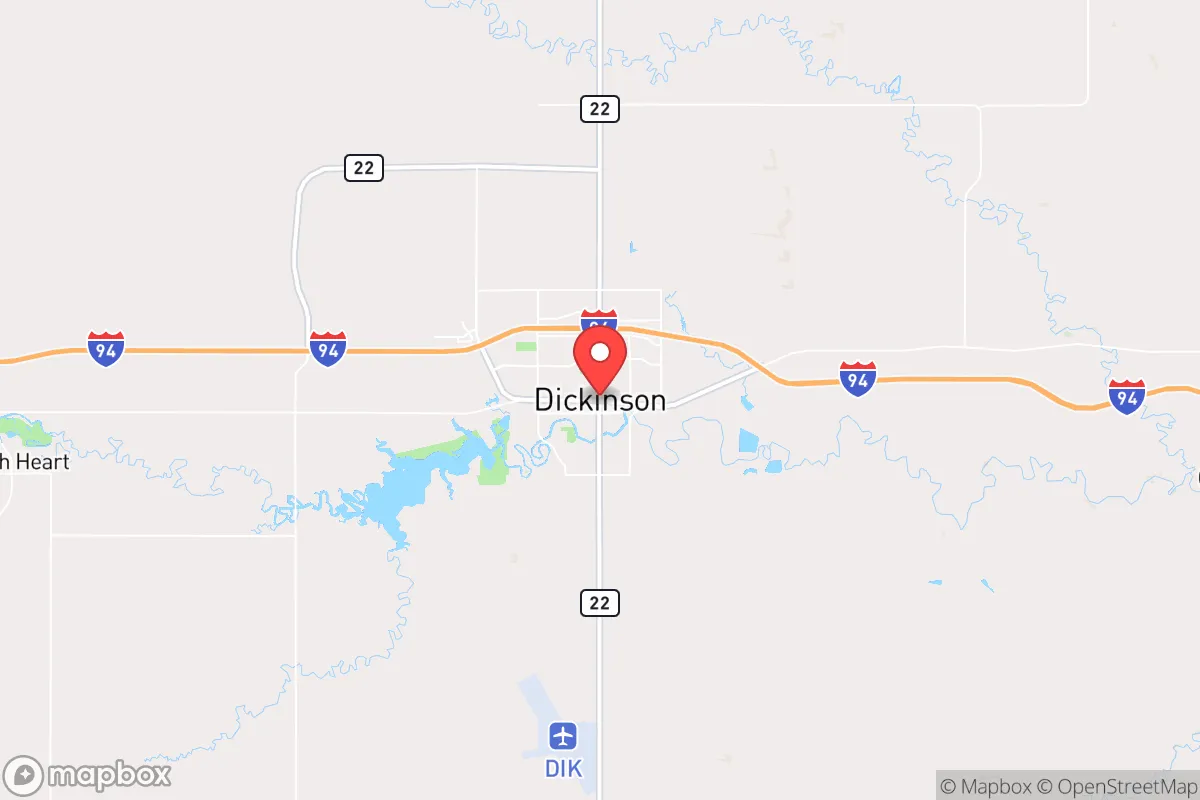
District shown is the primary district for this city’s centroid. Cities may span multiple districts.
Inherited from parent state — no local data available.
Local Political AnalysisPolitical Analysis of Dickinson, ND
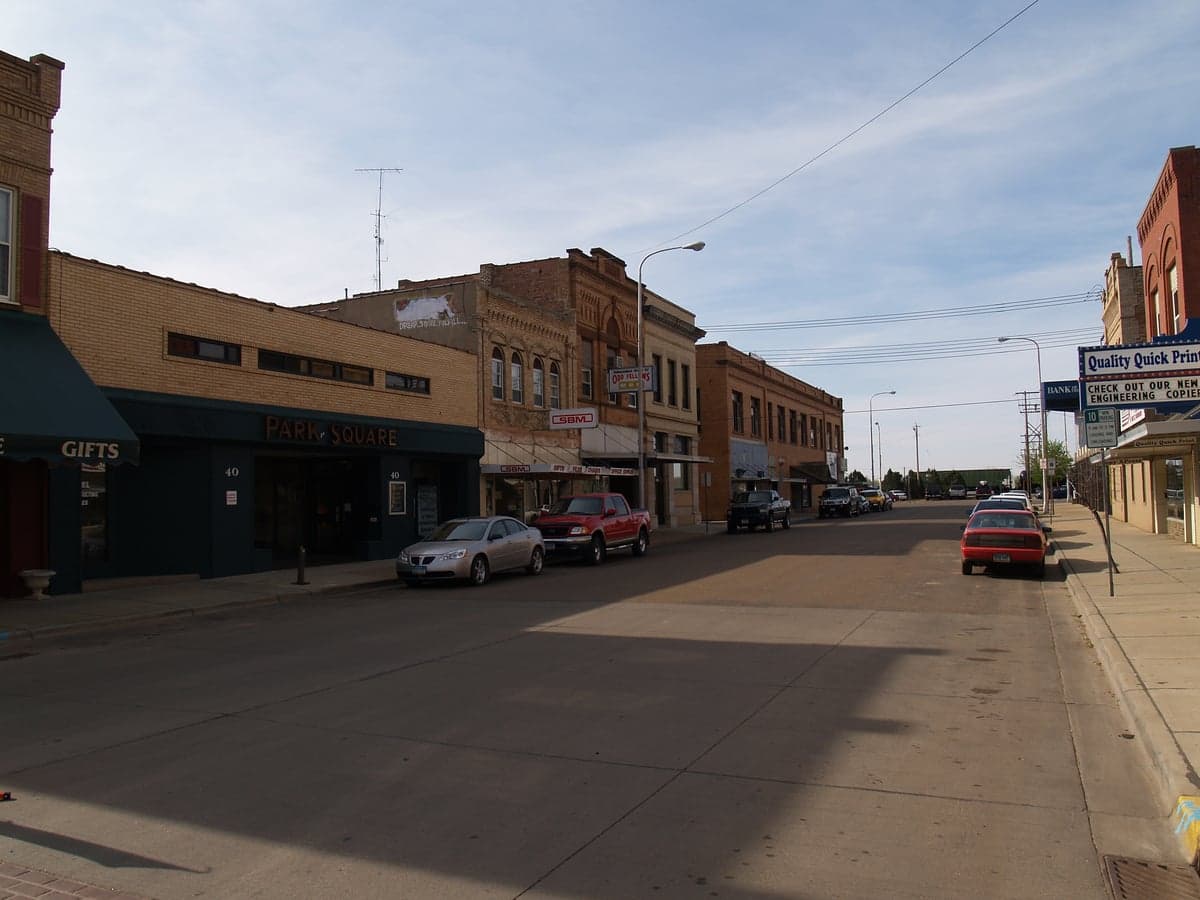
Dickinson, North Dakota, sits in a deeply conservative corner of the state, and it’s been that way for as long as most folks can remember. The Cook PVI of R+18 tells you the math, but the real story is in the culture: this is a place where people still believe in minding your own business and keeping the government out of your backyard. That said, you can feel the winds shifting a little, especially as the oil boom brought in folks from all over. The local elections still lean heavily Republican, but there’s a growing undercurrent of progressive ideas creeping into city council discussions and school board meetings—things like diversity initiatives and climate resolutions that would have been laughed out of the room twenty years ago. It’s not a blue wave by any stretch, but it’s enough to make a long-time resident pay closer attention.
How it compares
Drive an hour east to Bismarck, and you’ll find a similar conservative vibe, though it’s a bit more polished and corporate. The real contrast is south, toward the Badlands and places like Medora, where tourism dollars bring a more transient, left-leaning crowd. But the starkest difference is with the reservation communities just north of Dickinson, like the Mandan, Hidatsa, and Arikara Nation lands, where tribal sovereignty and federal funding create a whole different political conversation. Within Stark County itself, Dickinson is the anchor, and the surrounding farm towns—like Belfield and Killdeer—are even more rock-ribbed conservative. They look at Dickinson as a bit of a big city now, and they’re not entirely wrong. The oil patch brought in workers from blue states, and while most of them fit right in, a few brought their politics with them. It’s not a takeover, but it’s a noticeable change from the days when everyone in the county knew each other’s last name.
What this means for residents
For the average family in Dickinson, the political climate still means low taxes, minimal regulation, and a general hands-off approach from local government. You can build a shed on your property without a permit in most of the county, and the school board isn’t pushing critical race theory or gender ideology on your kids—at least not yet. But the concern is real: as the city grows, there’s more pressure to adopt zoning laws, environmental restrictions, and “equity” policies that sound harmless but end up giving bureaucrats more control over your daily life. The oil industry is the economic engine here, and any shift toward green energy mandates or carbon taxes would hit this community hard. Most residents see that coming and vote accordingly, but the younger generation is more exposed to national media and social media narratives, which is why you see more split-ticket voting among people under 30. It’s not a crisis, but it’s a trend worth watching.
One thing that still sets Dickinson apart is the strong sense of personal responsibility and community self-reliance. You don’t see people calling for the government to solve every problem—neighbors help neighbors, churches run food drives, and the local volunteer fire department is still the backbone of emergency response. The cultural pushback against government overreach is baked into the local identity, from the ranching families who’ve been here for generations to the oil workers who came for a paycheck and stayed for the freedom. If you’re looking for a place where your rights aren’t under constant assault from city hall or the state capitol, Dickinson is still a solid bet. Just keep an eye on the school board meetings and the city planning commission—that’s where the quiet battles are being fought. So far, common sense is winning, but it takes vigilance to keep it that way.

State Political ClimatePolitical Climate in North Dakota
State Political AnalysisPolitical Environment in the State
North Dakota is one of the most reliably Republican states in the nation, with a deep-rooted conservative culture that has only solidified over the last two decades. The state hasn’t voted for a Democratic presidential candidate since Lyndon B. Johnson in 1964, and in 2024, Donald Trump carried it by over 20 points. The dominant political coalition is a blend of agrarian populism, energy-sector libertarianism, and social conservatism, with the state GOP holding supermajorities in both legislative chambers. Over the last 10-20 years, the biggest shift has been the collapse of the old "Dem-NPL" (Democratic-Nonpartisan League) coalition in rural areas, as voters in places like Minot, Williston, and Dickinson have moved sharply right, driven by the oil boom and a growing distrust of federal overreach.
Urban vs. rural divide
The political map of North Dakota is starkly divided between a handful of small urban centers and the vast, deeply conservative rural expanse. Fargo and Grand Forks are the only real blue-ish dots on the map, and even they are purple at best. Fargo’s Cass County voted for Trump by only about 8 points in 2024, compared to the 40+ point margins in rural counties like Hettinger or Slope. Grand Forks County, home to the university, is similarly competitive but still leans right. The real engine of the state’s conservative majority is the western half—Bismarck, Mandan, and the oil patch towns like Watford City and Stanley—where voters are fiercely pro-energy, pro-gun, and anti-regulation. The divide isn’t just cultural; it’s economic. The east relies on agriculture and education, while the west is powered by the Bakken shale, and that economic split drives very different views on land use, taxation, and environmental rules.
Policy environment
North Dakota’s policy environment is about as friendly to conservative priorities as you’ll find anywhere. There is no state income tax on individuals, and the corporate income tax was slashed to a flat rate of under 2% in recent years. Property taxes are relatively low, though local levies vary. The regulatory posture is aggressively pro-business, especially in energy and agriculture—permitting for oil drilling is streamlined, and the state has fought federal land-use restrictions tooth and nail. On education, the state has a robust school choice movement, with a new Education Savings Account (ESA) program passed in 2025 that lets parents use state funds for private or homeschool expenses. Healthcare is a mixed bag: the state expanded Medicaid under the Affordable Care Act in 2013, a move that still rankles many conservatives, but there’s no state-level mandate for abortion coverage, and the legislature passed a near-total abortion ban in 2023 (triggered by Dobbs). Election laws are solid—voter ID is required, no same-day registration, and the state has resisted mail-in ballot expansions. The legislature is currently considering a constitutional amendment to require a supermajority for any future tax increases, which would lock in the low-tax environment.
Trajectory & freedom
North Dakota is trending toward more personal freedom, not less, which is a rare bright spot in the national landscape. The 2023 legislative session was a landmark for liberty: the state passed a constitutional carry law (no permit needed to carry a concealed firearm), banned COVID-19 vaccine mandates for both public and private employers, and enacted a Parents’ Bill of Rights that requires school districts to notify parents of any curriculum changes involving sexuality or gender identity. In 2025, the legislature went further, passing a law that prohibits any state or local enforcement of federal gun control measures—a direct nullification play. Property rights were strengthened with a new law limiting the use of eminent domain for carbon pipeline projects, a direct response to the controversial Summit Carbon Solutions pipeline that had landowners up in arms. On the downside, the state still has a state-run liquor monopoly (the "ND Liquor Control Board"), which libertarians hate, and there’s a lingering sales tax on groceries that many would like to see repealed. But overall, the trajectory is clearly toward less government intrusion in daily life.
Civil unrest & political movements
North Dakota is not a hotbed of street protests, but it has seen its share of political flashpoints. The most famous is the Standing Rock protests (2016-2017), where thousands of activists—many from out of state—clashed with law enforcement over the Dakota Access Pipeline. That event radicalized many rural North Dakotans against outside interference and cemented the state’s pro-energy stance. More recently, the Summit Carbon Solutions pipeline has sparked a quieter but intense grassroots rebellion among landowners in counties like Emmons and Burleigh, who see the project as a corporate land grab enabled by state government. On the right, the "Patriot" movement is strong, with active groups in Bismarck and Fargo that focus on election integrity and school board takeovers. There’s no sanctuary city movement to speak of—the state is overwhelmingly opposed to illegal immigration, and the legislature passed a law in 2024 requiring all state agencies to verify immigration status for benefits. Election integrity controversies are minimal; the state uses paper ballots and has strong chain-of-custody rules, so there’s little of the drama you see elsewhere.
Projection
Over the next 5-10 years, North Dakota is likely to become more conservative, not less, driven by two forces: in-migration from blue states and the continued growth of the energy sector. People are moving to Fargo and Bismarck from California, Illinois, and Minnesota, and while some bring progressive habits, the majority are fleeing high taxes and overreach, so they reinforce the state’s libertarian streak. The oil patch will keep drawing workers to Williston and Watford City, and those communities vote heavily Republican. The biggest wild card is the aging population—rural counties are losing young people to the cities, which could slowly shift the balance toward the Fargo metro. But even Fargo is trending right; the city council recently voted down a "sanctuary city" proposal, and the school board is now majority conservative after the 2024 elections. Expect more school choice expansion, further tax cuts, and continued resistance to federal overreach. A new resident moving in now will find a state that values self-reliance, low taxes, and local control, and that’s only going to get more pronounced.
Bottom line for a new resident: If you’re looking for a place where government stays out of your business, your wallet, and your family, North Dakota is one of the best bets in the country. The winters are brutal, but the freedom is real. Just know that the political culture is deeply rooted in the land and the energy that comes out of it—you’ll be expected to pull your own weight and respect your neighbor’s right to do the same. The state is on a solid trajectory toward even greater personal liberty, and the people here intend to keep it that way.
* Values derived from national, state, county, city and local statistics and may differ in a specific area. Last updated: 2026-04-19T06:10:18.000Z
Narrative content on this page is AI-generated and may contain mistakes. Verify any details that matter before acting on them.
ReloMaps may earn a commission from affiliate links at no extra cost to you.

