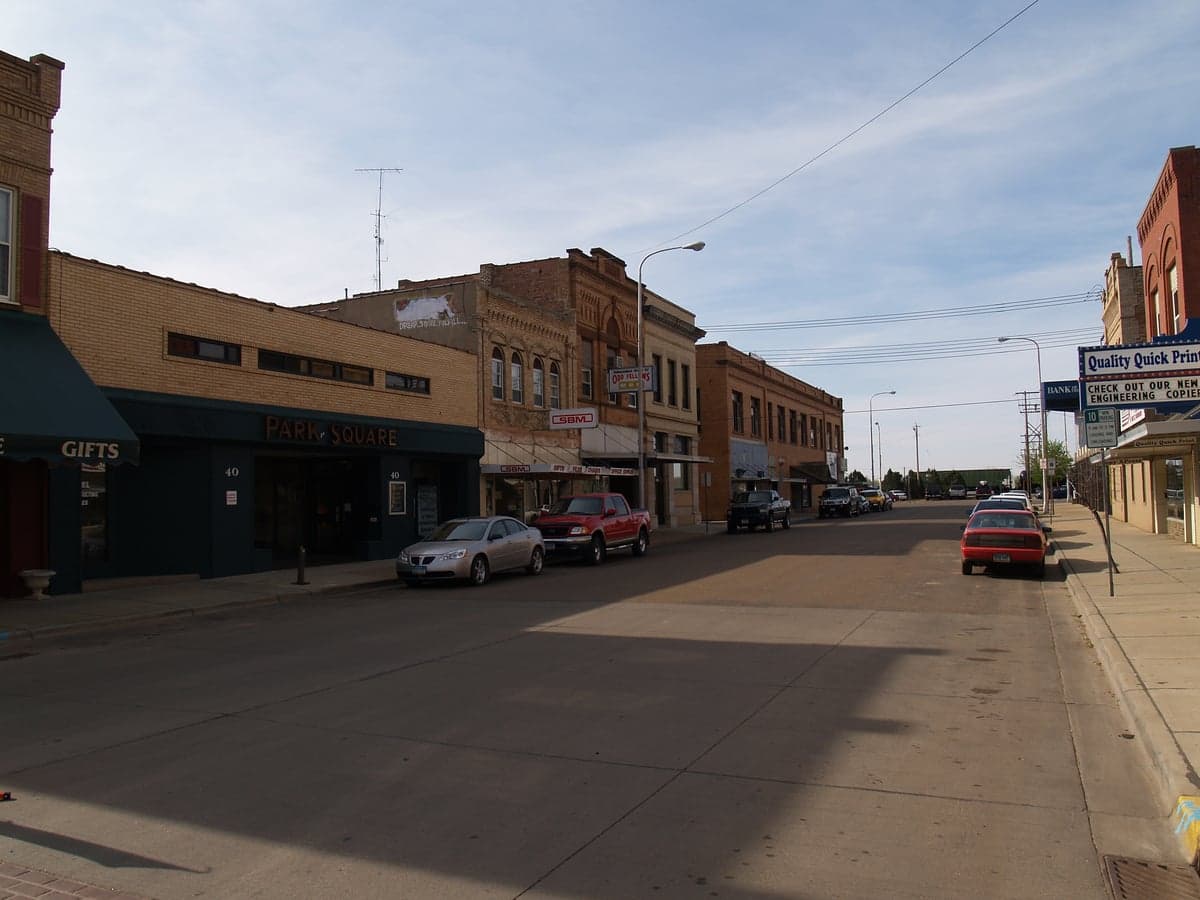
Photo: Wikipedia
Strategic Assessment of Dickinson, ND
Strong survivability profile. Good buffer from population centers, with manageable environmental and tactical risks.
What does the Strategic Assessment tell us?
Our Strategic Assessment grades tactical survivability of an area. Major population centers, military targets, fallout zones, natural disasters, and border exposure all drive risk — lower exposure means a more defensible position in a crisis.
This is heavily inspired by Joel Skousen's Strategic Relocation book. Highly recommended you checkout the book ($)What does this tell us?
Our Strategic Assessment grades tactical survivability of an area. Major population centers, military targets, fallout zones, natural disasters, and border exposure all drive risk — lower exposure means a more defensible position in a crisis.
This is heavily inspired by Joel Skousen's Strategic Relocation book. Highly recommended you checkout the book ($)Strategic Pillars

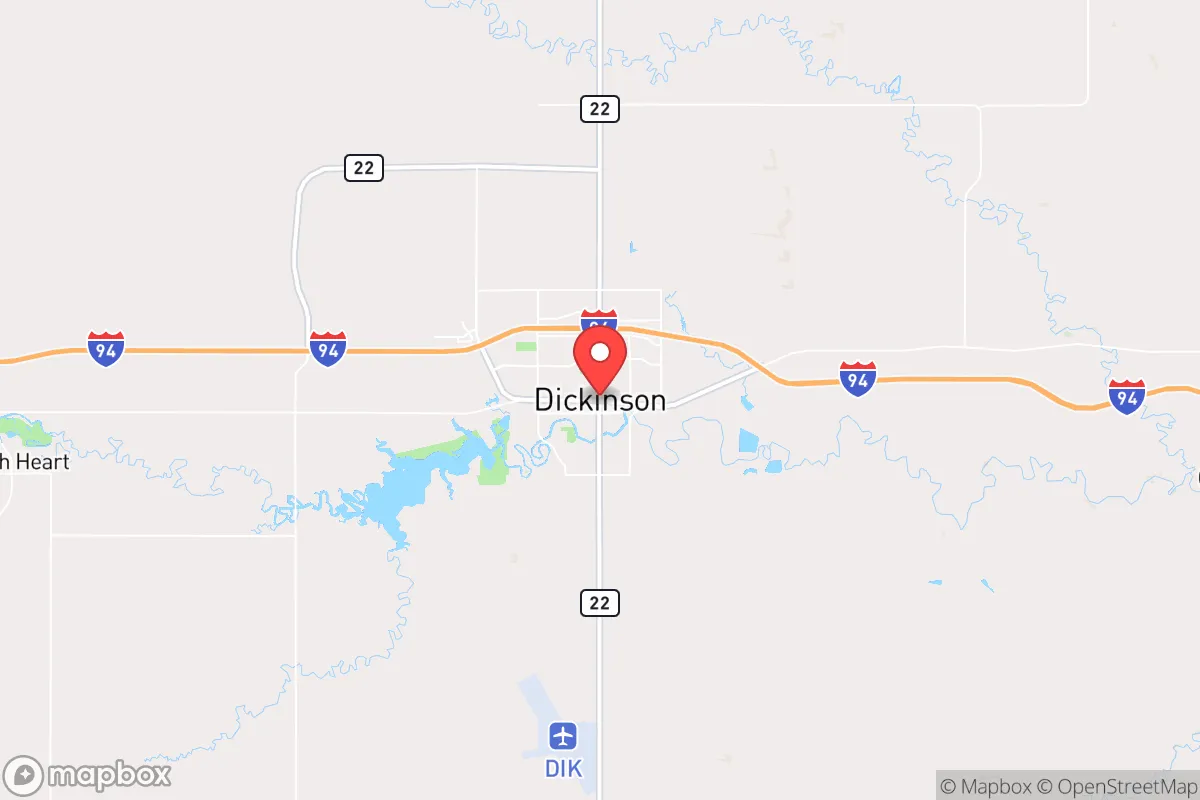
Key Distances
Regional Safe Places
Below is our recommended "safe zones" in North Dakota and the surrounding area based on our strategic heuristics. For most people, it's unrealistic to live in a “safe zone” full-time due to work, family or other personal reasons. They tend to be more rural. However, many of these areas are perfect for second homes and retreat properties that double as a vacation home or even a short-term rental.
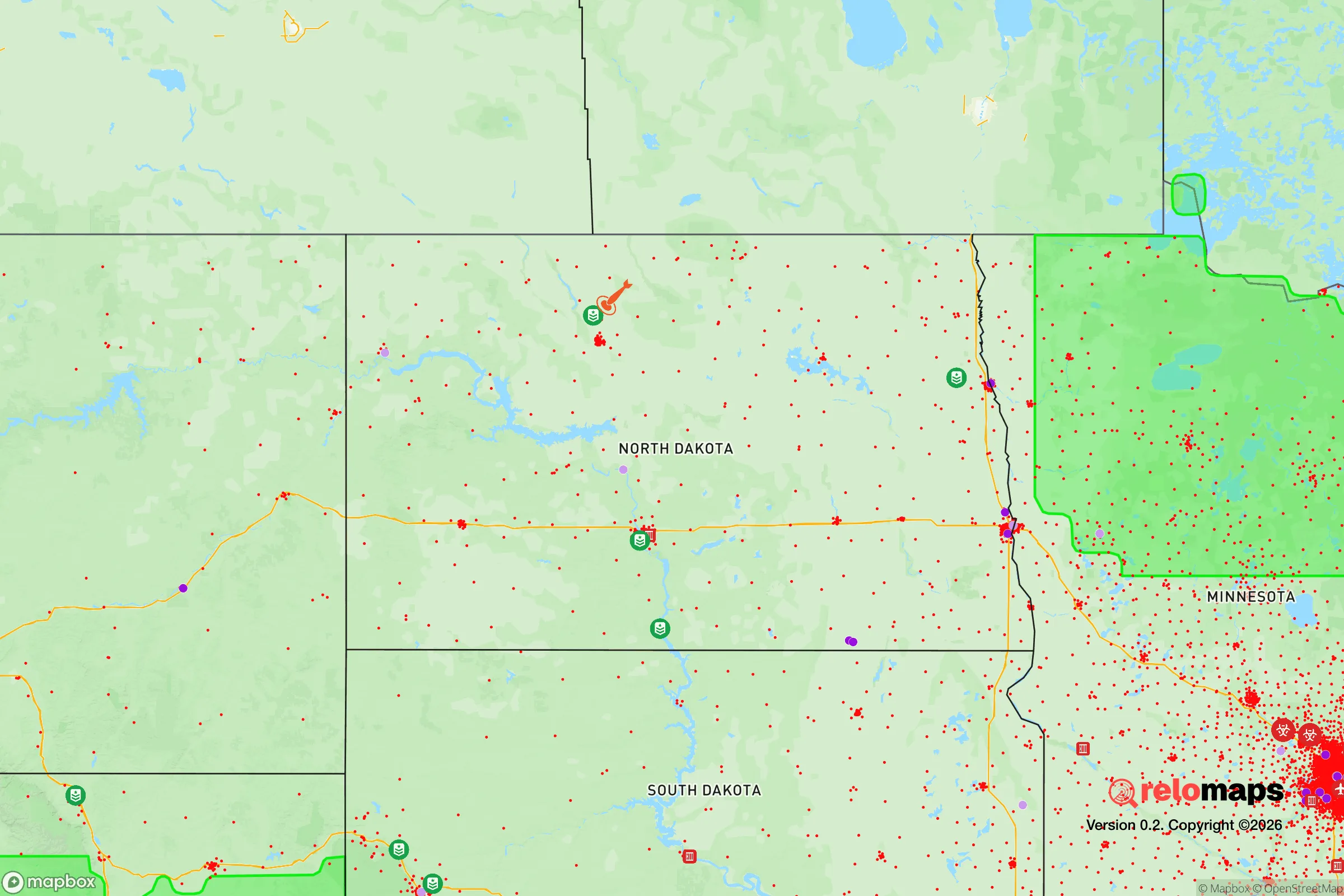
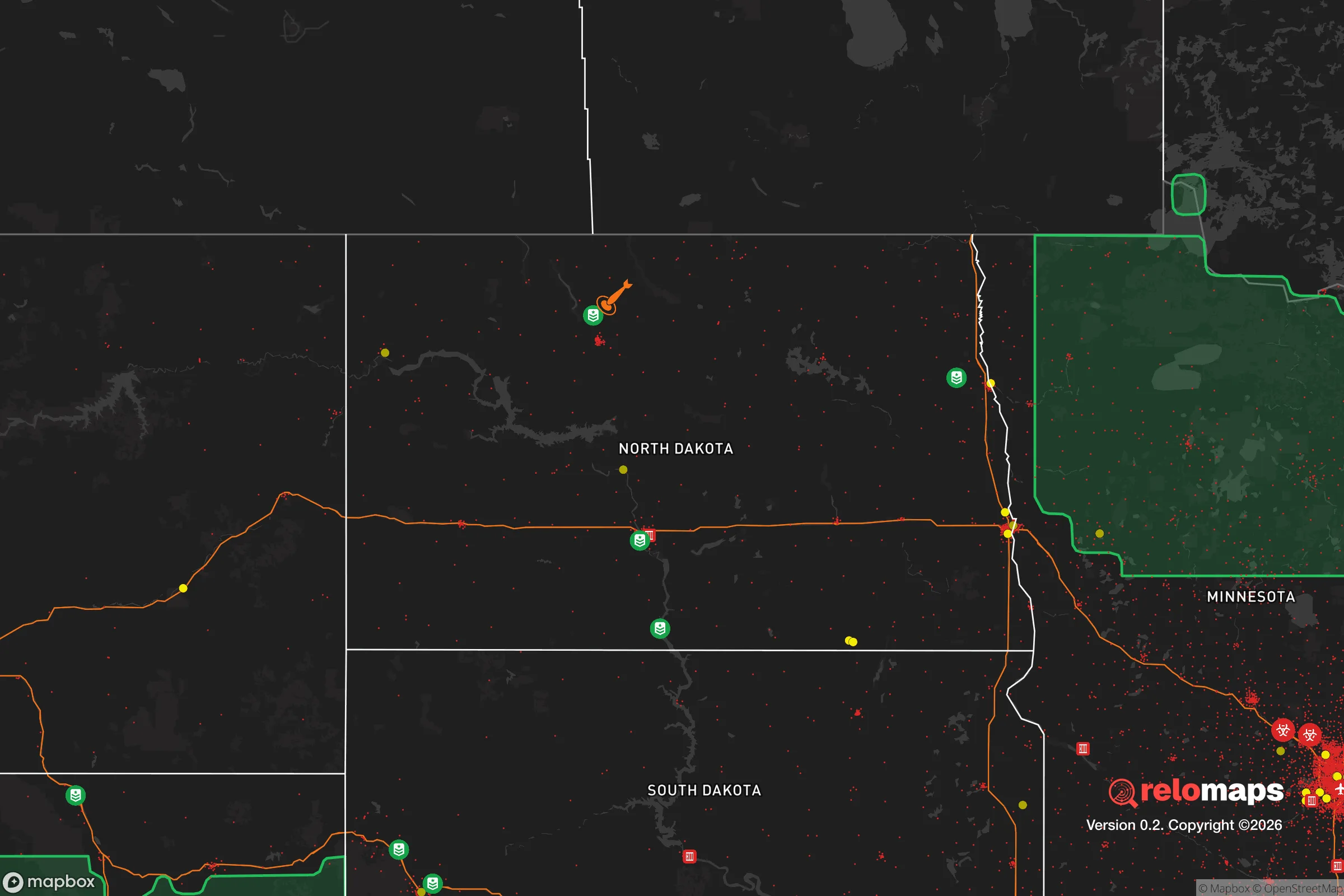


Important Note: For informational purposes only. This does not mean nothing bad ever happens in the green zones. Please use common sense. This is based on public data and modeled with AI. We tried to take a conservative approach but mistakes happen. We update this regularly as new information becomes available.
Solar Generator Recommendations
Backup power matters more here than in safer locations. We've picked three solar generators across budgets and capacity tiers — start with the budget unit if you only need a few essentials, or step up if you want to run a fridge and HVAC for days at a time.

Jackery Portable Power Station Explorer 300
Budget OptionPower on the Go: Weighing only 11 lbs, it's convenient to set up and store with book-sized foldable solar panels

BLUETTI Portable Power Station AC180
Designed for both indoor and outdoor scenarios, AC180 is highly capable as it has a robost capacity and continuous output power.

EF ECOFLOW DELTA Pro Ultra Power Station
Upgraded PickEcoFlow DELTA Pro Ultra is a whole-home energy system designed to grow with your family. Integrated with the Smart Home Panel 2, it scales to meet your evolving energy needs — keeping your home powered, intelligent, and secure through every stage of life.
We earn a commission, at no additional cost to you.
Strategic Assessment Analysis
Dickinson, North Dakota, offers a strategic relocation option for those prioritizing resilience and self-sufficiency, anchored by its position in the Bakken oil fields and its distance from major population centers. The city’s economy is built on energy extraction, which provides a degree of local resource independence and a workforce accustomed to hard, practical labor. Its location in the western part of the state, roughly 100 miles from the Montana border and over 200 miles from the nearest major city (Bismarck), creates a natural buffer against the cascading failures that could affect densely populated corridors. For a conservative-minded individual or family looking to weather potential civic unrest or supply chain disruptions, Dickinson presents a mix of genuine advantages and notable trade-offs that deserve a hard look.
Geographic position and natural advantages for long-term security
Dickinson sits on the high plains of the Missouri Plateau, an area characterized by rolling hills, buttes, and the Little Missouri River valley. This terrain offers natural defensibility—the surrounding badlands and open prairie provide limited cover for large-scale movement, making the area less attractive to organized chaos. The city’s elevation, around 2,400 feet, means a cooler, drier climate that reduces the risk of flooding and limits the spread of many pathogens. The region is also far from the major earthquake zones, hurricane tracks, and wildfire corridors that plague the West Coast and Gulf states. Critically, Dickinson is over 400 miles from the nearest major nuclear power plant (Prairie Island in Minnesota) and more than 500 miles from any known strategic military targets like Minot Air Force Base, which is roughly 150 miles north. While Minot is a potential target, the distance and the open terrain between the two cities mean Dickinson is unlikely to face direct fallout from a strike there. The area’s sparse population density—Stark County has about 34,000 people spread over 1,340 square miles—means that even a localized disaster would not trigger the kind of mass displacement seen in urban centers. For a prepper, this geographic isolation is a double-edged sword: it provides security but also demands serious self-reliance, as help from state or federal agencies could be days away in a crisis.
Risks, exposures, and proximity to fallout-relevant landmarks
No location is without vulnerabilities, and Dickinson has specific exposures that a strategic relocator must weigh. The most immediate risk is the city’s economic dependence on the oil and gas industry. A major disruption to energy markets—whether from geopolitical events, cyberattacks on pipeline infrastructure, or a domestic economic collapse—would hit Dickinson hard. The local workforce is heavily tied to extraction, and a prolonged downturn could lead to rapid population loss and social strain. Additionally, the Bakken region is crisscrossed by pipelines and rail lines carrying crude oil. A derailment or pipeline rupture near the city could create a localized environmental hazard, though the sparse population mitigates the risk of mass casualties. From a fallout perspective, the nearest significant target is the aforementioned Minot Air Force Base, which houses nuclear-capable B-52 bombers. While 150 miles is a substantial buffer, prevailing westerly winds could carry fallout from a strike on Minot toward Dickinson, depending on the season. The city is also within 200 miles of the Fort Peck Dam in Montana, a large earthen dam that, if compromised, could cause downstream flooding along the Missouri River, though Dickinson sits on a tributary and is not directly in the flood path. More concerning is the proximity to the Bakken oil fields themselves—a potential target for asymmetric attacks on energy infrastructure. For a family, the key takeaway is that Dickinson is not a zero-risk zone, but its risks are industrial and localized rather than the systemic, cascading failures of a major metro area. The absence of large-scale government facilities, military command centers, or major population hubs within 100 miles is a significant plus for those seeking to avoid the fallout of a national crisis.
Practical resilience for a relocator: food, water, energy, and defensibility
Dickinson’s practical resilience is where the analysis gets concrete. Water is a strong point: the city draws from the Missouri River via the Southwest Pipeline Project, a treated surface water source that is less vulnerable to groundwater contamination than many rural systems. For a prepper, the nearby Little Missouri River and numerous small creeks provide secondary water sources, though treatment would be necessary. The region’s low humidity and limited rainfall mean that rainwater harvesting is less viable than in wetter climates, but the deep aquifers in the area can be tapped with a well, provided you own land outside city limits. Food is a mixed bag. The local climate is harsh for agriculture—short growing seasons, cold winters, and alkaline soils limit what can be grown. However, the area has a strong ranching tradition, and local meat production (beef, bison, and some pork) is available. The city has a few grocery stores, but supply chains are thin; a disruption could empty shelves quickly. Serious relocators should plan for at least a six-month food stockpile and consider greenhouse or hydroponic setups for fresh produce. Energy is Dickinson’s standout advantage. The city is in the heart of the Bakken, and natural gas and oil are abundant. Local power generation is largely from natural gas and coal, with the nearby Antelope Valley Station providing a stable grid. For off-grid capability, solar is marginal due to long winters and frequent cloud cover, but wind is a reliable resource—the area is one of the windiest in the lower 48. Small wind turbines paired with battery storage could provide a solid backup. Defensibility is decent but not fortress-like. The city itself is spread out, with a mix of suburban neighborhoods and rural acreages. The open terrain makes it hard to approach unseen, but it also means that a determined group could move across the landscape. The local law enforcement presence is small—Stark County Sheriff’s Office and Dickinson Police Department have limited personnel—so community-based security would be essential. The population is largely conservative, self-reliant, and armed, which aligns with a prepper mindset. The biggest practical challenge is medical care: Dickinson has a hospital (CHI St. Alexius Health) and some clinics, but for serious trauma or specialist care, you’re looking at a 200-mile drive to Bismarck or a 300-mile flight to Billings. In a collapse scenario, this isolation could be a death sentence for anyone with chronic conditions.
Overall, Dickinson presents a viable but demanding strategic option for the conservative prepper. Its strengths—energy independence, geographic isolation, a self-reliant culture, and distance from major targets—are real and significant. Its weaknesses—economic monoculture, harsh climate, thin supply chains, and limited medical infrastructure—require serious planning and capital to mitigate. For a single individual or a family willing to invest in a well-stocked, off-grid capable property on the outskirts, Dickinson offers a solid base for riding out the storm. It is not a paradise; it is a working-class energy town with a frontier mentality that could either thrive or struggle depending on the nature of the crisis. The key is to treat it as a strategic asset, not a refuge—a place where you can dig in, build community with like-minded neighbors, and rely on your own skills and supplies. If you’re looking for a location that balances security with opportunity, and you’re prepared for the hard work of self-sufficiency, Dickinson deserves a serious look. If you want a turnkey solution with mild winters and easy access to healthcare, look elsewhere. This is a place for those who understand that resilience is earned, not bought.

* Values derived from national, state, county, city and local statistics and may differ in a specific area. Last updated: 2026-04-19T06:10:18.000Z
Narrative content on this page is AI-generated and may contain mistakes. Verify any details that matter before acting on them.
ReloMaps may earn a commission from affiliate links at no extra cost to you.

