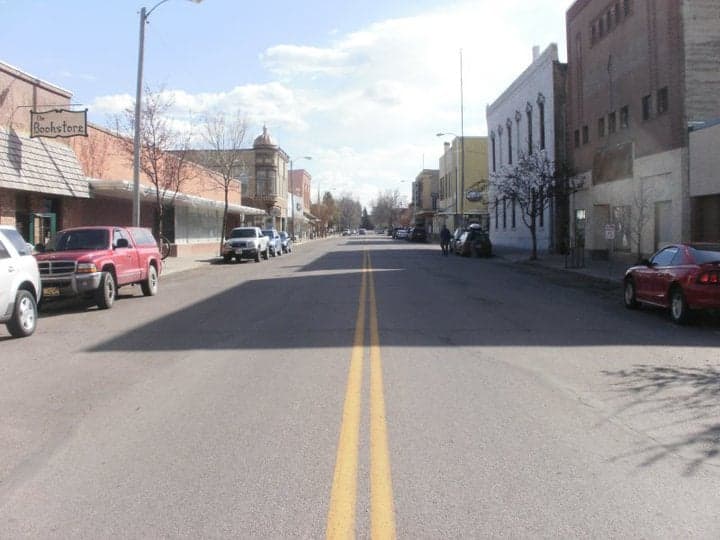
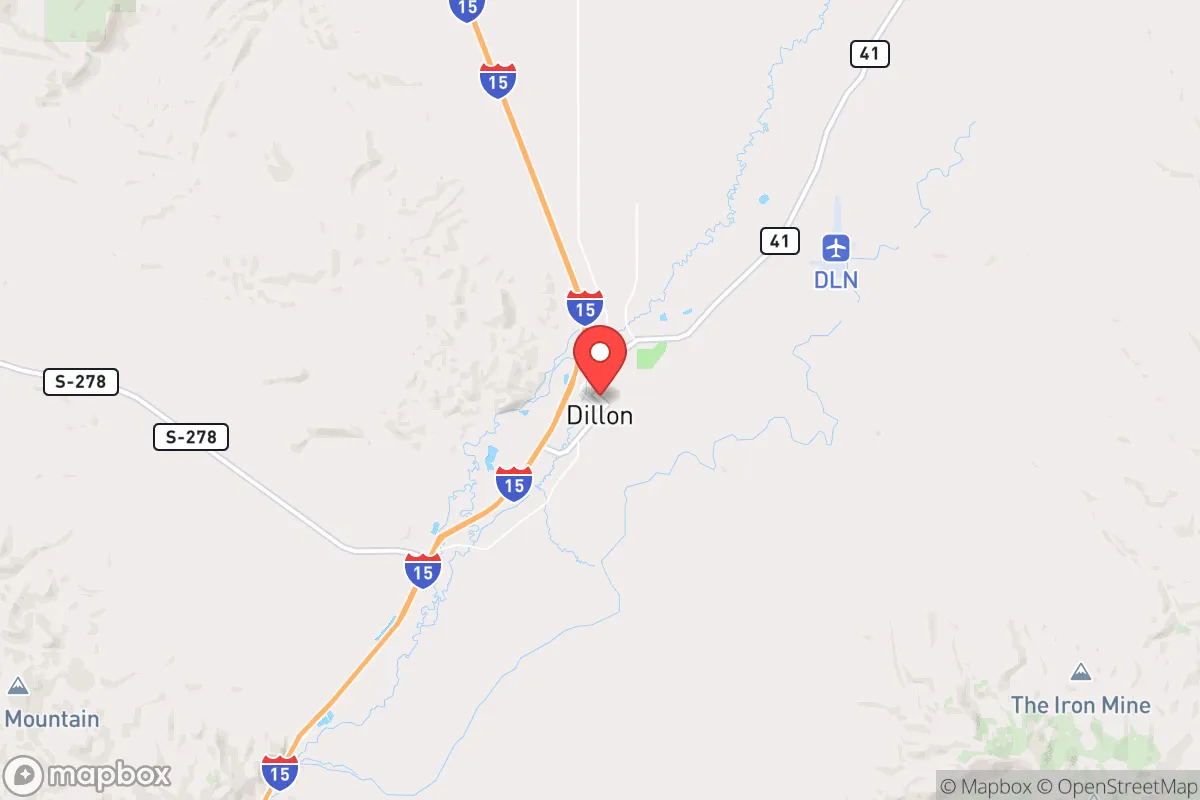
Photo: Wikipedia
Demographics of Dillon, MT
Affluence Level in Dillon, MT
A middle-class area roughly in line with national averages across income, home values, education, and employment.
People of Dillon, MT
Dillon, Montana, is a small, tight-knit community of 4,020 residents that remains overwhelmingly white (88.5%) and native-born, with a foreign-born population of just 0.5%. The city’s character is defined by its role as a regional hub for agriculture, education (home to the University of Montana Western), and outdoor recreation, fostering a self-reliant, conservative-leaning culture. Distinctive identity markers include a strong ranching heritage, a visible student population, and a low crime rate that appeals to families and retirees seeking a quiet, safe environment.
How the city was settled and grew
Dillon was founded in 1880 as a railroad town on the Utah and Northern Railway, which connected the region to the transcontinental line. The original population was drawn by the promise of land and economic opportunity: the railroad brought homesteaders, ranchers, and merchants, many of whom were of Northern European descent (English, Irish, German, and Scandinavian). The town was platted on the banks of the Beaverhead River, and the earliest residential areas—such as West Dillon (west of the railroad tracks) and East Dillon (east of the tracks)—were built by these settlers. West Dillon, with its modest homes and proximity to the rail depot, became the working-class heart of the town, while East Dillon housed the merchants and professionals. A second major wave arrived in the early 1900s with the establishment of the Montana State Normal College (now the University of Montana Western), which drew faculty and students from across the state. This influx created the College Heights neighborhood, a cluster of homes and boarding houses near the campus that remains a student-oriented area today. The city’s growth plateaued after the 1920s, as the railroad’s importance waned and the agricultural economy stabilized, leaving Dillon with a stable, largely homogeneous population through the mid-20th century.
Modern era (post-1965)
Since the 1965 Hart-Cellar Act, Dillon has seen minimal immigration-driven change. The foreign-born share (0.5%) is among the lowest in Montana, and the city has not experienced the suburbanization or ethnic diversification seen in larger U.S. cities. Instead, domestic in-migration has been the primary demographic driver: retirees from California and the Pacific Northwest, drawn by lower taxes and a slower pace of life, have settled in newer subdivisions like Beaverhead Estates (a planned community on the south edge of town) and Meadow Creek (a rural subdivision north of the city limits). These areas are predominantly white and middle-to-upper income, reinforcing the city’s existing demographic profile. The Hispanic population (3.8%) is the largest minority group, concentrated in the Southside neighborhood near the industrial park, where seasonal agricultural workers and their families have established a small, stable presence. The Black (1.3%) and East/Southeast Asian (0.4%) populations are tiny and scattered, with no distinct ethnic enclaves. The Indian subcontinent population is effectively zero (0.0%). The University of Montana Western brings a modest influx of younger, more diverse students, but most leave after graduation, limiting long-term demographic change.
The future
Dillon’s population is projected to remain stable or grow slowly, driven by continued domestic in-migration of retirees and remote workers rather than immigration. The city is homogenizing rather than tribalizing: new arrivals are overwhelmingly white and native-born, and the small Hispanic community is assimilating into the broader culture. The foreign-born population is unlikely to grow significantly, as Dillon lacks the economic pull (large employers, ethnic networks) that attracts immigrants. The next 10–20 years will likely see a slight aging of the population, as retirees outnumber young families, and a continued concentration of new development in Beaverhead Estates and Meadow Creek. The University of Montana Western will remain a stabilizing force, but its student body will continue to be drawn from the same regional and demographic pool. No new ethnic enclaves are expected to form.
Dillon is becoming a quieter, more retirement-oriented community, with little demographic churn. For someone moving in now, this means a stable, predictable environment where neighbors are likely to share similar backgrounds and values, but also limited diversity and a slower pace of change. The city’s future is one of continuity, not transformation.

* Values derived from national, state, county, city and local statistics and may differ in a specific area. Last updated: 2026-04-30T01:43:42.000Z
Narrative content on this page is AI-generated and may contain mistakes. Verify any details that matter before acting on them.
ReloMaps may earn a commission from affiliate links at no extra cost to you.

