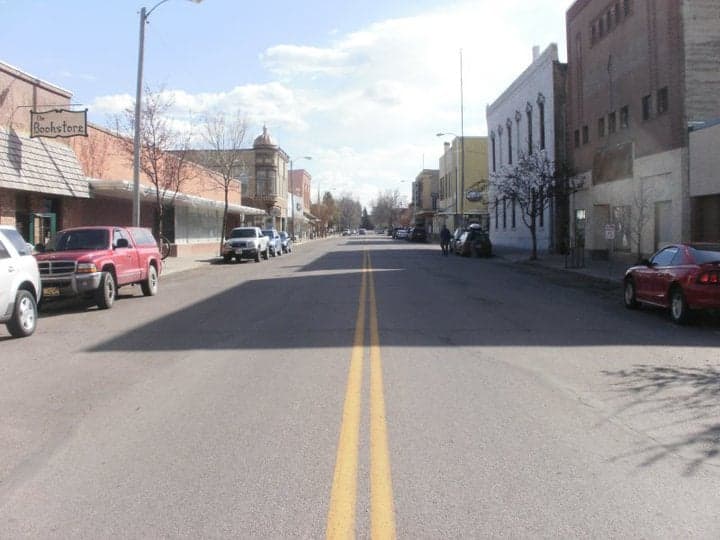
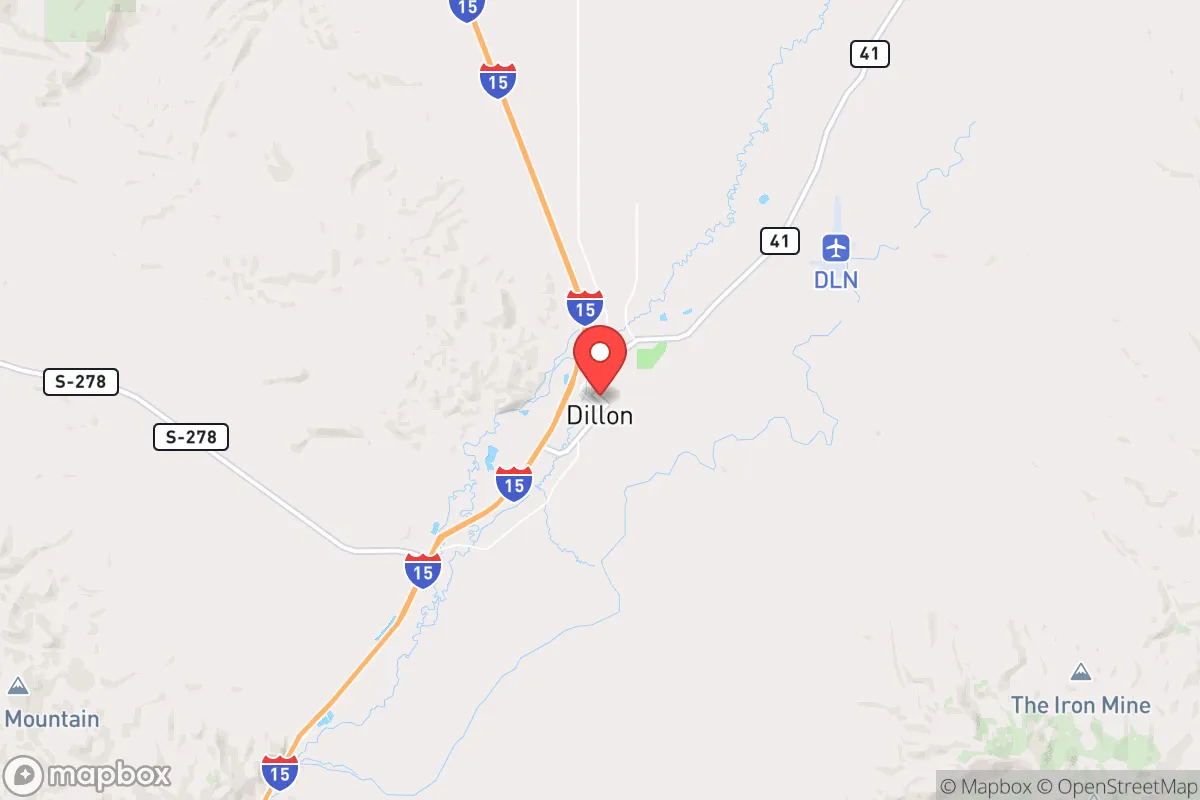
Photo: Wikipedia
Personal Sovereignty in Dillon, MT
Viable for self-reliance. Generally workable, though some barriers may limit total independence.
What does Personal Sovereignty tell us?
Personal Sovereignty measures your capacity for self-reliance and independence with minimal government friction. Higher scores mean fewer barriers between you and the way you want to live... but it assumes you have the space you need and good neighbors.
What does this tell us?
Personal Sovereignty measures your capacity for self-reliance and independence with minimal government friction. Higher scores mean fewer barriers between you and the way you want to live... but it assumes you have the space you need and good neighbors.
State Policy
Energy independence: Net exporter (120% of energy produced in-state)
Personal Liberty
Homesteading

Personal Liberty Analysis
Dillon, Montana offers one of the strongest personal sovereignty environments in the lower 48, functioning as a practical redoubt for those prioritizing autonomy over convenience. Located in Beaverhead County, this town of roughly 4,200 people sits in a state that consistently ranks among the top five for individual liberty indices, with no state income tax, minimal business regulation, and a culture that treats government as a necessary inconvenience rather than a solution. For the strategic relocator—whether a single prepper or a family seeking to opt out of overreach—Dillon provides a legal and cultural framework where self-reliance isn't just tolerated but expected.
Tax burden and regulatory posture: how Montana compares to high-tax states
Montana's tax structure is a primary draw for those fleeing jurisdictions that treat personal income as a public resource. The state imposes no state sales tax and no state income tax on individuals, meaning every dollar earned in Dillon stays in your pocket or your preps. Property taxes in Beaverhead County run approximately 0.8% of assessed value—roughly half the national average—and agricultural land is assessed at a fraction of market value, making acreage ownership viable for homesteaders. Regulatory posture is equally favorable: Montana is a right-to-work state with minimal occupational licensing burdens, and Dillon's local government operates with a light touch. There are no city-level income taxes, no onerous business license fees for home-based enterprises, and zoning codes are permissive enough that running a small fabrication shop or food preservation operation from your property is straightforward. For comparison, moving from a state like California or New York to Dillon effectively gives a family an immediate 10-15% raise in disposable income, plus freedom from the regulatory creep that makes simple projects require permits and inspections.
Self-defense and gun law specifics: what Dillon allows that other states restrict
Montana is a constitutional carry state, meaning Dillon residents can carry a concealed firearm without a permit—no classes, no fees, no government permission slip. The state preempts all local gun ordinances, so Dillon's city council cannot impose magazine bans, "assault weapon" registrations, or waiting periods that contradict state law. Stand Your Ground and Castle Doctrine protections are codified in Montana Code Annotated 45-3-110, with no duty to retreat in any place where you are lawfully present. For the prepper mindset, this means your home, vehicle, and property are legal redoubts where deadly force is justified against unlawful intrusion. Private firearm sales between individuals require no background checks, and there are no state-level restrictions on magazine capacity, suppressor ownership (with federal NFA compliance), or the types of rifles and handguns you can own. The local sheriff's office in Beaverhead County is known for pro-Second Amendment interpretation of state law, and the county's rural character means that discharging firearms on your own property for training or pest control is generally accepted, provided you observe basic safety and distance from occupied structures.
Self-reliance and homesteading viability: lot sizes, zoning, and off-grid feasibility
Dillon sits in the Big Hole Valley, where land is still affordable and zoning is minimal. Within city limits, standard residential lots range from 6,000 to 10,000 square feet, but the real opportunity lies in the surrounding county. Unincorporated Beaverhead County has no building codes, no zoning ordinances, and no permit requirements for structures under 200 square feet, meaning you can erect a workshop, greenhouse, or storage shed without any government interaction. Off-grid living is entirely legal: there are no state or county mandates requiring connection to municipal water, sewer, or electrical grids. Wells and septic systems require standard health department permits (typically under $500), but solar panels, wind turbines, and propane systems face no special restrictions. Agricultural zoning allows for livestock—chickens, goats, cattle—on parcels as small as 5 acres, and the county's extension office provides free soil testing and water quality analysis. For the serious homesteader, 20-40 acre parcels within 15 minutes of Dillon's grocery stores and hardware outlets run $2,000-$4,000 per acre, making a self-sufficient setup achievable for under $100,000 in land costs. The growing season is short (90-100 frost-free days), but cold frames and high tunnels can extend it, and the local agricultural community is active in seed swaps and equipment co-ops.
Personal liberties: parental rights, medical autonomy, speech, and property
Montana's legal framework provides robust protections for personal autonomy across multiple domains. Parental rights are explicitly protected under Montana Code 40-4-212, which affirms that parents have the fundamental right to direct their children's education, healthcare, and religious upbringing. The state has no vaccine mandates for school attendance—parents can opt out for medical, religious, or personal reasons with a simple written exemption. Homeschooling is regulated only by a notification requirement (no curriculum approval, no testing mandates), and Dillon has a active homeschool community that organizes co-ops and field trips. Medical autonomy is similarly strong: Montana does not require COVID-19 vaccines for any state services, and the Montana Medical Marijuana Act (passed by voter initiative) allows for personal cultivation of up to four plants with a state card. Property rights are protected by the Montana Constitution's Article II, Section 29, which explicitly states that "the right of individual privacy is essential to the well-being of a free society" and has been interpreted by state courts to limit warrantless searches and government data collection. Free speech is protected by both the First Amendment and Montana's own constitutional guarantee, which is broader than the federal version—the state supreme court has ruled that commercial speech and political donations are entitled to full protection. For the strategic relocator concerned about government overreach, Dillon sits in a county where the sheriff has publicly stated he will not enforce federal laws he deems unconstitutional, and the local culture strongly supports the idea that your home is your castle, not a compliance checkpoint.
In the broader landscape of American personal sovereignty, Dillon represents a tier-one destination for those prioritizing autonomy. While no location is perfect—Montana's winters are long, internet options are limited, and the nearest major airport is 90 minutes away in Butte—the trade-off is a legal environment where you can live largely unbothered by the state. Compared to the Pacific Northwest, where local governments are actively restricting gas stoves, firearms, and property use, or the Northeast, where tax burdens and regulatory density make self-reliance a legal minefield, Dillon offers a rare combination of low taxes, minimal regulation, strong gun rights, and a culture that values independence over compliance. For the single prepper or the family looking to build a life outside the system, this is one of the few places left where the government's default answer is "yes, unless there's a clear problem," rather than "no, unless you get permission."

* Values derived from national, state, county, city and local statistics and may differ in a specific area. Last updated: 2026-04-30T01:43:42.000Z
Narrative content on this page is AI-generated and may contain mistakes. Verify any details that matter before acting on them.
ReloMaps may earn a commission from affiliate links at no extra cost to you.

