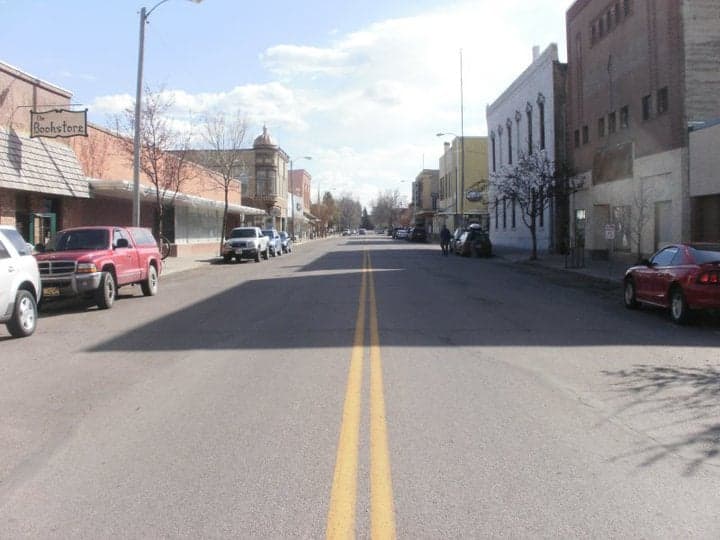
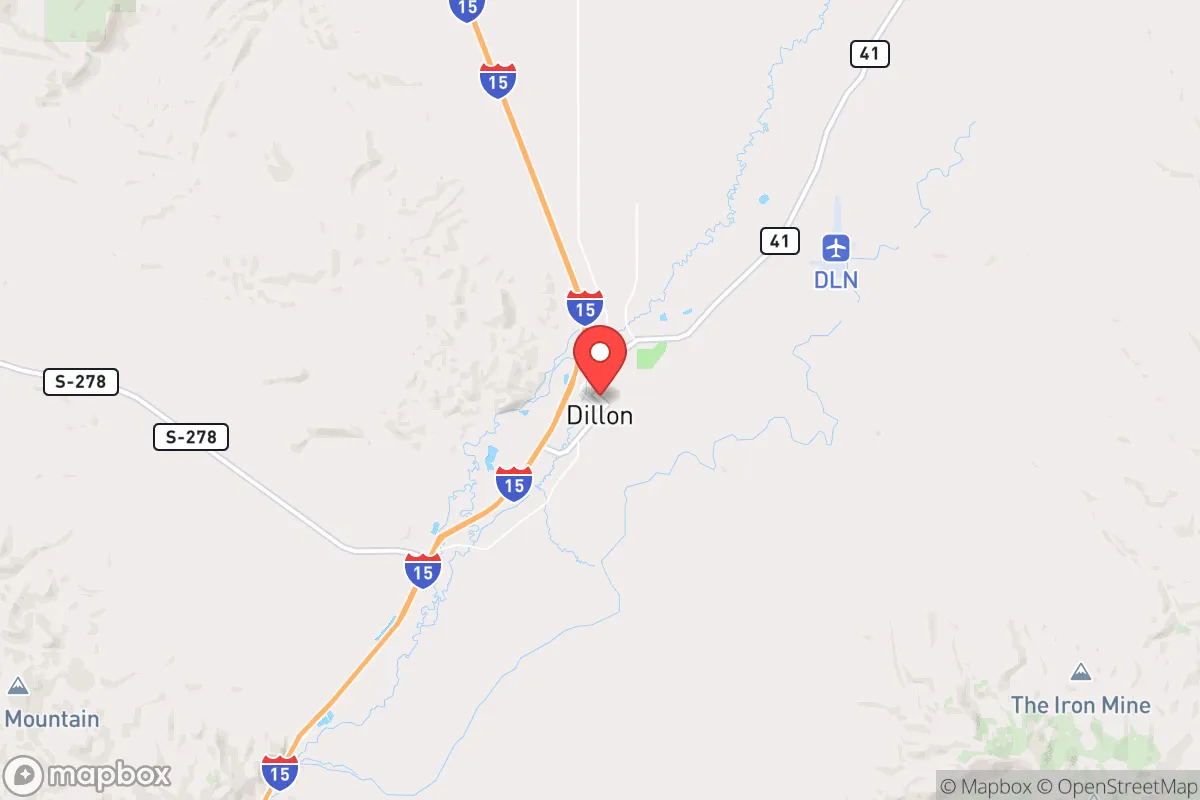
Photo: Wikipedia
Strategic Assessment of Dillon, MT
Workable tactical position. Some exposure to population density or targets, but generally defensible in a crisis.
What does the Strategic Assessment tell us?
Our Strategic Assessment grades tactical survivability of an area. Major population centers, military targets, fallout zones, natural disasters, and border exposure all drive risk — lower exposure means a more defensible position in a crisis.
This is heavily inspired by Joel Skousen's Strategic Relocation book. Highly recommended you checkout the book ($)What does this tell us?
Our Strategic Assessment grades tactical survivability of an area. Major population centers, military targets, fallout zones, natural disasters, and border exposure all drive risk — lower exposure means a more defensible position in a crisis.
This is heavily inspired by Joel Skousen's Strategic Relocation book. Highly recommended you checkout the book ($)Strategic Pillars

Key Distances
Regional Safe Places
Below is our recommended "safe zones" in Montana and the surrounding area based on our strategic heuristics. For most people, it's unrealistic to live in a “safe zone” full-time due to work, family or other personal reasons. They tend to be more rural. However, many of these areas are perfect for second homes and retreat properties that double as a vacation home or even a short-term rental.
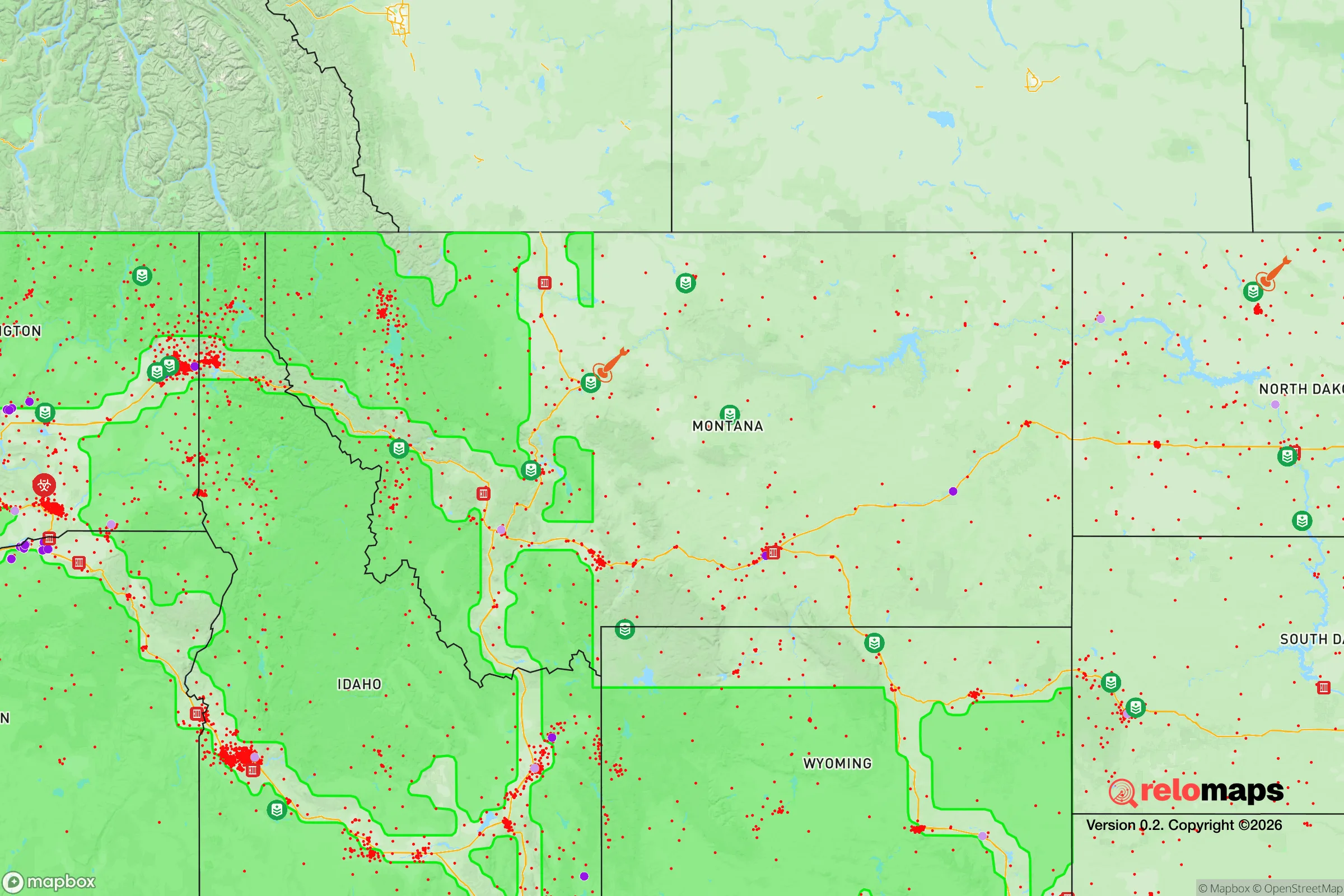


Important Note: For informational purposes only. This does not mean nothing bad ever happens in the green zones. Please use common sense. This is based on public data and modeled with AI. We tried to take a conservative approach but mistakes happen. We update this regularly as new information becomes available.
Solar Generator Recommendations
Backup power matters more here than in safer locations. We've picked three solar generators across budgets and capacity tiers — start with the budget unit if you only need a few essentials, or step up if you want to run a fridge and HVAC for days at a time.

Jackery Portable Power Station Explorer 300
Budget OptionPower on the Go: Weighing only 11 lbs, it's convenient to set up and store with book-sized foldable solar panels

BLUETTI Portable Power Station AC180
Designed for both indoor and outdoor scenarios, AC180 is highly capable as it has a robost capacity and continuous output power.

EF ECOFLOW DELTA Pro Ultra Power Station
Upgraded PickEcoFlow DELTA Pro Ultra is a whole-home energy system designed to grow with your family. Integrated with the Smart Home Panel 2, it scales to meet your evolving energy needs — keeping your home powered, intelligent, and secure through every stage of life.
We earn a commission, at no additional cost to you.
Strategic Assessment Analysis
Dillon, Montana, offers a compelling strategic position for those prioritizing resilience and self-sufficiency, sitting in the Beaverhead Valley at the intersection of Interstates 15 and 90 with a population of roughly 4,000. Its location—nearly 70 miles from the nearest significant population center (Butte) and over 200 miles from the Salt Lake City metro area—provides a natural buffer against the cascading effects of urban unrest, supply chain disruptions, or mass casualty events. The surrounding landscape, dominated by the Beaverhead-Deerlodge National Forest and the Pioneer Mountains, creates a defensible pocket with limited ingress points, making it a viable fallback zone for individuals or families seeking distance from coastal and metropolitan vulnerabilities.
Geographic position and natural advantages for long-term security
Dillon’s geographic isolation is its primary strategic asset. The town sits in a high desert valley at 5,200 feet, flanked by mountain ranges that funnel travel through a handful of road corridors—primarily I-15 north-south and MT-41 east-west. This chokepoint geography means that any large-scale movement of people or goods into the area can be monitored or controlled, a critical factor during civil unrest or a breakdown of public order. The surrounding Beaverhead-Deerlodge National Forest offers over 3.3 million acres of public land for hunting, foraging, and timber, while the Big Hole River and Beaverhead River provide reliable surface water sources. The region’s low population density—Beaverhead County has roughly 9 people per square mile—reduces the risk of disease spread, resource competition, and social friction during a crisis. For a relocator, this means a higher probability of maintaining operational security and community cohesion compared to more densely populated parts of the West.
Risks, exposures, and proximity to fallout-relevant landmarks
While Dillon’s isolation is a strength, it is not immune to certain strategic risks. The town lies roughly 120 miles from the Idaho National Laboratory (INL) near Idaho Falls, a major nuclear research and waste storage facility. In the event of a catastrophic incident at INL—whether from accident, sabotage, or a mass casualty event—prevailing winds from the southwest could carry fallout into the Beaverhead Valley within hours. Additionally, the nearby Malmstrom Air Force Base (about 200 miles north in Great Falls) is a key nuclear missile command center, making it a potential target in a conflict scenario. The area also sits within the Intermountain Seismic Belt, with a moderate risk of earthquakes that could disrupt infrastructure like the Clark Canyon Dam upstream on the Beaverhead River. For the prepper-minded, these exposures mean that a comprehensive plan must include fallout sheltering capability (at least 10 feet of earth or concrete) and a secondary water source independent of the municipal supply. The positive side: Dillon is far from the major population centers that would be primary targets—no major military bases, no major ports, no major industrial complexes within 100 miles.
Practical resilience for a relocator: food, water, energy, and defensibility
For a single individual or family looking to establish a resilient homestead, Dillon’s practical resources are mixed but workable. The growing season is short—roughly 90 to 110 frost-free days—limiting traditional agriculture to cold-hardy crops like potatoes, carrots, and kale, but the surrounding rangeland supports cattle and bison ranching. Local food production is feasible with greenhouses or high tunnels, and the area has a strong hunting culture for elk, mule deer, and antelope. Water access is generally good: the Big Hole and Beaverhead rivers offer year-round flow, and groundwater is plentiful at moderate depths (50-150 feet for most wells), though drilling costs can run $15-$30 per foot. Energy resilience is a challenge: the area is served by NorthWestern Energy, with a grid that can be vulnerable to winter storms and wildfire-related outages. Solar potential is decent—about 4.5 peak sun hours per day—but winter cloud cover and snow accumulation require battery storage and a backup generator. Defensibility is excellent: the valley’s natural bowl shape with limited road access means a small group can monitor the two main entry points (I-15 from the north and south, and MT-41 from the east). The local sheriff’s office is small (about 12 deputies for the entire county), so in a prolonged crisis, residents would largely rely on themselves and their neighbors. The community itself is tight-knit and conservative-leaning, with a strong culture of mutual aid and firearm ownership—factors that reduce the likelihood of internal conflict during a breakdown.
The overall strategic picture for Dillon is one of high potential with manageable trade-offs. It offers genuine distance from the chaos of urban centers and major target zones, combined with abundant natural resources and a defensible geography that few other locations in the lower 48 can match. The main liabilities—fallout risk from INL, a short growing season, and grid dependency—are not dealbreakers for a prepared relocator who invests in proper shelter, food storage, and off-grid energy. For the conservative-leaning individual or family who sees the current trajectory of the country as unstable and wants a place where community values, self-reliance, and physical security are still the norm, Dillon represents a solid strategic option. It is not a bug-out location for a weekend; it is a long-term base for those willing to put in the work to harden it against the uncertainties ahead.

* Values derived from national, state, county, city and local statistics and may differ in a specific area. Last updated: 2026-04-30T01:43:42.000Z
Narrative content on this page is AI-generated and may contain mistakes. Verify any details that matter before acting on them.
ReloMaps may earn a commission from affiliate links at no extra cost to you.

