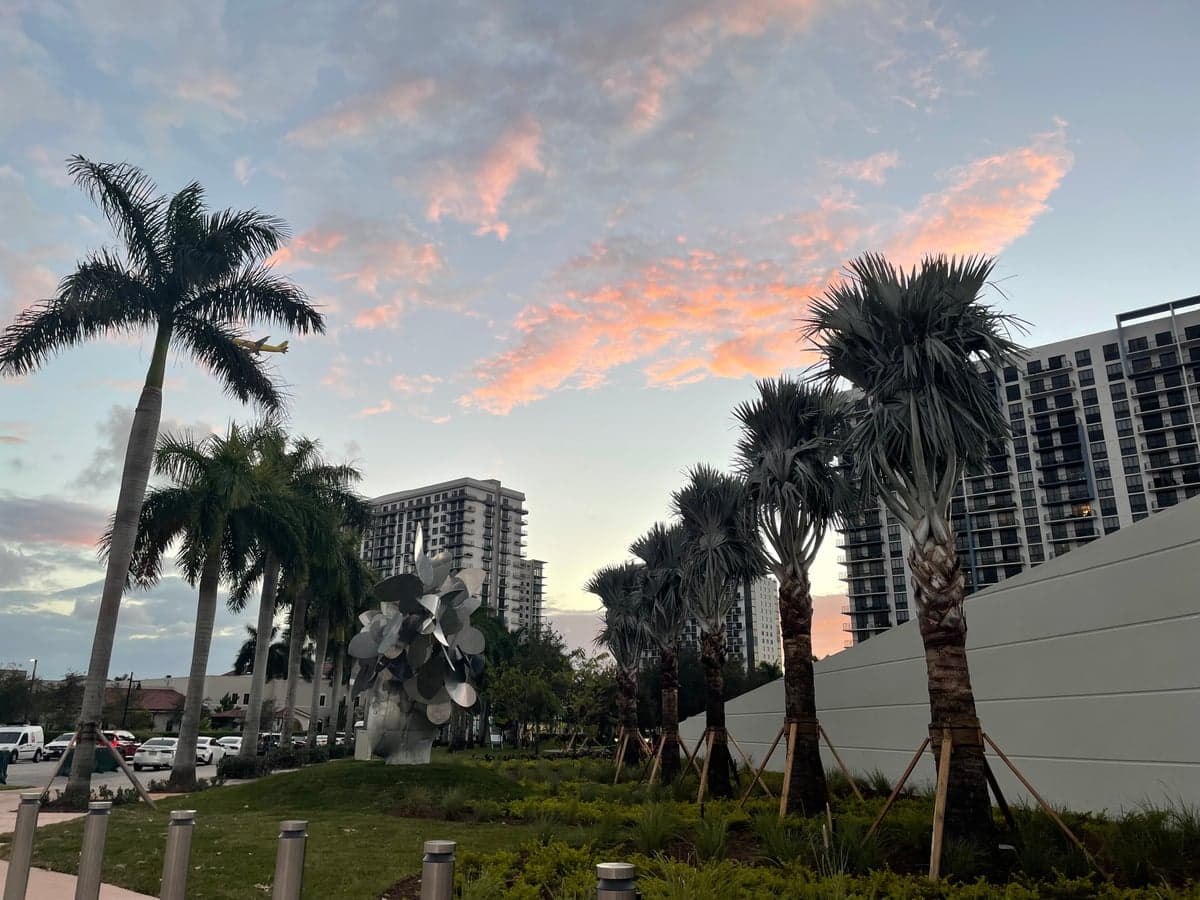
Photo: Wikipedia
Strategic Assessment of Doral, FL
Multiple tactical vulnerabilities. Population density, target proximity, or disaster risk are likely compounding. A retreat property and exit planning is required.
What does the Strategic Assessment tell us?
Our Strategic Assessment grades tactical survivability of an area. Major population centers, military targets, fallout zones, natural disasters, and border exposure all drive risk — lower exposure means a more defensible position in a crisis.
This is heavily inspired by Joel Skousen's Strategic Relocation book. Highly recommended you checkout the book ($)What does this tell us?
Our Strategic Assessment grades tactical survivability of an area. Major population centers, military targets, fallout zones, natural disasters, and border exposure all drive risk — lower exposure means a more defensible position in a crisis.
This is heavily inspired by Joel Skousen's Strategic Relocation book. Highly recommended you checkout the book ($)Strategic Pillars

Key Distances
Regional Safe Places
Below is our recommended "safe zones" in Florida and the surrounding area based on our strategic heuristics. For most people, it's unrealistic to live in a “safe zone” full-time due to work, family or other personal reasons. They tend to be more rural. However, many of these areas are perfect for second homes and retreat properties that double as a vacation home or even a short-term rental.

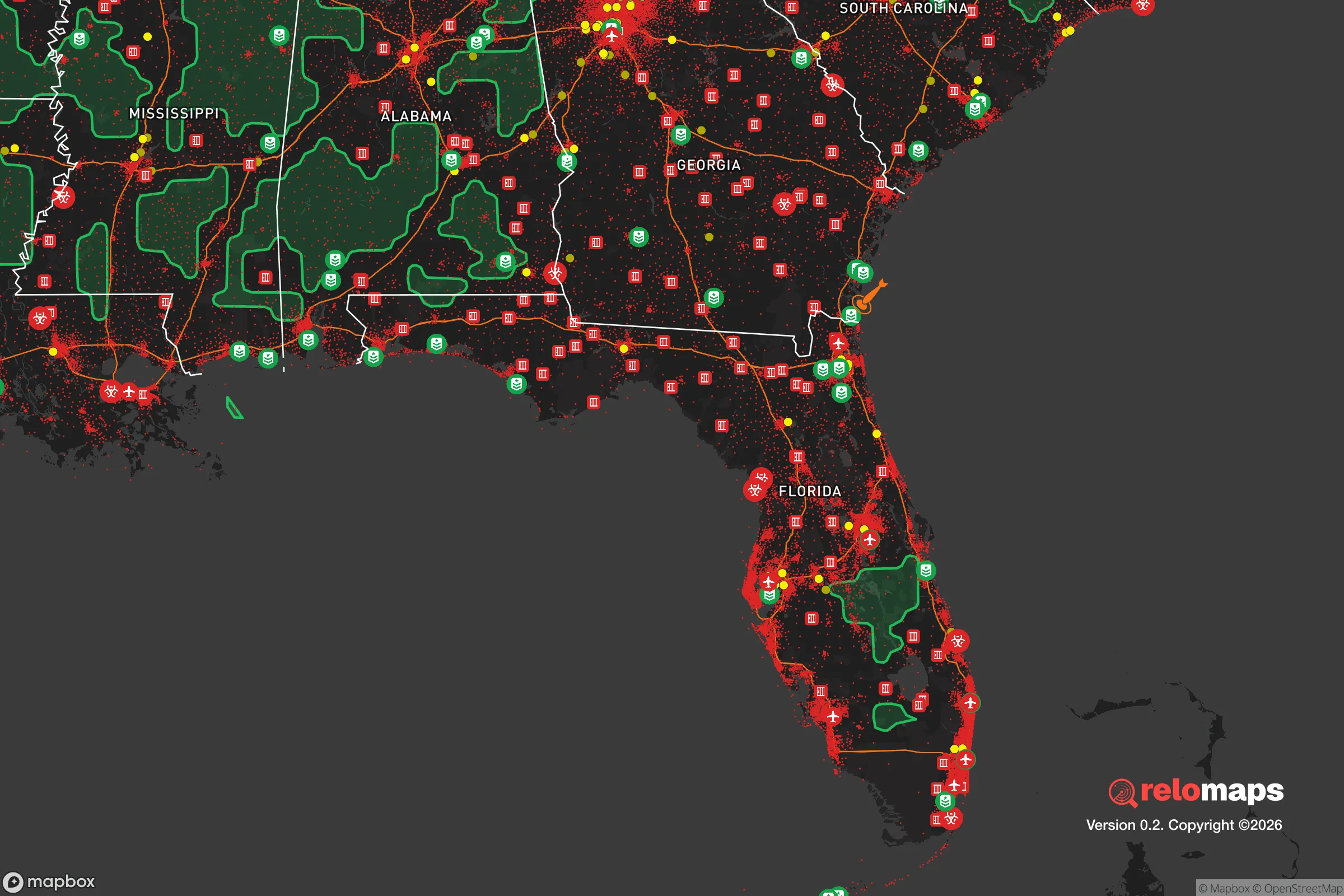


Important Note: For informational purposes only. This does not mean nothing bad ever happens in the green zones. Please use common sense. This is based on public data and modeled with AI. We tried to take a conservative approach but mistakes happen. We update this regularly as new information becomes available.
Solar Generator Recommendations
Backup power matters more here than in safer locations. We've picked three solar generators across budgets and capacity tiers — start with the budget unit if you only need a few essentials, or step up if you want to run a fridge and HVAC for days at a time.

Jackery Portable Power Station Explorer 300
Budget OptionPower on the Go: Weighing only 11 lbs, it's convenient to set up and store with book-sized foldable solar panels

BLUETTI Portable Power Station AC180
Designed for both indoor and outdoor scenarios, AC180 is highly capable as it has a robost capacity and continuous output power.

EF ECOFLOW DELTA Pro Ultra Power Station
Upgraded PickEcoFlow DELTA Pro Ultra is a whole-home energy system designed to grow with your family. Integrated with the Smart Home Panel 2, it scales to meet your evolving energy needs — keeping your home powered, intelligent, and secure through every stage of life.
We earn a commission, at no additional cost to you.
Strategic Assessment Analysis
Doral, Florida, presents a complex strategic picture for the conservative prepper. On one hand, its location within the Miami metropolitan area offers certain logistical advantages for supply access and economic stability; on the other, it sits squarely in a high-density, high-visibility zone that could become a liability during widespread civil unrest or a major disaster. The area’s resilience is a double-edged sword—its infrastructure is robust for daily life, but its dependence on a fragile, interconnected system and its proximity to numerous high-value, high-risk targets make it a location that demands serious, proactive preparation rather than passive reliance.
Geographic position and natural advantages for long-term stability
Geographically, Doral is positioned on a drained limestone ridge, giving it slightly higher elevation than much of coastal Miami-Dade County—typically 8 to 12 feet above sea level. This makes it less susceptible to storm surge than beachfront communities, though it remains vulnerable to inland flooding from heavy rainfall. The area’s flat terrain and grid-like street layout are not naturally defensible, but the prevalence of gated communities and HOA-controlled neighborhoods does offer a degree of perimeter control. The proximity to the Everglades, roughly 10 miles west, provides a potential, though challenging, retreat corridor for those with the skills and equipment to navigate swamp terrain. For a relocator, the key natural advantage is the subtropical climate: year-round growing seasons mean that with proper knowledge, food production is possible even in a small yard or on a balcony. However, the heat and humidity also accelerate decay and place heavy demands on water and power systems.
Risks, exposures, and proximity to fallout-relevant landmarks
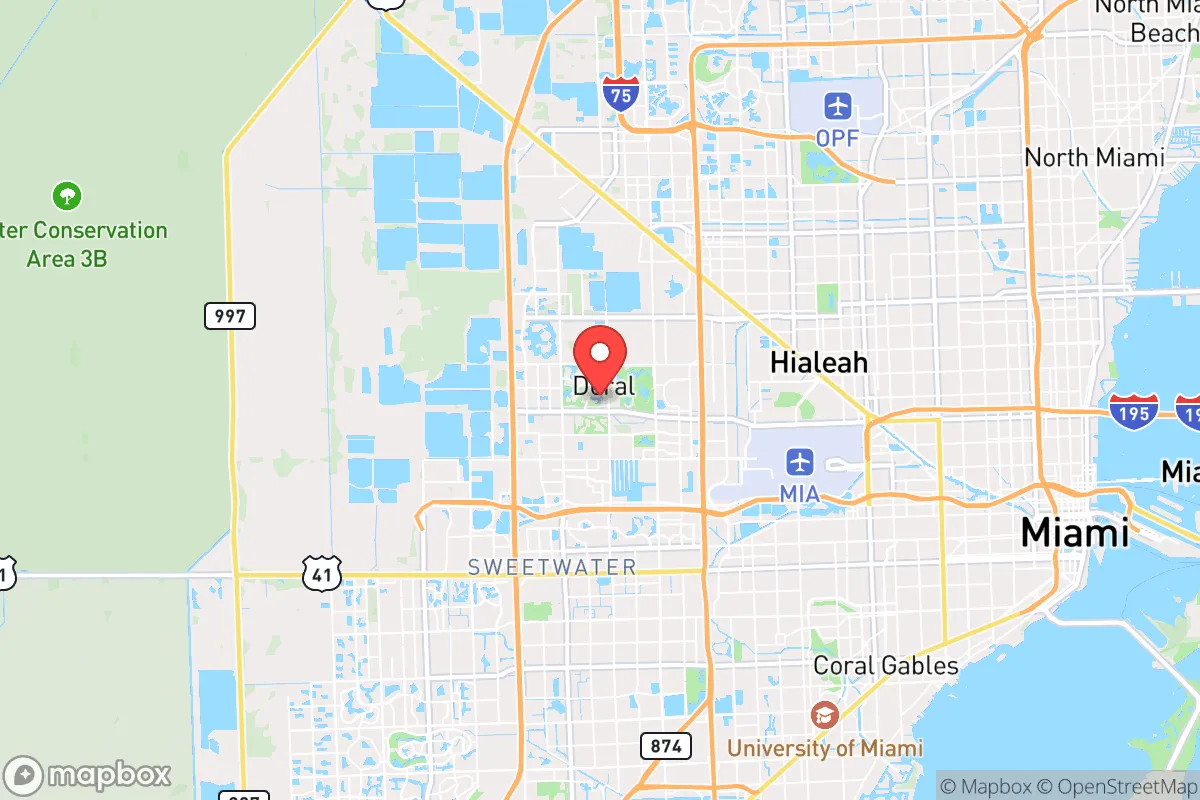
The most significant strategic drawback of Doral is its location within the Miami urban core. The city is surrounded by major infrastructure that would become focal points during any large-scale crisis. Miami International Airport (MIA) is less than 5 miles east, making it a likely target for evacuation chaos, potential terrorist activity, or a staging ground for government response—and thus a zone to avoid. PortMiami, one of the busiest cruise and cargo ports in the world, is roughly 10 miles east, and its disruption would immediately impact supply chains for food, fuel, and goods. Doral itself is home to the headquarters of many multinational corporations, including Carnival Corporation and several major banks, which could make it a target for civil unrest or cyber-attacks aimed at economic disruption. The area’s dense population—over 70,000 people in a 15-square-mile area—means that any localized event could quickly cascade into a regional problem. For the prepper, the concentration of people, wealth, and infrastructure in Doral is a liability, not an asset. The risk of being caught in a mass evacuation gridlock on the Dolphin Expressway (SR 836) or the Palmetto Expressway (SR 826) is high, and the lack of multiple, secure egress routes is a serious concern.
Practical resilience for a relocator: food, water, energy, and defensibility
For a relocator committed to staying in Doral, practical resilience requires a self-sufficient mindset that goes beyond typical suburban preparedness. Water is the most immediate vulnerability. The municipal supply comes from the Biscayne Aquifer, which is shallow and susceptible to saltwater intrusion during droughts or storm surges. A prepper should have at least a two-week supply of stored water (one gallon per person per day) plus a reliable filtration system capable of treating surface water from canals or rainwater collection. Food security is achievable but not passive. The year-round growing season allows for container gardening of staples like beans, squash, and leafy greens, but soil quality in many residential areas is poor and may contain contaminants from decades of urban runoff. A well-stocked pantry with freeze-dried and canned goods is essential, as local grocery stores will empty within hours of a crisis announcement. Energy independence is difficult but critical. The grid in South Florida is notoriously fragile during hurricane season, and a solar panel system with battery storage (like a Tesla Powerwall or similar) is a wise investment, though HOA restrictions may limit installation. A backup generator running on propane or natural gas is a more practical short-term solution. Defensibility in Doral is largely a function of community and neighborhood design. Gated communities with single points of entry offer some security, but they also create a bottleneck. A relocator should prioritize a home on a corner lot or near a secondary exit, and build relationships with like-minded neighbors. Medical preparedness is non-negotiable. The nearest Level I trauma center is Jackson Memorial Hospital, about 12 miles east, which could be overwhelmed or inaccessible during a crisis. A comprehensive first-aid kit, training in basic trauma care, and a stockpile of prescription medications are essential.
The overall strategic picture for Doral is one of calculated risk. It is not a retreat location; it is a forward operating base that requires constant vigilance and significant investment in self-sufficiency. For the conservative prepper who values economic opportunity and community infrastructure but is willing to put in the work to mitigate the area’s inherent vulnerabilities, Doral can be a viable long-term home. However, for those seeking a low-profile, easily defensible, and resource-independent lifestyle, the dense urban environment, proximity to high-value targets, and dependence on fragile systems make it a less-than-ideal choice. The key takeaway is this: Doral demands a proactive, not reactive, approach to preparedness. If you are willing to treat your home as a hardened node in a potentially unstable network—with stored supplies, redundant systems, and a clear evacuation plan—you can make it work. If you expect the system to hold, you are betting against history.

* Values derived from national, state, county, city and local statistics and may differ in a specific area. Last updated: 2026-04-30T05:16:42.000Z
Narrative content on this page is AI-generated and may contain mistakes. Verify any details that matter before acting on them.
ReloMaps may earn a commission from affiliate links at no extra cost to you.

