
Photo: Wikipedia
Strategic Assessment of Douglas, AZ
Meaningful friction. Expect exposure to either population pressure, blast zones, or natural disaster risk. Consider buying a retreat property.
What does the Strategic Assessment tell us?
Our Strategic Assessment grades tactical survivability of an area. Major population centers, military targets, fallout zones, natural disasters, and border exposure all drive risk — lower exposure means a more defensible position in a crisis.
This is heavily inspired by Joel Skousen's Strategic Relocation book. Highly recommended you checkout the book ($)What does this tell us?
Our Strategic Assessment grades tactical survivability of an area. Major population centers, military targets, fallout zones, natural disasters, and border exposure all drive risk — lower exposure means a more defensible position in a crisis.
This is heavily inspired by Joel Skousen's Strategic Relocation book. Highly recommended you checkout the book ($)Strategic Pillars

Key Distances
Regional Safe Places
Below is our recommended "safe zones" in Arizona and the surrounding area based on our strategic heuristics. For most people, it's unrealistic to live in a “safe zone” full-time due to work, family or other personal reasons. They tend to be more rural. However, many of these areas are perfect for second homes and retreat properties that double as a vacation home or even a short-term rental.
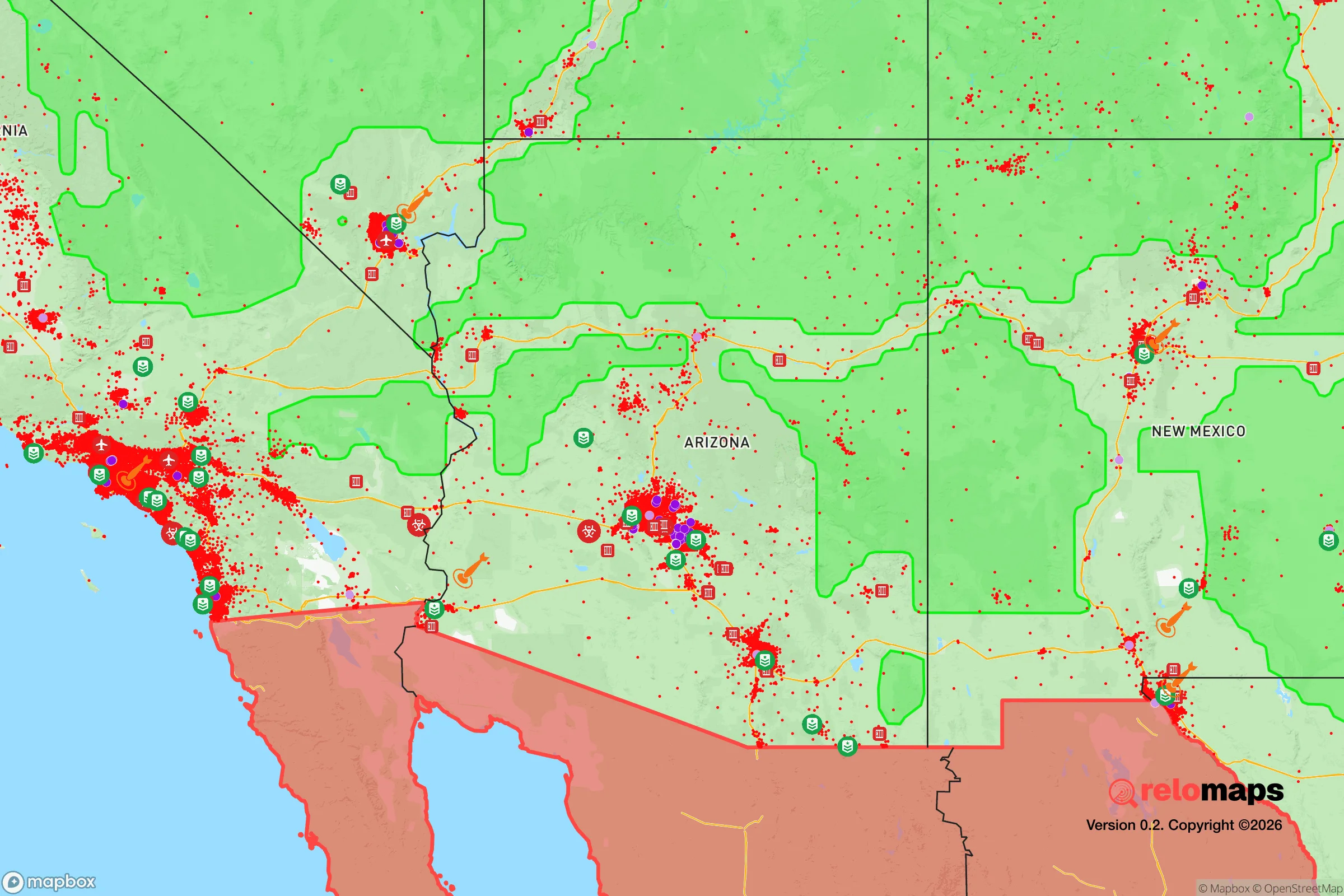
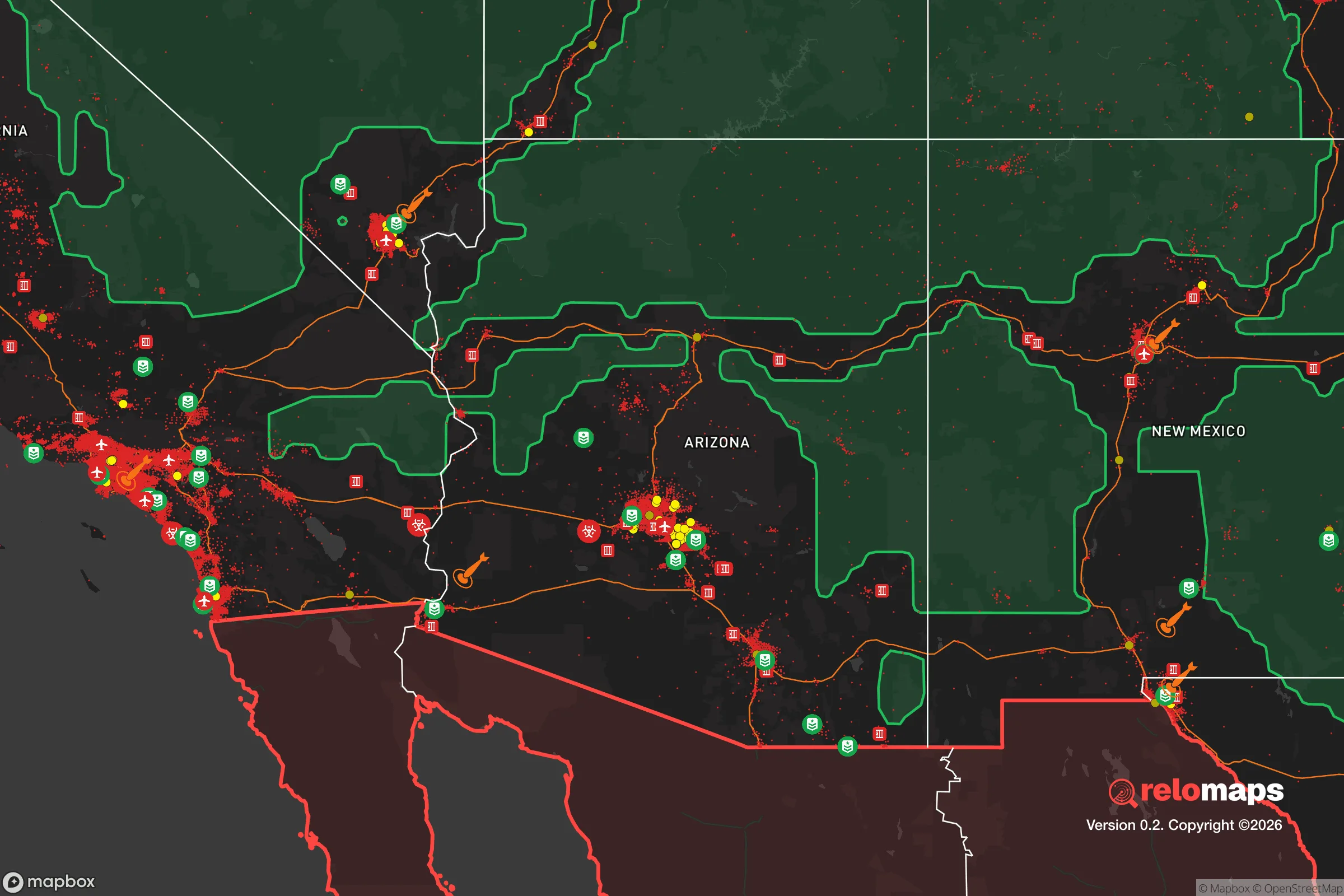


Important Note: For informational purposes only. This does not mean nothing bad ever happens in the green zones. Please use common sense. This is based on public data and modeled with AI. We tried to take a conservative approach but mistakes happen. We update this regularly as new information becomes available.
Solar Generator Recommendations
Backup power matters more here than in safer locations. We've picked three solar generators across budgets and capacity tiers — start with the budget unit if you only need a few essentials, or step up if you want to run a fridge and HVAC for days at a time.

Jackery Portable Power Station Explorer 300
Budget OptionPower on the Go: Weighing only 11 lbs, it's convenient to set up and store with book-sized foldable solar panels

BLUETTI Portable Power Station AC180
Designed for both indoor and outdoor scenarios, AC180 is highly capable as it has a robost capacity and continuous output power.

EF ECOFLOW DELTA Pro Ultra Power Station
Upgraded PickEcoFlow DELTA Pro Ultra is a whole-home energy system designed to grow with your family. Integrated with the Smart Home Panel 2, it scales to meet your evolving energy needs — keeping your home powered, intelligent, and secure through every stage of life.
We earn a commission, at no additional cost to you.
Strategic Assessment Analysis
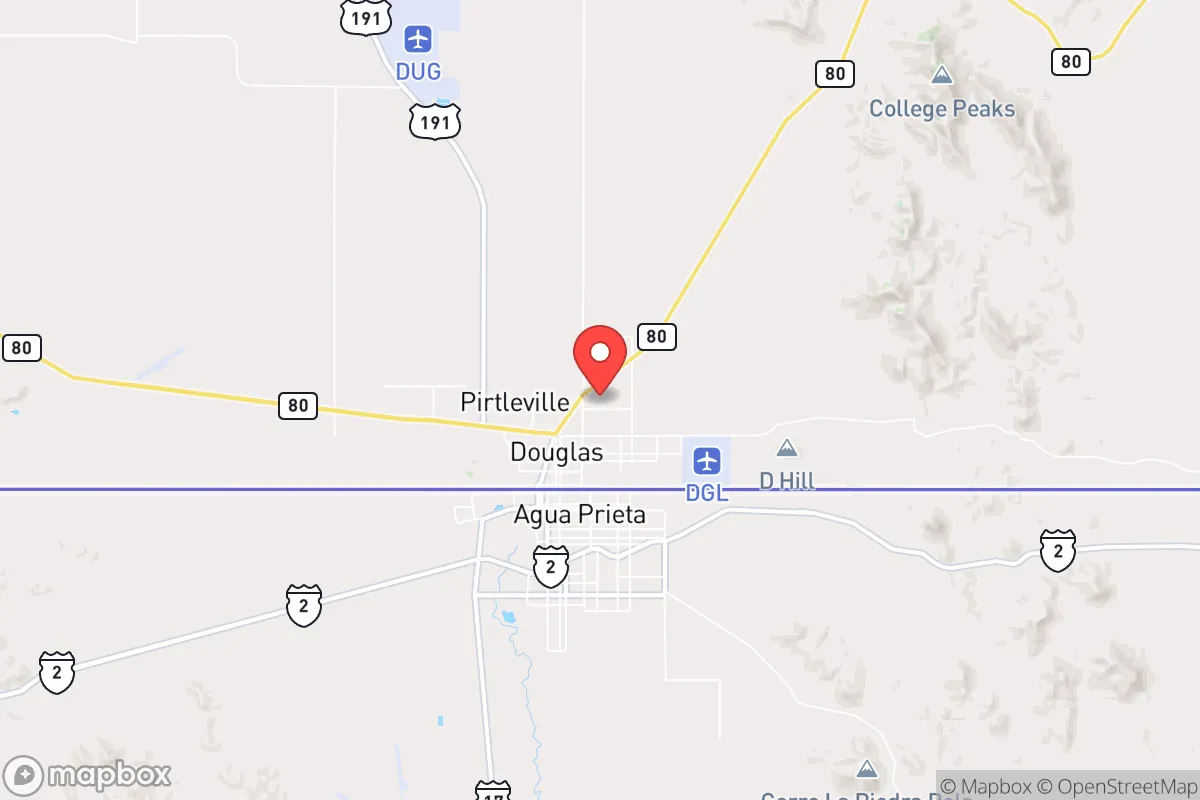
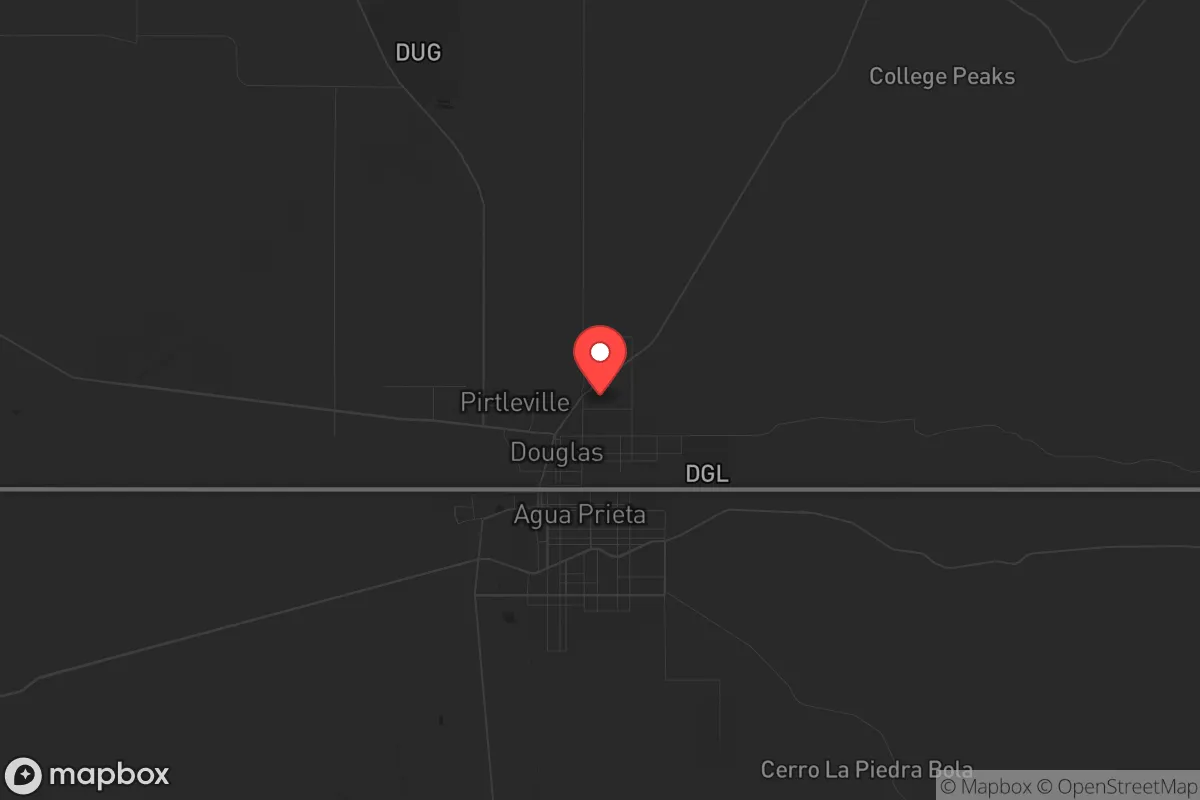
Douglas, Arizona, sits as a strategic outlier in the state’s southeastern corner, a town of roughly 16,000 people that offers a unique blend of isolation and cross-border positioning. Its resilience profile is defined by its location directly on the U.S.-Mexico border, adjacent to the Sierra Madre Occidental foothills, and its distance from major population centers—Tucson is 120 miles northwest, Phoenix 190 miles. For a relocator with a survivalist or prepper mindset, Douglas presents a paradox: its border proximity introduces specific security concerns, but its geographic isolation, low population density, and access to water from the San Pedro River and nearby mountain watersheds create a defensible, resource-rich environment. The town’s history as a copper mining and ranching hub has left a legacy of self-reliant infrastructure, but the modern reality includes a struggling economy and a population that has declined by nearly 20% since 2000, which can be read as either a warning or an opportunity for those seeking low-profile, off-grid potential.
Geographic position and natural advantages for long-term security
Douglas’s primary strategic asset is its position in the Sulphur Springs Valley, a high desert basin at 4,000 feet elevation that provides a moderate climate—hot summers but mild winters—and a growing season long enough for subsistence agriculture. The San Pedro River, one of the last free-flowing rivers in the Southwest, runs just west of town, offering a perennial water source that is rare in Arizona. The surrounding Chiricahua and Peloncillo Mountains create natural barriers to the east and west, funneling travel corridors and making the area easier to monitor and defend. The town sits less than 10 miles from the border, which means access to a secondary economy and potential supply lines, but also introduces the risk of cartel activity and illegal cross-border traffic. For a prepper, the key advantage is the ability to tap into the region’s historical ranching culture—many properties still have wells, windmills, and irrigation rights—and the fact that the local population is sparse enough that a determined individual could secure a large, remote parcel without drawing attention. The nearby Coronado National Forest and the Chiricahua National Monument provide public land for foraging, hunting, and retreat, though federal oversight means those areas are not truly defensible long-term.
Risks, exposures, and proximity to fallout-relevant landmarks
The most significant risk for Douglas is its location on the border, which in a scenario of mass civil unrest or a breakdown of federal authority could become a flashpoint for cartel violence, human trafficking, and resource competition. The town has a history of drug-related crime, and the local police force is small—around 30 officers—which means that in a crisis, residents would largely be on their own. The nearby Port of Entry at Douglas is a major commercial crossing, and any disruption to border security could funnel desperate populations through the area. Additionally, Douglas is within 150 miles of the Davis-Monthan Air Force Base in Tucson, a major military installation that could become a target in a conflict scenario, and within 200 miles of the Palo Verde Nuclear Generating Station, the largest nuclear plant in the country. While these are not immediate fallout zones, prevailing winds from the west could carry contamination toward the region in a worst-case event. The town’s proximity to the border also means that a pandemic or bioweapon event originating in Mexico could reach Douglas before it hits Phoenix or Tucson. On the positive side, Douglas is far from the major fault lines of California and the seismic risks of the Pacific Northwest, and its high desert location is less prone to wildfires than the forested areas of northern Arizona.
Practical resilience for a relocator: food, water, energy, and defensibility
For a relocator serious about self-sufficiency, Douglas offers a mixed bag. Water is the strongest asset: the San Pedro River and the local aquifer provide reliable groundwater, and many older homes have private wells. The growing season runs from March to November, allowing for two crop cycles of staples like beans, corn, and squash, and the area is suitable for raising goats, chickens, and cattle. The local soil is alkaline but workable with amendments, and there is a small but active farming community that can provide seeds and knowledge. Energy is a challenge: the grid is aging and prone to outages during monsoon storms, but the high desert sun offers excellent solar potential, and wind is consistent enough for small turbines. The town’s remote location means that fuel deliveries are expensive, so a prepper should plan for a solar-plus-battery setup from day one. Defensibility is moderate: the flat valley floor offers few natural chokepoints, but the surrounding mountains provide lookout positions, and the sparse population means that a well-armed group could control access to the few paved roads. The local gun culture is strong—Arizona has some of the most permissive firearms laws in the country—and the Cochise County Sheriff’s Office is generally supportive of Second Amendment rights. However, the border proximity means that law enforcement is often stretched thin, and in a crisis, the federal presence could become a liability rather than an asset.
Overall, Douglas is a high-risk, high-reward location for the strategic relocator. It offers genuine water security, isolation from major population centers, and a climate that supports year-round subsistence, but it sits on a geopolitical fault line that could become a source of instability in a national emergency. For a conservative-leaning individual or family who values self-reliance, low taxes, and minimal government interference, Douglas provides a blank canvas—but it demands a high level of preparedness, including robust security measures, a reliable water and energy system, and a willingness to operate outside the margins of conventional society. The town’s declining population and struggling economy mean that property is cheap, but they also mean that community support networks are thin. If you are looking for a place to ride out a collapse with a small, trusted group, Douglas could work. If you need a functioning school system, healthcare, or a stable job market, look elsewhere. The strategic picture is clear: Douglas is a frontier outpost, not a suburban sanctuary, and it rewards those who treat it as such.

* Values derived from national, state, county, city and local statistics and may differ in a specific area. Last updated: 2026-05-01T04:05:36.000Z
Narrative content on this page is AI-generated and may contain mistakes. Verify any details that matter before acting on them.
ReloMaps may earn a commission from affiliate links at no extra cost to you.

