Quality of Life in Dover, DE
Above-average quality of iife. The area offers a reasonable cost of living, decent mobility, and a mix of neighborhood amenities.
What does Quality of Life tell us?
Quality of Life blends cost of living, nearby amenities, socioeconomic signals, and neighborhood character. City-level scores represent the whole municipality; individual neighborhoods can differ.
What does this tell us?
Quality of Life blends cost of living, nearby amenities, socioeconomic signals, and neighborhood character. City-level scores represent the whole municipality; individual neighborhoods can differ.
Cost of Living
The Real Cost of Living in Dover, DE for 2026
| Tier | Individual | Family (4) |
|---|---|---|
| Survival | $20k | $38k |
| Comfortable | $48k | $71k |
| Luxury | $92k+ | $143k+ |
| Elite (Top 5%) | $109k+ | $168k+ |
82%
The Area Signal
A metric tracking the socioeconomic signals of the area.
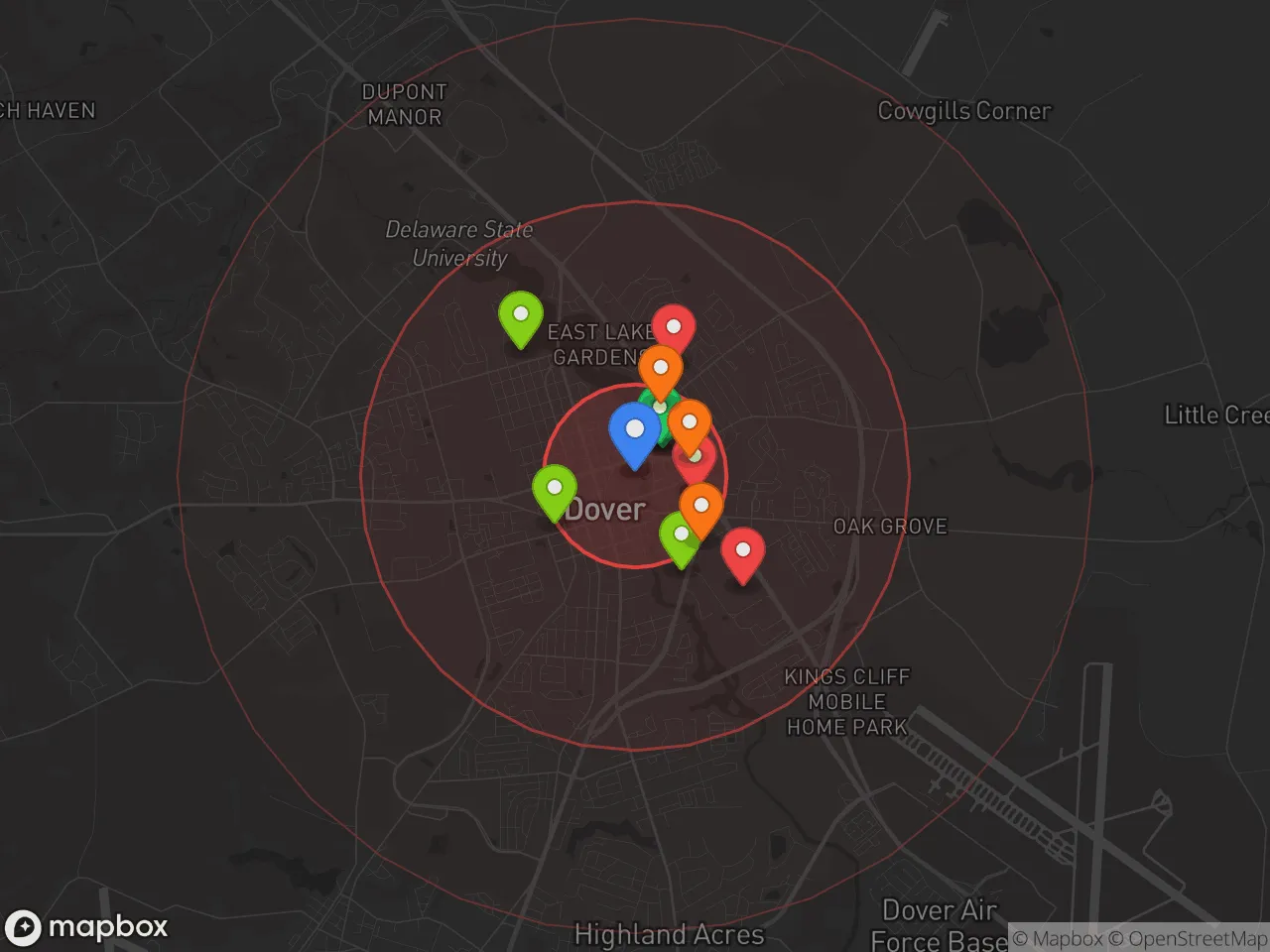
Hobbies
Explore the areaGroceries
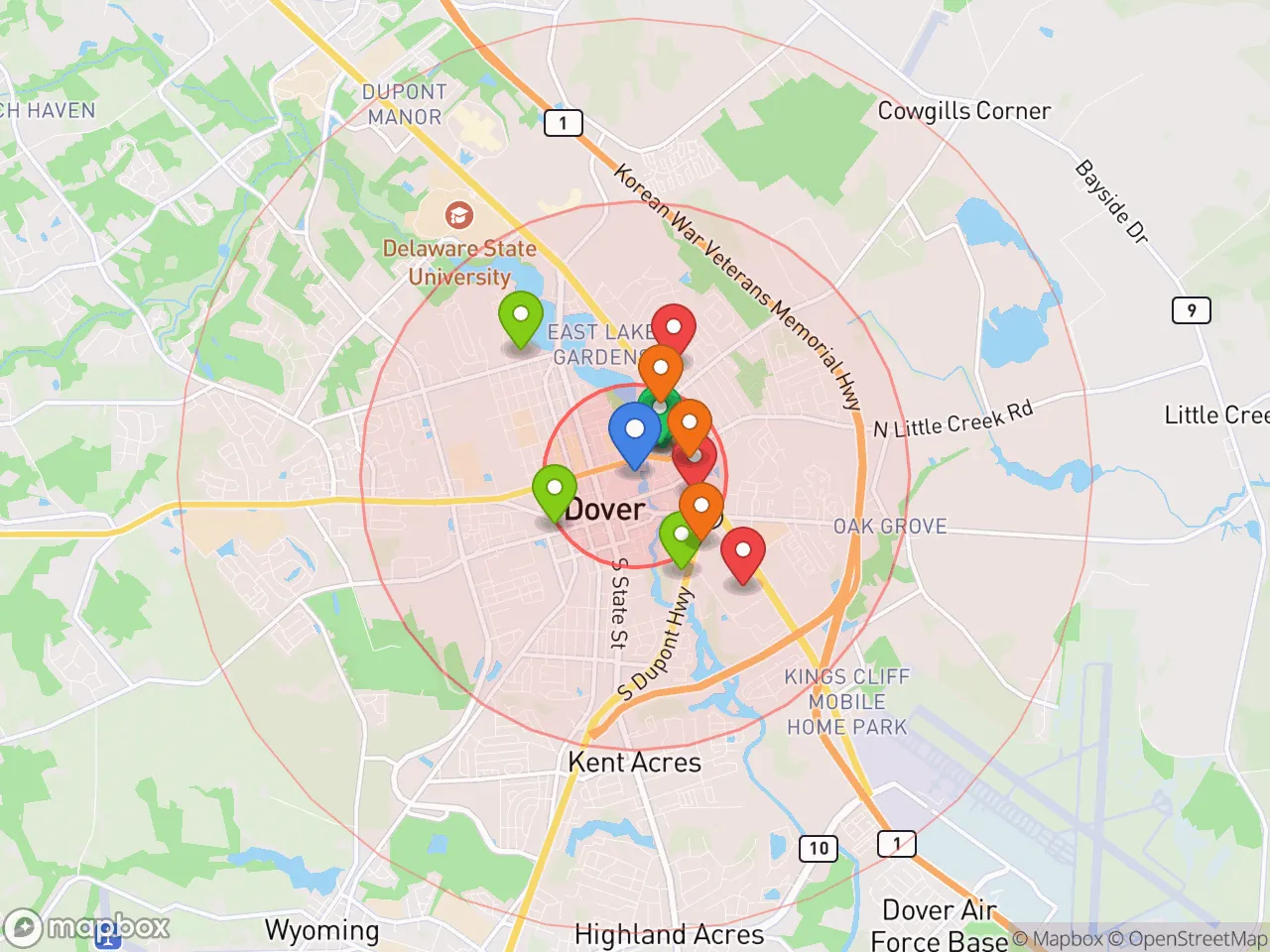
7 within 10 miles
Gas
20 within 10 miles
Hospital
2 within 20 miles
Airport
PHL — Philadelphia International
Post Office
USPS — Dover, DE
Critical Amenities
Quality-of-Life Analysis
Dover, Delaware, presents a quality of life defined by middle-market affordability and a steady, family-oriented rhythm, attracting a mix of state government employees, military personnel connected to Dover Air Force Base, and professionals seeking a lower-cost alternative to the Mid-Atlantic corridor. With a cost of living index of exactly 100—matching the national average—the capital city offers a financial equilibrium that is increasingly rare along the I-95 sprawl. The population skews toward long-term residents and public-sector workers, creating a community that values stability over flash, with a median age hovering around 34 and a notable proportion of households earning between $50,000 and $75,000 annually.
Cost of living and housing affordability compared to nearby cities
Dover’s housing market remains one of its strongest draws, with a median home value of $248,500—roughly $100,000 below the national median and dramatically less than the $400,000+ averages seen in Wilmington or Philadelphia. Renters also find relief: the median rent of $1,252 is about $200 below the U.S. average, making it feasible for single-income households and young families to secure a two-bedroom apartment without cost burden. Compared to nearby Middletown, where home values often exceed $450,000, Dover offers a 40–50% discount on entry-level homes. The trade-off is a slower rate of appreciation; annual home value growth in Dover has averaged 4–5% since 2020, lagging behind the double-digit gains seen in coastal Delaware markets like Lewes. Property taxes remain low by regional standards, with an effective rate around 0.6%, which helps offset the state’s relatively high personal income tax (top bracket 6.6%). The average commute of 24 minutes is notably shorter than the 35-minute regional average, a practical advantage for state workers and base personnel who live within city limits.
Schools, amenities, and the daily rhythm of life
Daily life in Dover centers on a compact, car-dependent layout where most errands and school drop-offs fall within a 15-minute drive. The Capital School District serves the city proper, with Dover High School holding a 78% graduation rate and Caesar Rodney High School in the eastern suburbs posting a stronger 88% rate. For families, the presence of the Delaware State University campus adds cultural programming and part-time college course access, while the Air Force base provides a steady influx of military families that keeps school enrollment stable. Amenities are practical rather than abundant: the Dover Mall anchors retail, the Delaware State Fairgrounds hosts seasonal events, and the city’s 12 parks—including the 100-acre Silver Lake Park—offer walking trails and fishing piers. Dining leans toward chain restaurants and local diners, with a handful of independent spots like Fraizer’s Restaurant & Lounge serving soul food. Healthcare is adequate, with Bayhealth Kent General Hospital providing emergency and specialty care, though residents often travel 45 minutes to Christiana Care in Newark for complex procedures. The cultural calendar is modest, punctuated by the annual Firefly Music Festival (held at the nearby Woodlands) and the Dover Days Festival each May.
Dover is best suited for budget-conscious families, state and federal employees, and military-connected individuals who prioritize low housing costs and a predictable, low-crime suburban environment over urban nightlife or rapid career mobility. Retirees on fixed incomes also find the combination of low property taxes and median rent under $1,300 appealing, though those seeking coastal recreation should note the 45-minute drive to beaches like Rehoboth. Professionals in high-paying fields—tech, finance, or biotech—will likely find the local job market thin and may need to commute to Wilmington or Philadelphia, negating some cost advantages. For the right resident, Dover delivers a stable, affordable base with a slower pace that many Mid-Atlantic transplants find refreshing.

Crime in Dover, DE
Higher crime rates than 66% of comparable U.S. locations.
Violent CrimeViolent Crime Analysis
Property CrimeProperty Crime Analysis
Crime Analysis
Dover, Delaware, reports a violent crime rate of 735.3 incidents per 100,000 residents and a property crime rate of 5,660 per 100,000, figures that place the capital city well above both state and national averages for public safety risk. These statistics indicate that residents face a significantly elevated likelihood of experiencing crime compared to the typical American city, a reality shaped in part by the broader criminal justice environment in Delaware’s most populous county.
Crime in context
Dover’s violent crime rate is more than double the national average of roughly 380 per 100,000 and substantially exceeds Delaware’s statewide rate of approximately 450 per 100,000. Property crime in the city is also elevated, running about 50% higher than the U.S. average of roughly 3,700 per 100,000. These numbers place Dover among the more dangerous small cities in the Mid-Atlantic region. The city’s proximity to the larger Wilmington metro area and its role as a state government hub do not appear to insulate it from the broader crime trends affecting Kent County. A key contributing factor is the progressive judicial philosophy prevalent in Delaware’s courts, where lenient sentencing and rehabilitative-first approaches have been linked to high rates of recidivism and a revolving-door justice system that prioritizes offender outcomes over public safety and victim rights.
What residents experience
For those living in Dover, the high crime rates translate into tangible daily concerns. Property crimes such as burglary, larceny-theft, and motor vehicle theft are the most common offenses, with residents frequently reporting break-ins and stolen vehicles. Violent crime, while less frequent, is a serious threat, with aggravated assault making up the majority of incidents, followed by robbery and, less commonly, homicide. The presence of progressive district attorneys and judges in Kent County has resulted in policies like cash bail reform and reduced charging for non-violent offenses, which critics argue emboldens repeat offenders and undermines deterrence. This environment creates a sense of insecurity, particularly in neighborhoods near the city’s commercial corridors and lower-income areas where police response times can be slower.
Neighborhood-level safety varies considerably within Dover. Areas west of the St. Jones River, including the downtown core and parts of the Capital District, tend to report higher concentrations of both violent and property crime. In contrast, residential neighborhoods on the city’s northern and eastern edges, such as those near the Dover Air Force Base and newer subdivisions, generally experience lower crime rates. However, even in these safer pockets, the city’s overall crime climate means residents must remain vigilant, as property crime can spill over from higher-crime zones. Prospective residents are advised to consult local police crime maps and consider neighborhoods with active community watch programs when evaluating safety.
* Values derived from national, state, county, city and local statistics and may differ in a specific area. Last updated: 2026-04-29T21:39:41.000Z
Narrative content on this page is AI-generated and may contain mistakes. Verify any details that matter before acting on them.
ReloMaps may earn a commission from affiliate links at no extra cost to you.

