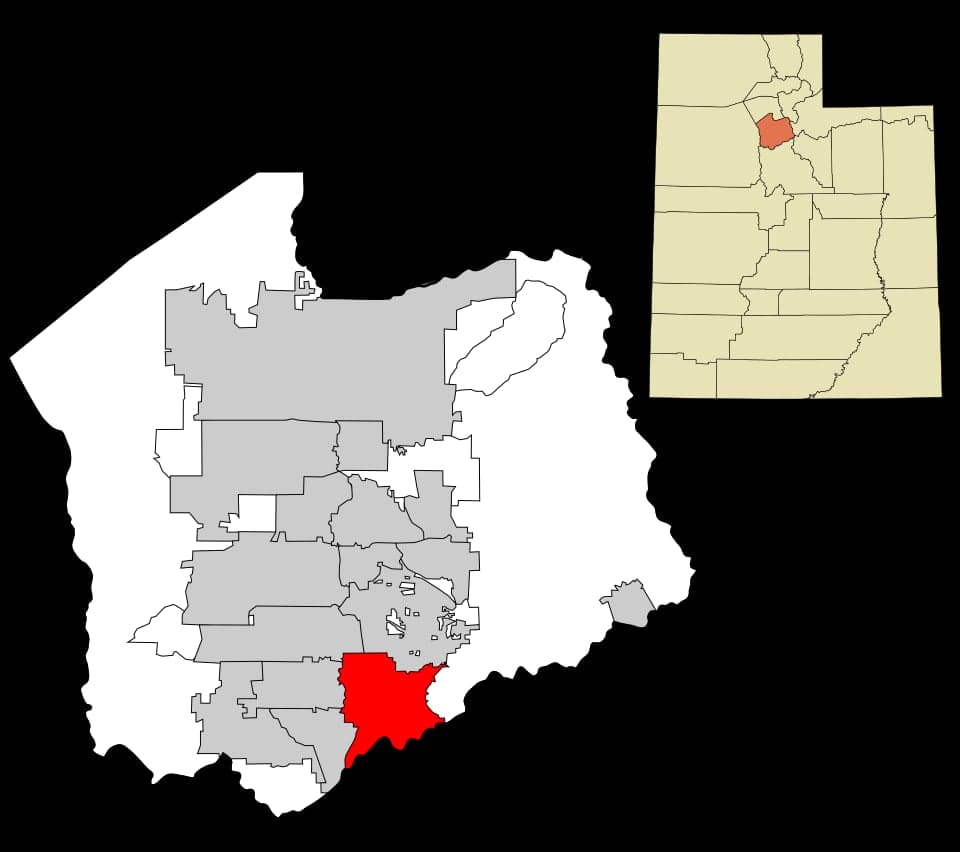
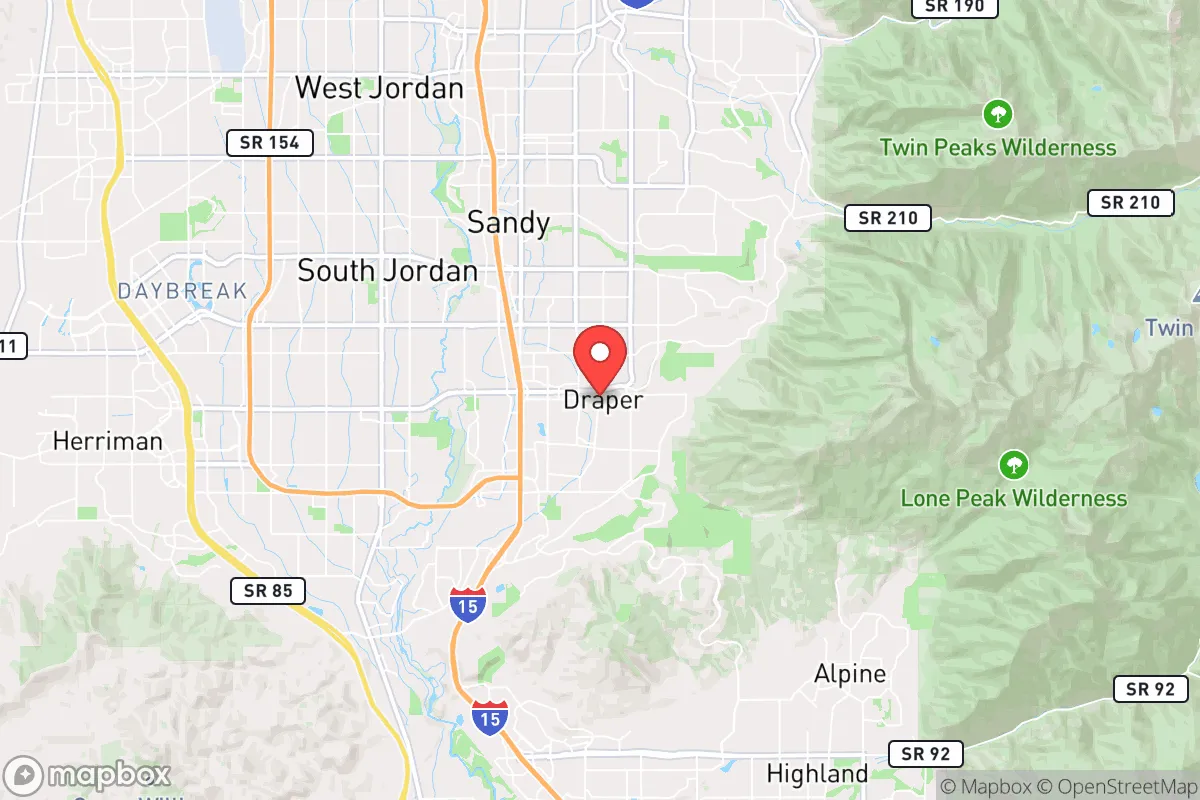
Photo: Wikipedia
Demographics of Draper, UT
Affluence Level in Draper, UT
An upper-middle-class area. Household wealth, education levels, and homeownership run ahead of national benchmarks.
People of Draper, UT
The people of Draper, Utah, today number roughly 50,000 and form one of the state’s most educated and family-oriented suburban populations, with over half holding a college degree. The city is predominantly white (78.6%) but has seen measurable growth in Hispanic (8.1%), East/Southeast Asian (2.6%), and Indian-subcontinent (2.4%) communities, creating a quietly diversifying landscape. Draper’s identity is shaped by its blend of historic Mormon pioneer roots and a newer wave of tech-industry professionals drawn by Silicon Slopes employment. The result is a high-density, low-crime suburb where conservative values and outdoor recreation coexist with an increasingly professional-class demographic.
How the city was settled and grew
Draper’s original settlers were Mormon pioneers dispatched by Brigham Young in the 1850s to farm the fertile benches below the Wasatch Mountains. The first permanent residents arrived in 1852, led by William Draper Jr., and established small dry-farm homesteads along what is now Pioneer Park and the historic Draper Historic District near 1300 East. These families—mostly of English and Scandinavian descent—built irrigation canals, gristmills, and a meetinghouse, forming a tight-knit agricultural community. By the early 1900s, the population hovered around 500, with ranching and fruit orchards dominating the economy. The town remained overwhelmingly white and LDS (Church of Jesus Christ of Latter-day Saints) through the mid-20th century, with growth limited to natural increase and a trickle of rural Utahns moving in for farmland.
Modern era (post-1965)
The post-1965 transformation of Draper began with the expansion of the interstate highway system and the rise of Salt Lake City’s suburban sprawl. The 1980s and 1990s saw the first major wave of domestic in-migration, as families from the Salt Lake Valley sought larger lots and newer homes in areas like Suncrest and South Mountain. These neighborhoods, built on former ranchland, attracted mostly white, college-educated professionals employed in finance, healthcare, and the emerging tech sector. By 2000, Draper’s population had surged past 25,000, and the city annexed land east of I-15 to accommodate master-planned communities like Cove Point and Hidden Valley. The 2010s brought a second wave, driven by the explosive growth of Silicon Slopes—Adobe, eBay, and Vivint established major offices nearby—drawing engineers and managers from California, Washington, and other tech hubs. This cohort included a rising share of East/Southeast Asian and Indian-subcontinent families, who concentrated in newer subdivisions like Corner Canyon and the luxury homes along Wasatch Boulevard. Hispanic residents, many working in construction and service industries, settled in older, more affordable pockets near Draper Parkway and the city’s central commercial corridor. The foreign-born share today stands at 6.0%, modest by national standards but notable for Utah, and reflects a pattern of selective, skill-based immigration rather than large-scale refugee resettlement.
The future
Draper’s population trajectory points toward continued but moderated growth, with the city nearing build-out capacity. The foreign-born share is likely to plateau near current levels, as housing costs—among the highest in Utah County—limit new arrivals to higher-income professionals. The white share will continue a slow decline, not from white flight but from the natural aging of the pioneer-descendant population and the arrival of younger, more diverse tech workers. East/Southeast Asian and Indian-subcontinent communities are expected to grow incrementally, clustering in Corner Canyon and newer infill developments, while Hispanic residents may see modest increases through family reunification and service-sector employment. The city is not tribalizing into distinct ethnic enclaves; rather, it is homogenizing around a professional-class identity, with income and education level becoming stronger markers of neighborhood character than race or origin. The next decade will likely see Draper become slightly more diverse, slightly denser, and more politically moderate—though still reliably conservative—as its population ages and its tech sector matures.
For someone moving in now, Draper offers a stable, safe, and highly educated community where the dominant culture remains Mormon-influenced but increasingly secularized among newcomers. The city is becoming a place where a tech executive from Bangalore, a software engineer from Beijing, and a fifth-generation Utah rancher’s grandchild can live on the same block—and often do. The bottom line: Draper is a prosperous, diversifying suburb that rewards professional ambition and values order, making it a strong fit for conservative-leaning families and single professionals seeking a predictable, high-amenity environment.

* Values derived from national, state, county, city and local statistics and may differ in a specific area. Last updated: 2026-05-03T04:57:07.000Z
Narrative content on this page is AI-generated and may contain mistakes. Verify any details that matter before acting on them.
ReloMaps may earn a commission from affiliate links at no extra cost to you.

