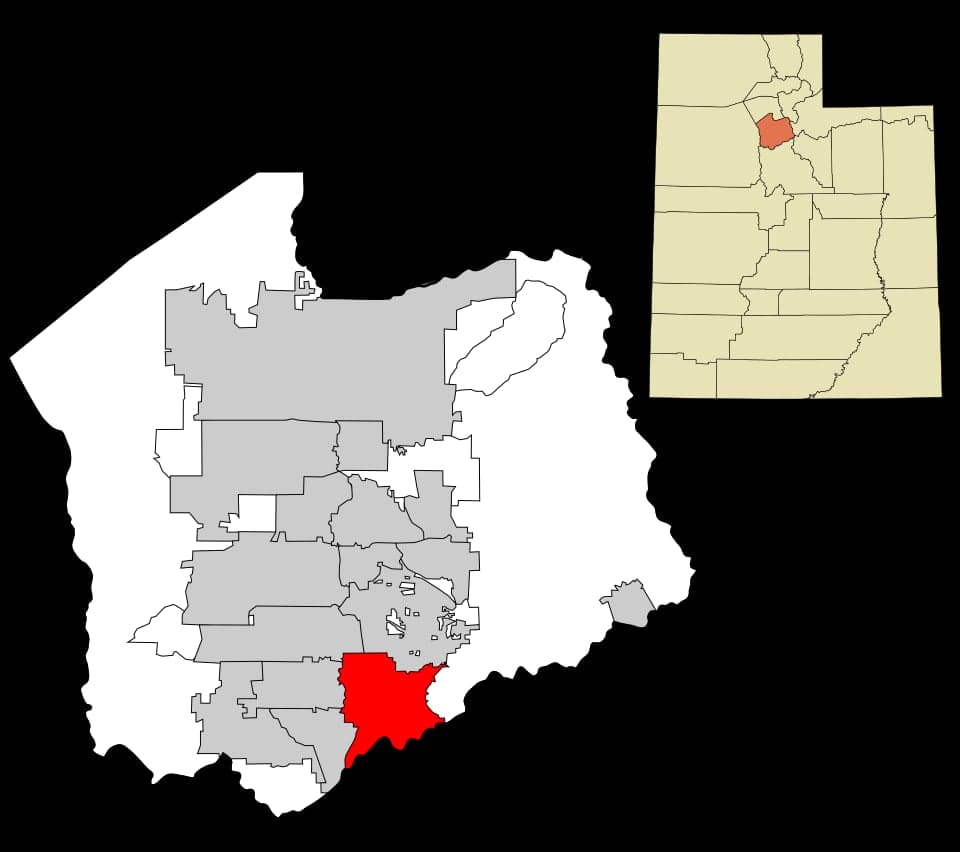
Photo: Wikipedia
Political ClimatePolitical Climate in Draper, UT
District shown is the primary district for this city’s centroid. Cities may span multiple districts.
Local Political AnalysisPolitical Analysis of Draper, UT
Draper, Utah, has long been a solidly conservative stronghold, and that hasn’t changed much despite the rapid growth. With a Cook PVI of R+10, the city leans heavily Republican, and you can feel it in the local school board meetings, city council decisions, and even the way neighbors talk over the fence. But if you’ve lived here as long as I have, you’ve noticed a subtle shift—not in the voting booth, but in the cultural undercurrent. The old guard of ranchers and LDS families who built this place still sets the tone, but the influx of tech workers from Silicon Slopes and out-of-state transplants has introduced a more moderate, sometimes progressive, edge. It’s not a blue wave by any stretch, but it’s a reminder that even in a place like Draper, the political climate isn’t static.
How it compares
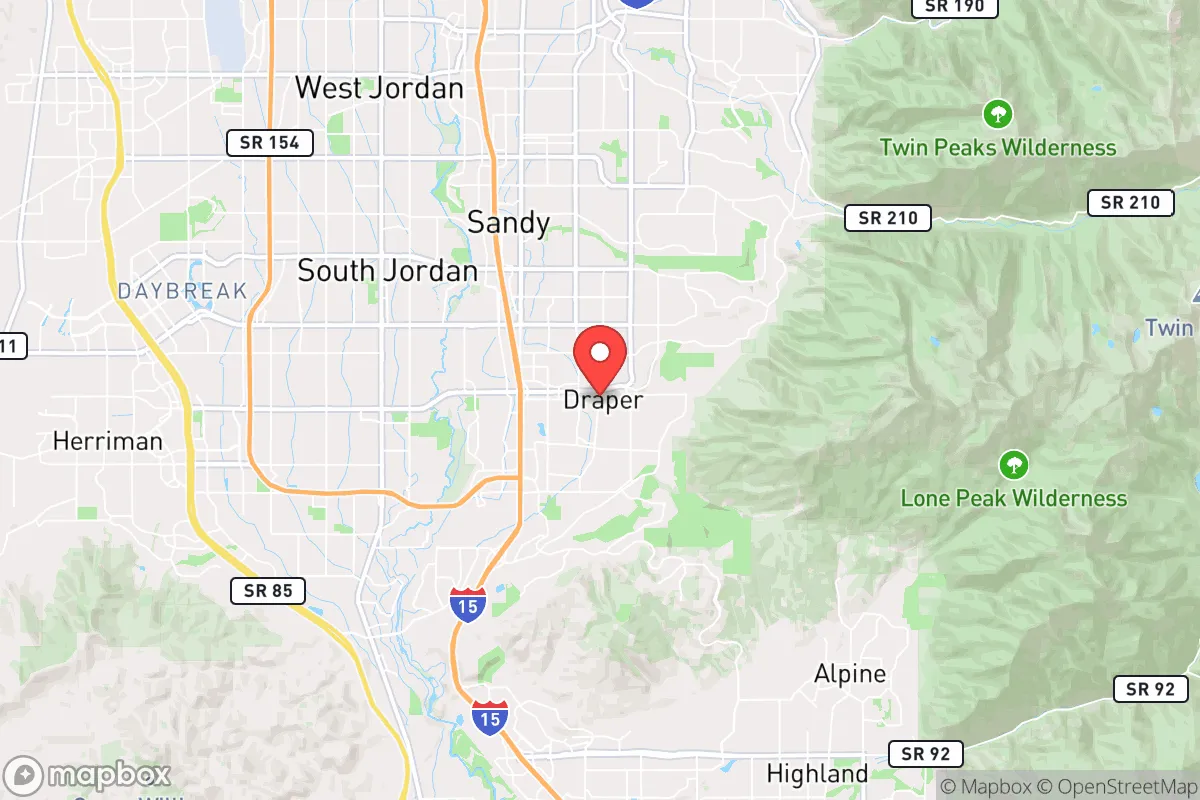
Drive ten minutes north to Sandy or fifteen minutes south to Lehi, and you’ll find similar conservative vibes, but the contrast with nearby cities is telling. Salt Lake City, just 20 miles north, is a deep blue island with a Cook PVI of D+18, and its progressive policies on housing, taxes, and social issues feel like a different country. Draper residents often look at that with a wary eye—worried about government overreach creeping south. To the west, West Jordan and South Jordan lean red but with a softer edge, while Draper’s eastern foothills and rural pockets hold the line harder. The real contrast is with Park City, a wealthy liberal enclave 30 miles east, where tax hikes and strict land-use regulations are the norm. Here in Draper, we still value personal freedom—low property taxes, minimal zoning fuss, and a general hands-off approach from the city. That’s the draw for many of us.
What this means for residents
For the average Draper resident, the political climate means a government that mostly stays out of your way. You won’t see the kind of overreach you hear about in places like Portland or Seattle—no heavy-handed mandates on businesses, no aggressive housing density pushes that ignore neighborhood character. The city council tends to side with property rights and local control, which is why you still see large lots and quiet streets. But there’s a growing tension: as more young families and remote workers move in, they bring expectations for more bike lanes, transit-oriented development, and even talk of affordable housing mandates. That’s where the rubber meets the road. If you value limited government and the freedom to live without a lot of red tape, Draper is still a safe bet, but you’ll want to keep an eye on city council elections. The long-term trend is toward more regulation, not less, and that’s a concern for anyone who moved here to escape the bureaucracy of bigger cities.
Culturally, Draper holds onto its conservative roots with a few distinct quirks. The city’s strong LDS influence means a focus on family and community, but it also means a certain resistance to the kind of progressive social policies you see in Salt Lake City. You won’t find a lot of public art pushing political messages or city-funded diversity programs here—that’s seen as government overreach into personal values. The real policy distinction is in land use: Draper has fought hard to keep its rural character, with strict limits on high-density housing and a preference for single-family homes. That’s a direct reflection of a political climate that prioritizes individual property rights over collective planning. Looking ahead, the biggest threat to that way of life isn’t a sudden leftward swing—it’s the slow erosion of local control as state and federal mandates creep in. For now, Draper remains a place where you can still live your life without the government breathing down your neck, but the fight to keep it that way is just getting started.

State Political ClimatePolitical Climate in Utah
State Political AnalysisPolitical Environment in the State
Utah is one of the most reliably conservative states in the nation, with a Republican trifecta controlling the governorship and supermajorities in both legislative chambers. The state has voted for the GOP presidential candidate by double digits in every election since 2000, with margins typically exceeding 20 points. However, the last 10-15 years have seen a subtle but real shift: the Wasatch Front’s explosive growth, driven by tech and in-migration from blue states, is slowly diluting the state’s rock-ribbed conservatism, particularly in Salt Lake County, which has become a battleground for moderate Republicans and a rising Democratic minority.
Urban vs. rural divide
The political map of Utah is a tale of two landscapes. The rural counties—like San Juan, Emery, and Daggett—vote Republican by margins of 70-80% or more, driven by ranching, mining, and a deep distrust of federal land management. These areas are the heart of the state’s libertarian streak, where the “Sagebrush Rebellion” against BLM control is a living memory. In contrast, the urban core along the Wasatch Front is more nuanced. Salt Lake City itself is a deep blue island, with the University of Utah and a growing tech sector pushing it leftward. Provo and Orem remain solidly conservative, anchored by Brigham Young University and a strong LDS cultural influence. The real story is in the suburbs: Sandy, Draper, and Lehi are classic “soccer mom” suburbs that lean Republican but are increasingly split on social issues like education funding and environmental regulation. Summit County (Park City) is a notable outlier—a wealthy, ski-resort enclave that votes reliably Democratic, driven by second-home owners and a tourism economy. The urban-rural divide is sharpening: the 2020 election saw Salt Lake County flip to Biden by a narrow margin, while rural counties deepened their red hues.
Policy environment
Utah’s policy environment is a mixed bag for a conservative. On the plus side, the state has a flat income tax rate of 4.65% (recently cut from 4.95%), no state-level property tax on vehicles, and a strong right-to-work law. The regulatory climate is business-friendly, with minimal zoning hurdles in most rural areas and a fast-track permitting system for new construction. Education policy is a flashpoint: the state has a robust school choice program, including a new universal school voucher law (HB 215, passed in 2023) that allows families to use state funds for private or homeschool expenses. However, the LDS Church’s influence means the state has a relatively high sales tax on groceries (1.75%) and a strict alcohol control system—beer above 3.2% ABW is only sold in state-run liquor stores, a relic of Mormon-era morality that frustrates many newcomers. On healthcare, Utah expanded Medicaid under the Affordable Care Act in 2019 via a voter initiative, but the legislature has since added work requirements. Election laws are solid: voter ID is required, same-day registration is available, and mail-in voting is universal but with signature verification. The state has no income tax on military pensions, a big draw for retirees.
Trajectory & freedom
Utah is trending in a mixed direction on personal freedom. On the positive side, the state passed constitutional carry (HB 60) in 2021, allowing law-abiding adults to carry a concealed firearm without a permit. The legislature also passed a parental rights in education bill (HB 331) in 2023, requiring schools to notify parents of any curriculum involving sexuality or gender identity and allowing them to opt their children out. Medical autonomy is strong: Utah has no vaccine mandates for adults, and a 2022 law (HB 308) prohibits employers from requiring COVID-19 vaccines as a condition of employment. However, there are concerning trends. The state’s Inland Port Authority and Point of the Mountain Development Commission represent massive state-level land-use planning that some conservatives view as government overreach into property rights. The legislature also passed a statewide net metering cap in 2023 that effectively limits rooftop solar growth, a move that angered libertarian-leaning homeowners. On speech, Utah has a “critical race theory” ban in K-12 schools (HB 261, 2021), but the state’s higher education system, particularly the University of Utah, has seen growing DEI bureaucracy that worries free-market advocates. The overall trajectory is one of cautious conservatism, but the growth-driven centralization of power in Salt Lake City is a red flag for those who value local control.
Civil unrest & political movements
Utah has been relatively calm compared to coastal states, but there have been notable flashpoints. The “Sagebrush Rebellion” is alive and well in rural counties like Kane and Garfield, where local officials have passed resolutions demanding the transfer of federal lands to state control. In 2023, the Utah Legislature passed a bill (HB 378) authorizing the state to sue the federal government over land management, a direct challenge to federal authority. On the left, the “Utah Rising” movement has organized protests against the state’s abortion trigger law (which bans most abortions after a 2020 law was triggered by the Dobbs decision), and there have been small but persistent demonstrations at the state capitol. Immigration politics are relatively muted—Utah has no sanctuary cities, and the state passed a 2011 law (HB 497) requiring local law enforcement to check immigration status of those arrested. However, the “Utah Compact” of 2010, a bipartisan statement supporting a humane approach to immigration, still influences local rhetoric. Election integrity is not a major controversy here; the state’s universal mail-in system has strong bipartisan support, and audits have shown no significant fraud. The most visible political movement is the “Utah Republican Party” itself, which is increasingly split between a pragmatic, business-friendly wing and a more populist, anti-establishment faction that has targeted incumbents in primaries.
Projection
Over the next 5-10 years, Utah will likely remain a red state, but the shade of red will shift. The in-migration from California, Washington, and Oregon—which has added over 100,000 new residents annually—is bringing a more moderate, tech-oriented electorate. These newcomers tend to be fiscally conservative but socially liberal, and they are concentrated in Salt Lake County and Utah County’s tech corridor (Lehi, American Fork). This could push the state toward a “purple” tipping point in Salt Lake County, but rural counties will keep the statewide margin safe for Republicans. The biggest wildcard is the LDS Church’s influence: as the church’s membership share declines (from 70% in 2000 to roughly 55% today), the cultural conservatism that once dominated may weaken. Expect continued fights over land use (the Inland Port expansion), education funding (voucher expansion vs. public school funding), and water rights (the Great Salt Lake’s decline will force tough policy choices). A new resident moving in now should expect a state that is still conservative but increasingly divided between a libertarian-leaning, growth-friendly wing and a more traditional, religiously-influenced wing.
Bottom line for a new resident: Utah offers a high degree of personal freedom—low taxes, strong gun rights, and parental control over education—but it is not a libertarian paradise. The state government is actively involved in land-use planning, alcohol regulation, and education curriculum, and the growing tech influx is slowly moderating the political climate. If you value local control and minimal government, you’ll find allies in rural counties but may chafe at the centralized power in Salt Lake City. If you’re a conservative who wants a safe, family-friendly environment with a strong economy, Utah is still one of the best bets in the nation—just keep an eye on the Wasatch Front’s demographic drift.
* Values derived from national, state, county, city and local statistics and may differ in a specific area. Last updated: 2026-05-03T04:57:07.000Z
Narrative content on this page is AI-generated and may contain mistakes. Verify any details that matter before acting on them.
ReloMaps may earn a commission from affiliate links at no extra cost to you.

