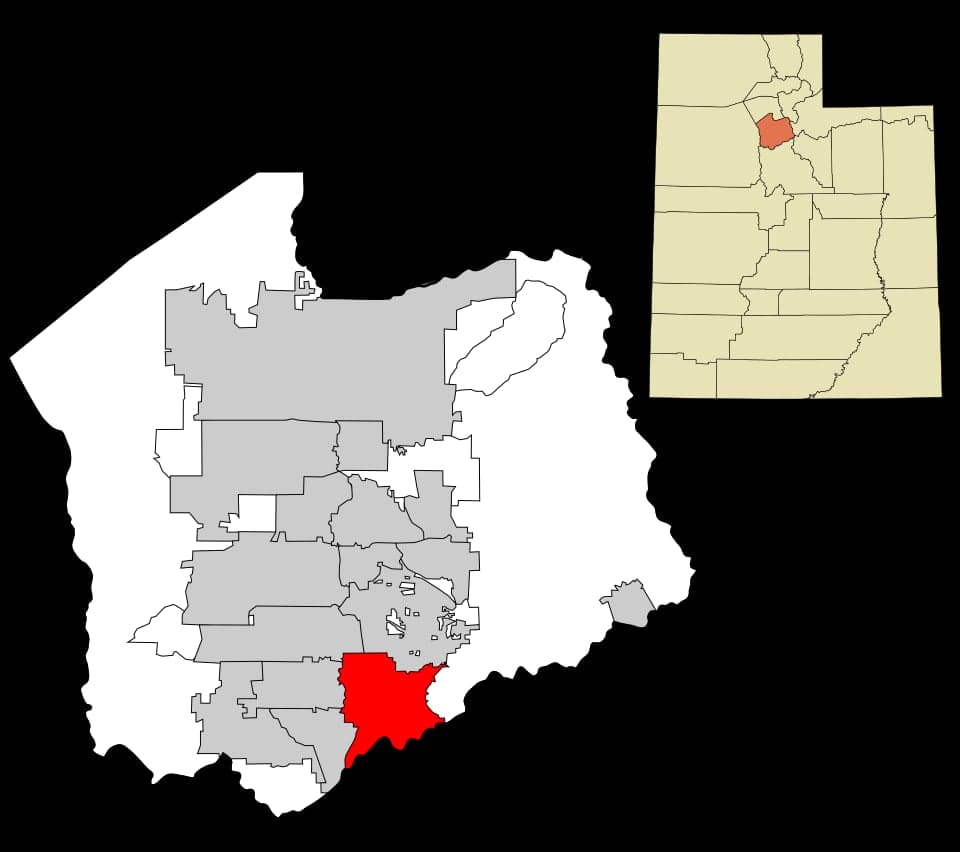
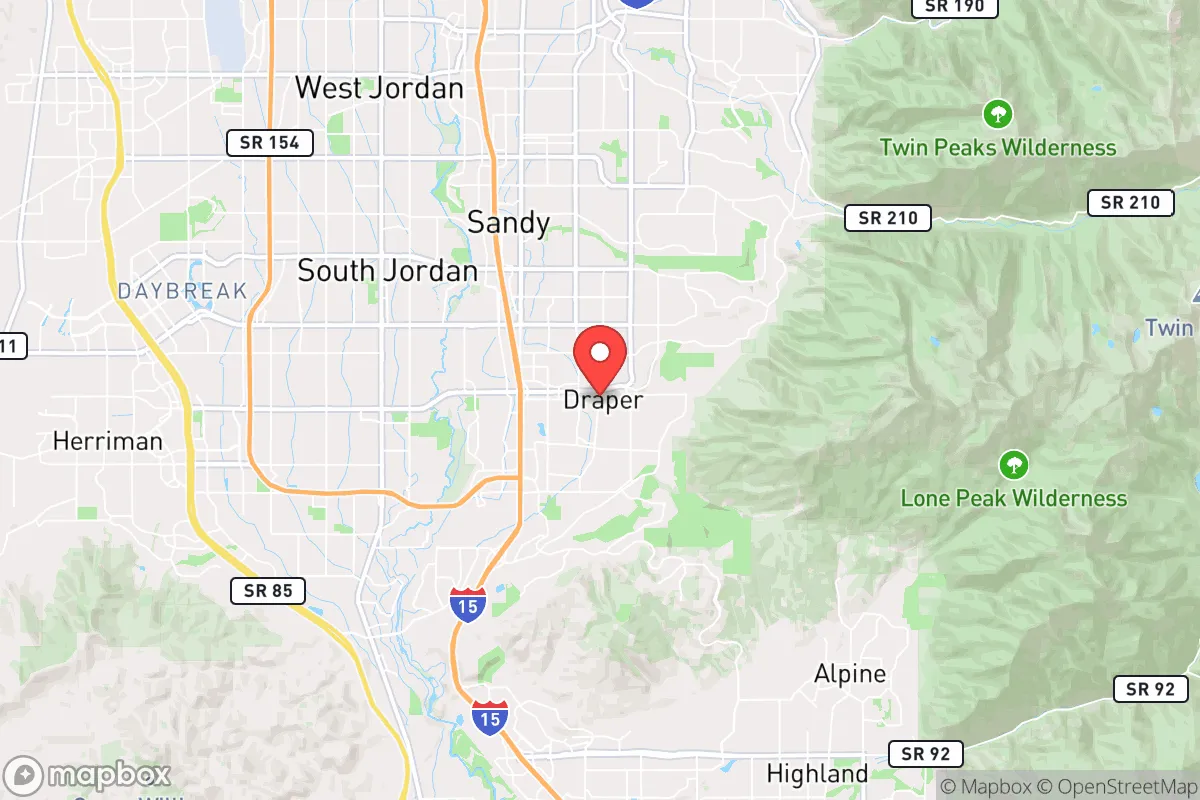
Photo: Wikipedia
Personal Sovereignty in Draper, UT
Viable for self-reliance. Generally workable, though some barriers may limit total independence.
What does Personal Sovereignty tell us?
Personal Sovereignty measures your capacity for self-reliance and independence with minimal government friction. Higher scores mean fewer barriers between you and the way you want to live... but it assumes you have the space you need and good neighbors.
What does this tell us?
Personal Sovereignty measures your capacity for self-reliance and independence with minimal government friction. Higher scores mean fewer barriers between you and the way you want to live... but it assumes you have the space you need and good neighbors.
State Policy
Energy independence: Self-sufficient (80% of energy produced in-state)
Personal Liberty
Homesteading

Personal Liberty Analysis
Draper, Utah, offers a notably high degree of personal sovereignty relative to most urbanized areas in the United States, particularly for those who prioritize minimal government interference in daily life. The city sits within a state that has actively pushed back against federal overreach on multiple fronts, from land management to public health mandates, creating a legal and cultural environment where individual autonomy is the default rather than the exception. For a single individual or parent evaluating relocation through a survivalist or prepper lens, Draper represents a strategic balance—proximity to the economic engine of the Salt Lake Valley, but with a local governance structure and community ethos that leans heavily toward self-determination. The key question is not whether the state respects your rights, but how the specific municipal ordinances and county-level enforcement patterns in Draper align with a lifestyle built on self-reliance and minimal government entanglement.
Tax burden and regulatory posture: How Utah’s fiscal conservatism protects your wallet and choices
Utah’s tax structure is among the most favorable in the nation for those seeking to keep more of their own money and reduce dependency on state services. The state levies a flat income tax rate of 4.65%, with no progressive brackets to penalize higher earnings, and no tax on Social Security benefits—a critical factor for those planning long-term financial independence. Sales tax in Draper, when combining state, county, and local rates, sits around 7.25%, which is moderate but predictable. Property taxes are notably low, with Utah ranking 46th nationally in effective property tax rates; in Draper, the average effective rate hovers near 0.6% of assessed home value. This means a $700,000 home—common in the area—carries an annual tax bill of roughly $4,200, far less than comparable suburbs in California, Colorado, or the Northeast. More importantly, Utah’s regulatory posture is aggressively pro-business and pro-property owner. The state has a right-to-work law, no state-level rent control, and a streamlined permitting process for home improvements, accessory dwelling units, and small-scale agriculture. For the prepper, this translates into fewer bureaucratic hurdles when building a root cellar, installing solar panels, or adding a workshop. The city of Draper itself has a reputation for efficient code enforcement that focuses on safety rather than aesthetic micromanagement, though homeowners should verify HOA restrictions in specific subdivisions, as some planned communities impose covenants that can override city-level leniency.
Self-defense and gun law specifics: What Utah’s constitutional carry means for your family’s security
Utah is a constitutional carry state, meaning any law-abiding adult 21 or older can carry a concealed firearm without a permit—no training requirement, no waiting period, no government permission slip. This is a foundational pillar of personal sovereignty in Draper. The state also has strong preemption laws, so local governments like Draper City cannot enact their own gun bans, magazine limits, or registration schemes. Stand-your-ground laws are in full effect, with no duty to retreat in any place where you have a legal right to be. For parents, this extends to vehicle storage: Utah law explicitly protects the right to keep a firearm locked in your car on school parking lots, provided it is out of sight. The state’s Castle Doctrine applies to both primary residences and temporary dwellings, including RVs and hotel rooms. Draper’s crime rates are low—violent crime is about 60% below the national average—but the proximity to the Salt Lake City metro area means that property crime and occasional gang-related incidents do occur. The practical takeaway: you can legally defend your home, your vehicle, and your person without navigating a patchwork of local restrictions. Utah also issues concealed carry permits for reciprocity with other states, which is useful for those who travel frequently. The state’s firearm-friendly culture is reinforced by a robust network of gun ranges, training facilities, and a state legislature that has consistently rejected federal overreach on firearm regulations.
Self-reliance and homesteading viability: Lot sizes, zoning, and off-grid feasibility in Draper
Draper’s geography—nestled against the Wasatch Front with a mix of foothills, bench areas, and valley floor—creates a unique opportunity for self-reliance that is rare in a city of 50,000 people. Zoning in the city’s eastern bench and Suncrest areas allows for larger lots, typically half an acre to several acres, where homeowners can keep chickens, goats, and even small livestock under city code, provided they meet setback and noise ordinances. The city’s agricultural zone (A-1) permits a wider range of activities, including beekeeping and limited crop production, though it is primarily located on the city’s fringe. For off-grid feasibility, Utah is generally favorable: the state has no net metering cap for solar, and Draper’s abundant sunshine (over 220 sunny days per year) makes solar panels a practical investment. Rainwater collection is legal without a permit for rooftop catchment, though the state encourages registration for larger systems. Well water is a more complex issue—new wells in the Draper area are subject to groundwater rights and Utah’s prior appropriation doctrine, meaning you cannot simply drill without proving beneficial use and obtaining a water right. However, for those purchasing existing homes with wells, the rights typically transfer with the property. The city’s municipal water supply is reliable, but for the serious prepper, a backup well or cistern system is advisable. Composting toilets and greywater systems are permitted under Utah’s alternative wastewater rules, though they require a permit and inspection. The biggest constraint is wildfire risk: Draper’s foothill neighborhoods sit in a high-risk zone, and the city enforces defensible space requirements, which can limit vegetation and storage of combustible materials. Overall, Draper offers a viable middle ground—you can achieve meaningful self-sufficiency without moving to a remote county, but you must work within a municipal framework that prioritizes fire safety and water conservation.
Personal liberties: Parental rights, medical autonomy, speech, and property protections
Utah has become a national leader in protecting parental rights, with a state constitutional amendment passed in 2024 that explicitly guarantees parents’ fundamental right to direct the upbringing, education, and healthcare of their children. This means Draper parents have strong legal standing to opt out of school curricula, refuse medical treatments, and make educational choices—including homeschooling or microschooling—without excessive state interference. The state’s school choice program, the Utah Fits All Scholarship, provides up to $8,000 per child for private school, tutoring, or educational materials, effectively giving parents control over education funding. On medical autonomy, Utah has banned COVID-19 vaccine mandates for both public employees and private businesses receiving state contracts, and it has passed laws prohibiting discrimination based on vaccination status. The state also has a robust medical freedom law that allows patients to access experimental treatments and refuse standard care without losing insurance coverage. For speech and assembly, Utah is a strong First Amendment state, with no hate speech laws that chill political expression, and a state constitution that provides even broader protections than the federal version. Property rights are reinforced by Utah’s eminent domain laws, which strictly limit takings to public use with just compensation, and by the state’s strong trespassing statutes that protect landowners from unauthorized entry. Draper’s local government has a history of resisting federal land-use mandates, particularly regarding the nearby Wasatch-Cache National Forest and Bureau of Land Management holdings. For the survivalist, this means you can stockpile supplies, host firearms training on your property, and discuss preparedness strategies without fear of local censorship or SWAT-style raids for nonviolent regulatory violations.
In the broader context of the Intermountain West, Draper stands out as a location where personal sovereignty is not just tolerated but structurally supported by state law and local culture. Compared to cities in California, Oregon, or Colorado, where progressive governance has steadily eroded property rights, firearm access, and parental authority, Draper offers a legal environment that respects the individual’s right to prepare, defend, and provide for themselves and their family. The trade-offs are real: you are still in a suburban setting with HOA restrictions in some neighborhoods, a relatively high cost of living by Utah standards, and the ever-present risk of wildfire and earthquake. But for the strategic relocator who values autonomy over convenience, Draper provides a rare combination of economic opportunity, legal protection, and community resilience that is difficult to find elsewhere in the United States. The state’s political leadership has consistently signaled that it will resist federal overreach, and the local population largely shares that sentiment. If your goal is to live free, raise your children without government interference, and maintain the ability to defend your life and property, Draper is one of the strongest options in the country.

* Values derived from national, state, county, city and local statistics and may differ in a specific area. Last updated: 2026-05-03T04:57:07.000Z
Narrative content on this page is AI-generated and may contain mistakes. Verify any details that matter before acting on them.
ReloMaps may earn a commission from affiliate links at no extra cost to you.

