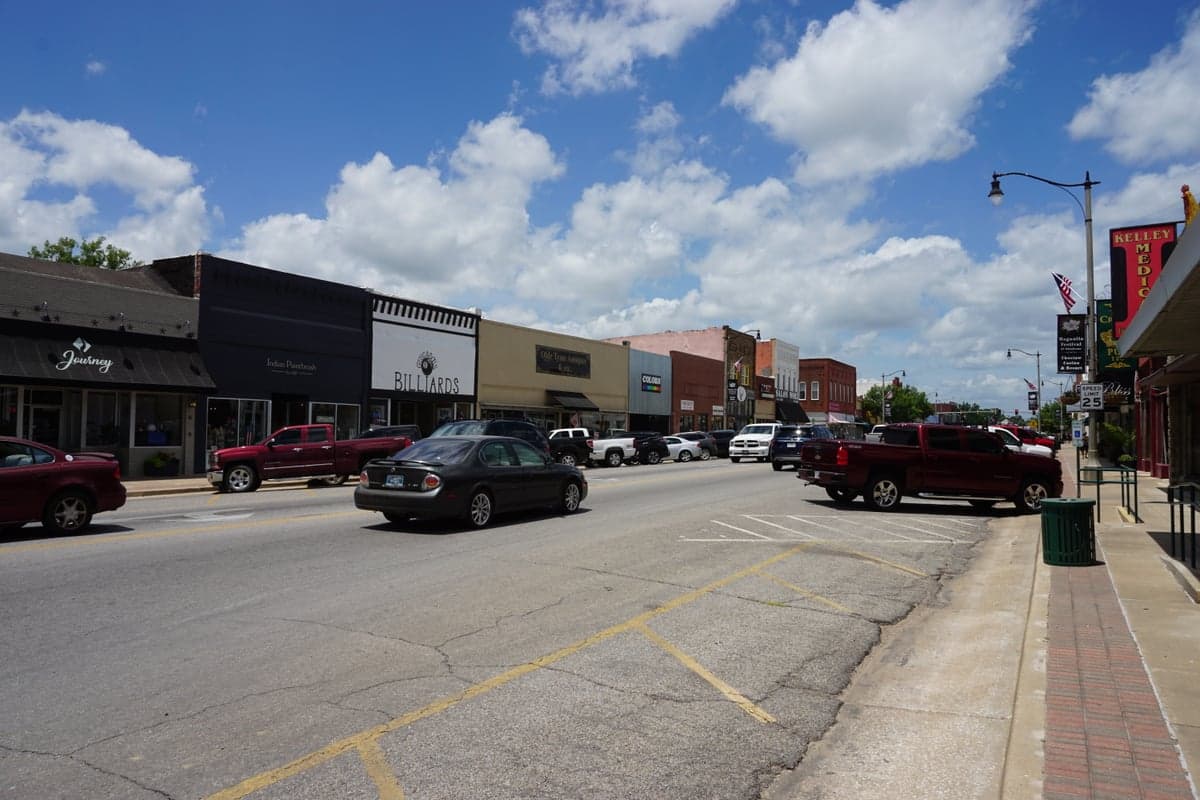
Photo: Wikipedia
Strategic Assessment of Durant, OK
Meaningful friction. Expect exposure to either population pressure, blast zones, or natural disaster risk. Consider buying a retreat property.
What does the Strategic Assessment tell us?
Our Strategic Assessment grades tactical survivability of an area. Major population centers, military targets, fallout zones, natural disasters, and border exposure all drive risk — lower exposure means a more defensible position in a crisis.
This is heavily inspired by Joel Skousen's Strategic Relocation book. Highly recommended you checkout the book ($)What does this tell us?
Our Strategic Assessment grades tactical survivability of an area. Major population centers, military targets, fallout zones, natural disasters, and border exposure all drive risk — lower exposure means a more defensible position in a crisis.
This is heavily inspired by Joel Skousen's Strategic Relocation book. Highly recommended you checkout the book ($)Strategic Pillars

Key Distances
Regional Safe Places
Below is our recommended "safe zones" in Oklahoma and the surrounding area based on our strategic heuristics. For most people, it's unrealistic to live in a “safe zone” full-time due to work, family or other personal reasons. They tend to be more rural. However, many of these areas are perfect for second homes and retreat properties that double as a vacation home or even a short-term rental.
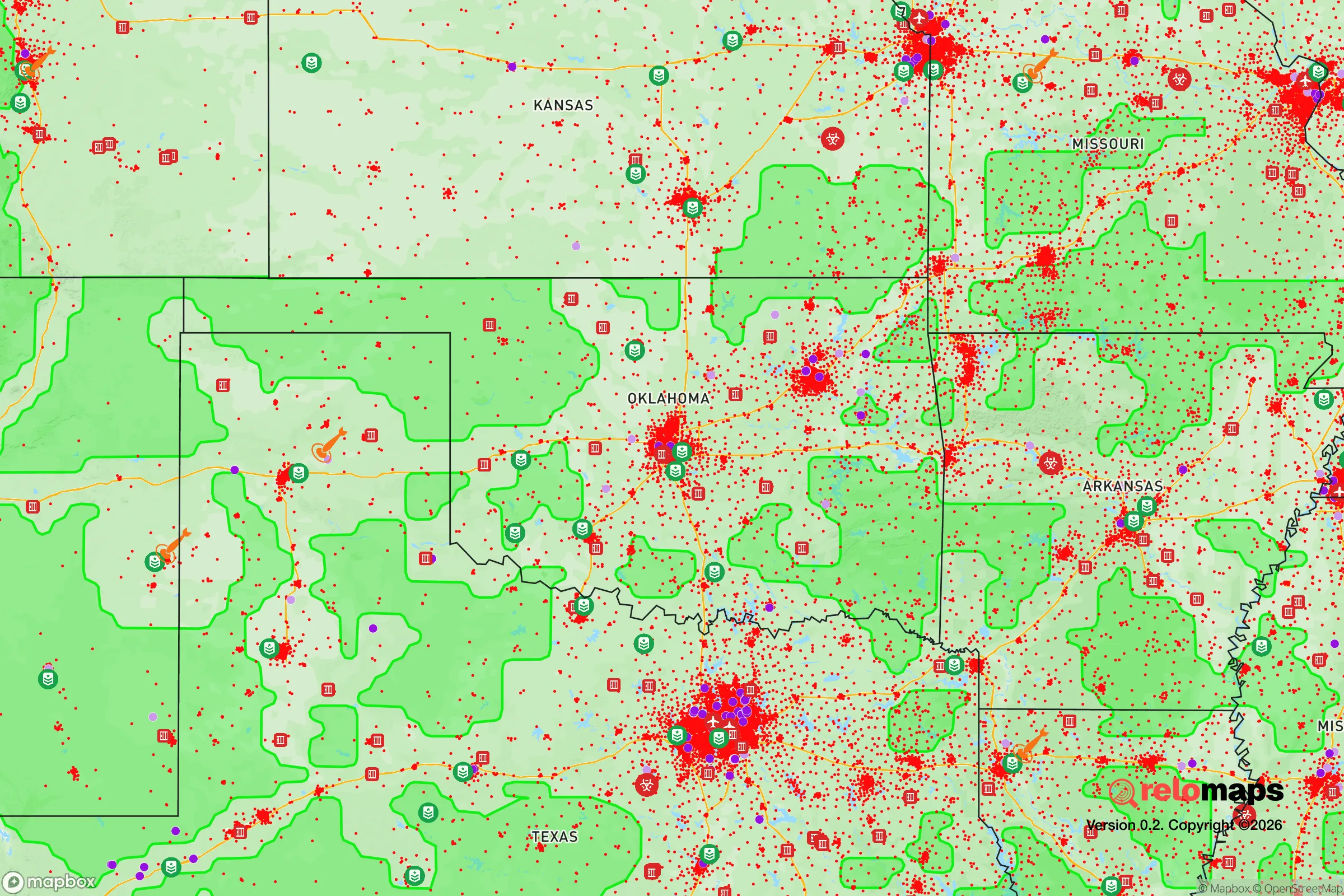
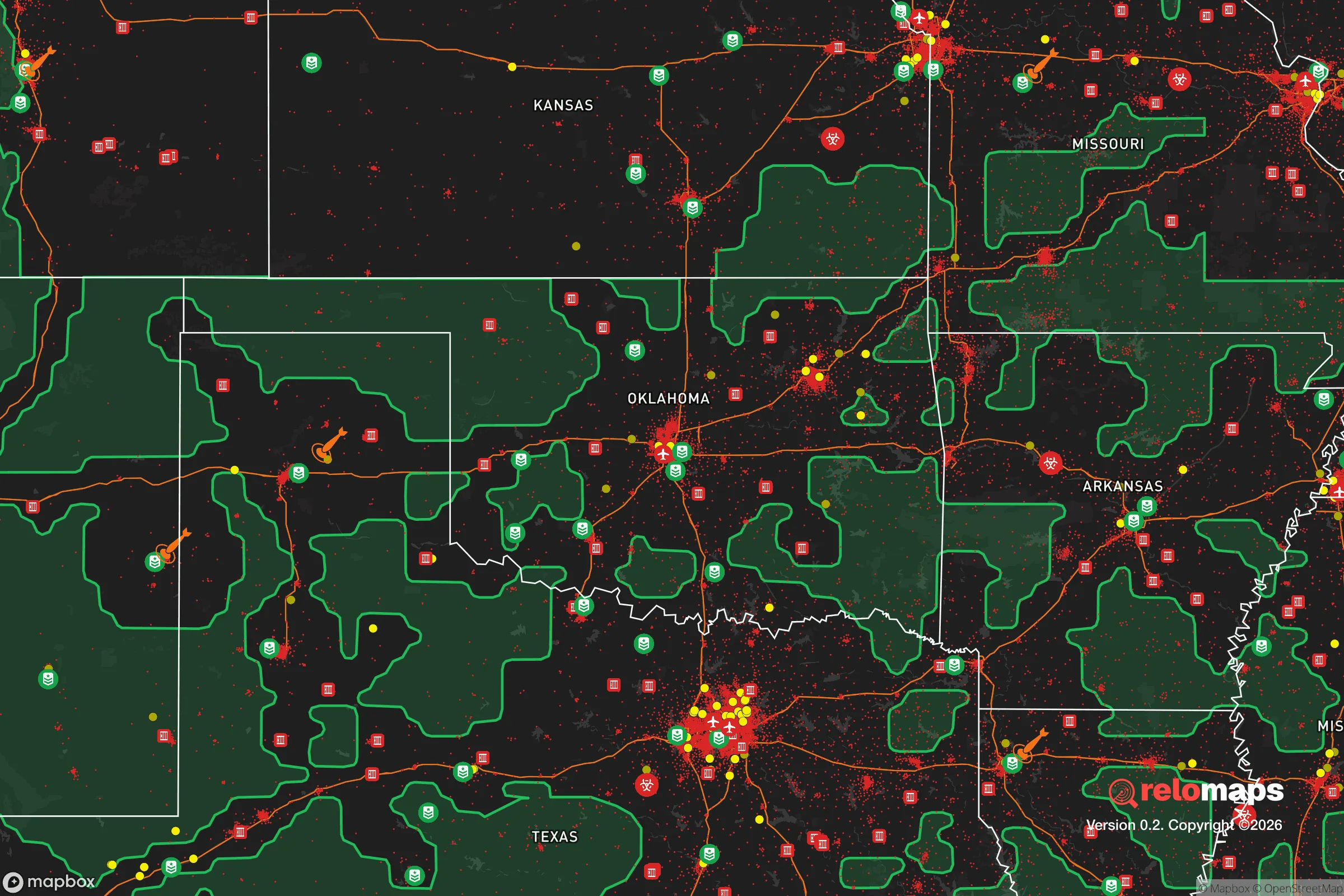


Important Note: For informational purposes only. This does not mean nothing bad ever happens in the green zones. Please use common sense. This is based on public data and modeled with AI. We tried to take a conservative approach but mistakes happen. We update this regularly as new information becomes available.
Solar Generator Recommendations
Backup power matters more here than in safer locations. We've picked three solar generators across budgets and capacity tiers — start with the budget unit if you only need a few essentials, or step up if you want to run a fridge and HVAC for days at a time.

Jackery Portable Power Station Explorer 300
Budget OptionPower on the Go: Weighing only 11 lbs, it's convenient to set up and store with book-sized foldable solar panels

BLUETTI Portable Power Station AC180
Designed for both indoor and outdoor scenarios, AC180 is highly capable as it has a robost capacity and continuous output power.

EF ECOFLOW DELTA Pro Ultra Power Station
Upgraded PickEcoFlow DELTA Pro Ultra is a whole-home energy system designed to grow with your family. Integrated with the Smart Home Panel 2, it scales to meet your evolving energy needs — keeping your home powered, intelligent, and secure through every stage of life.
We earn a commission, at no additional cost to you.
Strategic Assessment Analysis
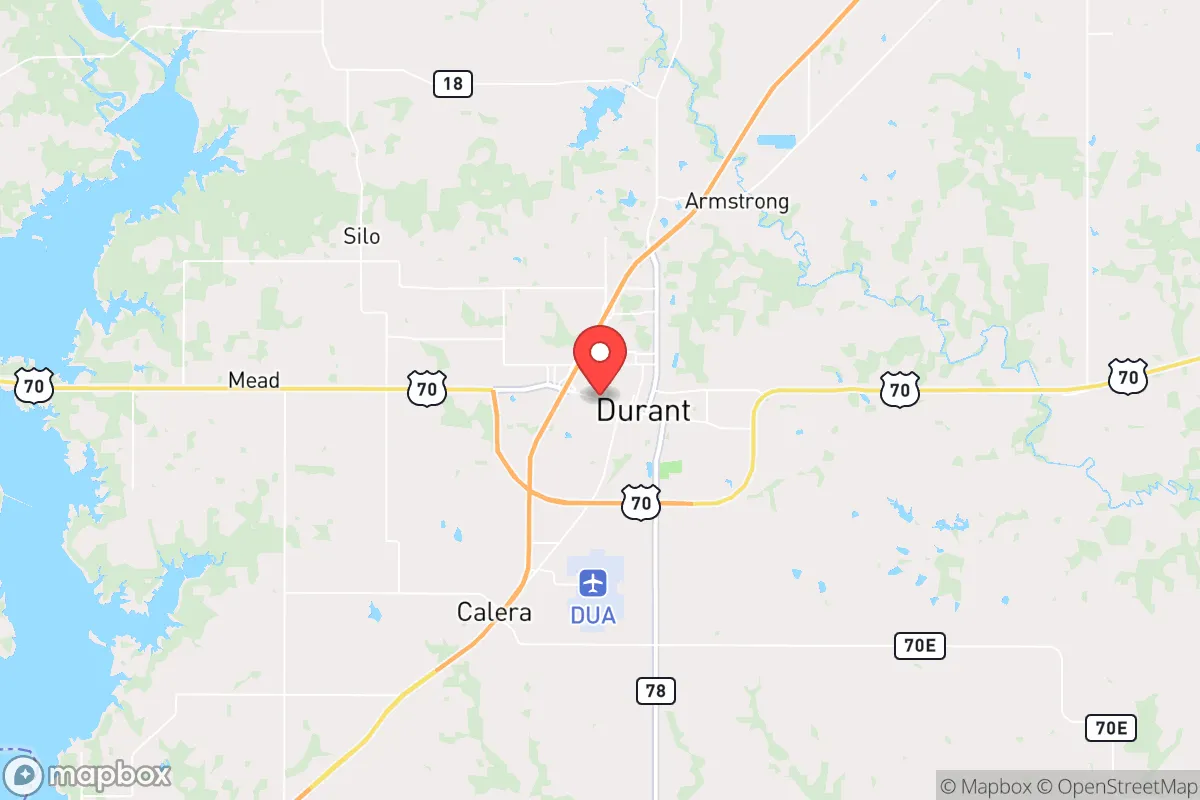
Durant, Oklahoma, offers a strategic blend of geographic isolation and practical resilience that appeals to those prioritizing self-sufficiency and security in an uncertain future. Located roughly 90 miles north of Dallas and 30 miles from the Texas border, this small city of about 19,000 people sits in Bryan County, a region that has historically voted heavily Republican and maintains a strong rural, independent character. For a relocator with a prepper or survivalist mindset, Durant’s key advantage is its position just outside the immediate blast and fallout zones of major metropolitan targets, while still being close enough to access resources and supply chains if needed. The area’s low population density, agricultural base, and limited industrial infrastructure make it a plausible fallback location for those seeking to weather civic unrest, economic collapse, or mass casualty events.
Geographic position and natural advantages for long-term security
Durant’s location in south-central Oklahoma places it in a region with several natural buffers that enhance its strategic value. The city lies near the Red River, which forms the border with Texas, providing a natural barrier and a potential water source for independent living. The surrounding terrain is mostly flat to gently rolling, with mixed hardwood forests and open farmland—ideal for small-scale agriculture, livestock, and off-grid homesteading. The area is far from major fault lines, nuclear power plants, and large-scale chemical facilities, reducing the risk of secondary disasters. The nearest major military or government target is likely Tinker Air Force Base near Oklahoma City, about 130 miles northwest, or the Dallas-Fort Worth metroplex, which is a high-priority target for any adversary. Durant sits outside the 50-mile radius that would see catastrophic fallout from a ground burst on either of those targets, though prevailing winds from the south could carry some fallout from a Dallas strike. The city’s elevation—around 650 feet—keeps it above floodplains along the Red River, though low-lying areas near the river itself are prone to flooding during heavy rains. For a relocator, the key takeaway is that Durant offers a balance of remoteness from primary targets while still being within a day’s drive of major medical and supply hubs in the Dallas area, which could be leveraged before or after a crisis.
Risks, exposures, and proximity to fallout-relevant landmarks
No location is without vulnerabilities, and Durant has several that a strategic relocator must weigh. The most significant risk is its proximity to the Dallas-Fort Worth metroplex, a population center of over 7 million people that would be a primary target for any nuclear or conventional attack on the United States. While Durant is far enough to avoid the immediate blast zone, fallout patterns depend on wind direction. A ground burst on Dallas with prevailing north winds could deposit dangerous levels of radioactive particles over Durant within 6 to 12 hours. The city’s location in Tornado Alley also means severe weather is a recurring threat—tornadoes, hailstorms, and straight-line winds can disrupt power, communications, and transportation. The region is also prone to drought and extreme heat, which can stress water supplies and agricultural output. On the infrastructure side, Durant is served by US-69 and US-70, two-lane highways that could become clogged during a mass evacuation from the Dallas area. The city has a small regional airport (Durant Regional Airport–Eaker Field) but no major rail or interstate connections, which limits both supply routes and escape options. For a prepper, these factors mean that Durant is not a fortress—it’s a buffer zone. The real risk is being caught in the path of refugees fleeing the Dallas metro, which could overwhelm local resources and law enforcement. The Bryan County Sheriff’s Office and Durant Police Department are small forces, and the nearest National Guard unit is in Ardmore, about 50 miles west. In a widespread crisis, self-reliance would be essential.
Practical resilience for a relocator: food, water, energy, and defensibility
Durant’s practical resilience for a relocator hinges on its agricultural base and available natural resources. The surrounding farmland produces hay, wheat, corn, and soybeans, and there is a strong ranching presence for beef cattle. The Red River and Lake Texoma, a large reservoir about 15 miles south, provide ample water for drinking, irrigation, and fishing. Lake Texoma is a major water source for the region, but it’s also a popular recreation area that could attract crowds during a crisis. For off-grid living, the area has decent solar potential—about 5.5 peak sun hours per day—and many rural properties already use well water and septic systems. Natural gas is widely available in the region, and propane delivery is common for heating and cooking. The local power grid is served by the Oklahoma Municipal Power Authority, which has a mixed generation portfolio including natural gas, coal, and renewables. Grid reliability is average for rural Oklahoma, with occasional outages during storms, but the area is not a priority for restoration in a widespread blackout. Defensibility is a mixed picture. Durant itself is a small town with a walkable downtown and residential neighborhoods that are not easily fortified. However, the surrounding rural areas offer properties with significant acreage, tree lines, and distance from main roads, which can provide natural concealment and standoff. The local population is predominantly conservative, gun-friendly, and accustomed to self-reliance, which means a relocator would find a community that values preparedness and mutual aid—but also one that may be wary of outsiders. Building trust through neighborly engagement and demonstrating practical skills (farming, mechanics, medical training) would be critical for long-term integration.
Overall, Durant presents a viable but not ideal strategic relocation option for a conservative-leaning individual or family focused on survival and preparedness. Its strengths are its distance from primary targets, its agricultural and water resources, and a culturally aligned population that values independence. Its weaknesses are the risk of fallout from a Dallas strike, vulnerability to severe weather, and limited infrastructure for mass evacuation or resupply. For a relocator willing to invest in off-grid systems, build local relationships, and maintain a low profile, Durant offers a reasonable base of operations for weathering short-term disruptions or long-term societal collapse. The smart move would be to secure a property with well water, solar panels, and enough land for subsistence farming, while keeping a vehicle fueled and ready for a secondary relocation if the Dallas corridor becomes a liability. In the grand strategic picture, Durant is a solid B-tier location—not a hardened bunker, but a workable fallback for those who understand that true security comes from preparation, not geography alone.

* Values derived from national, state, county, city and local statistics and may differ in a specific area. Last updated: 2026-04-21T11:46:25.000Z
Narrative content on this page is AI-generated and may contain mistakes. Verify any details that matter before acting on them.
ReloMaps may earn a commission from affiliate links at no extra cost to you.

