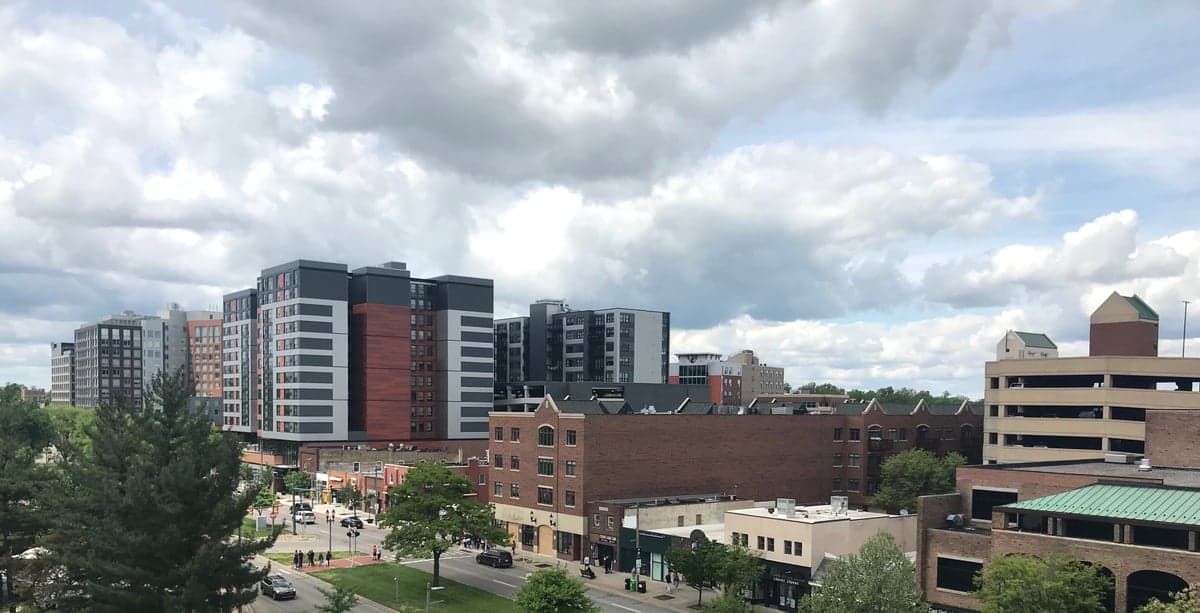
Photo: Wikipedia
Quality of Life in East Lansing, MI
A high quality of life with strong walkability, manageable living costs, healthy neighborhood signals, and solid amenity access.
What does Quality of Life tell us?
Quality of Life blends cost of living, nearby amenities, socioeconomic signals, and neighborhood character. City-level scores represent the whole municipality; individual neighborhoods can differ.
What does this tell us?
Quality of Life blends cost of living, nearby amenities, socioeconomic signals, and neighborhood character. City-level scores represent the whole municipality; individual neighborhoods can differ.
Cost of Living
6% below national average
The Real Cost of Living in East Lansing, MI for 2026
| Tier | Individual | Family (4) |
|---|---|---|
| Survival | $18k | $34k |
| Comfortable | $49k | $72k |
| Luxury | $79k+ | $122k+ |
| Elite (Top 5%) | $166k+ | $257k+ |
61%
The Area Signal
A metric tracking the socioeconomic signals of the area.
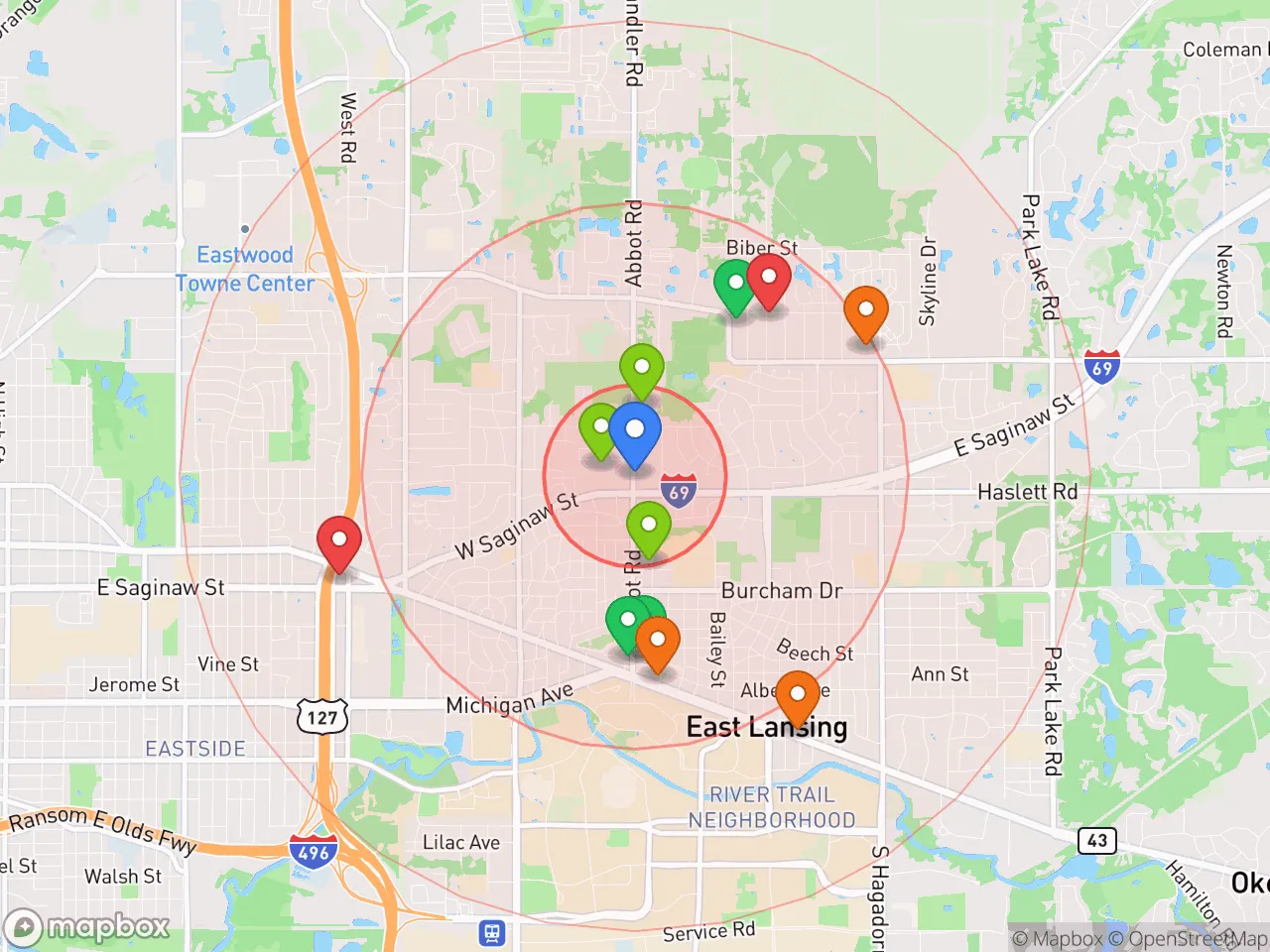
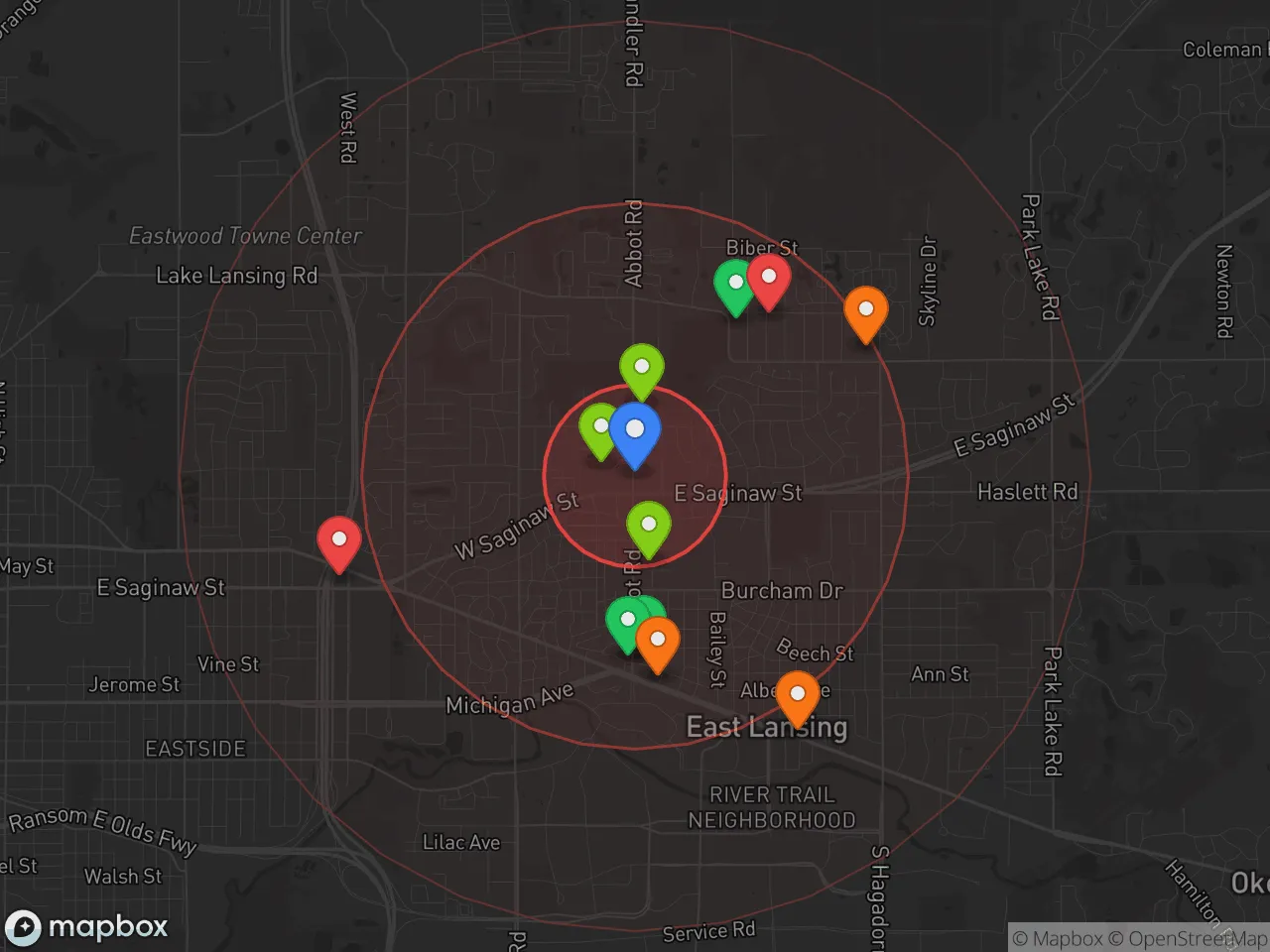
Hobbies
Explore the areaGroceries
8 within 10 miles
Gas
20 within 10 miles
Hospital
8 within 20 miles
Airport
DTW — Detroit Metropolitan Wayne County
Post Office
USPS — East Lansing, MI
Critical Amenities
Quality-of-Life Analysis
East Lansing, Michigan, is an affluent, college-centric community anchored by Michigan State University, where a blend of academics, young professionals, and long-term residents creates a distinctly educated and family-oriented population. With a cost-of-living index of 94—6% below the national average—the city offers a rare combination of economic accessibility and high-quality public services, making it a magnet for faculty, graduate students, and professionals seeking a stable, walkable environment. The median home value of $251,600 and median rent of $1,122 reflect a market that is more affordable than nearby Ann Arbor or the Detroit suburbs, yet still commands a premium over rural Ingham County areas.
Cost of living and housing affordability compared to Lansing and Ann Arbor
East Lansing’s housing market is notably more expensive than the city of Lansing, where median home values hover around $150,000, but it remains significantly cheaper than Ann Arbor’s median of roughly $400,000. The median rent of $1,122 is about 15% lower than the national average, though it has risen steadily since 2020 due to student demand and limited new construction. Property taxes in East Lansing are moderate, with an effective rate around 1.8%, but residents should note that Michigan’s Proposal A caps annual assessment increases at 5% or the inflation rate, whichever is lower—a key factor for long-term homeowners. The average commute of just under 17 minutes is among the shortest in the region, thanks to the city’s compact layout and proximity to MSU’s campus, which employs over 15,000 people.
Schools, parks, and daily life for families and professionals
East Lansing Public Schools are consistently rated among the top in Michigan, with Glencairn Elementary and MacDonald Middle School earning Blue Ribbon distinctions for academic excellence. The district’s graduation rate exceeds 95%, and the presence of MSU provides a pipeline for enrichment programs, from robotics clubs to dual-enrollment courses. Daily life revolves around the city’s 30+ parks, including the 200-acre Harrison Road Park with its disc golf course and nature trails, and the bustling downtown along Grand River Avenue, where independent bookstores, farm-to-table restaurants, and coffee shops cater to a mix of students and families. The East Lansing Farmers Market operates year-round, and the city’s robust recreation department offers leagues for soccer, tennis, and pickleball. For cultural amenities, the Wharton Center for Performing Arts hosts Broadway tours and symphony performances, while the MSU Museum provides free admission to natural history exhibits.
Who thrives in East Lansing? The city is ideal for academics, graduate students, and professionals who value walkability, strong public schools, and a vibrant cultural scene without the high costs of larger metro areas. Families with children benefit from the top-tier school district and low crime rates—violent crime is roughly half the national average—while retirees appreciate the quiet neighborhoods near Lake Lansing and the easy access to MSU’s lifelong learning programs. Commuters to Lansing or Detroit will find the short drive a relief, though those seeking a bustling nightlife or a more diverse housing stock may prefer Ann Arbor or downtown Lansing. Overall, East Lansing offers a balanced, affordable quality of life that few college towns can match.

Crime in East Lansing, MI
Generally safer than 65% of comparable U.S. locations.
Violent CrimeViolent Crime Analysis
Property CrimeProperty Crime Analysis
Crime Analysis
East Lansing, home to Michigan State University, presents a mixed safety profile where property crime rates significantly exceed national averages while violent crime remains below the U.S. median. The city’s 2024 reported violent crime rate of 214.1 per 100,000 residents is roughly 40% lower than the national average, but its property crime rate of 1,260.7 per 100,000 is nearly double the national figure. These numbers reflect a community shaped by a large student population, transient housing patterns, and a local justice system influenced by progressive prosecutorial policies that prioritize diversion and reduced incarceration over traditional sentencing.
Crime in context
East Lansing’s violent crime rate is comparable to other college towns in the Midwest, such as Ann Arbor (roughly 230 per 100K) and Iowa City (200 per 100K), and is well below Michigan’s state average of about 450 per 100K. However, the property crime rate is a standout concern: it is more than double the Michigan state average of approximately 600 per 100K and significantly higher than the national rate of roughly 680 per 100K. The Ingham County Prosecutor’s Office, led by a progressive Democrat since 2020, has implemented policies that reduce cash bail for nonviolent offenses and emphasize restorative justice programs. While intended to reduce recidivism, critics argue these measures have contributed to a revolving-door effect for property offenders, particularly in areas near campus where bicycle theft, package theft, and vehicle break-ins are common.
What residents experience
For most residents, the primary safety concern is property crime rather than personal violence. Larceny-theft accounts for the majority of property offenses, with over 800 incidents reported annually, many concentrated in student-heavy neighborhoods like the Cedar Village area and along Grand River Avenue. Burglary rates are also elevated, with roughly 200 incidents per year, often targeting off-campus apartments during holiday breaks. Violent crime is less frequent but not absent: aggravated assault makes up the bulk of incidents, typically arising from altercations near bars on Abbott Road or during large gatherings. The East Lansing Police Department maintains a visible presence, but response times can lag during MSU football game days or major events when resources are stretched thin.
Neighborhood-level variation is notable. The southwest quadrant near Lake Lansing Road and the area around Hagadorn Road tend to report lower crime rates, with many single-family homes and longer-term residents. In contrast, the downtown core and areas immediately surrounding MSU’s campus—especially the Bailey Street and Charles Street corridors—see the highest concentration of property crimes and alcohol-related incidents. Residents in these zones should invest in security cameras, secure bike storage, and renter’s insurance. The progressive judicial approach in Ingham County means that even repeat property offenders often receive probation or short sentences, a factor that prospective homeowners and families should weigh when choosing a specific block or apartment complex.
* Values derived from national, state, county, city and local statistics and may differ in a specific area. Last updated: 2026-05-03T06:45:08.000Z
Narrative content on this page is AI-generated and may contain mistakes. Verify any details that matter before acting on them.
ReloMaps may earn a commission from affiliate links at no extra cost to you.

