Photo: Wikipedia
Demographics of East Orange, NJ
Affluence Level in East Orange, NJ
A below-average socioeconomic profile. Incomes, home values, and educational attainment trail the U.S., with higher poverty and unemployment.
People of East Orange, NJ
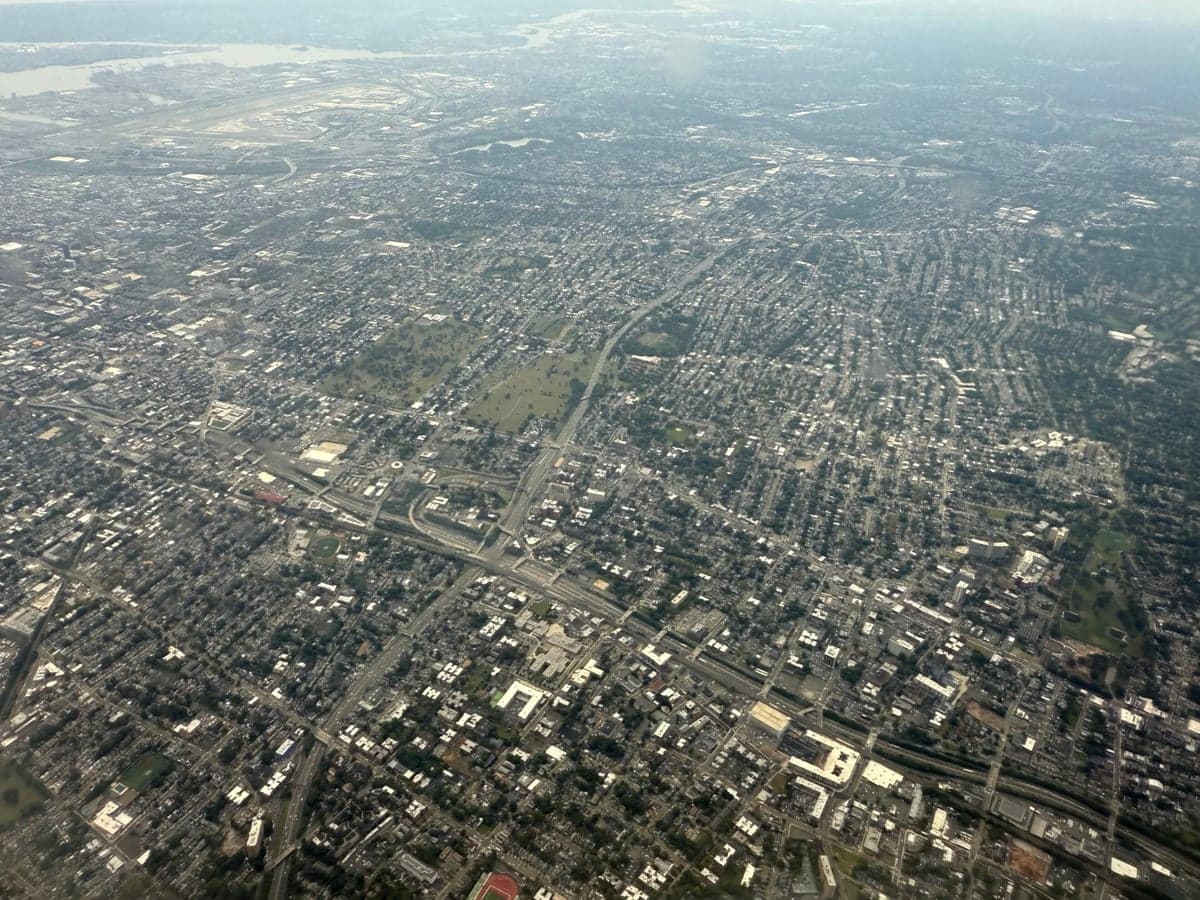
East Orange, New Jersey, is a densely packed urban city of 69,183 residents, characterized by a predominantly Black population (79.0%) with a small but growing Hispanic minority (9.9%) and a foreign-born share of 11.3%. The city is notably less diverse than its neighbors, with a White population of just 1.9% and a college attainment rate of 22.9%, reflecting a working-to-middle-class community shaped by decades of racial transition and suburban flight. Its identity is rooted in a history of successive waves — first European immigrants, then Black migrants from the South, and later Caribbean and African immigrants — each leaving a distinct mark on neighborhoods like the Amity Park historic district and the Elmwood area.
How the city was settled and grew
East Orange’s population history begins in the late 19th century, when it was carved from Orange Township and incorporated as a city in 1899. Its early growth was driven by the expansion of the Lackawanna Railroad and the rise of manufacturing — especially hat-making, electrical equipment, and brewing — which drew waves of German, Irish, and Italian immigrants. These groups settled in the Central Ward and along Main Street, building the row houses and three-family flats that still define the city’s housing stock. By 1930, East Orange had swelled to over 68,000 residents, nearly all White, with a small Black population concentrated in the Fourth Ward near the Newark border. The city’s streetcar suburbs, such as the Amity Park district, attracted middle-class commuters who worked in Newark and New York City, giving East Orange a reputation as a stable, family-oriented bedroom community.
Modern era (post-1965)
The post-1965 era brought dramatic demographic upheaval. The Hart-Cellar Immigration Act of 1965 and the Fair Housing Act of 1968 opened the door for Black families leaving Newark’s decaying inner city and for African American migrants from the South seeking better schools and housing. By 1970, East Orange had become majority Black, a shift that accelerated as White families departed for suburbs like Livingston and West Orange. The Elmwood neighborhood, once a Jewish and Italian enclave, became a hub for middle-class Black professionals, while the Brick Church district saw an influx of Caribbean immigrants — primarily from Haiti, Jamaica, and Trinidad — who now form a significant portion of the foreign-born population. The city’s Hispanic population (9.9%) is concentrated near the Grove Street corridor, with Puerto Rican and Dominican families arriving in the 1980s and 1990s. East/Southeast Asian residents (0.6%) and Indian-subcontinent residents (1.8%) remain small but visible in the Prospect Hill area, often drawn by proximity to Newark’s hospitals and universities. The city’s Black share peaked around 90% in the 1990s and has since declined slightly as Hispanic and Indian populations have grown.
The future
East Orange’s population is slowly diversifying, but the trend is toward modest fragmentation rather than full integration. The Black majority is shrinking gradually — from roughly 90% in 2000 to 79% today — as Hispanic (9.9%) and Indian (1.8%) communities grow. The foreign-born share (11.3%) is below the national average, suggesting that immigration is not a primary driver of change. Instead, the city is seeing a slow inflow of younger, college-educated Black professionals priced out of Montclair and Maplewood, alongside a small but steady stream of Hispanic families from Newark. The Amity Park historic district is attracting renovation-minded buyers, while the Elmwood area remains the most stable middle-class Black neighborhood. Over the next 10–20 years, East Orange will likely remain a predominantly Black city with a growing Hispanic minority, but it will not become a melting pot — its low White share and modest Asian presence suggest continued racial homogeneity. The city’s future depends on whether it can retain its Black middle class while integrating new immigrant groups without the racial turnover that marked the 1970s.
For someone moving in now, East Orange offers a dense, urban environment with strong transit access to New York (30 minutes via NJ Transit) and a housing stock of affordable Victorian-era homes. It is a city in transition — still overwhelmingly Black, but with a growing Hispanic and Indian presence that is slowly reshaping its cultural landscape. The key question for newcomers is whether the city can stabilize its population and attract the investment needed to reverse decades of disinvestment, or whether it will continue to lose its middle class to the suburbs.

* Values derived from national, state, county, city and local statistics and may differ in a specific area. Last updated: 2026-10-10T16:27:20.000Z
Narrative content on this page is AI-generated and may contain mistakes. Verify any details that matter before acting on them.
ReloMaps may earn a commission from affiliate links at no extra cost to you.

