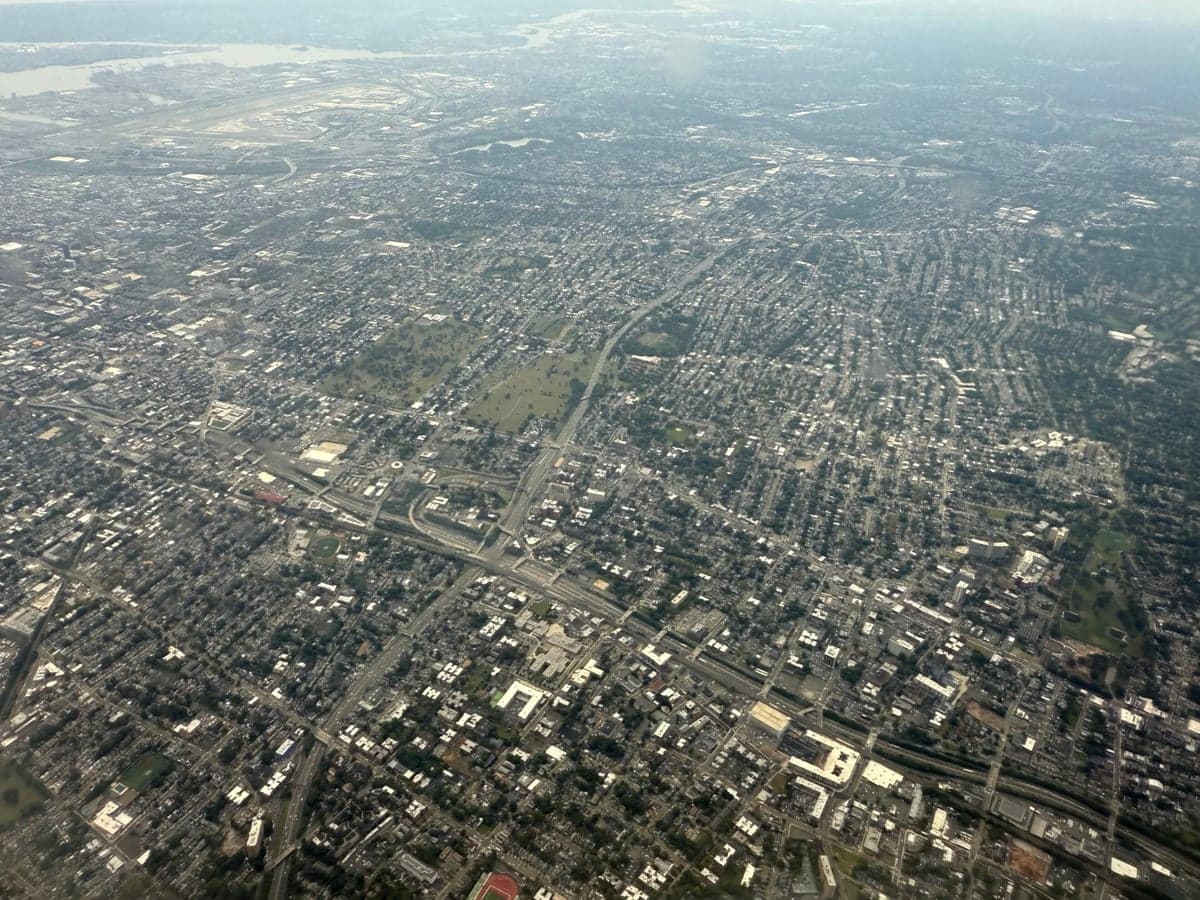
Photo: Wikipedia
Political ClimatePolitical Climate in East Orange, NJ
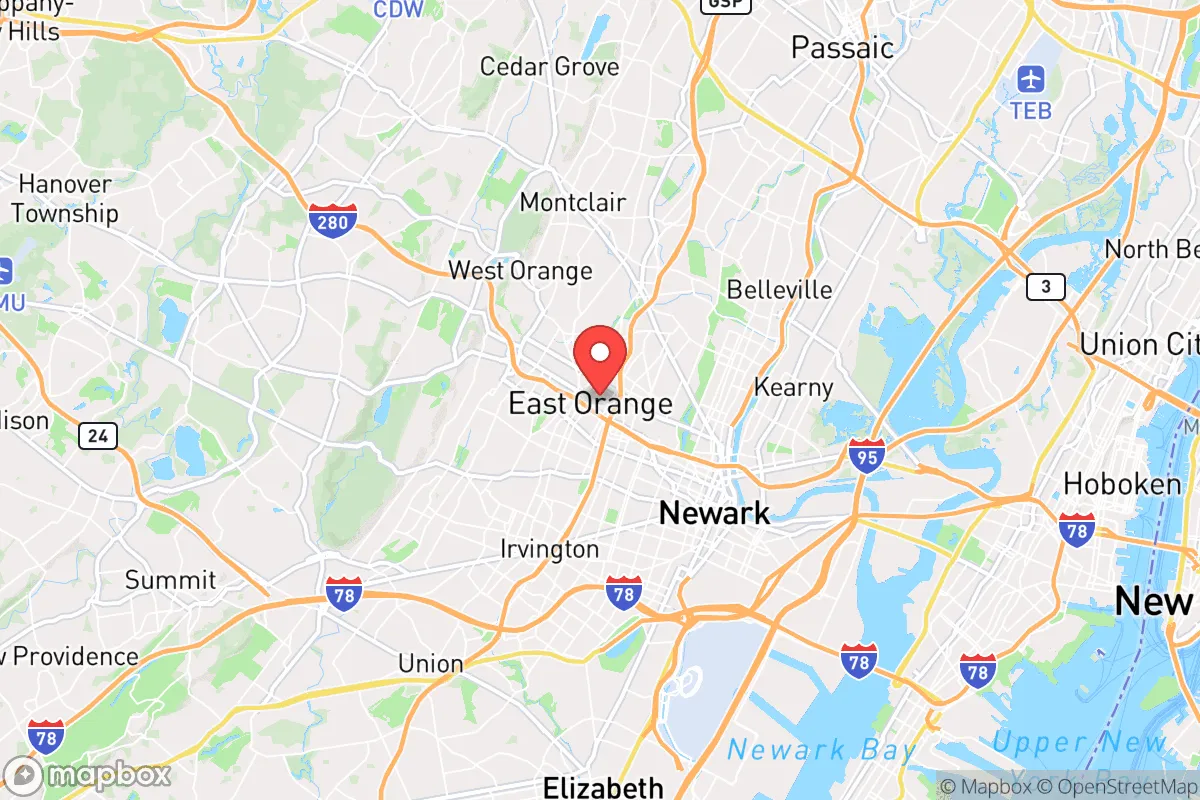
District shown is the primary district for this city’s centroid. Cities may span multiple districts.
Local Political AnalysisPolitical Analysis of East Orange, NJ
East Orange, New Jersey, is about as deep blue as it gets, with a Cook PVI of D+27, meaning the city votes nearly 30 points more Democratic than the national average. That wasn't always the case—back in the 1980s and early 90s, this was a solidly middle-class, union-heavy town where folks voted for whoever promised to keep the streets safe and the taxes low. But over the last two decades, the political machine here has shifted hard left, and now you're looking at a one-party system where progressive policies get rubber-stamped with little debate. The trajectory is clear: more government programs, higher taxes, and a growing disconnect between what the city council votes on and what everyday residents actually want.
How it compares
Drive ten minutes west to Bloomfield or Glen Ridge, and you'll feel the political temperature drop. Those towns still have a healthy mix of moderate Democrats and Republicans, with local elections that actually get contested. Head east into Newark, and you're in an even more progressive stronghold, but at least there you see some pushback from the old guard. East Orange, though, is an island of uniformity. The city council hasn't had a Republican member in decades, and even moderate Democrats get primaried out if they don't toe the line on things like rent control expansions, sanctuary city policies, and tax hikes for "equity" programs. Surrounding Essex County towns like West Orange and Maplewood lean blue too, but they've kept a check on the most extreme proposals—East Orange seems to race ahead without looking back.
What this means for residents
For the average person living here, the political climate translates directly into your wallet and your freedoms. Property taxes are already among the highest in the state—the average effective rate hovers around 2.5%—and every year there's a new proposal to raise them for another social program. The city council passed a paid sick leave ordinance that sounds nice on paper, but small business owners I've talked to say it's just another reason to close up shop or move to Irvington. Then there's the police funding debate: in 2020, the council voted to cut the police budget by 5%, even as crime stats showed a rise in car thefts and break-ins. You've got less say in how your tax dollars are spent, and more of your paycheck going to programs you might not agree with. If you value personal responsibility and local control, this place feels like it's heading in the wrong direction.
One thing that stands out culturally is the city's embrace of "sanctuary" policies—East Orange was one of the first in the state to limit cooperation with federal immigration enforcement. That might sound compassionate, but it also means local resources get stretched thin, and there's little transparency about who's living in the community. Longtime residents remember when the city had a vibrant downtown with family-owned shops and a real sense of neighborly trust. Now, you see more chain stores and empty storefronts, and the political class seems more focused on national issues than fixing potholes or keeping the parks clean. If the trend continues, East Orange will keep losing its middle-class backbone, and the folks who can afford to leave will—leaving behind a city run by the same political machine, with fewer people to push back.

State Political ClimatePolitical Climate in New Jersey
State Political AnalysisPolitical Environment in the State
New Jersey has long been a reliably blue state in presidential elections, but its political climate is far more complex than a simple partisan label suggests. The state has voted Democratic in every presidential election since 1992, but the margin has narrowed in recent cycles, with Joe Biden winning by about 16 points in 2020 compared to Hillary Clinton’s 14-point margin in 2016. However, beneath the surface, a deep urban-rural divide and a growing suburban backlash against progressive policies are reshaping the state’s political landscape. For a conservative-leaning audience, New Jersey presents a mixed bag: high taxes and heavy regulation dominate, but there are pockets of resistance and a real possibility of a rightward shift in the coming decade.
Urban vs. rural divide
The political map of New Jersey is a tale of two states. The northern and central urban corridors—Newark, Jersey City, Paterson, and Elizabeth—are Democratic strongholds, driven by dense populations, union influence, and a strong public-sector workforce. These cities reliably deliver 70-80% of their votes to Democratic candidates, effectively canceling out the rest of the state. In contrast, the rural and exurban areas of Sussex County, Hunterdon County, and Salem County are deeply red, often voting 60-65% Republican. The real battleground is the suburbs, particularly in Bergen County, Morris County, and Monmouth County. These areas have been trending leftward since 2016, driven by college-educated professionals and an influx of New York City commuters. However, the 2021 gubernatorial election saw a surprising shift: Republican Jack Ciattarelli came within 3 points of unseating Governor Phil Murphy, winning Ocean County by 30 points and flipping Gloucester County—a sign that suburban voters are growing weary of progressive overreach.
Policy environment
New Jersey’s policy environment is a cautionary tale for conservatives. The state has the highest property taxes in the nation, averaging over $9,500 per year, and a progressive income tax that tops out at 10.75% for earners over $1 million. The regulatory posture is heavy-handed, with strict environmental rules, rent control in many municipalities, and a cumbersome business licensing process. On education, the state spends over $20,000 per pupil annually—among the highest in the country—yet student outcomes remain mediocre, and the teachers’ union (NJEA) wields outsized political influence. Healthcare is dominated by the state’s Medicaid expansion and a robust insurance market, but costs remain high. Election laws are relatively permissive: no-excuse mail-in voting was made permanent in 2021, and same-day voter registration is available. For conservatives, the policy environment feels like a slow-motion squeeze on personal freedom, with the state government acting as a nanny-state that taxes, regulates, and mandates at every turn.
Trajectory & freedom
New Jersey is becoming less free by almost any measure. The most glaring example is the state’s gun control regime: in 2022, Governor Murphy signed a package of bills banning .50 caliber rifles, requiring microstamping on handguns, and raising the purchasing age for long guns to 21. The state also has a “may issue” concealed carry law that was struck down by the Supreme Court in NYSRPA v. Bruen, leading to a chaotic scramble to rewrite the law. On parental rights, the state has moved aggressively to enshrine LGBTQ+ curriculum in public schools, with no opt-out provision for parents. In 2023, Murphy signed a law requiring all school districts to adopt policies that “affirm” transgender students, including allowing them to use preferred names and pronouns without parental consent. Medical autonomy took a hit during COVID, with New Jersey having one of the longest-lasting mask mandates and vaccine mandates for healthcare workers. Property rights are under constant assault from eminent domain and overzealous zoning boards. The only bright spot for freedom is the state’s recent move to legalize recreational marijuana, which passed by ballot measure in 2020—but even that came with heavy taxation and licensing hurdles that favor large corporations over small growers.
Civil unrest & political movements
New Jersey has seen its share of political flashpoints. The 2020 Black Lives Matter protests in Newark and Trenton were large but largely peaceful, though they did lead to calls to defund the police—a movement that gained little traction outside of the state’s most progressive enclaves. On the right, the “NJ for Trump” movement has been active, with regular rallies in Flemington and Howell. The state’s sanctuary policies are a major point of contention: New Jersey is a “sanctuary state” under Executive Order 83, which limits cooperation between local law enforcement and ICE. This has led to tensions in towns like Woodbridge and Perth Amboy, where immigrant populations have grown rapidly. Election integrity remains a hot-button issue, with many conservatives pointing to the 2020 election’s widespread use of mail-in ballots and the state’s decision to send ballots to all registered voters. The 2021 gubernatorial race saw allegations of voter fraud in Paterson, though no major convictions resulted. A new resident would notice a palpable sense of political fatigue—people are tired of the high taxes, the overregulation, and the feeling that their voices don’t matter in a state dominated by the northern urban machine.
Projection
Over the next 5-10 years, New Jersey is likely to become more purple, but not necessarily more conservative. The demographic trends are working against the GOP: the state is becoming more diverse, with growing Asian and Hispanic populations that lean Democratic. However, the exodus of high-earning residents to Florida, Texas, and the Carolinas is accelerating—New Jersey lost over 100,000 residents to other states between 2020 and 2023. This “brain drain” is disproportionately affecting blue-leaning professionals, which could paradoxically help Republicans by leaving behind a more working-class, tax-weary electorate. The 2025 gubernatorial election will be a key bellwether: if a Republican can win, it would signal a major shift. But even if Democrats hold the governor’s mansion, the margin is likely to narrow. For someone moving in now, expect to see continued battles over school curriculum, property taxes, and gun rights. The state will not become a conservative paradise, but it may become a place where conservative voices are no longer completely drowned out.
Bottom line for a new resident: If you’re moving to New Jersey, you’re signing up for high taxes, heavy regulation, and a political culture that leans left. But you’re also getting access to one of the best job markets in the country, excellent schools in certain suburbs, and a growing conservative movement that is fighting back. Pick your town carefully—Sussex County or Ocean County will feel much more like home than Hoboken or Montclair. And be prepared to get involved: in New Jersey, local politics is where the real battles are fought, from school board meetings to zoning hearings. It’s not an easy place to be a conservative, but it’s a place where your vote and your voice can actually make a difference.
* Values derived from national, state, county, city and local statistics and may differ in a specific area. Last updated: 2026-10-10T16:27:20.000Z
Narrative content on this page is AI-generated and may contain mistakes. Verify any details that matter before acting on them.
ReloMaps may earn a commission from affiliate links at no extra cost to you.

