Photo: Wikipedia
Find The Best Places To Live
in Nashville
PRO TIP! You can paste a Zillow or Redfin link to get info on that property.
What It's Like Living in Nashville, TN
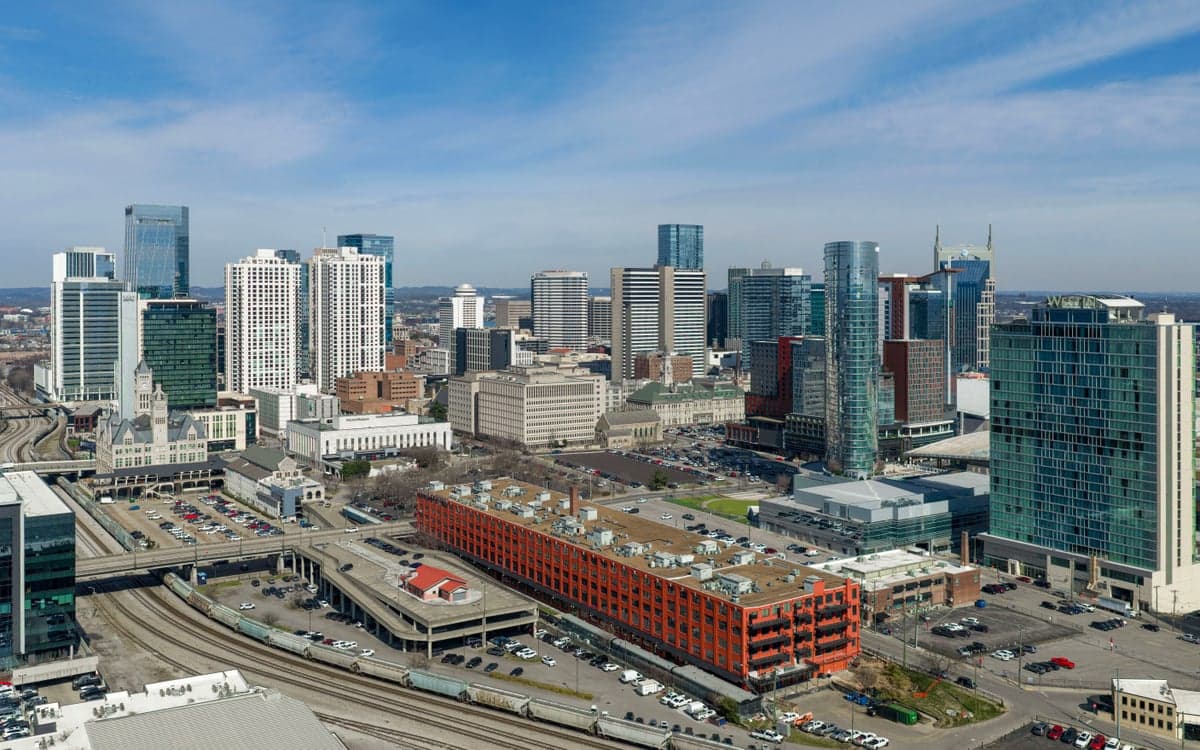
Living in Nashville means trading the idea of a quiet Southern town for a city that’s equal parts honky-tonk hustle and suburban sprawl. It’s a place where you can watch a college football game at a packed sports bar on a Saturday, then hike a shaded trail at Percy Warner Park on Sunday morning, all while the hum of construction and the twang of a steel guitar provide the soundtrack. The city’s identity is still being written, and that tension between its Music City roots and its rapid growth is the single most defining thing about daily life here.
The Daily Grind: Traffic, Weather, and Where You Actually Go
Your daily life in Nashville is largely dictated by two things: your commute and the weather. The average commute clocks in at just under 25 minutes, which sounds manageable until you realize that a trip from the suburbs of Brentwood or Mount Juliet into downtown can easily double during rush hour. Interstate 24 and the I-440 loop are notorious for bottlenecks, and locals have learned to check traffic apps before heading out. The weather is a four-season affair, but it’s the humidity from May through September that really shapes your routine. You’ll learn to love early morning runs or evening walks, because the midday sun can be oppressive. Winters are mild, with the occasional ice storm that shuts everything down for a day or two, giving you a legitimate excuse to stay home and binge-watch.
When you’re not commuting, you’re likely at a grocery store like Publix or the local Turnip Truck, grabbing takeout from a hot chicken joint (Hattie B’s or Prince’s are the standard-bearers), or meeting friends at a neighborhood spot like The Pharmacy for a burger and a beer. Weekends are for brunch, and the lines at places like Pancake Pantry or Biscuit Love are a rite of passage. The city’s median age of 34.4 means you’re surrounded by a mix of young professionals, new parents, and empty-nesters, all trying to find their footing in a place that’s growing faster than its infrastructure can handle.
Sports, Music, and the Weekend Playbook
Sports are a serious part of the local identity, and they’re not just for the pros. The Tennessee Titans (NFL) and the Nashville Predators (NHL) draw passionate crowds, but the real heartbeat is college football. On a fall Saturday, you’ll see a sea of black and gold for the Vanderbilt Commodores, but the true obsession is with the University of Tennessee Volunteers in Knoxville, whose games are a three-hour pilgrimage for many. High school football is also a big deal, especially in the suburbs, where Friday night lights are a community event. If you’re a soccer fan, the Nashville SC matches at Geodis Park are a surprisingly electric scene, drawing a younger, more diverse crowd.
Beyond sports, the entertainment is, of course, legendary. The Ryman Auditorium is a pilgrimage site for music lovers, but the real local secret is that the best shows happen at smaller venues like The Bluebird Cafe or Exit/In. The CMA Fest in June turns the city into a wall-to-wall concert, but locals often avoid downtown during that week. For a quieter weekend, you’ll head to Centennial Park for a walk around the Parthenon replica, or drive 20 minutes to Radnor Lake State Park for a peaceful hike. The city’s food scene has exploded, with everything from upscale Southern cuisine at City House to the no-frills barbecue at Martin’s Bar-B-Que Joint.
Who Fits In and Who Doesn’t: The Honest Trade-Offs
Nashville attracts a specific kind of person: someone who wants the energy of a growing city but still values a neighborly wave and a front porch. The median household income of $75,197 is decent, but the cost of living index of 131 (well above the national average) means that housing is the biggest shock. The median home value of $383,100 has pushed many young families and singles into the suburbs or into renting longer than they planned. The city is also increasingly polarized between the old guard—folks who remember when Broadway was just a street, not a tourist gauntlet—and the newcomers who are driving the change.
For parents, the public schools are a mixed bag. The city’s Metro Nashville Public Schools system has some excellent magnet and charter options, but many families with means opt for private schools or move to Williamson County (Brentwood, Franklin) for the highly-rated public systems. The violent crime rate of 490.5 per 100,000 is a real concern, especially in certain neighborhoods, and it’s something you’ll hear discussed at dinner parties and PTA meetings alike. The pros are the sheer variety of things to do, the strong job market (especially in healthcare and music), and the genuine friendliness of the people. The cons are the traffic, the rising cost of living, and the feeling that the city is sometimes trying to be something it’s not—a polished, corporate version of its scrappy, creative self.
Ultimately, living in Nashville is a trade-off. You get a city that’s still small enough to run into someone you know at the grocery store, but big enough to offer world-class entertainment and a booming economy. It’s a place where you can wear cowboy boots to a rock show and no one blinks, where the humidity is a shared complaint that bonds strangers, and where the constant construction is a sign that things are changing—for better or worse. If you can handle the growing pains, it’s a genuinely fun, vibrant place to call home.

Similar mid-size cities to Nashville

* Values derived from national, state, county, city and local statistics and may differ in a specific area. Last updated: 2026-04-22T01:24:46.000Z
Narrative content on this page is AI-generated and may contain mistakes. Verify any details that matter before acting on them.
ReloMaps may earn a commission from affiliate links at no extra cost to you.

